


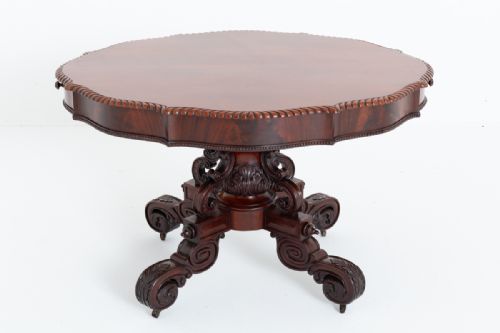
French Tilt Top Table
These french tilt top table pieces combine ingenious folding mechanisms with regional character, offering practical surface space that tucks away neatly when not in use.
French Tilt Top Table
A french tilt top table serves multiple domestic purposes, operating primarily as a compact dining surface or wine tasting table that pivots vertically for storage against a wall. The selections span various regional types, including round vendange and vineyard tables alongside more formal pedestal designs.
The nineteenth century dominates the available examples, drawing on provincial workshops and urban cabinet makers alike. Buyers encounter robust oak and cherry iterations designed for agricultural work alongside polished mahogany and burr walnut parlor pieces.
Materials and Construction Methods
Makers utilised solid timbers such as oak, cherry, and fruitwood for provincial tables to withstand daily handling, while finer reception pieces relied on mahogany, kingwood, and burr walnut veneers. Brass fittings and iron mechanisms frequently secure the pivoting top to the central pedestal or folding base.
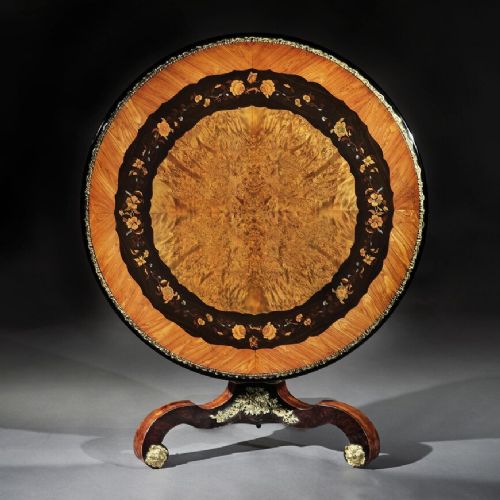
Joinery methods range from simple pegged construction in utilitarian vineyard tables to sophisticated marquetry and amboyna mounts on revival pieces. The pivot mechanism requires precise alignment so the circular top rests flat and locks securely into position.
Vineyard workers relied on these folding tables to survive the harvest season before the tables retired to peaceful drawing rooms.
Distinctions in Craftsmanship
The sophistication of the timber selection dictates the visual hierarchy, moving from plain utilitarian fruitwood and oak up to figured burr walnut and intricate marquetry. Finer examples display carefully matched grain patterns across segmented table tops and refinedturning on the central columns.
The stability and smoothness of the tilting mechanism separate basic workshop output from superior cabinet work. High quality specimens maintain a rigid horizontal plane when locked, avoiding any wobble in the central pivot joint.
Edward Holmes Baldock·Gillows
The French Tilt Top Table Glossary
- Vendange table
- A traditional French wine harvesting table featuring a removable or tilting circular top designed for easy storage during the off-season. These practical items often appear in oak, cherry, or fruitwood.
- Gueridon
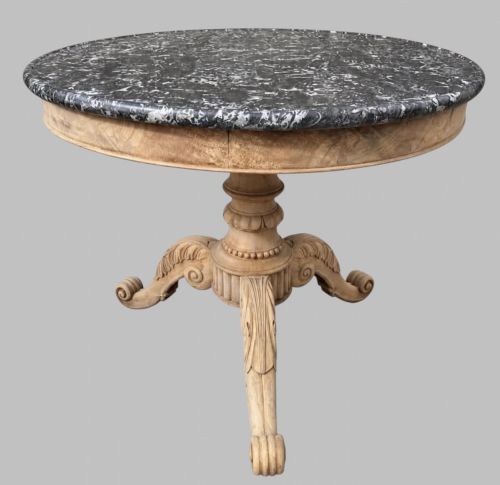
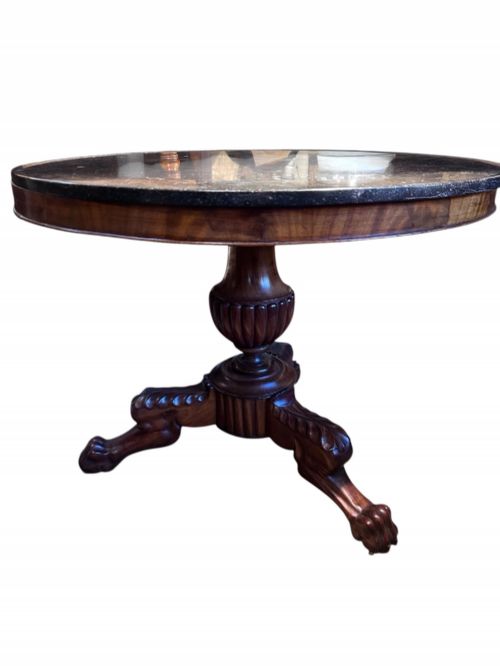
- A small French round table supported by a single central pillar and pedestal base. They gained popularity during the nineteenth century for use as occasional or side tables.
- Tilt top table
- A table equipped with a hinge mechanism that allows the surface to rotate vertically. This clever design enabled tables to stand flat against a wall when floor space was required.
- Marquetry
- The art of applying decorative pieces of veneer to a structure to form intricate designs. Cabinet makers employed this technique on formal nineteenth century centre tables.
- Louis Philippe
- A mid nineteenth century French design style characterised by understated elegance and curved structural lines. Pieces from this period prioritise clean wood grains over excessive ornamentation.
French Tilt Top Table: Frequently Asked Questions
How do tilt top mechanisms work?
The circular table top connects to a wooden or iron catch mechanism mounted on top of a central pedestal pillar. Releasing this catch allows the surface to pivot ninety degrees into a vertical orientation for compact storage.
Original mechanisms rely on turned wooden pegs, brass latches, or iron brackets. Inspecting the underside reveals how the pivot block integrates with the framing beneath the timber top.
What is a vendange table?
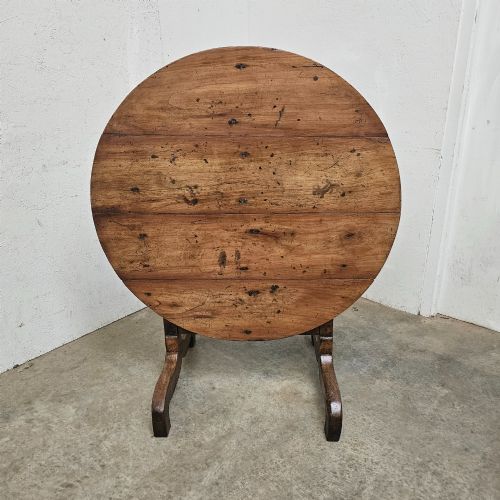
Vendange tables are traditional French wine harvest tables constructed for use in vineyards and rural farmhouses during the autumn months. Their folding or tilting designs made them simple to clear away once the grape pressing finished.
Most examples utilise durable provincial timbers like oak, cherry, and fruitwood. Their robust construction reflects practical agricultural origins rather than formal parlor use.
Where should I place a gueridon table?
A gueridon table works well in a hallway, corner, or beside seating where a compact circular surface is required without dominating the room. Their central pillar construction leaves ample legroom compared to four-legged alternatives.
Because many tilt upward, placing one near a wall allows you to display the decorative timber grain of the top when the table is not in active use.
How do I identify nineteenth century pieces?
Nineteenth century French tables typically exhibit hand-cut joinery, traditional timber patination, and period-specific proportions associated with styles like Louis Philippe or Rococo Revival. Regional pieces often show tool marks left by provincial woodworking planes.
Examining the underside and the pivot mechanism helps confirm period construction methods. Look for uniform wood shrinkage and appropriate wear around the pivot points.