
French Style Writing Bureau
A french style writing bureau brings elegance and refined surface space to a room, drawing on centuries of cabinet-making heritage.
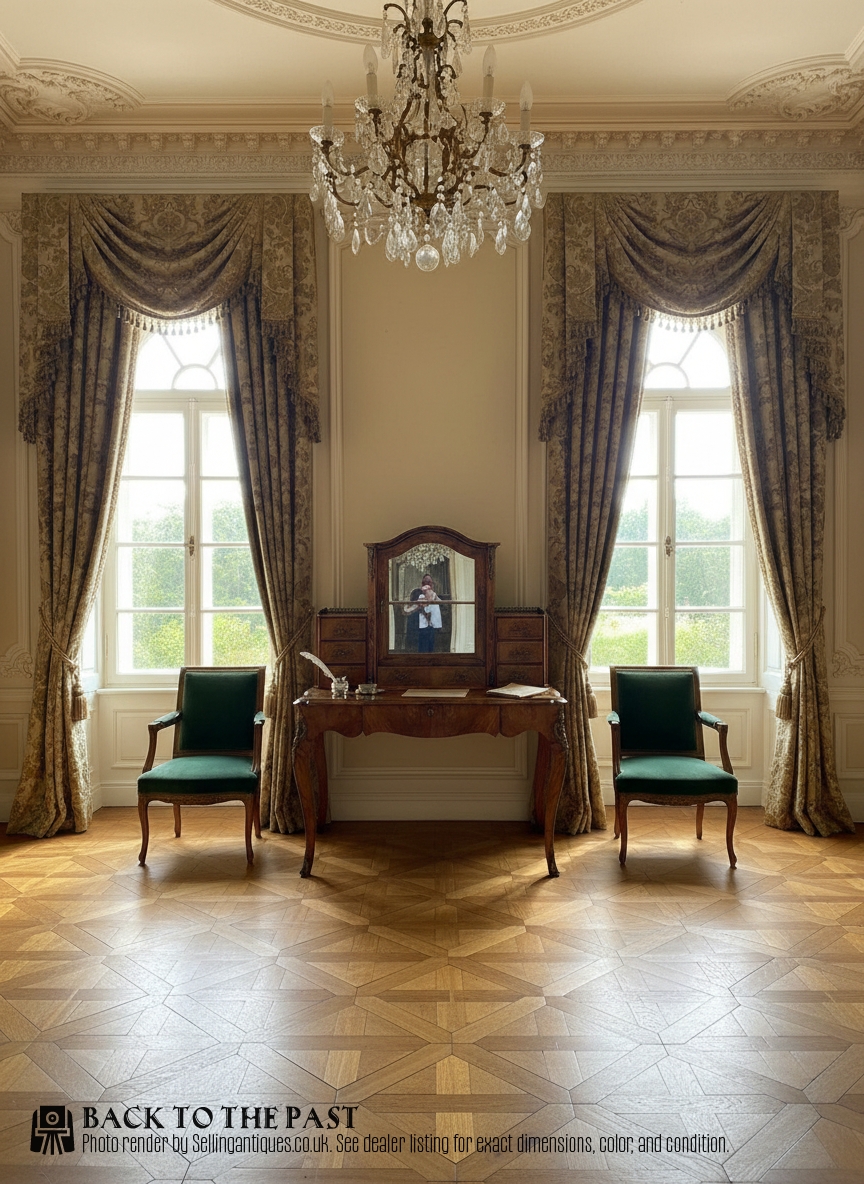
French Style Writing Bureau
A french style writing bureau encompasses desks, writing tables, and secretaires designed for correspondence and paperwork. Buyers encounter pieces from the nineteenth century alongside Victorian interpretations influenced by continental taste.
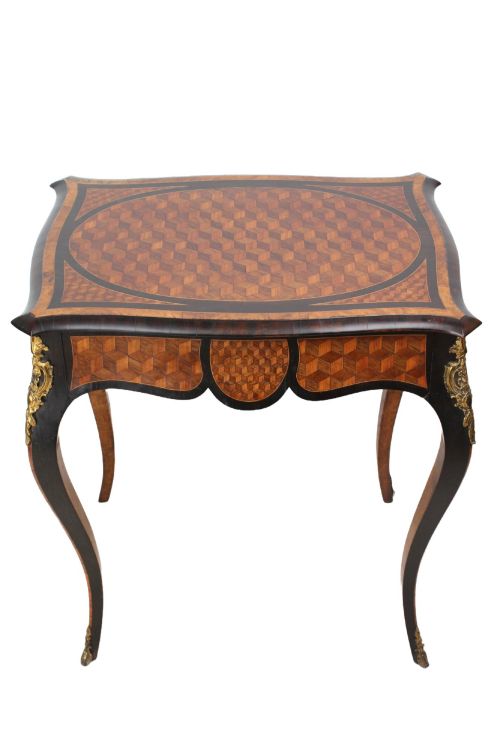
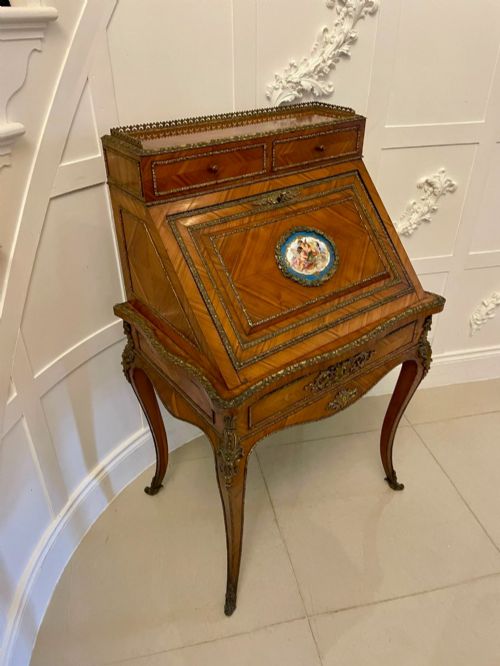
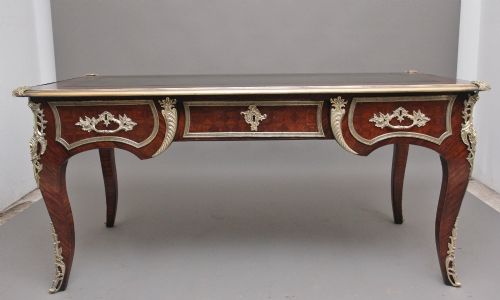
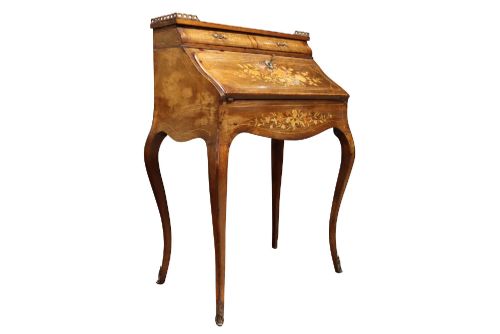
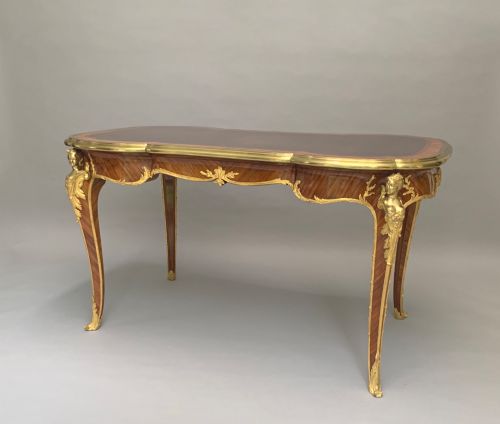
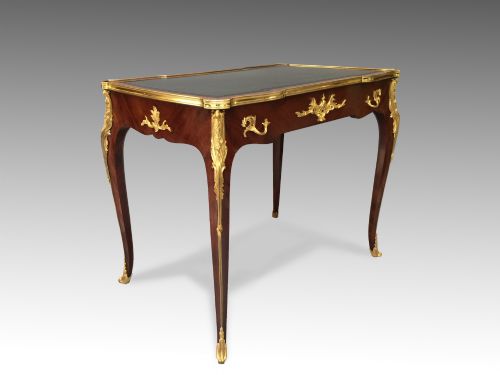
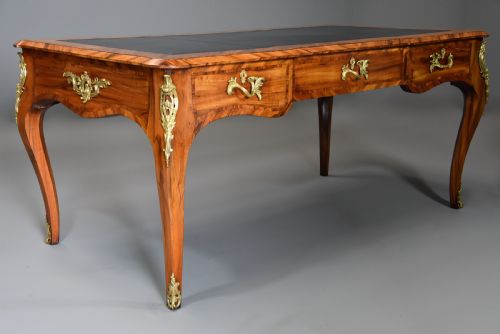
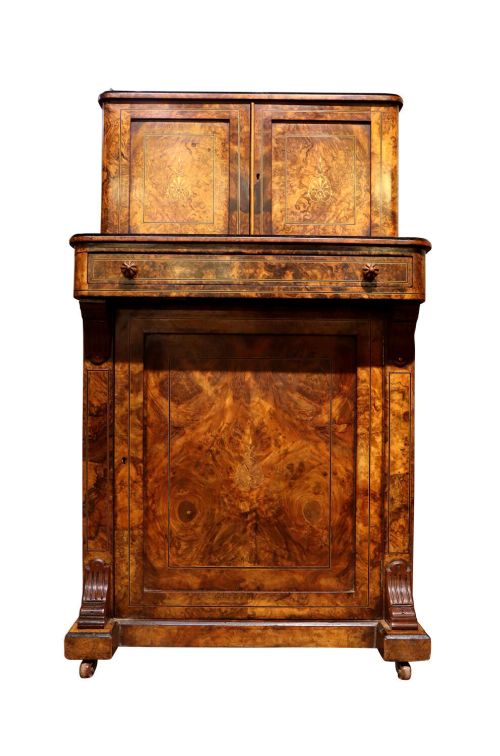
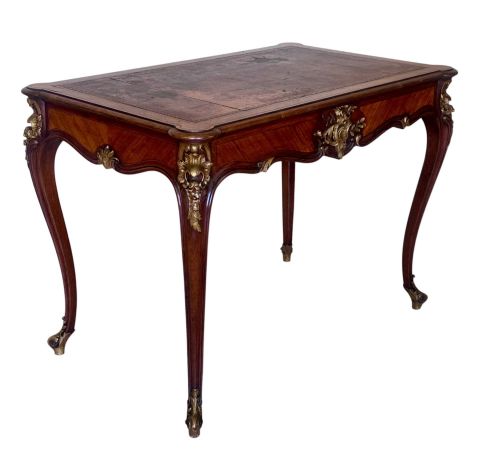
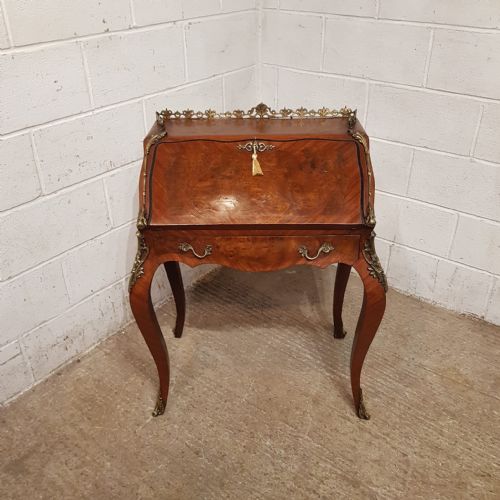
Objects range from compact walnut ladies writing desks to large mahogany centre tables fitted with leather inserts and drawers. Many examples display influences from Louis XV, Louis XVI, and Empire decorative vocabularies.
Materials and Construction
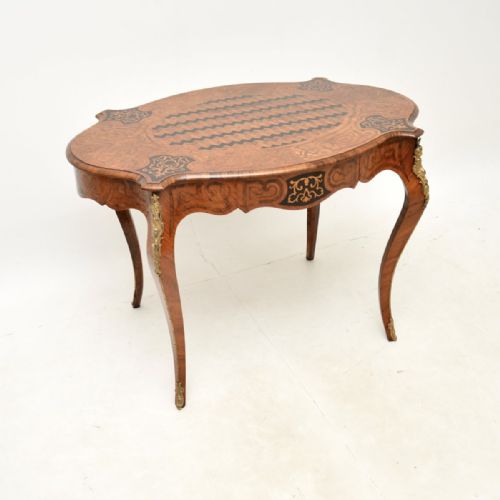
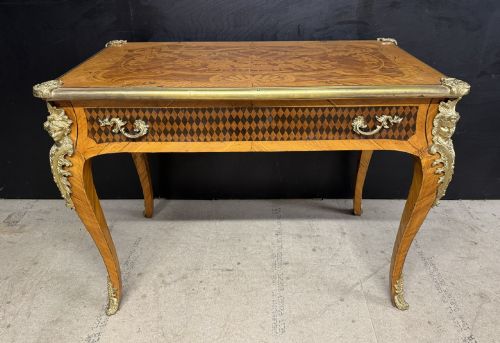
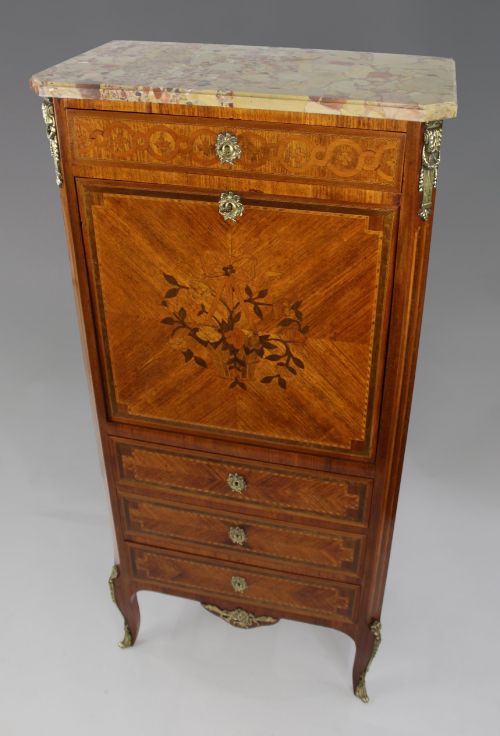
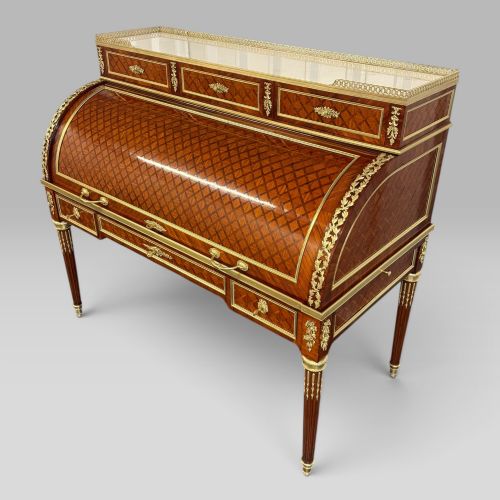
Craftsmen utilised exotic timbers such as kingwood, rosewood, tulipwood, and mahogany as veneers over robust secondary woods. Parquetry and marquetry arrangements create geometric patterns and floral motifs across the writing surfaces and drawers.
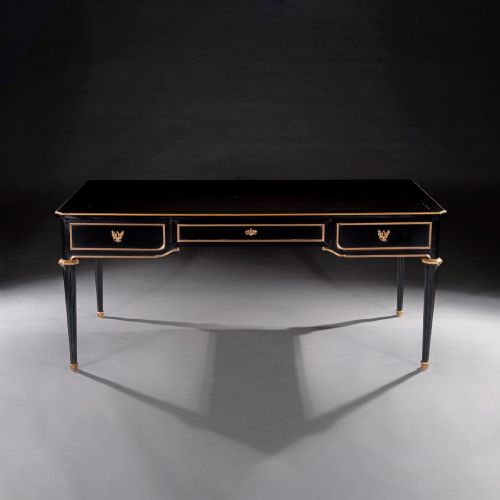
Ormolu and gilt bronze mounts decorate corners, aprons, and legs, accentuating the contours of each piece. Leather writing inserts provide a functional surface for correspondence, frequently bordered with gilt tooling.
Listings feature walnut, mahogany, and kingwood alongside ormolu mounts and leather writing surfaces across nineteenth-century styles.
Indicators of Excellence
The precision of the parquetry inlay and the crispness of the cast ormolu mounts distinguish finer pieces from standard production. Artisans who executed works for prominent makers employed heavier bronze casting and meticulous wood selection.
Original fittings, such as working locks and matching keys, contribute to the integrity of a bureau. The fluidity of the curved veneers around serpentine frames indicates the skill invested in the construction.
François Linke·Edwards & Roberts·CH Jeanselme & Co·JAS Shoolbred
The French Style Writing Bureau Glossary
- Bureau Plat
- A freestanding writing table fitted with one or more drawers in the frieze. These desks were designed to stand away from walls in the centre of a room.
- Bonheur-du-Jour
- A small, light ladies writing desk featuring a small cabinet or set of drawers on the upper surface. This form gained popularity during the mid-nineteenth century.
- Ormolu
- Gilt bronze mounts applied to furniture for decorative accent. The technique involves treating brass or bronze with an amalgam of gold.
- Parquetry
- Geometric patterns formed by fitting veneer pieces together on a surface. Artisans utilised contrasting timbers to create visual depth.
- Secretaire
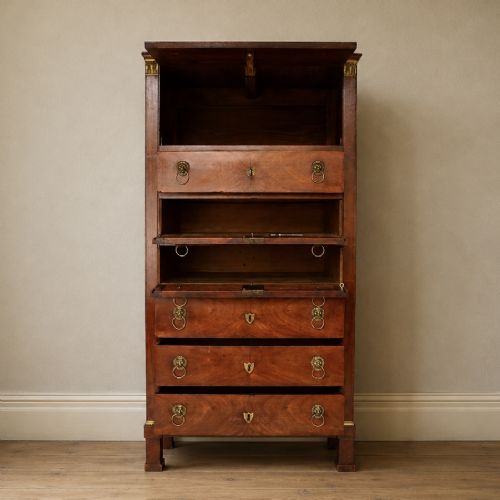
- A writing cabinet featuring a drop-front panel that conceals a fitted interior of small drawers and pigeonholes. Certain versions incorporate secret compartments.
French Style Writing Bureau: Frequently Asked Questions
Where should I place a bureau plat?
A bureau plat functions best when positioned in the centre of a room because the back is finished with the same attention as the front. This placement allows the desk to serve as a focal point.
Sufficient clearance around the piece is necessary to access the frieze drawers and accommodate a chair comfortably.
How do I care for the leather top?
Leather writing surfaces require gentle cleaning with a slightly damp cloth followed by a neutral leather cream to maintain suppleness. Avoid harsh chemical cleaners that can strip the gold tooling.
Keeping the leather away from direct sunlight prevents the material from drying out and fading prematurely.
How do I distinguish Louis XV from Louis XVI style?
Louis XV style pieces rely on asymmetrical curves, cabriole legs, and elaborate rococo floral marquetry. The overall aesthetic prioritises flowing organic lines.
LouisXVI style introduces neoclassical symmetry, straight tapered fluted legs, and geometric parquetry inspired by ancient architectural motifs.