


French Style Work Table
These French style work table pieces bring decorative ingenuity and refined storage to a room.
French Style Work Table
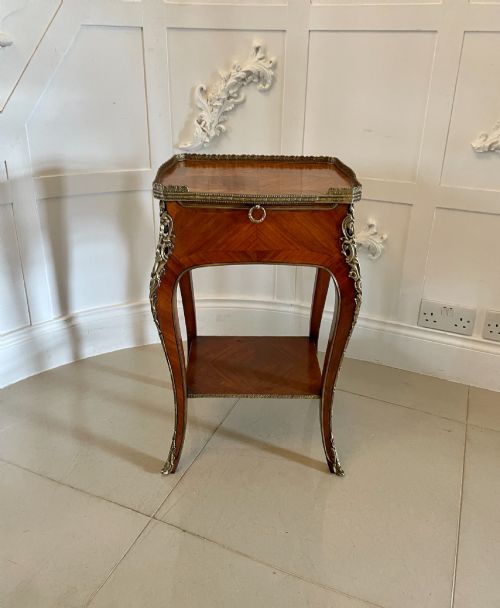
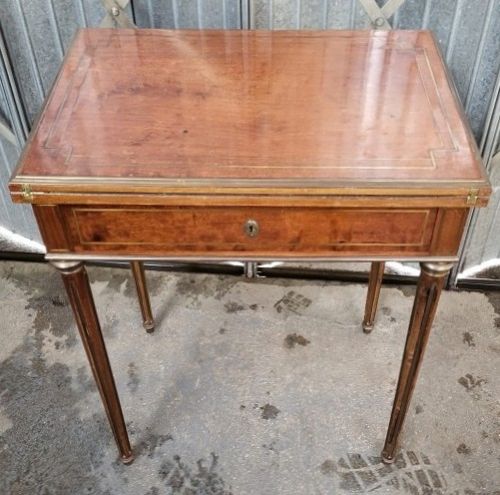
A french style work table combines compact display surfaces with fitted compartments for sewing, writing or dressing, designed in revival aesthetics from the nineteenth century onward.
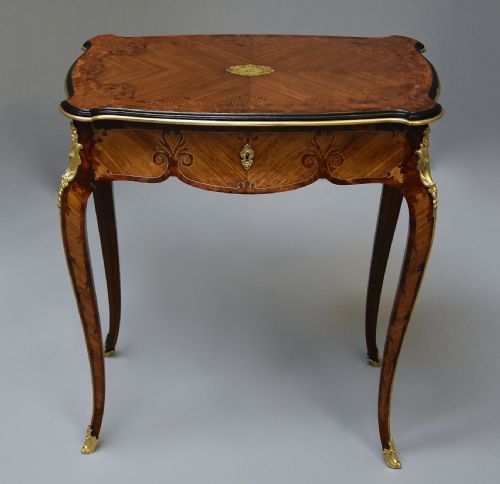
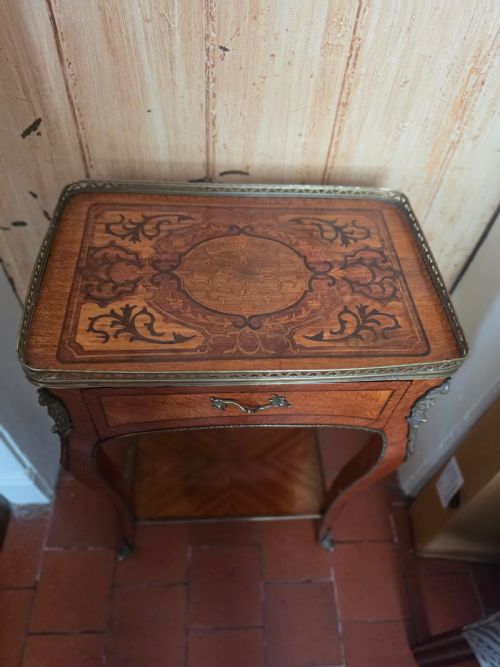
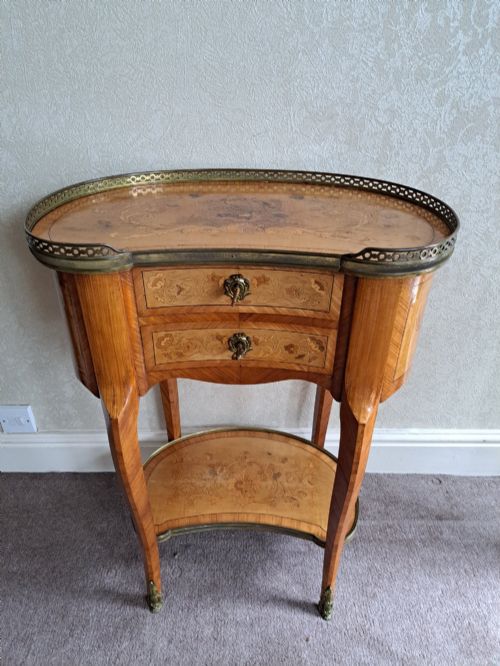
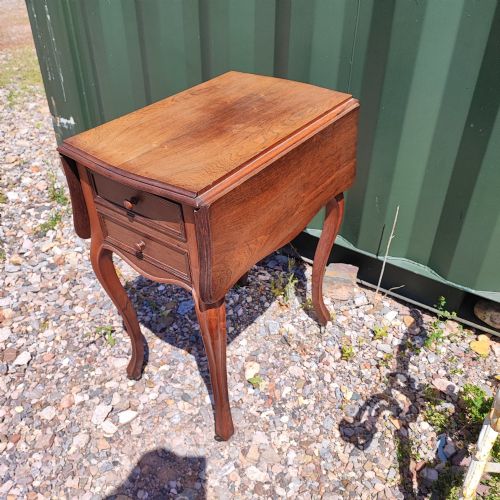
Buyers encounter walnut, kingwood and rosewood examples featuring marquetry inlay or porcelain plaques, often configured with drop leaves or internal trays.
Forms span from freestanding occasional pieces to combined poudreuse and sewing tables originating in nineteenth century workshops and later revival periods.
Materials and construction
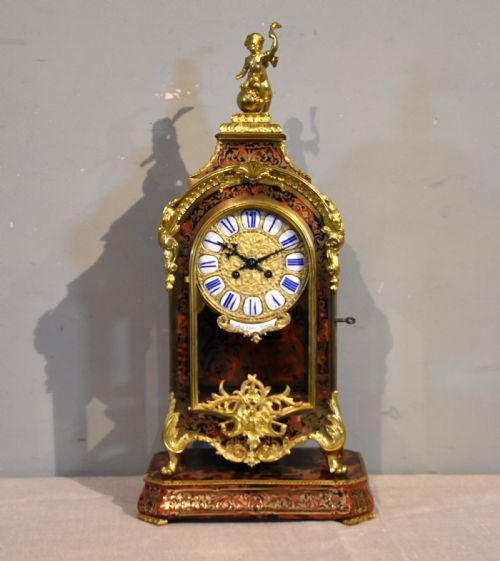
Cabinet makers utilised dense hardwoods like kingwood, walnut and rosewood as a base for intricate marquetry and boulle work.
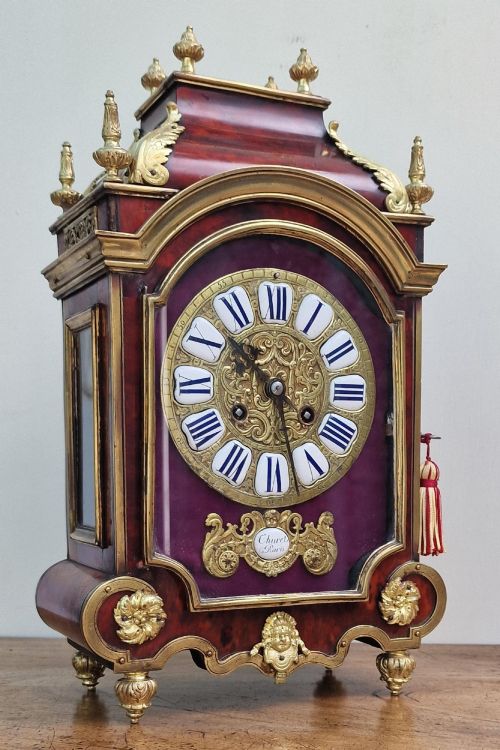
Ormolu, brass and gilt bronze mounts define the angles and borders, cast and chased to accentuate the curved lines of revival designs.
Internal mechanisms employ sophisticated linkages for drop leaves, folding tops and sliding compartments hidden beneath the primary surface.
Listings feature nineteenth century dates alongside Victorian, Edwardian and Art Deco periods, employing kingwood, walnut, brass and ormolu.
Variations in quality
The sophistication of the internal mechanism dictates the grade of a piece, separating simple boxes from complex metamorphic tables.
The crispness of the gilt bronze mounts and the precision of the timber marquetry determine the standard of workshop execution.
Originality of fitted interior compartments and the integration of porcelain plaques elevate the finish.
Thuret Paris·Lacroix Lalique·Schneider·Maison Millet·Charles Topino
The French Style Work Table Glossary
- Marquetry
- Decorative veneer patterns assembled from various woods to form pictorial or geometric designs. It covers the flat surfaces of many nineteenth century tables.
- Ormolu
- Gilded bronze applied as decorative mounts to furniture edges and corners. This technique adds metallic contrast to dark timbers.
- Poudreuse
- A combination dressing and work table fitted with a mirror and compartments for cosmetics. These pieces date predominantly to the Victorian and nineteenth century periods.
- Boulle
- Marquetry technique utilising tortoiseshell and brass inlay developed in France. It creates a contrasting pattern across cabinet surfaces.
French Style Work Table: Frequently Asked Questions
What was a work table used for?
These tables served women for needlework, sewing and letter writing, keeping materials organised inside fitted compartments beneath the lid.
They doubled as decorative occasional furniture in drawing rooms and boudoirs during the nineteenth century.
How do I identify a French revival piece?
Look for characteristic timber veneers such as kingwood and walnut combined with cast ormolu mounts and marquetry inlay.
Proportions typically follow Louis XV or Louis XVI revival patterns featuring curved cabriole legs or straight tapered supports.
Are the interiors usually fitted?
Many examples contain original compartmented trays, velvet lined wells or sliding drawers designed for sewing implements.
Some variations combine writing surfaces with dressing mirrors for multi-purpose use in private rooms.
How do I care for kingwood and marquetry?
Keep wooden surfaces away from direct sunlight and heat sources to prevent timber shrinkage and veneer lifting.
Apply traditional wax polish sparingly and buff with a soft cloth to maintain the grain.