

French Style Settee
When you search for a french style settee, you are looking at seating shaped by historical revival styles and traditional craftsmanship.
French Style Settee
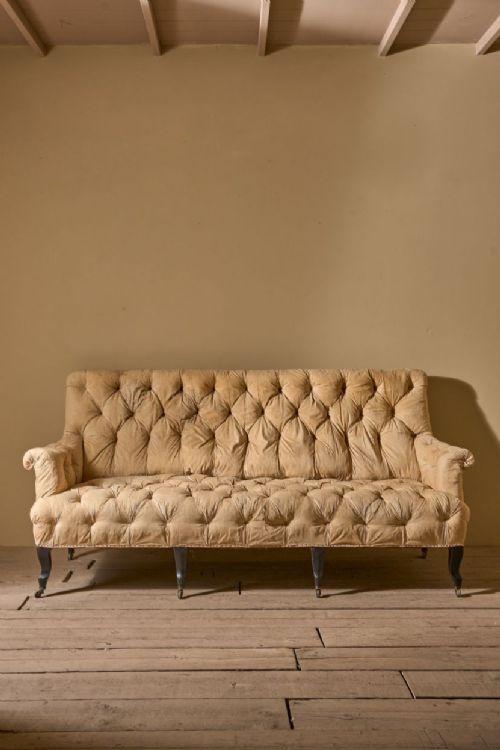
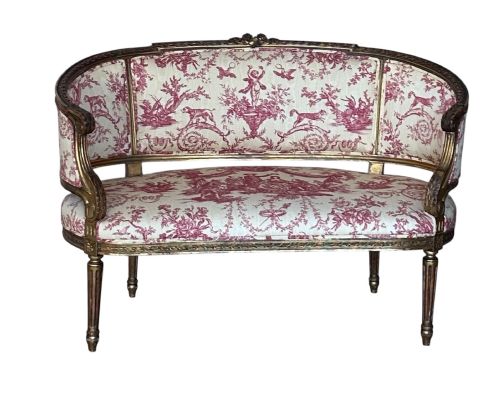
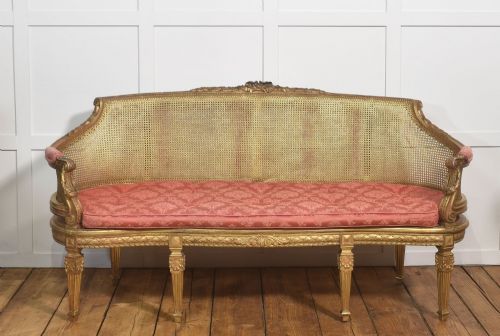
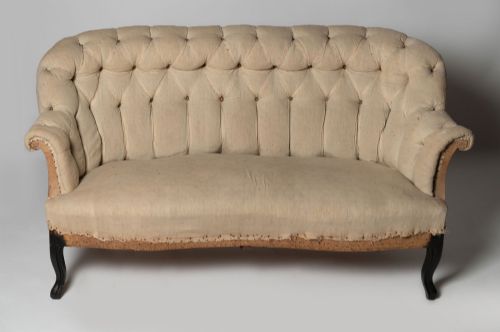
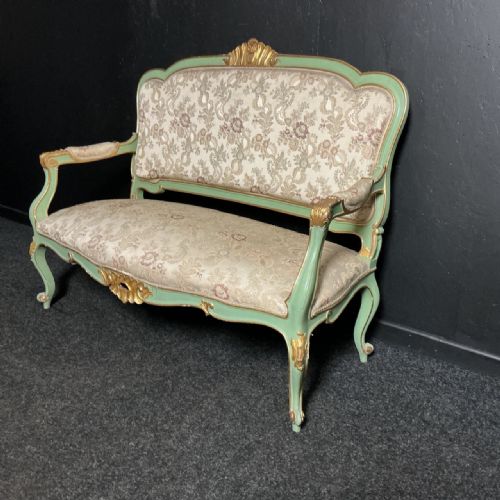
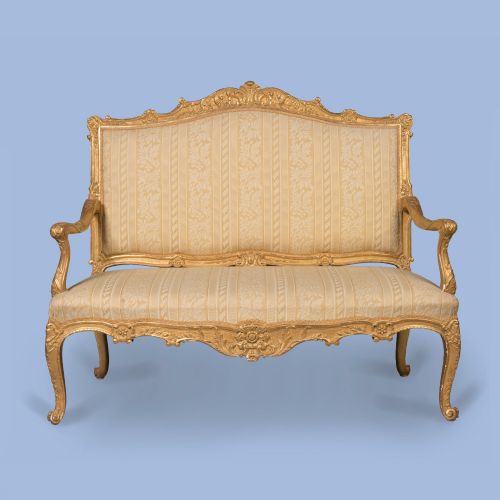
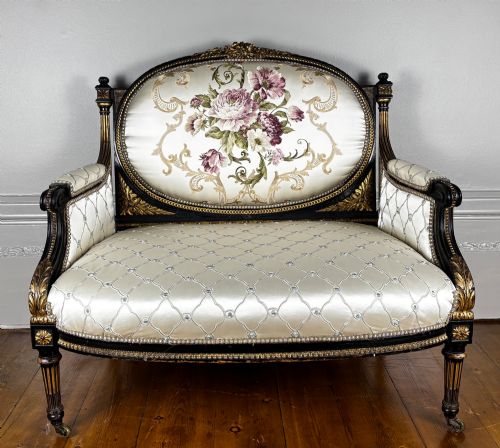
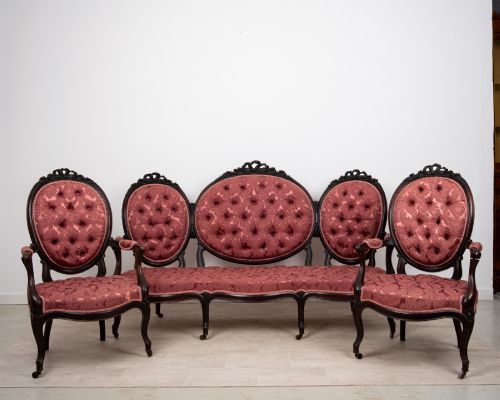
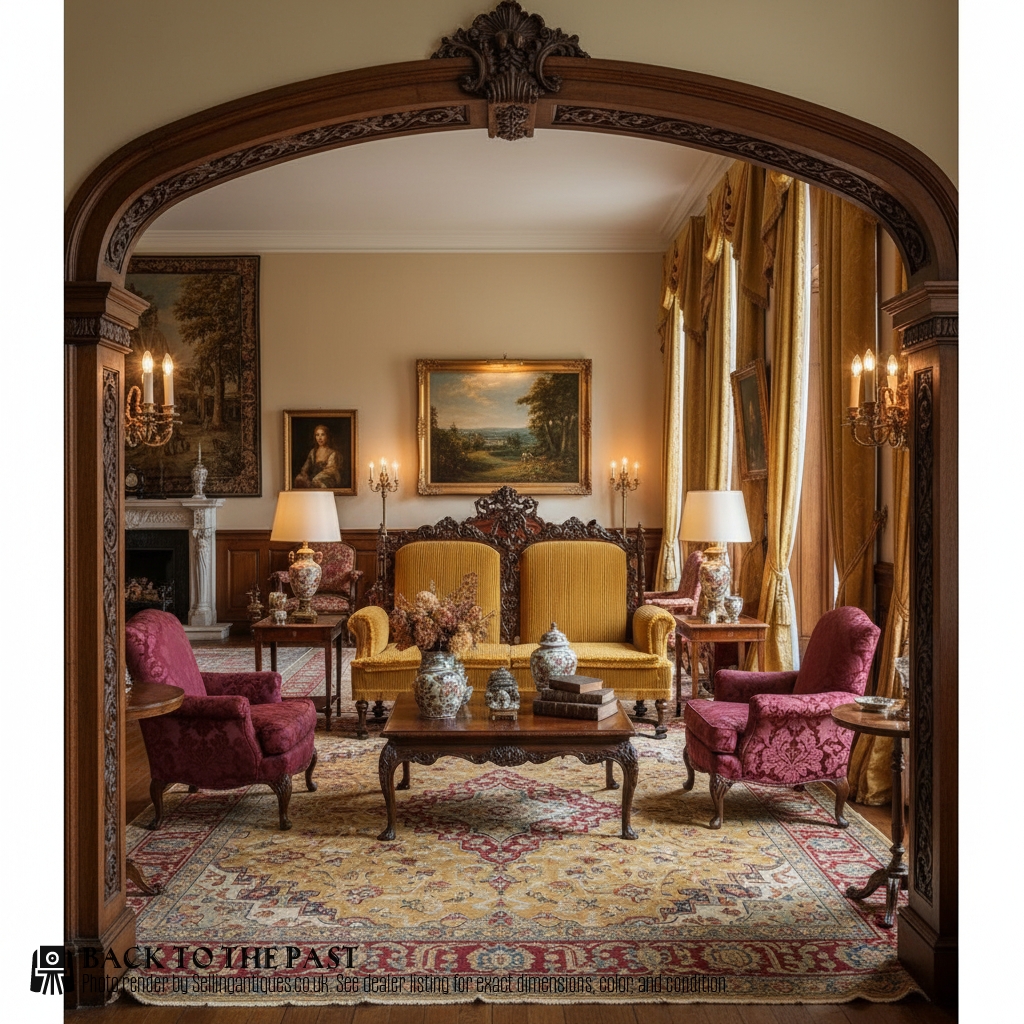
A french style settee encompasses multi-seater upholstered and framed couches drawing inspiration from historical periods such as the Louis XV and Louis XVI reigns. These pieces frequently appear in nineteenth century interpretations and revivals, including Napoleon III buttoned designs and giltwood canapés.
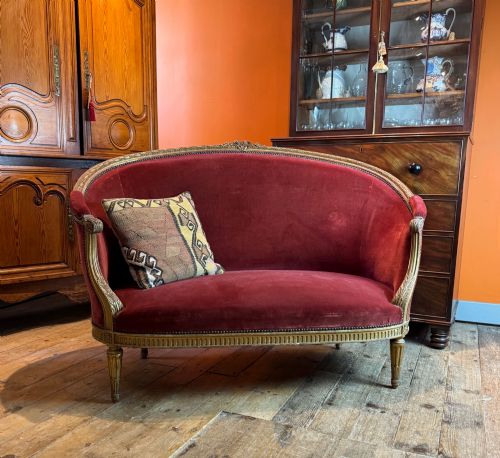
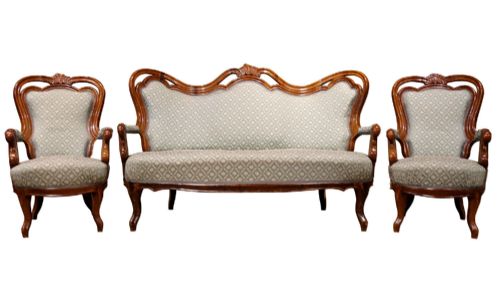
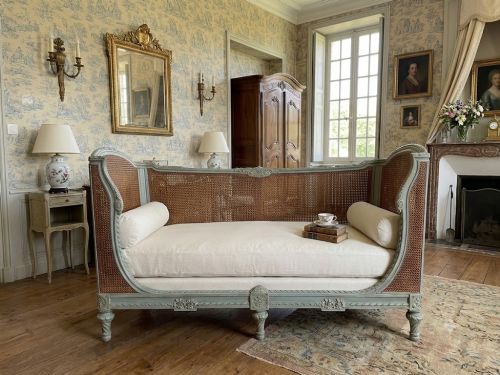
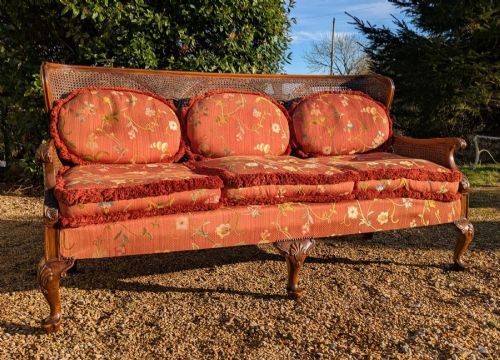
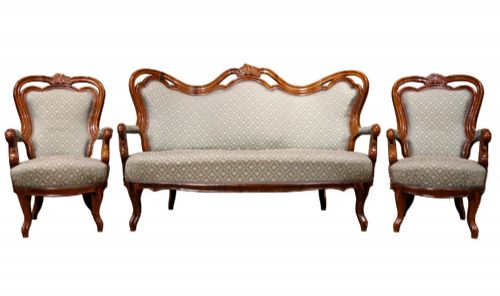
The selection ranges from grand salon suites and three-seater couches to intimate two-seat boudoir love seats and cane-backed day beds. Most examples demonstrate classical carving, exposed wooden frames, and proportions suited to formal entertaining or parlour use.
Buyers encounter frequent variations in decorative finish, spanning from natural walnut and mahogany to painted wood, ebonised surfaces, and giltwood. Many pieces incorporate cane panels, feather cushions, or deep buttoned upholstery across backrests and seats.
How they were made
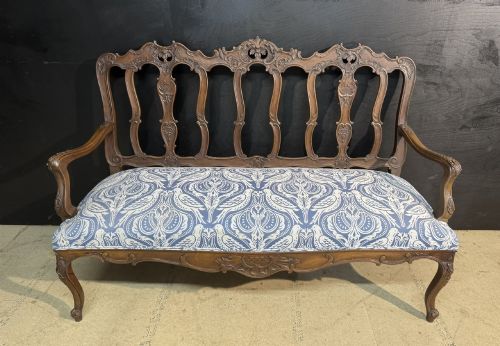
Makers shaped these frames from solid timbers including walnut, mahogany, beech, and giltwood, applying hand-carved ornamentation to crest rails, arms, and legs. Structural joinery relied on traditional carpentry methods to support curved cabriole legs, fluted uprights, or ormolu mounts.
Upholstery techniques involved webbed foundations, stuffed padding, and coverings in silk, velvet, tapestry, or fabric secured with careful tacking. Canework frames utilised woven cane inserts on backs and seat panels to provide lightweight structural support.
French Style Settee Retail Price Guide 2026
Typical asking prices for french style settee among the pieces listed under this phrase on Sellingantiques today, from the lower quarter to the upper quarter. They describe what is for sale here now, not the wider market.
Some nineteenth-century boudoir settees were specifically proportioned with shorter seats so ladies could sit comfortably without crushing their elaborate trailing skirts.
What varies in quality
The standard of carving determines much of the visual merit, distinguishing crisp, deep hand-chiselled foliage and scrollwork from softer, shallower machine shaping. Wood selection and finish execution also divide pieces, with genuine fire gilding or careful paint layering offering greater depth than basic modern applications.
Structural integrity depends on the rigidity of the original timber frame and the quality of the joining work at stress points like legs and arm joints. Upholstery standard varies from commercial re-covering to traditional sprung builds utilising original hair stuffing and period-appropriate textiles.

The French Style Settee Glossary
- Canapé
- An upholstered sofa or settee featuring an exposed wooden frame, commonly associated with eighteenth-century French designs. These seating forms often display carved rails and padded armrests.
- Giltwood
- Timber coated with a thin layer of gold leaf or gilt paint for a decorative metallic finish. This treatment was standard on formal salon furniture during revival periods.
- Cabriole leg
- A furniture leg that curves outward and then tapers inward with a pad or scroll foot, mimicking animal limbs. It appears frequently on Louis XV style seating.
- Ormolu
- Cast bronze mounted details finished with high-purity gold gilding, applied to enhance neoclassical and Empire style frames. These decorative mounts highlight structural corners and aprons.
- Corbeille
- A furniture style featuring a rounded, basket-like curved back enclosing the sitter. Canapé corbeille designs wrap continuously from the backrest into the arms.
French Style Settee: Frequently Asked Questions
What is a french style settee?
A french style settee is an upholstered couch or sofa that emulates historical design periods such as Louis XV, Louis XVI, or Empire. These pieces use carved wooden frames, exposed legs, and traditional upholstery.
They serve as decorative seating options in living spaces, hallways, or bedrooms, offering distinct historical character compared to standard modern sofas.
How do I identify Louis XV and Louis XVI styles?
Louis XV style settees feature asymmetrical curves, floral carvings, and sinuous cabriole legs. Louis XVI style pieces display straight lines, symmetry, fluted legs, and neoclassical geometric motifs.
Looking at the leg shape and frame silhouette provides the quickest visual distinction between these two major French design periods.
Where were these settees used originally?
These settees functioned as primary seating within formal reception rooms, salons, and private boudoirs of grand houses. They provided comfortable seating for conversation and social gatherings.
Today, homeowners place them in sitting rooms, studies, or large entrance hallways as statement focal points.
Are these settees comfortable for daily lounging?
Many nineteenth-century and revival settees offer firm support due to traditional stuffed padding and webbed bases. Some feature deep buttoning or feather cushions for added softness.
They suit formal sitting areas and reading spaces rather than casual lounging, though cushion firmness varies significantly by individual piece.