


French Style Server
These french style server pieces bring monumental proportions and marble surfaces to dining and living spaces, offering both display space and deep storage.

French Style Server
A french style server encompasses substantial case pieces designed for storage and presentation, spanning formats like sideboards, buffets, console tables, and serving tables. The selection draws heavily from the nineteenth century alongside eighteenth-century examples, incorporating regional interpretations from provincial workshops to grand chateau designs.
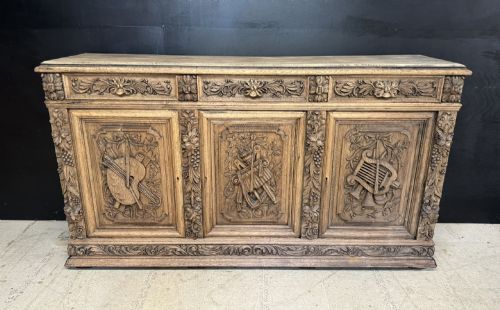
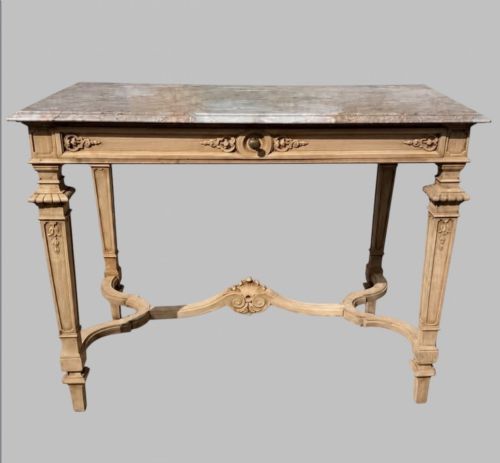
The most frequent form encountered is the marble-topped buffet or sideboard, frequently styled after the Louis periods, Empire, or Directoire aesthetics. These items balance utility with distinct architectural presence through carved timber frames and stone surfaces.
Materials and construction
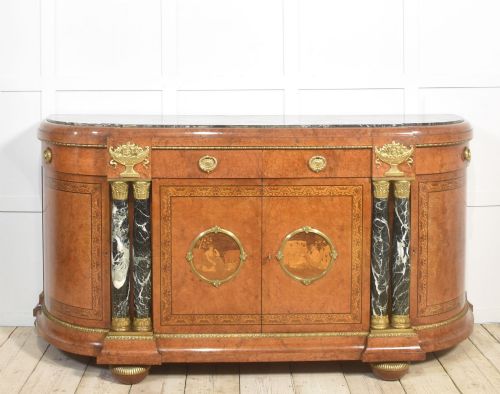
Cabinet makers built these pieces using dense hardwoods such as oak, walnut, mahogany, cherrywood, and burr walnut, occasionally applying intricate parquetry or birds-eye maple veneers. Heavy stone slabs, particularly marble, form the working or display surface on top of many tables and buffets.
Decorative metalwork defines much of the ornamentation, utilising cast ormolu mounts, brass details, and solid silver elements on select serving pieces. Structural joinery relies on traditional framing methods suited to large case furniture and tables.
Periods represented span from the eighteenth century through the Victorian era and into the early twentieth century.
Judging quality in execution
Quality reveals itself in the crispness of hand-carving on timber panels and the precision of the joinery across large case pieces. Superior examples feature deeply figured woods like burr walnut or meticulously matched veneers rather than plain flat surfaces.
The integration of heavy marble tops and the weight of cast ormolu mounts signal the tier of the piece. Finer workshops employed heavier gauge mounts and superior stone selections that align with the architectural ambition of the design.
KRIEGER of Paris·Gillows·Melissa White
The French Style Server Glossary
- Ormolu
- Gilded bronze mounts applied to furniture for decorative enrichment. These metallic accents catch the light and highlight the corners of doors and drawers.
- Parquetry
- Geometric wood-mosaic work used for flooring or cabinet tops. It creates patterned surfaces using contrasting timber grains.
- Buffet
- A sideboard or cabinet used for storing and serving food. These pieces provide substantial surface area and enclosed shelving.
- Console table
- A table fixed to a wall or supported by front console brackets. They often feature marble tops and slim proportions for hallway or living room placement.
- Chiffonier
- A narrow tall sideboard or cabinet with drawers and shelves. This form emerged during the nineteenth century for compact storage.
French Style Server: Frequently Asked Questions
What is a french style server used for?
These items serve primarily as storage cabinets and display surfaces in dining rooms and grand hallways. They hold dinnerware, linens, and serving items while providing a flat top for food presentation.
In living spaces, console and side table variants support decorative objects, lamps, and collections. Their substantial proportions make them focal points within a room's layout.
How do I identify the period of a server?
Dating relies on combining the stylistic vocabulary, such as Louis XV curves, Empire symmetry, or Directoire restraint, with the construction methods visible in the timber. Eighteenth-century pieces typically show hand-pit-saw marks and pegged joinery.
Later nineteenth-century revivals incorporate machine-sawn elements alongside historical ornamentation. The presence of specific hardware styles and marble edge profiles also helps pinpoint the era of manufacture.
Are these servers made of solid wood?
Construction methods vary between solid timbers like oak, walnut, and cherrywood, and underlying carcases faced with veneers. Burr walnut and exotic woods were often applied as veneers over stable secondary woods to display dramatic grain patterns.
Heavier items utilise solid construction for structural frames, especially in provincial pieces. The evidence records both solid wood builds and sophisticated veneered surfaces.
How do I care for marble-topped servers?
Marble surfaces require gentle cleaning with neutral soap and water to avoid dulling the polished stone finish. Acidic liquids like wine or citrus should be wiped away immediately to prevent permanent etching.
Waxing the wooden frames periodically helps maintain the timber's condition without affecting the stone insert. Proper placement away from direct heat sources protects both the wood and the stone from thermal shock.