


French Style Painted Drawers
French style painted drawers bring continental elegance and muted colour into a room, spanning rustic provincial forms and ornate revival pieces.
French Style Painted Drawers
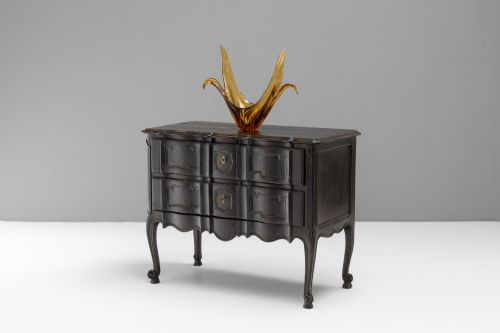
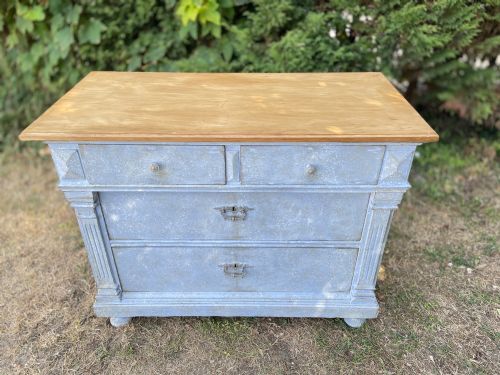
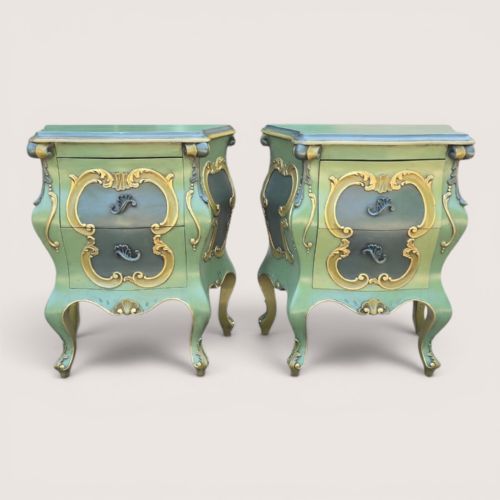
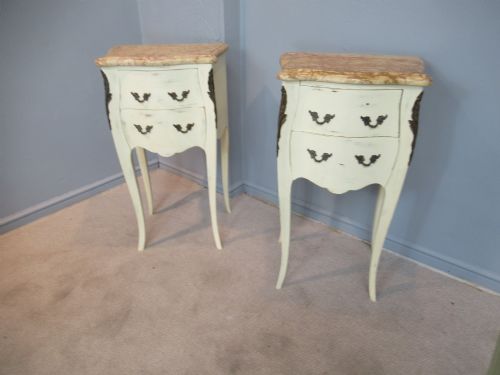
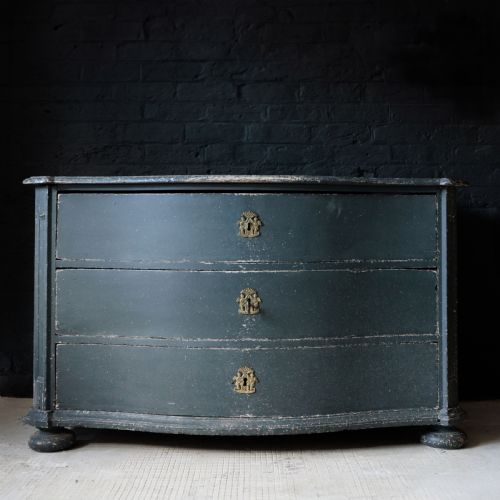
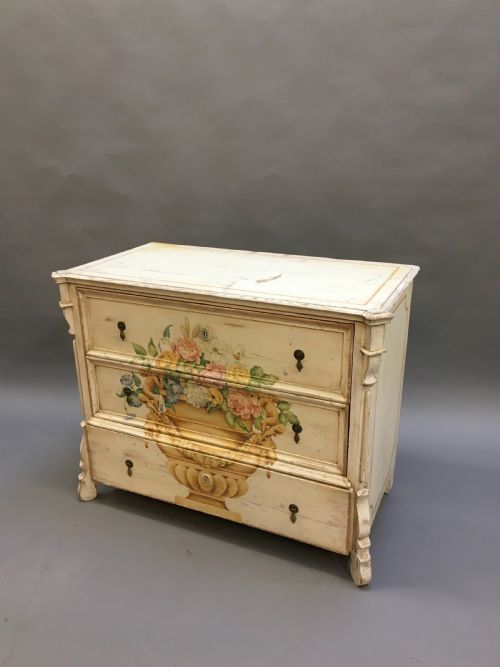
When you search for french style painted drawers, you encounter a varied selection of storage furniture ranging from grand commodes to compact bedside tables and tall chests. The material evidence on this page draws heavily from the nineteenth and early twentieth centuries, alongside eighteenth-century examples.
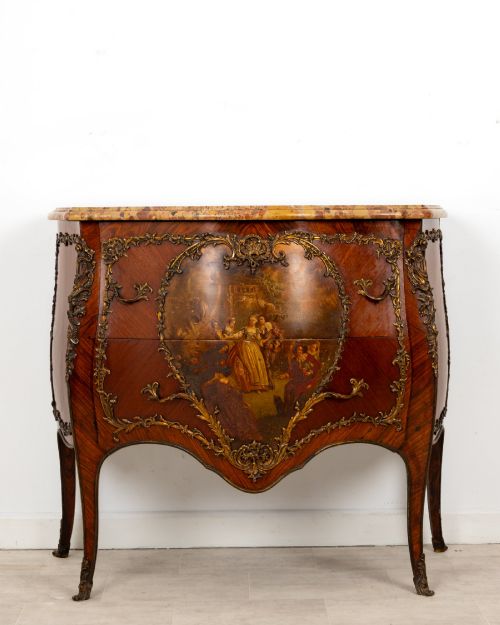
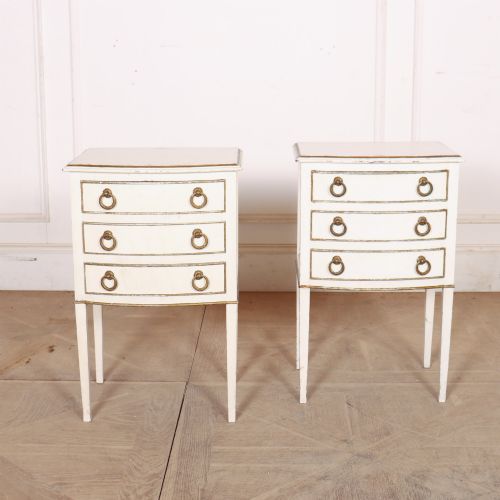
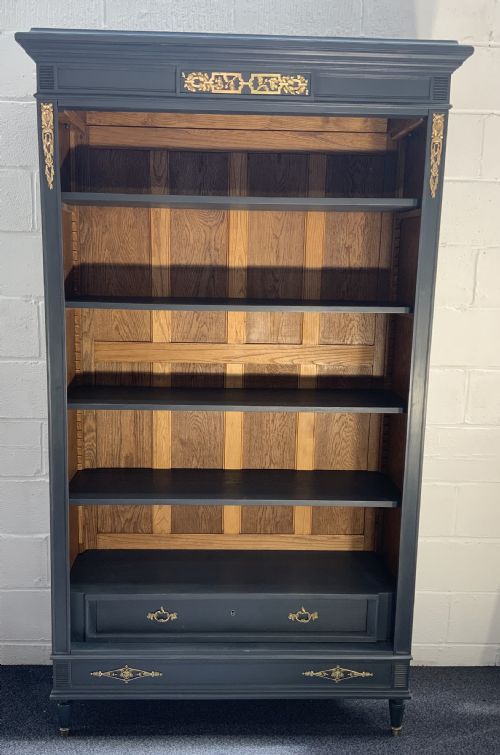
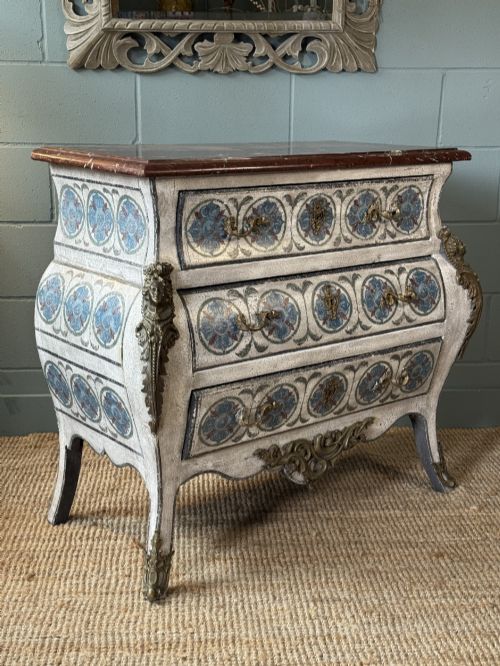
The dominant forms include commodes with serpentine or bombe fronts, alongside pairs of bedside chests, console tables, and bookcases. These pieces reflect stylistic traditions such as Louis XV and Louis XVI revivals, French Provincial, Gustavian, and Rococo designs.
Many items combine painted wooden surfaces with contrasting elements like marble tops or brass embellishments. Both original period paint and later decorative applications appear across the selection.
How they were made
Carpenters utilised solid woods such as oak, pine, and exotic timbers like kingwood, constructing carcases designed to support heavy marble and faux marble tops. Carving, brass mountings, and gilt-bronze details were applied to elevate the architectural presence of the commodes and cabinets.
Surface decoration relies on layers of paint, sometimes incorporating intricate motifs or specialist finishes like diamond-point patterns. Brass handles, escutcheons, and mounts are secured to drawers and doors to accent the painted woodwork.
Some bedside chests hide their daily duties behind impeccably curved French facades, refusing to look like mere storage.
What varies in quality
Quality reveals itself in the harmony of the proportions, the crispness of the carved ornamentation, and the integration of secondary materials like marble and brass. Pieces originating from dedicated cabinet-making centres in Paris display refined joinery and sophisticated contouring on serpentine and bombe frames.
The character of the painted finish also distinguishes the selection, with original period surfaces carrying a different historical value compared to later decorative interventions. Superior examples maintain structural integrity in their drawer construction while preserving the subtlety of their stylistic revival details.
The French Style Painted Drawers Glossary
- Commode
- A low chest of drawers, often associated with French cabinet-making of the eighteenth and nineteenth centuries. These pieces typically feature serpentine or bombe fronts.
- Bombe
- A swelling, outward-curving contour found on the sides and fronts of commodes and chests. This bulbous shape requires advanced carpentry techniques to execute.
- Serpentine
- A furniture front or top curving outward at the centre and inward at the sides in a continuous undulating line. It adds visual movement to storage pieces.
- Vernis Martin
- A type of simulated Japanese lacquer developed in France during the eighteenth century. It involves layers of varnish applied to wood surfaces.
- Gustavian
- The Swedish interpretation of French neoclassical design, characterised by lighter proportions and restrained painted finishes. It heavily influences certain chests on this page.
French Style Painted Drawers: Frequently Asked Questions
How do I date a painted commode?
Dating relies on examining the construction methods of the drawers, the type of timber used in the carcase, and the characteristics of the paint layer. Original hardware and secondary woods often provide clues to whether a piece belongs to the eighteenth century or a later nineteenth-century revival.
Stylistic markers such as Louis XV curves or Louis XVI straight tapered legs also help place the furniture within a specific period.
Are marble tops original to these chests?
Many nineteenth and twentieth-century commodes and bedside chests were designed specifically with fitted marble or faux marble tops to provide a durable surface. These stones were cut to follow the serpentine or bombe contours of the wooden carcase.
Checking the fit between the stone and the upper moulding helps determine if the top corresponds to the original manufacture of the chest.
What is the difference between provincial and revival pieces?
Provincial pieces originate from regional workshops and tend to feature simpler, sturdier construction in woods like oak or pine with straightforward painted finishes. Revival pieces, such as those from the nineteenth century, emulate court styles like Louis XV with elaborate brass mounts and curved lines.
Both categories fall under the broad umbrella of French style storage furniture.
How should I care for painted wooden surfaces?
Painted antique furniture requires gentle dusting with a soft, dry cloth to prevent accumulation of grit. Avoid harsh chemical cleaners or excessive moisture that might lift or degrade the paint layers over time.
Keeping pieces away from direct heat sources and strong sunlight preserves the stability of the wood and the tone of the paint.