


French Style Ottoman Bench
A french style ottoman bench brings architectural weight and upholstered comfort into a room through carved timber frames and low seating.
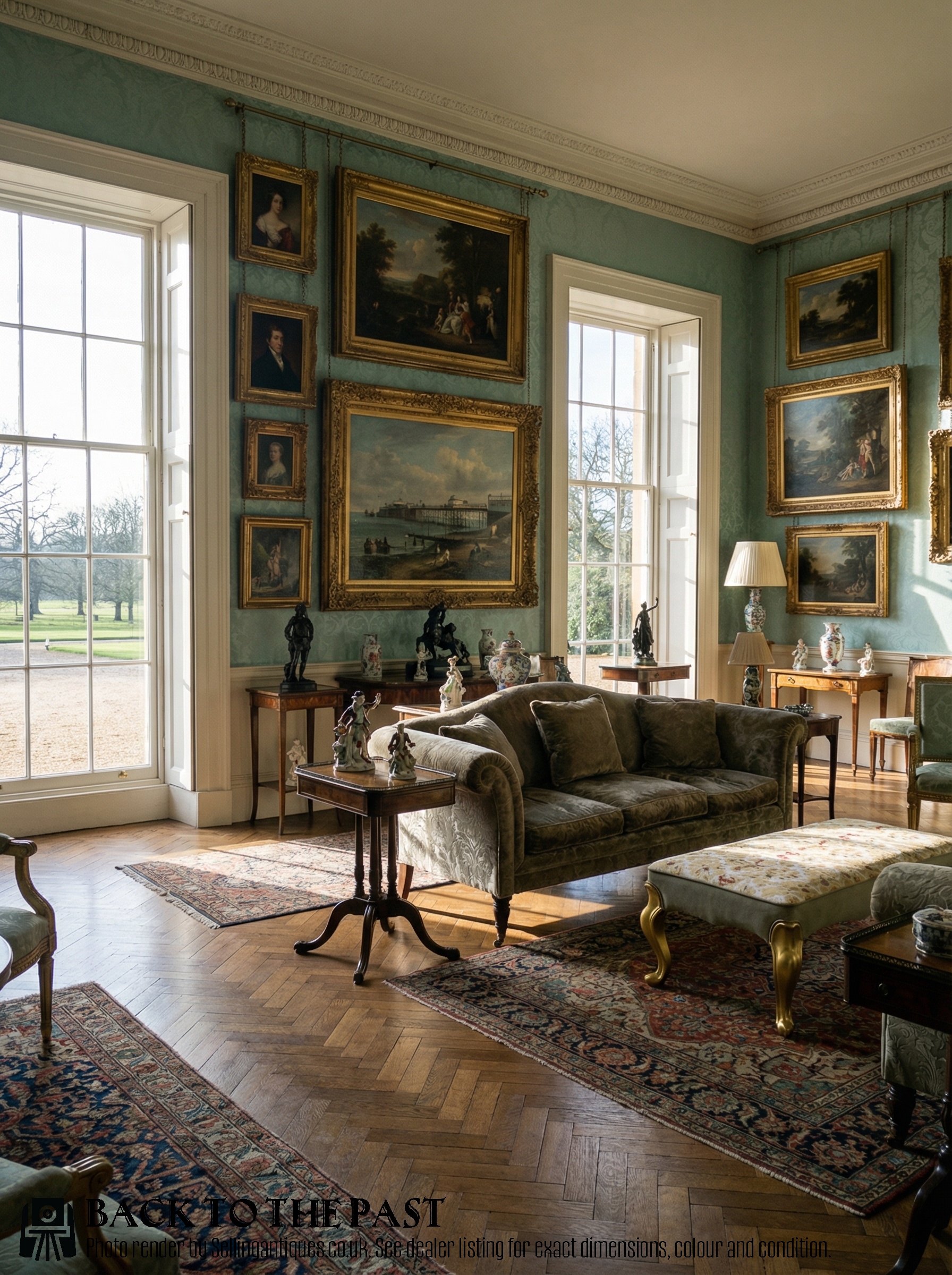
French Style Ottoman Bench
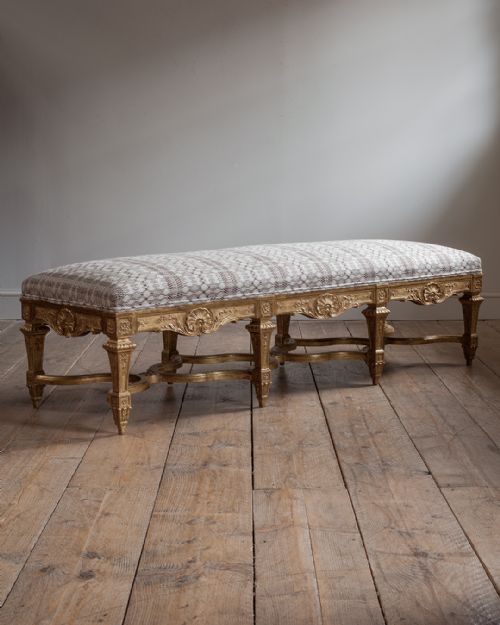
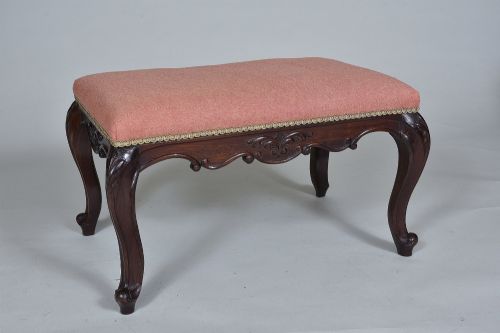
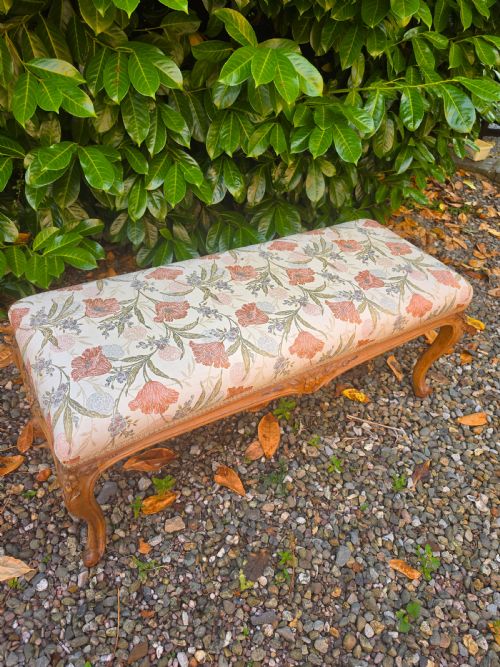
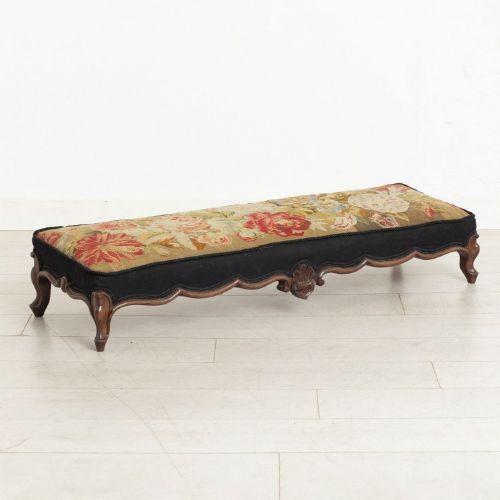
A french style ottoman bench spans low stools, footstools, window seats, and long benches originating from the nineteenth century down to the nineteen thirties. These pieces emerge across periods including the Regency era, the Victorian epoch, and revival movements such as Louis XIV and Rococo.
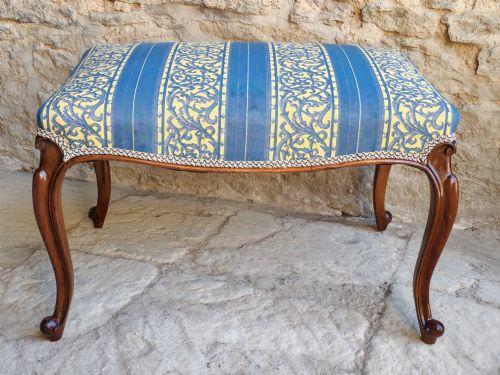
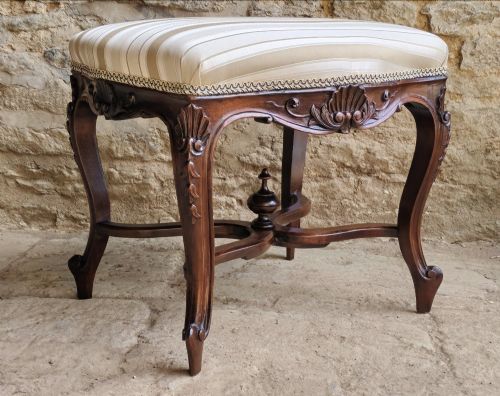
The form functions primarily as a stool or window seat, often supported by cabriole legs or rigid rectilinear frames. Walnut, mahogany, and giltwood supply the structural foundation for upholstered tops dressed in textile, linen, and original fabric.
Continental output merges with domestic Victorian adaptations to produce decorative seating intended for salons and drawing rooms. Buyers encounter painted wood finishes alongside heavily carved gilt surfaces reflecting classical design vocabularies.
Materials and construction methods
Carpenters shaped structural frames from solid hardwoods like walnut and mahogany, alongside softer timbers designated for painted or gilded decoration. Hand carving generated the ornate cabriole legs and sculptural rails characteristic of revivalist workshops.
Giltwood pieces received layers of gold leaf applied over prepared gesso grounds on carved wood bases. Upholstery relied on traditional textile coverings fixed directly to internal webbeding and stuffing materials.
Some nineteenth century makers carved giltwood with such enthusiasm that even the hidden underside received intricate floral motifs.
Differentiating quality across examples
The depth and crispness of hand carving distinguish superior framework from mechanical or simplistic shaping. Dense hardwoods like walnut provide sharper relief work than softer painted timbers.
The integrity of the original gilt surface or the preservation of early upholstery fabrics elevates the standing of an individual bench. Proportional harmony between the height of the seat and the curvature of the cabriole legs dictates structural success.
The French Style Ottoman Bench Glossary
- Cabriole leg
- A furniture leg featuring a double curve, typically arching outward at the knee and tapering inward toward the foot. This design originates from classical antiquity and defines many nineteenth century seat frames.
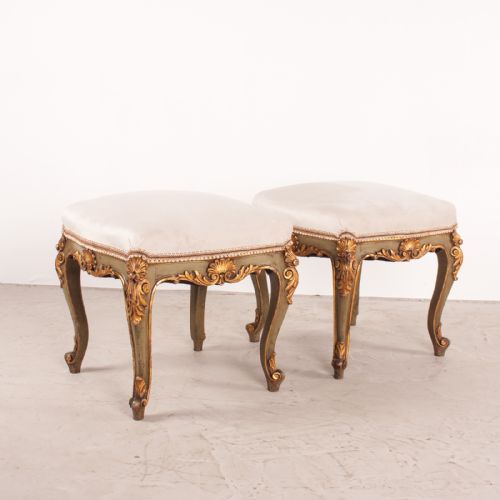
- Giltwood
- Timber coated with gold leaf or powder applied over a prepared base. It appears frequently on formal revival seating.
- Window seat
- A long, upholstered bench designed to fit within a window recess. These forms often incorporate arms or low backs.
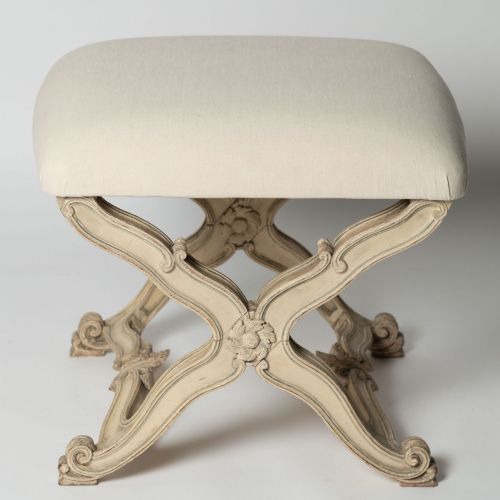
- Curule stool
- An ancient Roman stool shape featuring crossed curved legs resembling an X. Nineteenth century makers revived this form for classical interiors.
French Style Ottoman Bench: Frequently Asked Questions
Where should I place a french style ottoman bench?
These low seats function well at the foot of a bed, beneath a window, or as movable seating in a principal salon.
Their compact height allows them to sit unobtrusively in living spaces without blocking natural light or sightlines.
How do I identify a nineteenth century frame?
Examine the timber species beneath any paint or gilt, as older frames typically utilise dense walnut or mahogany. Hand-cut joinery and tool marks on hidden surfaces indicate period manufacture.
Stylistic cues such as Rococo revival curves or heavy cabriole legs point directly toward nineteenth century workshop practices.
What is the difference between a stool and an ottoman?
Stools generally feature rigid wooden frames with simple upholstered tops raised on legs. Ottomans often provide longer proportions intended for extended seating or resting feet.
Both categories overlap considerably in nineteenth century terminology and domestic application.
Can I use original fabric daily?
Original textiles provide historical context and aesthetic charm but require careful preservation if utilised constantly. Fragile linen or antique fabric responds well to gentle care and minimal friction.
Many buyers choose to protect vulnerable surfaces while retaining the underlying historical structure.