

French Style Open Armchairs
When searching for french style open armchairs, collectors find seats that combine carved wooden frames with exposed arms and period upholstery.
French Style Open Armchairs
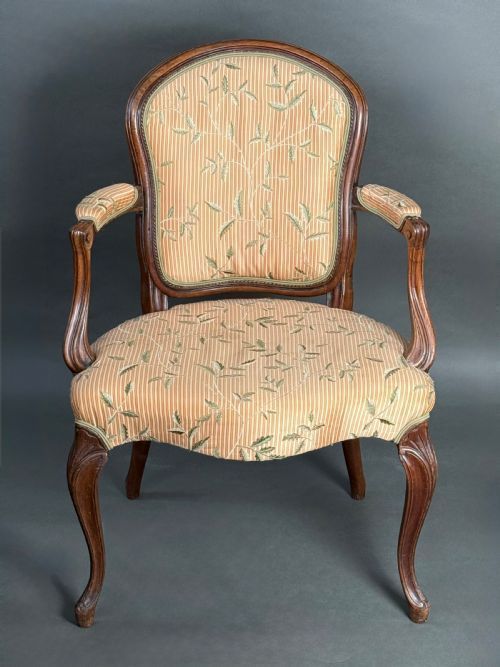
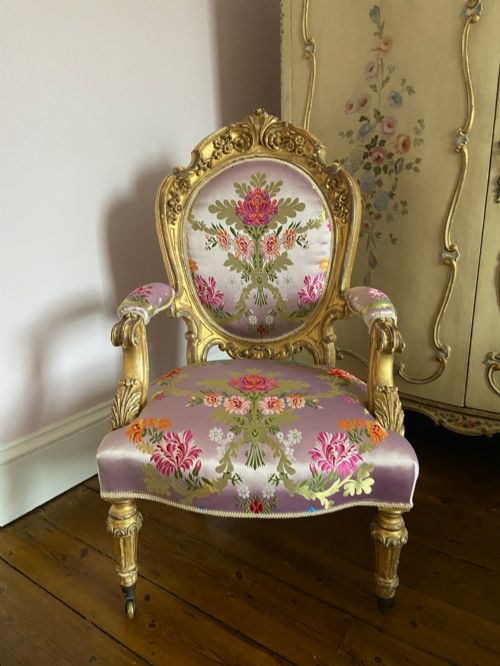
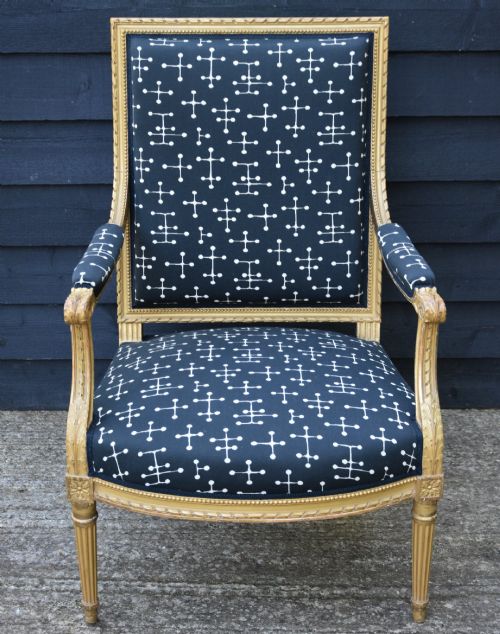
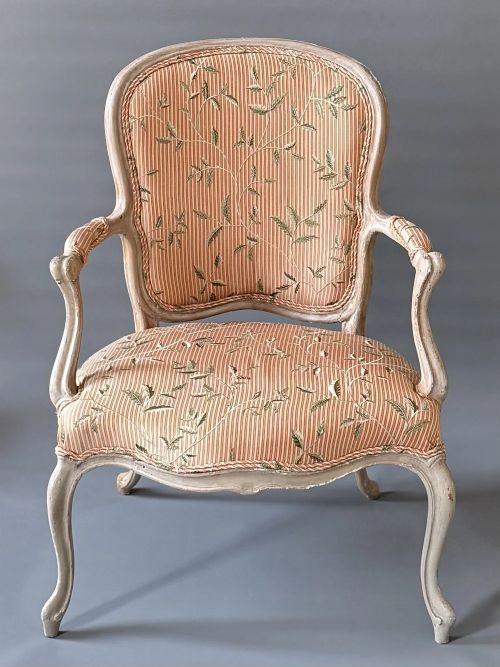
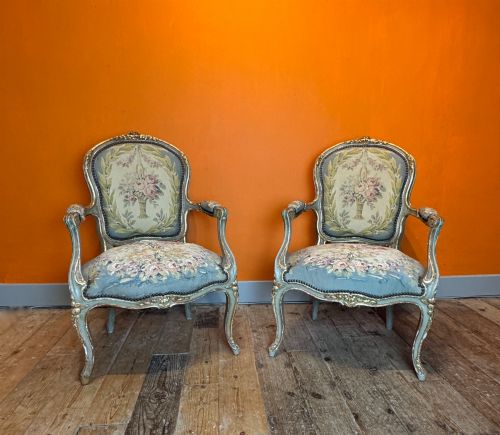
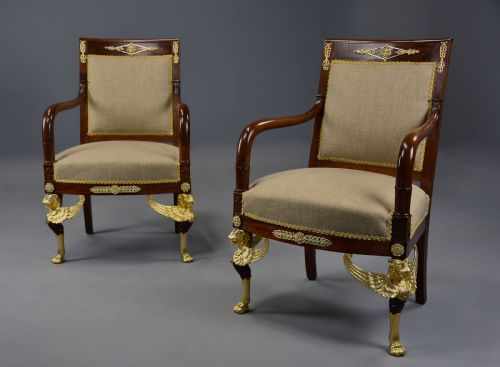
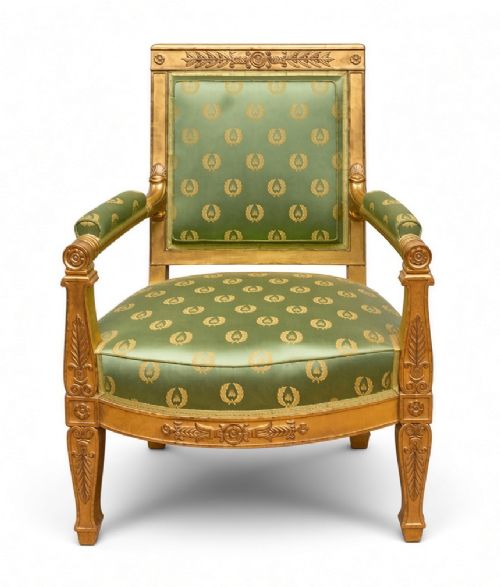
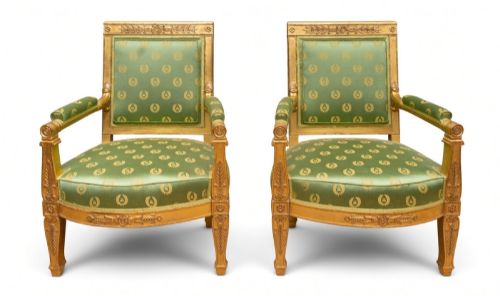
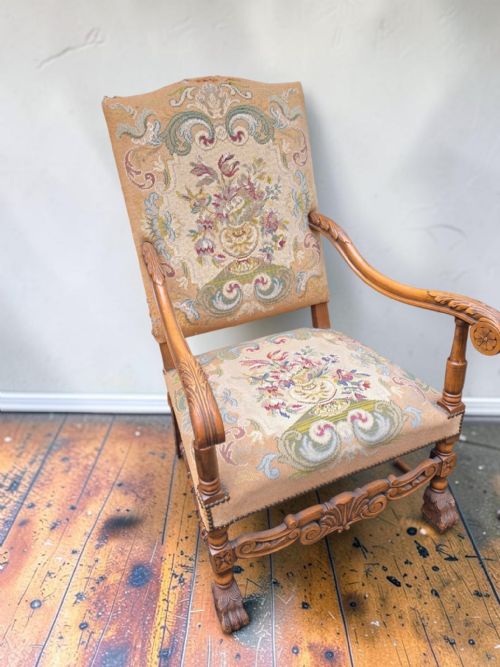
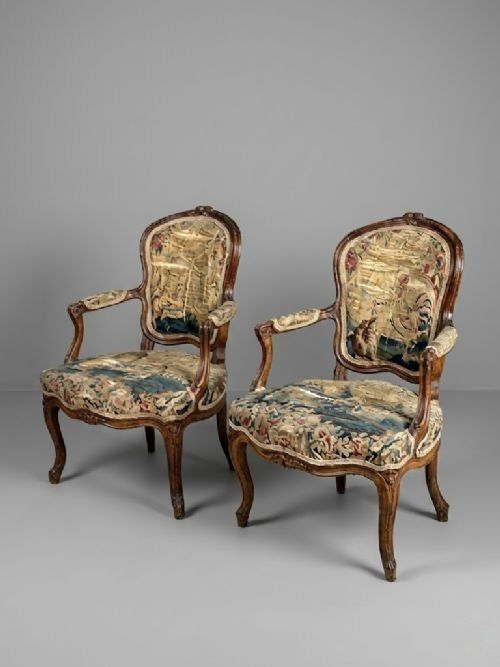
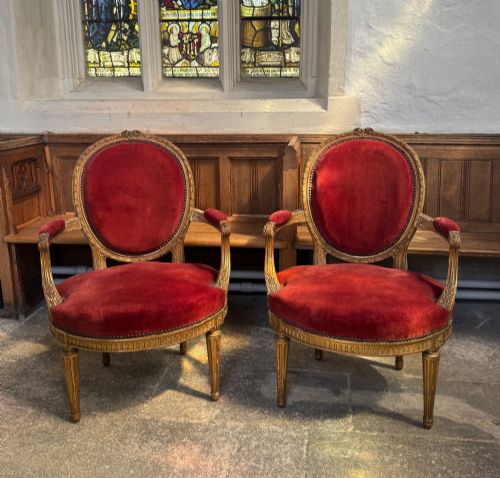
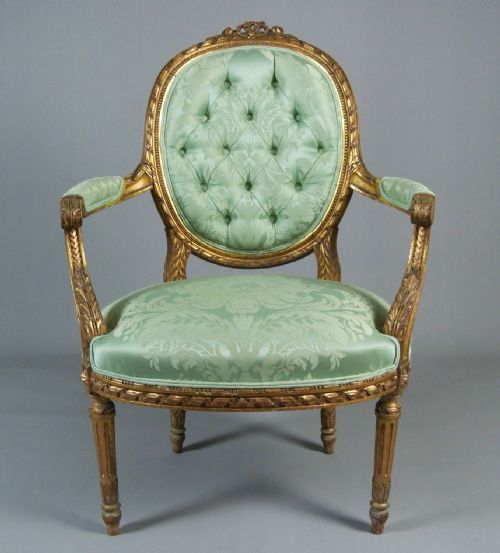
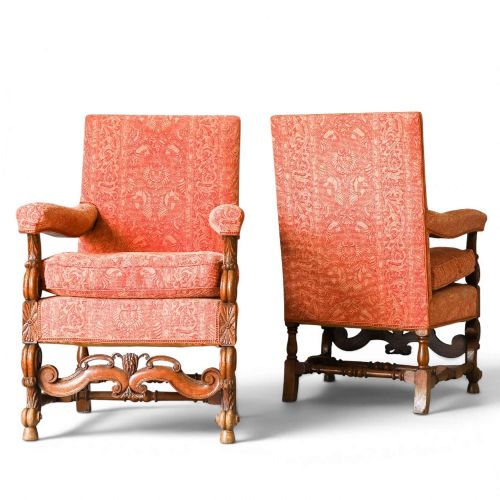
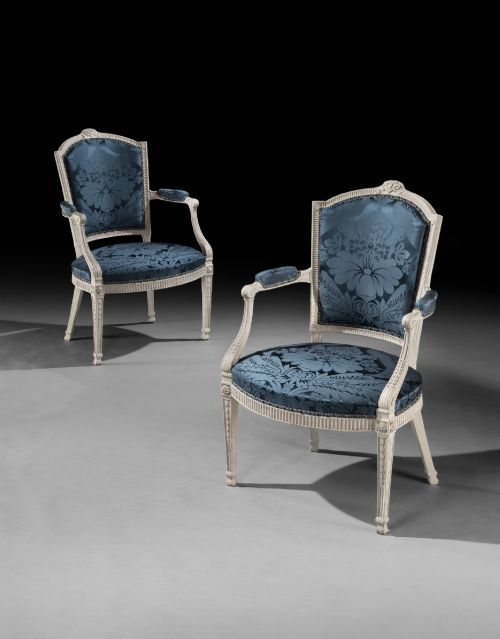
French style open armchairs, often termed fauteuils, are defined by their exposed wooden frames and open sides, separating them from fully upholstered wingbacks or club chairs. These seats appear in various iterations across this selection, from the flowing curves of Louis XV revival models to the more restrained straight lines of Louis XVI style examples.
The pieces listed span multiple eras, encompassing original 18th century examples alongside later 19th and early 20th century revivals. Buyers encounter formats ranging from single salon chairs to matched pairs and larger sets intended for formal drawing rooms.
How they were made
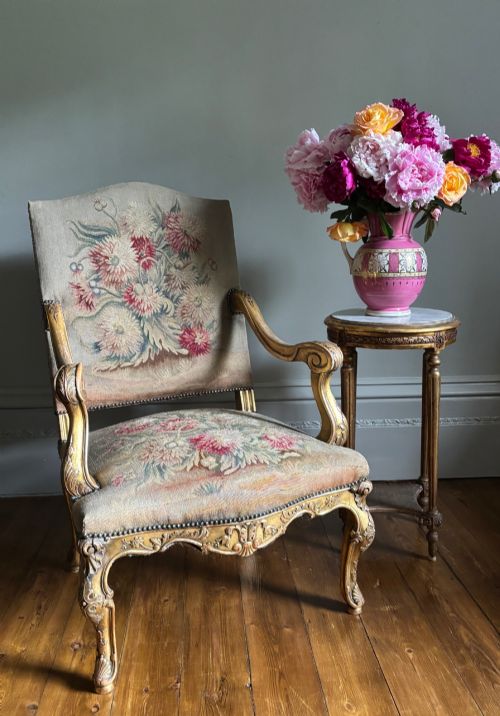
Makers constructed the structural frames of these armchairs using dense hardwoods such as beech, walnut, and oak, which provided the necessary strength for intricate hand carving. Artisans then applied surface treatments including oil gilding onto gesso, paint, or polish to finish the exposed timber.
Upholstery techniques involved traditional webbing, springs, and stuffing covered in textiles like silk, velvet, tapestry, and contemporary decorative fabrics. Brass tacks or decorative gimp often secured the fabric edges directly to the wooden rails.
Listings feature periods spanning from the 18th century up to the 1930s, alongside materials including giltwood, walnut, silk, and tapestry.
What varies in quality
The distinction between average and superior examples rests heavily on the depth and crispness of the hand carving on the wooden frame. Skillful artisans produced floral motifs, scrolling acanthus, and fluted legs with sharp relief and clean undercutting, whereas lower grade pieces display softer, shallower details.
Proportion and structural integrity further divide the range, as superior armchairs maintain balanced lines and tight joints that withstand regular use. The quality and authenticity of the textile covering, whether period tapestry or luxury silk, also influence the overall standing of an individual chair.
Jacob Desmalter·Thomas Chippendale·Blaise Maucuy
The French Style Open Armchairs Glossary
- Giltwood
- Timber that has been coated with a thin layer of gold leaf over a prepared gesso ground. This finish was widely utilised on formal salon seating to reflect candlelight.
- Bergère
- An enclosed upholstered armchair with closed sides padded and stuffed within the wooden framework. It often includes a loose upholstered seat cushion for added comfort.
- Rococo
- An 18th century design style characterised by asymmetrical ornamentation, C-scrolls, and naturalistic plant motifs. Revival versions of this aesthetic appear frequently in later 19th century seating.
- Tapestry
- A thick textile woven with pictorial or geometric designs used historically to cover high status furniture. Many surviving armchairs retain or have been restored with period-style woven covers.
French Style Open Armchairs: Frequently Asked Questions
What is a fauteuil?
A fauteuil is an open-framed French armchair featuring upholstered back and seat panels with exposed wooden arms. These chairs were designed for formal reception rooms and parlours.
The style emphasises decorative carving on the wooden framework alongside comfortable padded armrests. They differ from fully upholstered armchairs by keeping the structural wood visible on the sides.
How do I identify Louis XV style?
Louis XV style armchairs are easily recognised by their flowing asymmetric curves, cabriole legs, and carved floral motifs. The frames avoid straight lines in favour of organic serpentine shapes.
Craftsmen working in this tradition used scrolling elements and naturalistic leaf carvings that define the Rococo aesthetic. This look returned with great popularity during the 19th century revival periods.
Where were these chairs used?
These armchairs served primarily in drawing rooms, salons, and formal bedchambers of grand houses and chateaux. They provided comfortable yet elegant seating for social gatherings and conversation.
Pairs and larger sets allowed hosts to arrange seating symmetrically around a room. Their decorative backs ensured they looked attractive from every angle, even when placed away from walls.
Are these chairs comfortable for daily use?
Most of these open armchairs offer a firm sit suited to upright conversation rather than lounging. The supportive upholstered backs and padded armrests provide solid ergonomic positioning.
Comfort levels depend largely on the interior webbing and padding condition, which varies between original stuffing and modern restoration work. Many buyers successfully integrate them into contemporary living spaces as accent seating.