

French Style Bedside Cabinets
French style bedside cabinets bring continental elegance to a bedroom, offering compact storage with distinctive revival curves and decorative veneers.
French Style Bedside Cabinets
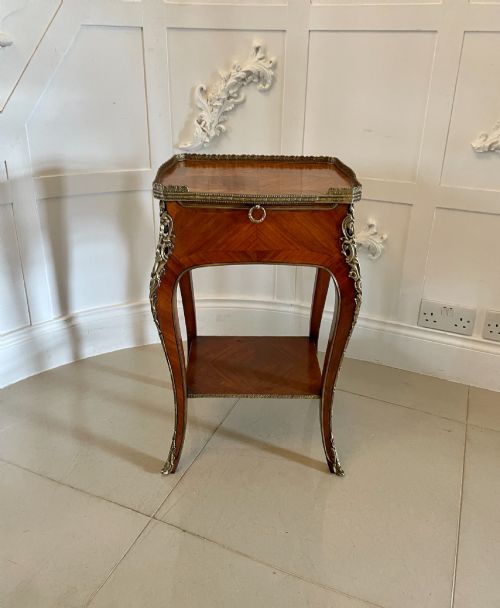
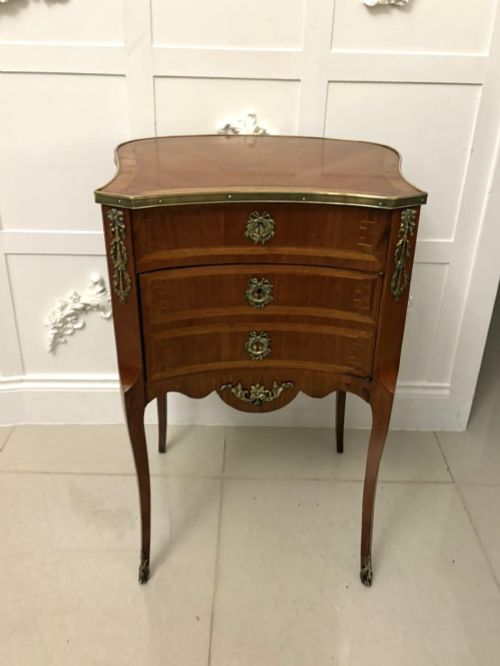
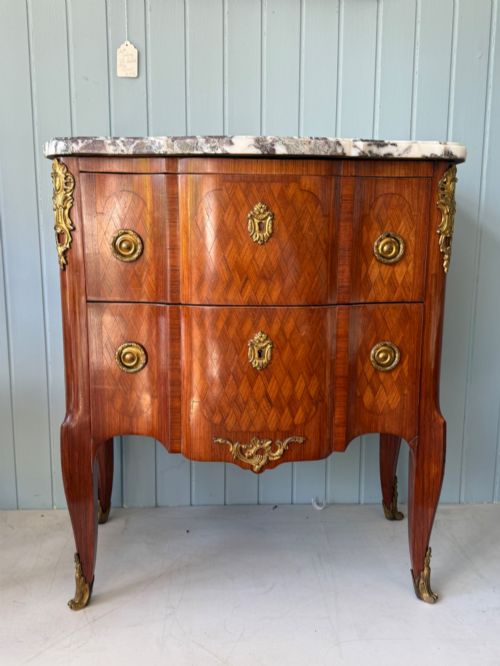
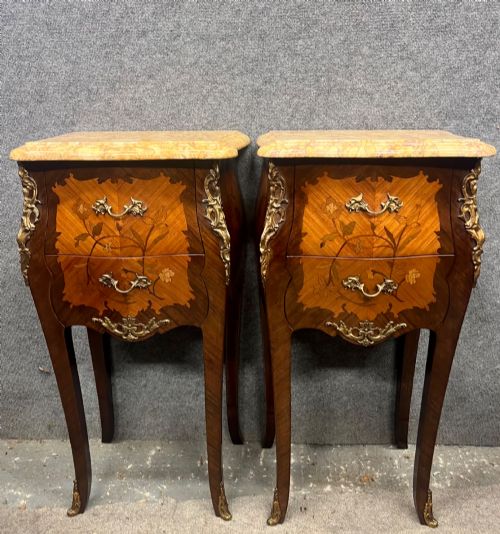
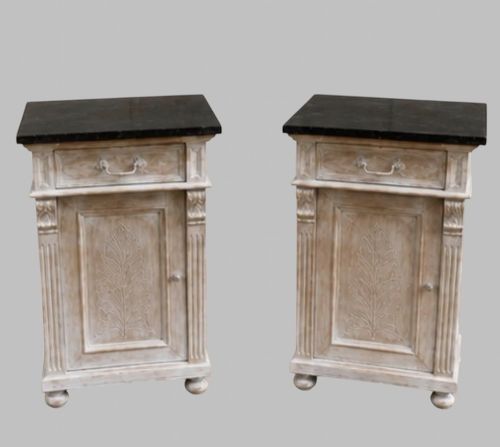
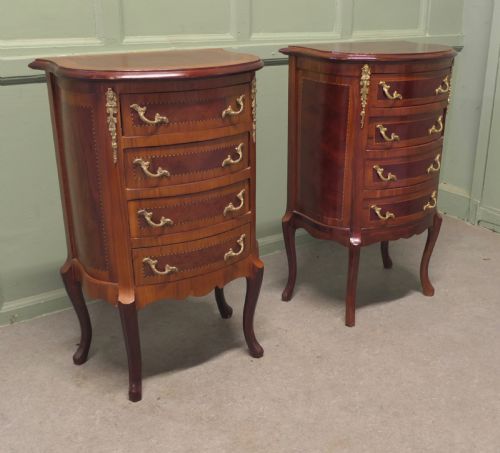
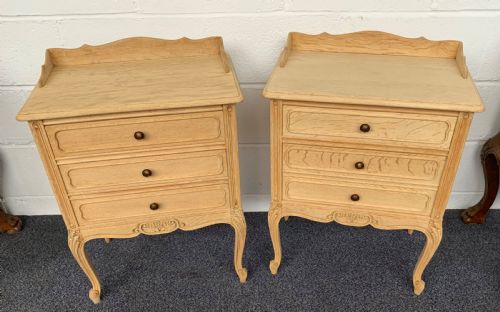
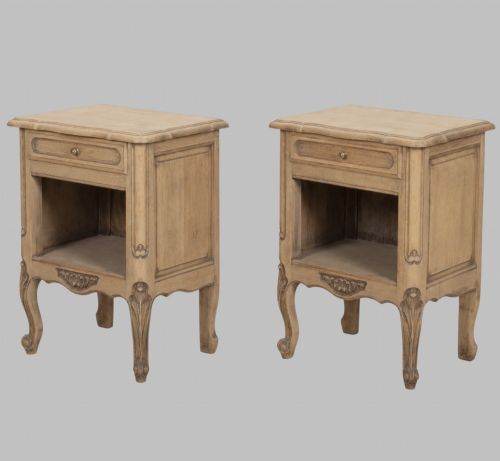
When searching for french style bedside cabinets, buyers encounter a variety of compact bedside chests, commodes, and lamp tables created in continental revival aesthetics. These pieces typically follow Louis XV and Louis XVI design traditions, translated into functional bedside storage through serpentine fronts, shaped aprons, and slender cabriole legs.
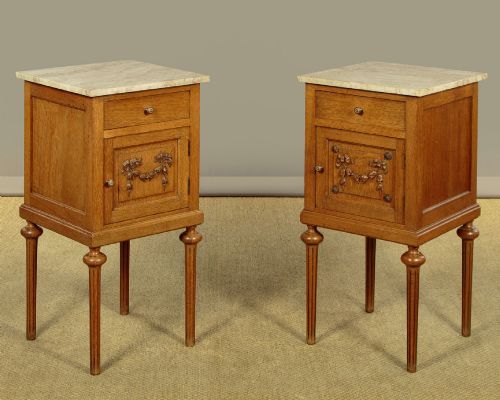
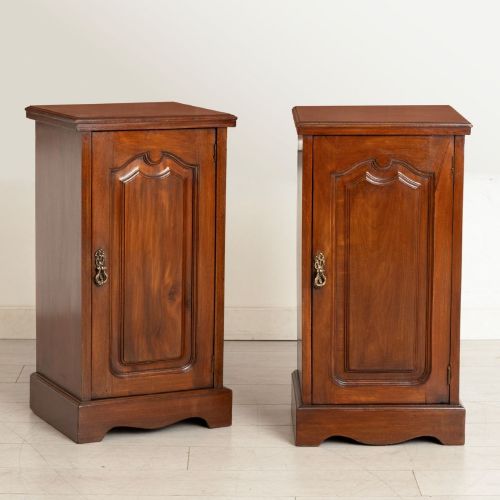
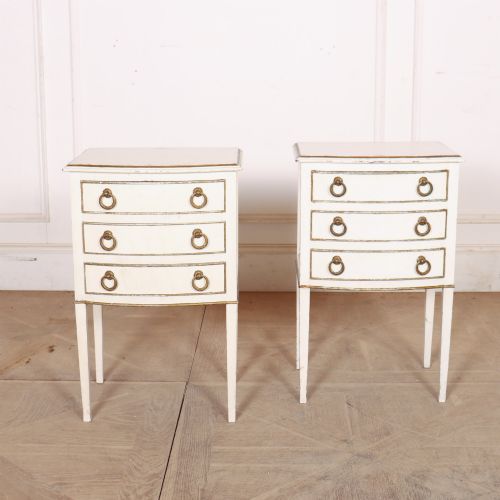
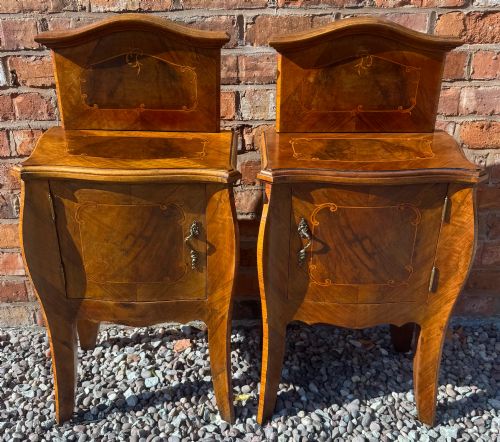
The selection ranges from nineteenth-century walnut and mahogany examples to early twentieth-century interpretations featuring marquetry, parquetry, and painted finishes. Many survive in matched pairs, reflecting the historical demand for symmetrical bedroom furnishings during the Victorian era and the subsequent decades.
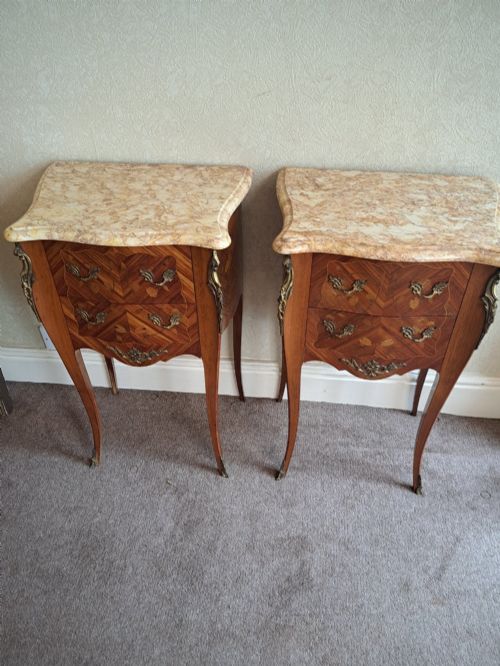
Makers and cabinetmakers adapted court furniture styles for domestic bedrooms, resulting in small-scale commodes and marble-topped bedside tables. These items combine practical enclosed cupboard space or drawers with decorative brass mounts and intricate wood inlays.
Materials and construction methods
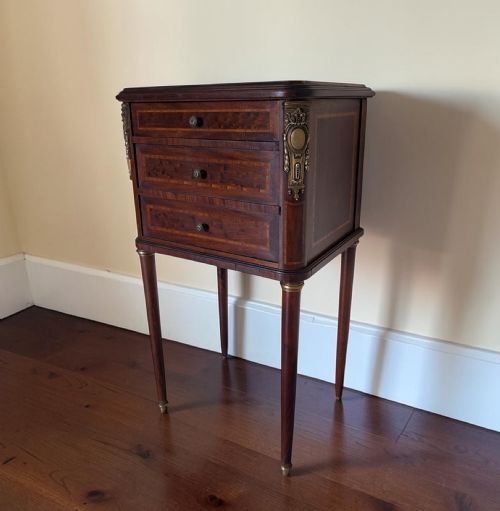
Cabinetmakers utilised dense timbers such as mahogany, walnut, kingwood, and rosewood as foundational woods, often applying intricate marquetry and parquetry veneers in geometric or floral patterns. Oak and chestnut frequently served as secondary timbers for internal drawer construction and carcase framing.
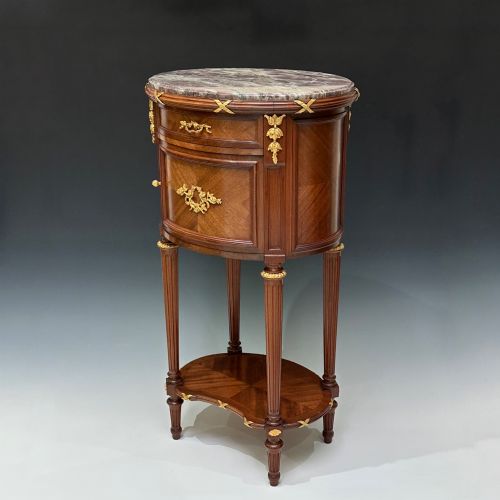
Decorative detailing relies heavily on cast or gilt orrmolu mounts, brass handles, and inset marble tops designed to provide durable surfaces. Surface finishes range from French polish on figured veneers to painted and lacquered treatments seen in decorative provincial variants.
Several cabinets conceal surprising marble surfaces beneath compact proportions, ready to hold morning tea.
Judging quality in revival bedside pieces
Quality rests upon the precision of the veneer work and the crispness of the bronze or ormolu mounts rather than mere age. Superior examples display seamless matching of wood grain across curved surfaces and tightly fitted drawer joints.
The integration of materials dictates distinction, notably the weight and polish of marble tops and the hand-chiselling detail visible on metal mounts. Lesser pieces exhibit simpler timber selections and stamped rather than chased metalwork.
François Linke·Sormani
The French Style Bedside Cabinets Glossary
- Ormolu
- Gilded bronze mounts utilised to accent furniture corners, handles, and feet. This technique was widely applied during revival periods to emulate eighteenth-century court standards.
- Marquetry
- Decorative patterns formed by fitting together thin slices of various coloured woods onto a carcase. It requires considerable skill to execute across curved drawer fronts.
- Parquetry
- Geometric wood mosaic patterns arranged to create repeating designs such as cubes or chequers. This technique frequently decorates the top surfaces of side tables.
- Commode
- A low chest of drawers or cabinet with doors, originating in France. In bedroom furniture, the term often describes larger bedside chests with marble surfaces.
- Cabriole leg
- A furniture leg that curves outward and then tapers inward, finishing in a pad or scroll foot. It is a defining characteristic of Louis XV revival design.
French Style Bedside Cabinets: Frequently Asked Questions
Are these cabinets purely decorative or practical?
These cabinets provide enclosed bedside storage through small cupboards and drawers while serving as decorative display surfaces. Their compact dimensions allow them to function effectively beside modern bed heights.
Marble-topped variants offer durable surfaces resistant to everyday bedside wear, combining utility with distinct aesthetic character.
How do I distinguish Louis XV from Louis XVI style?
Louis XV style pieces are characterised by flowing curved lines, serpentine fronts, and sweeping cabriole legs. Decoration focuses on asymmetrical floral marquetry and organic bronze mounts.
Louis XVI style shifts toward straight lines, symmetrical geometry, and tapered fluted legs reflecting neoclassical restraint. Ormolu mounts on these pieces often incorporate classical architectural motifs.
Why do many listings appear as pairs?
Historical bedroom design placed strong emphasis on symmetry, prompting manufacturers to produce matching sets of bedside tables or commodes. Surviving pairs remain desirable for maintaining balance on both sides of a bed.
Individual pieces occasionally emerge when companion items became separated over time or were produced as single lamp tables.
What maintenance do marble tops require?
Marble surfaces require minimal upkeep beyond regular cleaning with a damp cloth and mild soap to remove dust. Abrasive cleaners should be avoided to preserve the polished finish.
Sealing the stone periodically helps protect against staining from liquids placed on the bedside table during daily use.