


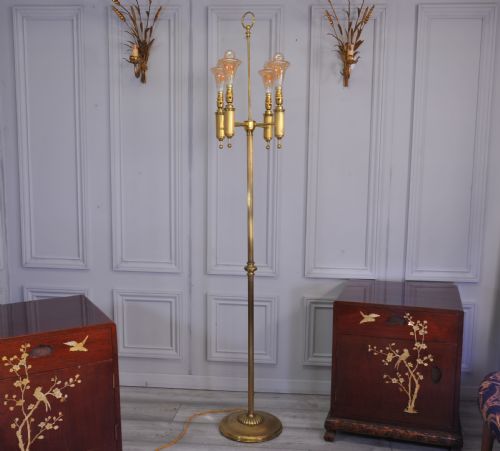


French Standard Lamp
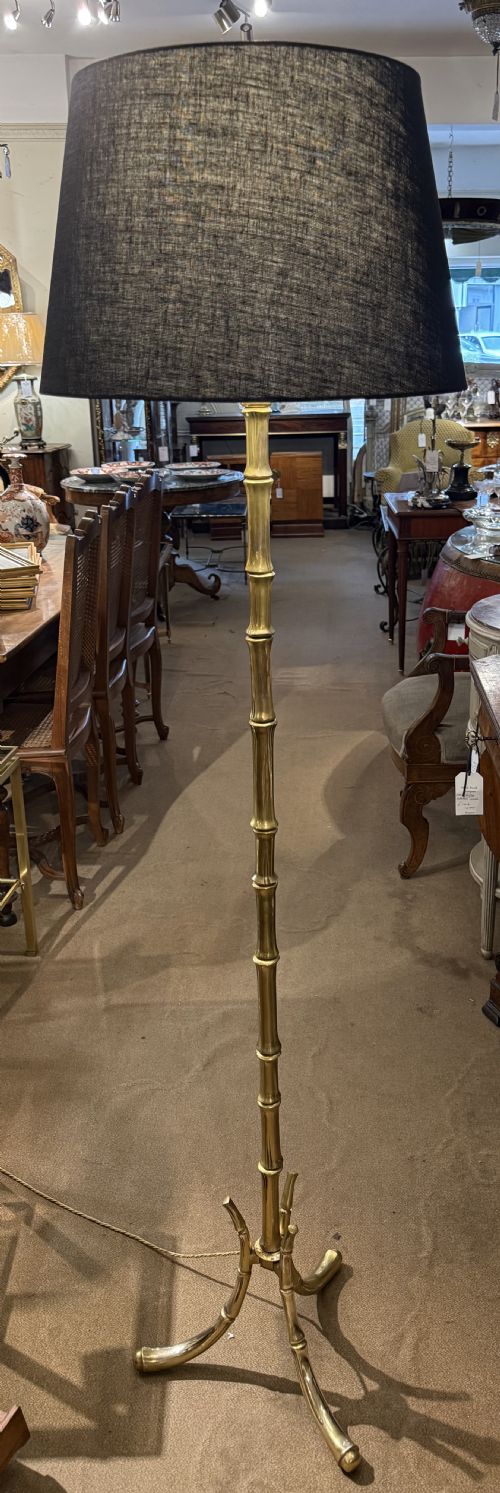
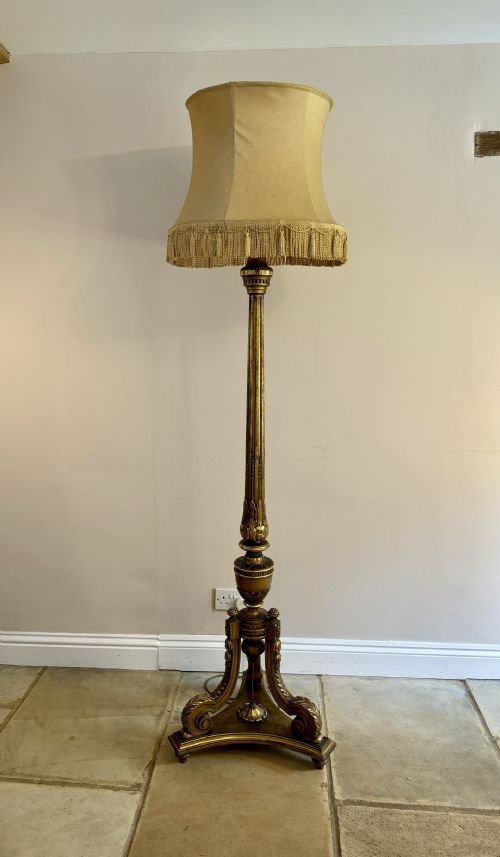
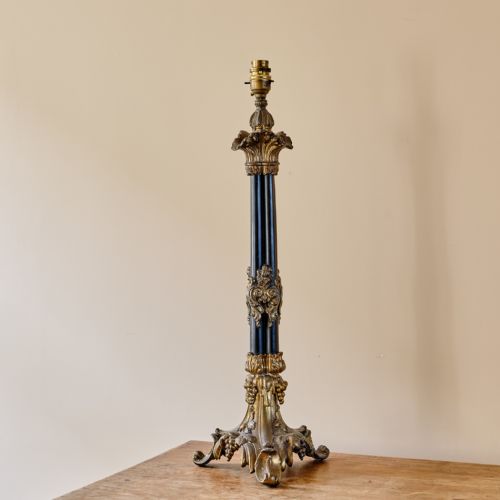
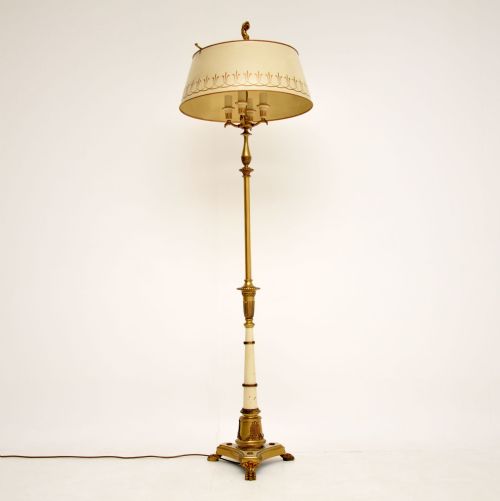
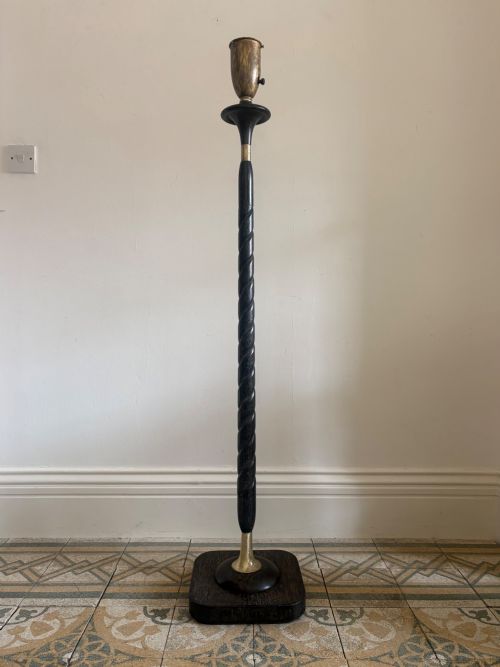
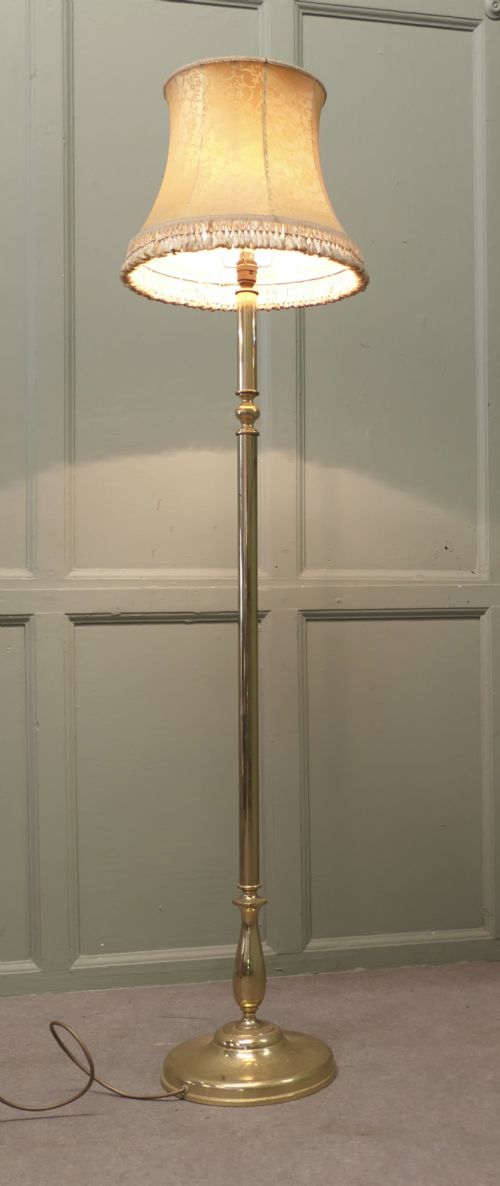
A french standard lamp brings vertical illumination and classical presence to a room, ranging from slender brass columns to ornate gilded woodwork.

French Standard Lamp
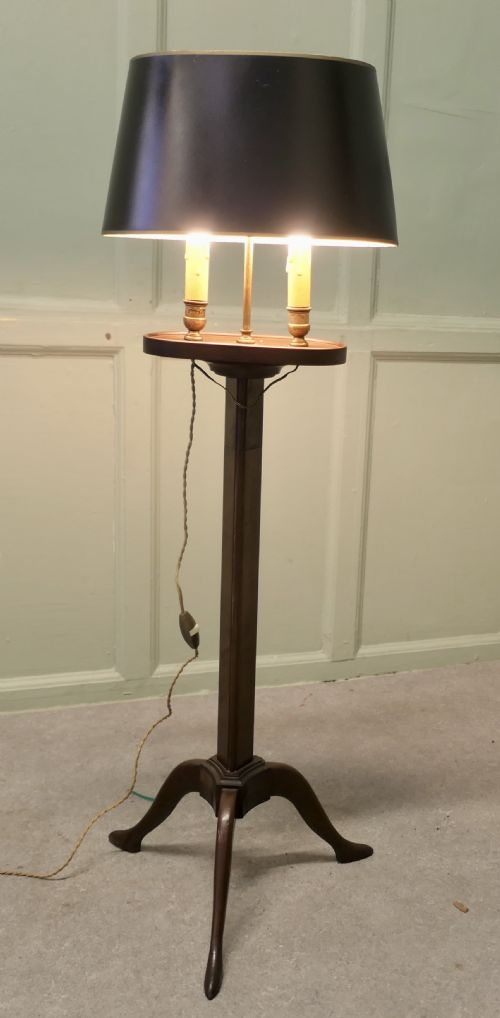
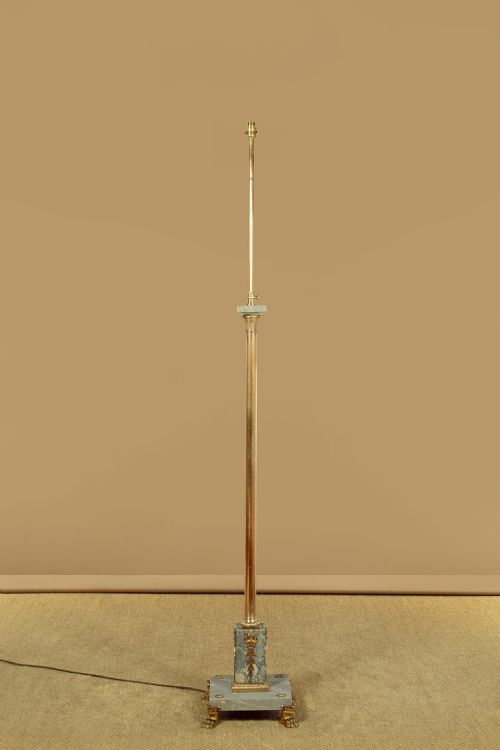
A french standard lamp serves as a tall floor-standing light source, appearing in forms such as slender columns, adjustable reading lights and candelabra conversions. These pieces originate across diverse eras, spanning the Victorian and Edwardian periods alongside the nineteen-twenties and nineteen-thirties.
Makers and workshops across France produced these lamps in styles drawing upon Neoclassical, Empire, Rococo Revival and Art Deco design vocabularies. Buyers encounter varying silhouettes, from carved giltwood poles to telescopic brass shafts and tripod iron bases.
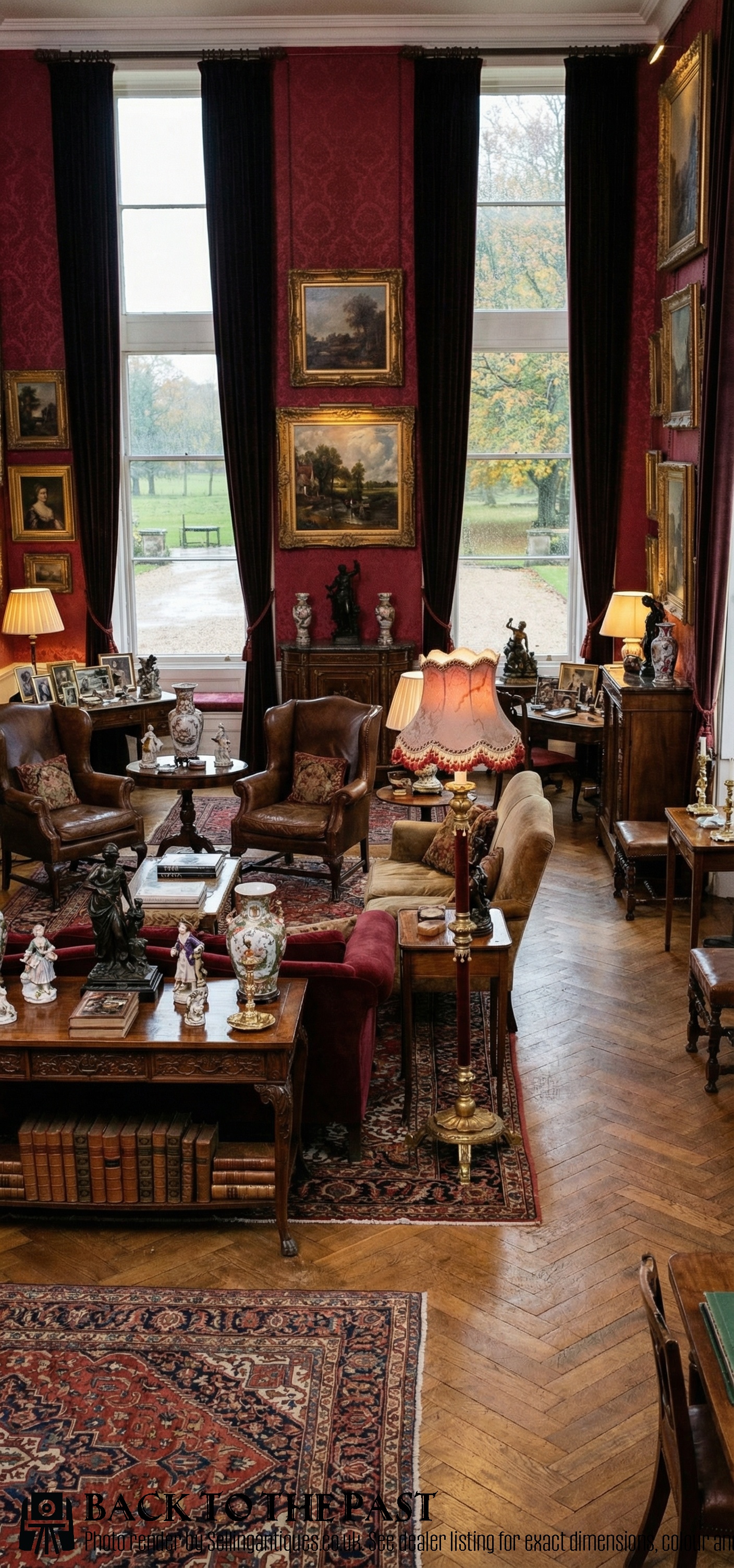
Materials and Technique
Craftsmen utilised cast brass, forged iron, ormolu and gilt bronze alongside carved timber such as giltwood, ebonised wood and gesso. Structural integrity often relied on weighted metal bases or marble columns to support the height of the lamp.
Surface decoration involved hand-applied gilding, silvering, paint finishes and patination, frequently paired with fabric shades and glass components. Telescopic mechanisms and adjustable candle arms required precise engineering in brass and iron.
French Standard Lamp Retail Price Guide 2026
Typical asking prices for french standard lamp among the pieces listed under this phrase on Sellingantiques today, from the lower quarter to the upper quarter. They describe what is for sale here now, not the wider market.
Certain nineteenth-century survivors started life as wrought iron candelabra before quietly trading their candles for copper wires.
Distinctions in Execution
Quality rests in the crispness of carved detail upon giltwood surfaces and the weight and finish of cast brass or ormolu mounts. Finer examples display harmonious proportions, integrated adjustable mechanisms and original gilding rather than later repainting.
The sophistication of the silhouette defines the upper tier, where architectural elements like fluted columns or classical urn motifs are executed with precision. Lesser examples show simplified turning and heavier, less refined castings.
Maison Bagues·Maison Ramsay Paris·Rene Mathieu
The French Standard Lamp Glossary
- Ormolu
- Gilded bronze, typically mercury-gilded, used extensively for decorative mounts on fine furniture and lighting. This technique yields a deep, enduring metallic lustre.
- Bouillotte
- A style of lamp originally designed for card games, featuring an adjustable shade on a central shaft with one or more candle arms. It frequently appears in brass or bronze.
- Giltwood
- Timber coated with a thin layer of gold leaf or powder over a prepared gesso ground. It provides a luminous surface characteristic of formal French interiors.
- Telescopic
- An extendable shaft mechanism allowing the overall height of the lamp to be adjusted. This engineering feature is common in brass reading lamps from the nineteenth and early twentieth centuries.
- Ebonised
- Wood finished to resemble ebony through staining or painting. This dark treatment offers a stark contrast against gilded metal details.
French Standard Lamp: Frequently Asked Questions
How were these lamps used historically?
These tall floor lamps provided ambient illumination or focused light for reading beside seating areas in reception rooms and boudoirs. Many designs incorporated adjustable arms or telescopic shafts to direct light precisely where needed.
Some earlier examples originated as standing candelabra that were later converted to electricity as domestic lighting evolved. Their substantial height allowed them to cast light downward over tables or reading chairs.
How do I identify a Neoclassical piece?
Neoclassical lamps display architectural motifs inspired by ancient Greece and Rome, including fluted columns, urns, swags and symmetrical geometric lines. Brass and giltwood are common materials for this refined aesthetic.
These pieces contrast sharply with the more exuberant, asymmetrical curves found in Rococo Revival designs or the streamlined geometric forms of Art Deco.
Are these lamps safe for modern electrical standards?
Most antique lamps require professional rewiring to meet contemporary electrical safety regulations before daily use in a modern home. Qualified electricians can easily update internal wiring while preserving the external vintage components.
Original brass lamp holders and switches should be inspected and often replaced with compliant modern equivalents to ensure safe operation.
How do I fit a shade to an antique lamp?
Selecting a shade depends on the proportions of the standard lamp, ensuring the width of the shade balances the height of the column. Fabric shades in silk or parchment complement traditional gilded and brass finishes.
Fittings vary by model, so measuring the harp or gallery helps determine whether a shade requires a spider fitter or a direct clip-on attachment.