

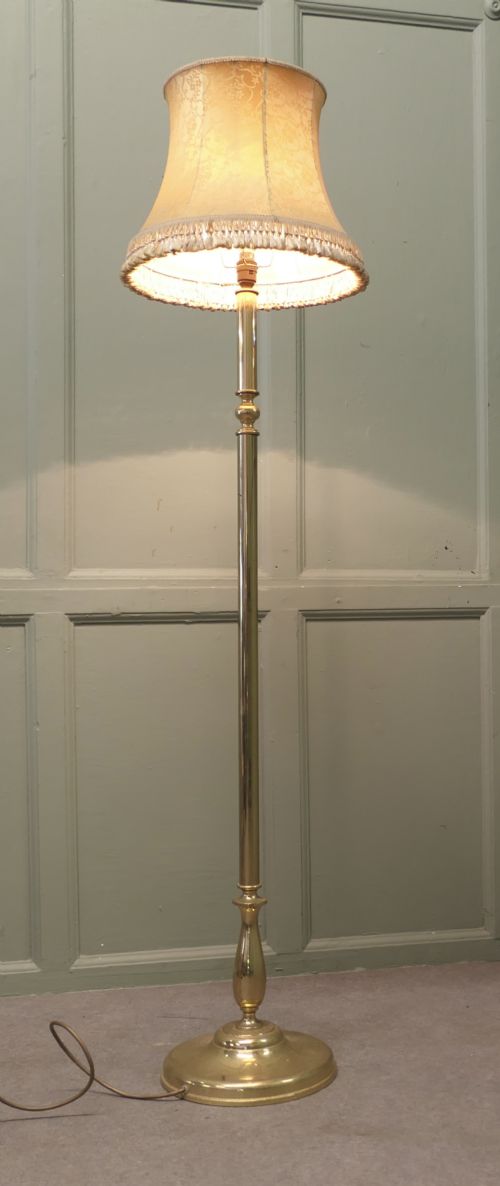


French Boudoir Lamp
These small decorative fittings offer intimate lighting for a French boudoir lamp, bringing period charm and soft illumination to a dressing room or bedroom.
French Boudoir Lamp
A French boudoir lamp provides low-level, intimate illumination suited to a private bedroom or dressing space. When you search for a french boudoir lamp, you encounter table lamps, floor lamps, wall lights, and small chandeliers designed to create a soft atmosphere rather than bright task lighting.
The pieces listed on this page span the early twentieth century, including Edwardian examples alongside creations from the 1900, 1910, and 1920 periods. Formats range from delicate reading lamps and porcelain pieces to heavy wrought iron structures.
Stylistically, these fittings draw upon French Chateau, French Country, Louis XVI Revival, Art Nouveau, and Art Deco traditions. You are most likely to meet compact table lamps featuring decorative glass shades and metal bases.
Materials and Construction
Maker workshops utilised a combination of cast metals and worked glass to achieve their decorative effects. Bronze, brass, nickel-plated bronze, and wrought iron form the structural bases of these lights.
Shades and decorative elements rely on glass, frosted glass, crystal, and fabric textiles. Many pieces incorporate specialised glass components produced by notable workshops, such as amber frosted glass or moulded shades.
French Boudoir Lamp Retail Price Guide 2026
Typical asking prices for french boudoir lamp among the pieces listed under this phrase on Sellingantiques today, from the lower quarter to the upper quarter. They describe what is for sale here now, not the wider market.
Some tiny reading lamps were built specifically small enough to hide behind a velvet cushion when the chaperone entered the room.
Evaluating Quality
Quality in these lighting fixtures rests upon the artistic merit of the metalwork and the distinction of the glass components. Master workshops employed skilled metal casters and glassmakers whose signed or labelled pieces command greater attention.
The refinement of the decorative detail, from hand-carved woodwork and marquetry inlay to quality gilt bronze mounts, separates standard production items from superior studio creations.
Georges Leleu·Muller Bros·Degue·Haentgos Freres Paris
The French Boudoir Lamp Glossary
- Art Deco
- A design style of the 1920s and 1930s defined by geometric symmetry, stylised motifs, and modern industrial materials. It followed the organic curves of the preceding movement.
- Art Nouveau
- A decorative style from around 1900 inspired by natural forms, plant stems, and flowing asymmetrical lines. It heavily influenced early twentieth-century lighting design.
- Cabochon
- A polished, convex gem or piece of glass cut without facets, frequently used to stud metal lamp bases. They add a jewel-like accent to the metalwork.
- Frosted Glass
- Glass that has been rendered opaque through acid etching or sandblasting to diffuse light evenly. This technique softens the glare of early electric bulbs.
- Louis XVI Revival
- An architectural and decorative style drawing on eighteenth-century French neoclassical symmetry, straight lines, and classical motifs. It experienced a strong revival in the late nineteenth and early twentieth centuries.
French Boudoir Lamp: Frequently Asked Questions
What is a french boudoir lamp used for?
These fixtures provide gentle, localized illumination intended for private bedrooms, dressing rooms, and intimate sitting spaces. They were traditionally placed on dressing tables or bedside surfaces to offer soft light during grooming or reading.
Unlike overhead chandeliers, their purpose is to create a warm, atmospheric glow rather than to illuminate an entire room. Their compact scale makes them well-suited for smaller surfaces where large lamps would overpower the space.
How do I identify an Art Nouveau lamp?
Art Nouveau lighting relies heavily on organic motifs, featuring flowing lines inspired by plant stems, floral shapes, and natural asymmetry. Metal bases often mimic the curving growth of vines or drapery.
Look for cabochons, iridescent glass, and soft sculptural forms that avoid straight lines and sharp geometric angles entirely.
Are these lamps electrified for modern use?
The listings encompass various periods from the early twentieth century, meaning electrical components vary widely. Many pieces retain older wiring or specialised fittings that may require professional rewiring to meet contemporary safety standards.
Buyers should consult a qualified electrician to check the internal wiring and ensure compatibility with modern plug sockets before daily use.
How do I distinguish Art Deco from Edwardian styles?
Edwardian lighting leans towards delicate ornamentation, traditional revival motifs, and softer, romantic forms influenced by eighteenth-century French aesthetics. It often incorporates fabrics, crystal drops, and ornate gilt bronze.
Art Deco, emerging strongly in the 1920s, replaces these curves with clean geometric lines, streamlined metalwork, and industrial finishes such as nickel plating and frosted glass.