


French Slant Desk
A French slant desk offers a sloping fall-front that opens to reveal fitted writing compartments, combining refined continental cabinetry with practical workspace.
French Slant Desk
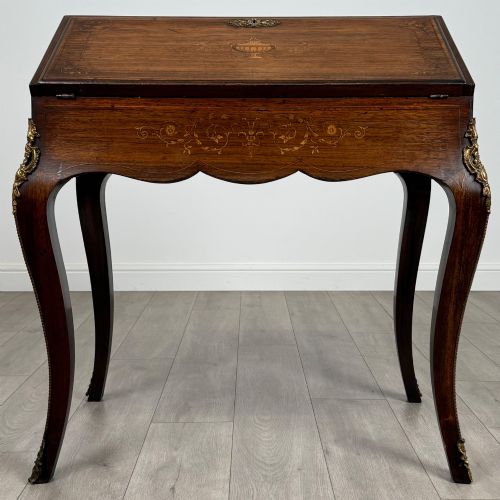
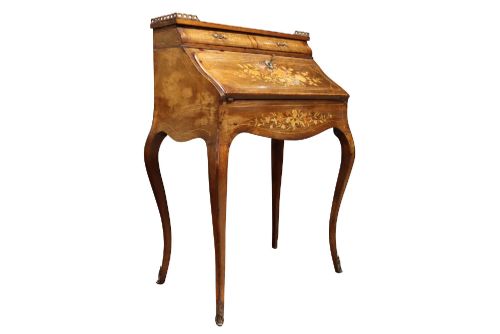
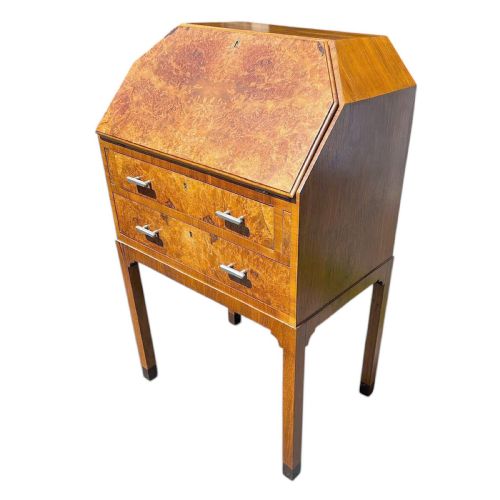
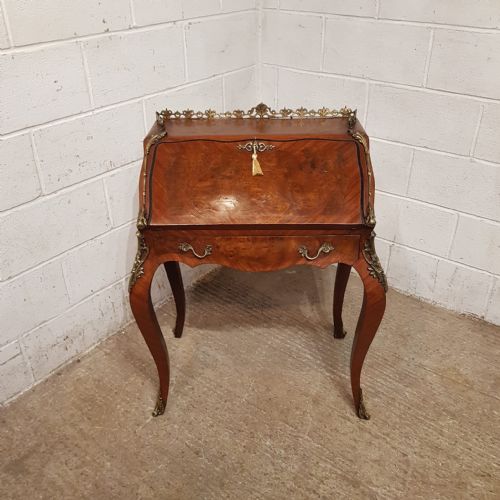
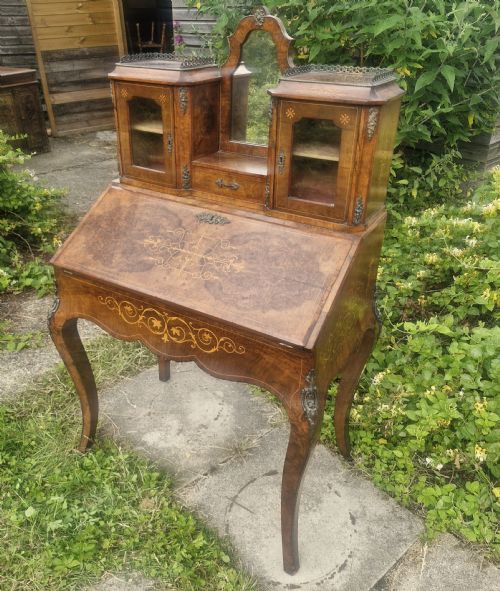
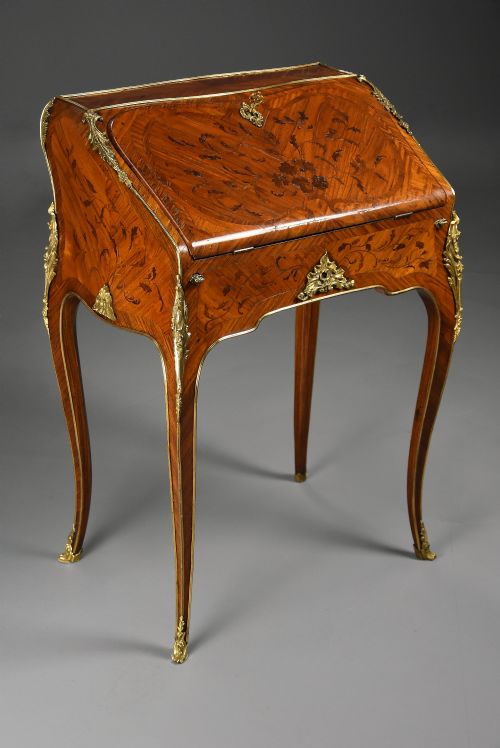
A French slant desk is primarily represented on this page by the bureau de dame and the bonheur-du-jour, originating mainly from the nineteenth century and the eighteenth century. These pieces function as compact writing furniture designed for domestic use, frequently displaying the curved contours associated with Louis XV revival and rococo styles.
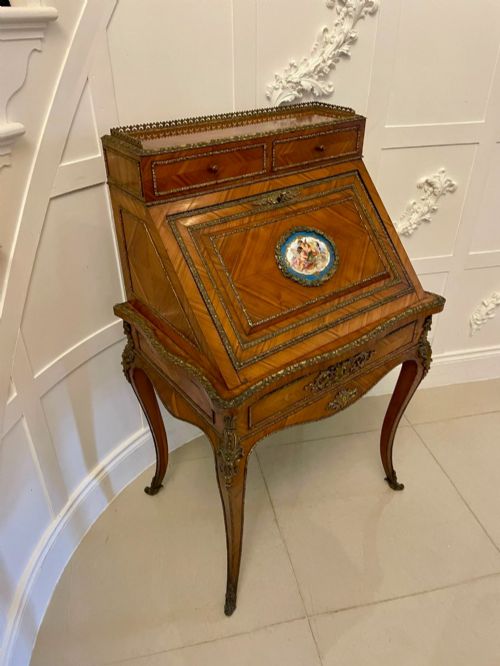
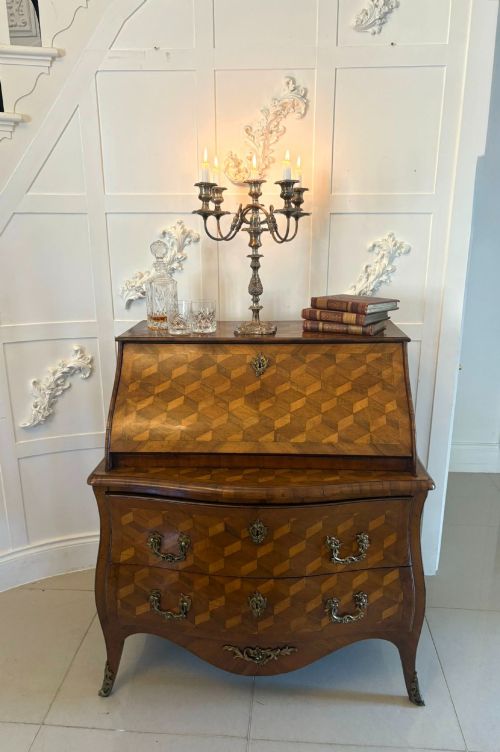
The selection ranges from neat walnut and rosewood ladies' desks to bomb-shaped parquetry examples and pieces mounted with ormolu. Buyers encounter various interpretations of French styling, including Victorian English adaptations constructed in similar timber veneers.
How they were made
Cabinet makers built these desks upon carcases of oak or pine, applying decorative veneers of kingwood, rosewood, walnut, and tulipwood. Wood inlay and marquetry created elaborate floral or geometric patterns across the sloping falls and tabletops.
Mounts in cast ormolu and gilt metal highlighted the structural curves, whilst brass stringing outlined individual panels. Porcelain plaques occasionally appeared inset into the veneer work as additional focal points.
Cabinet forms include bureaux de dame, bonheur-du-jour writing tables, and freestanding partner desks.
What varies in quality
Quality in a French slant desk depends heavily on the precision of the marquetry and the choice of timber veneer, such as figured burr walnut or quarter-matched kingwood. Finer examples display meticulous hand-cut parquetry that aligns seamlessly across opening flaps and drawer fronts.
The execution of the cast ormolu mounts and the internal arrangement of small drawers and pigeonholes distinguish superior pieces from standard workshop production. Substantial carcass construction and well-fitted interior compartments indicate higher standards of period craftsmanship.
Paul Sormani·BVRB
The French Slant Desk Glossary
- Bureau de dame
- A lady's writing desk, typically featuring a sloping fall-front or a cylinder top enclosing fitted compartments. These smaller desks were designed for domestic correspondence in private sitting rooms.
- Bonheur-du-jour
- A light writing table with a small cabinet or set of shelves superstructure on top. This form emerged during the eighteenth century and remained popular through nineteenth-century revival periods.
- Ormolu
- Gilt bronze mounted onto furniture as decorative feet, corners, and escutcheons. The metal is cast and chased before receiving a layer of gold amalgamation.
- Marquetry
- Veneering technique where thin slices of various coloured woods are assembled to form pictorial or geometric designs. Craftsmen fit the pieces together like a puzzle before gluing them to the carcase.
- Parquetry
- Geometric wood inlay forming repetitive patterns such as cubes, lozenges, or squares. It provides a structured decorative surface distinct from floral marquetry.
French Slant Desk: Frequently Asked Questions
What is a French slant desk?
A French slant desk is a compact writing cabinet featuring an angled lid that lowers to create a writing surface. These pieces often include internal compartments for stationery.
Originating in continental workshops and later reproduced during the Victorian era, they prioritize decorative veneers and curved silhouettes.
How do I use one today?
These desks serve well as compact laptop stations or dedicated writing spots in a study or bedroom. The internal pigeonholes remain practical for organising letters and modern correspondence.
Placing them away from direct sunlight and radiators protects the delicate rosewood, walnut, and kingwood veneers from drying out.
What is a bureau de dame?
A bureau de dame is a specific French term for a lady's writing desk. They are generally smaller in scale than standard bureau desks.
Many examples on this page date from the nineteenth century and incorporate marquetry, brass inlay, and ormolu mounts.
How do I spot a revival piece?
Revival pieces often date from the Victorian period or the late nineteenth century while copying eighteenth-century Louis XV styles. Examining the secondary timbers inside the drawers helps clarify the actual period of manufacture.
Construction methods and hardware fixings also provide clues to distinguish nineteenth-century workshop interpretations from earlier pieces.