
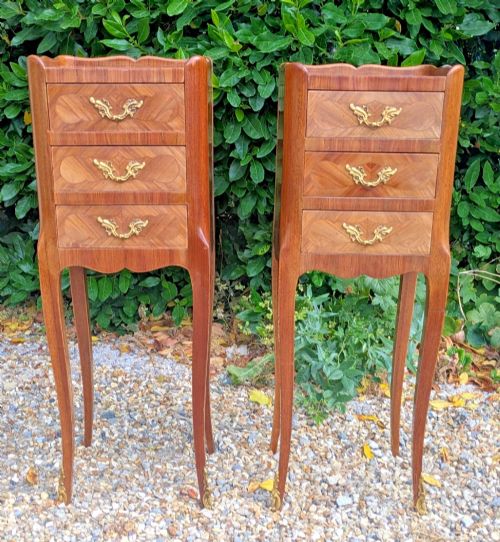
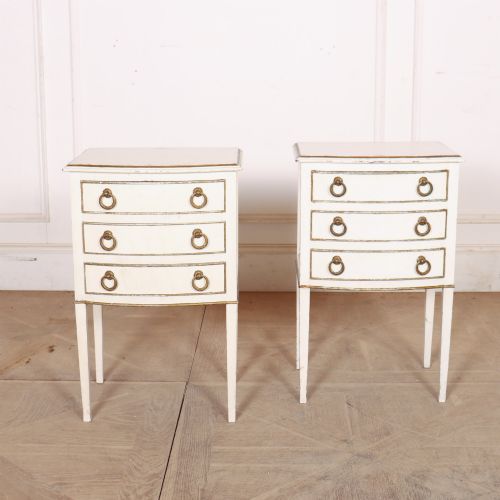
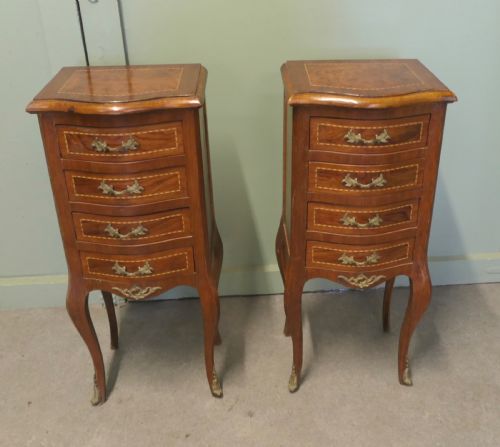
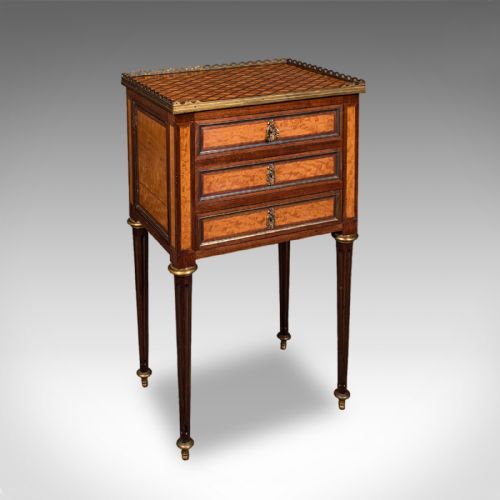
French Side Table with Drawers
A french side table with drawers offers compact utility paired with continental elegance, making it a versatile addition to any room.
French Side Table with Drawers
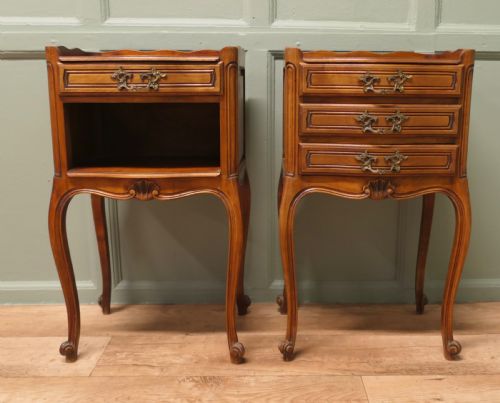
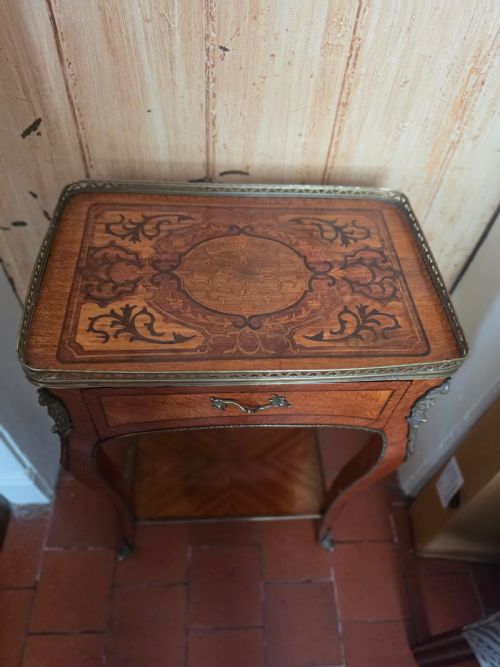
A french side table with drawers combines everyday practicality with decorative appeal, appearing across periods from the eighteenth century to the early twentieth century.
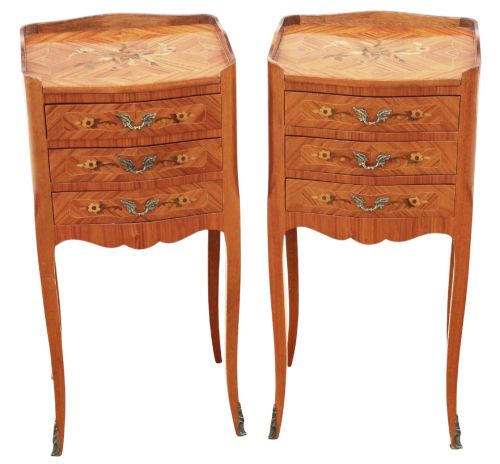
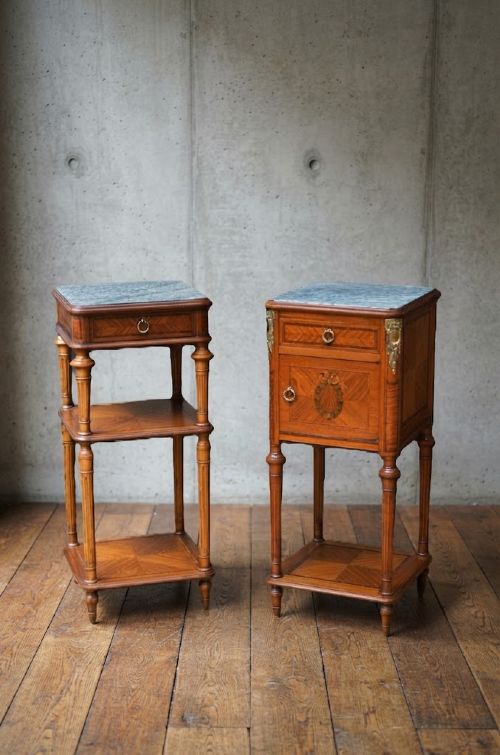
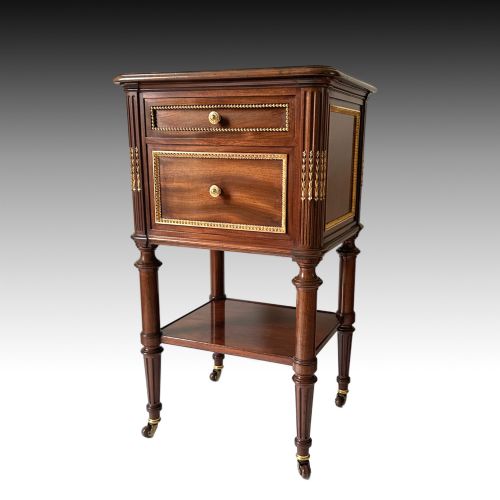
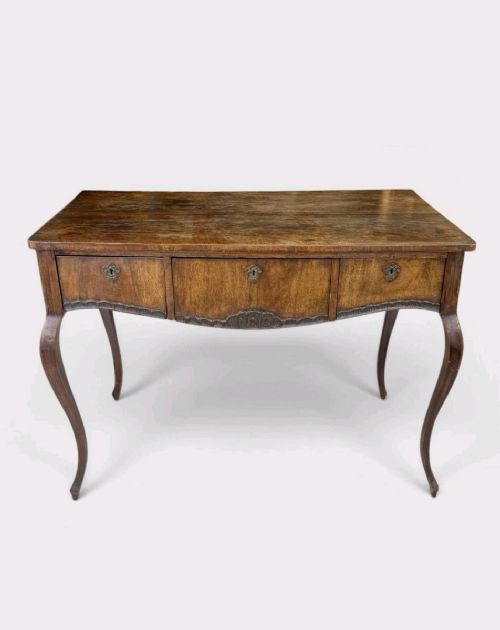
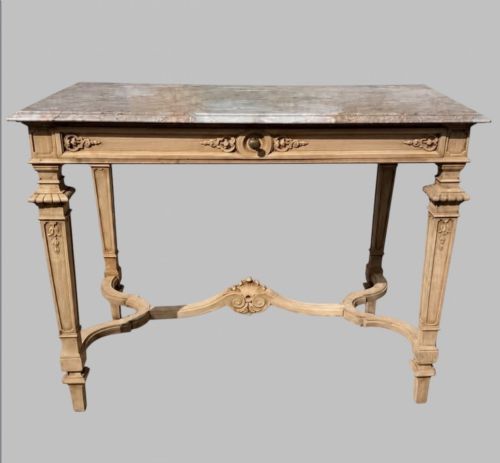
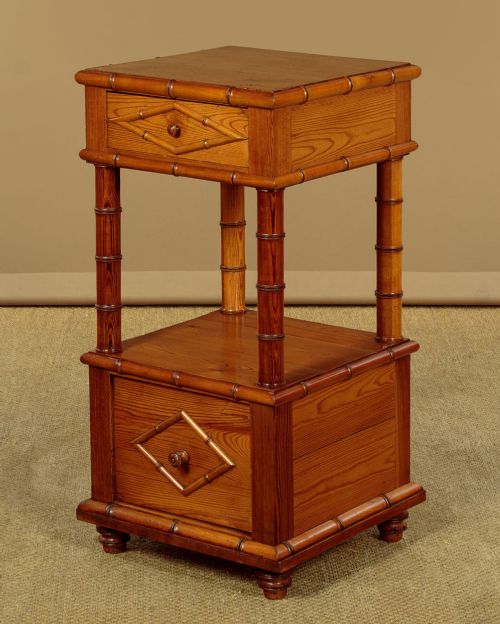
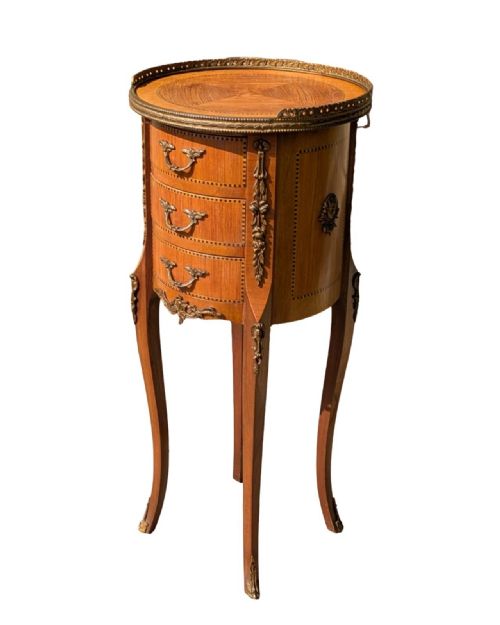
These tables typically feature single or multiple drawers paired with surfaces of wood or inset marble, serving functional storage needs in compact footprints.
How they were made
Cabinetmakers utilised hardwoods including walnut, oak, fruitwood, and mahogany, often incorporating pine for secondary framing and drawer linings.
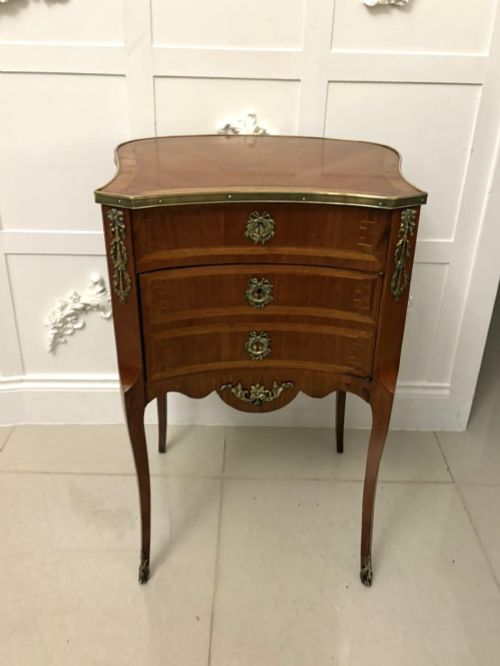
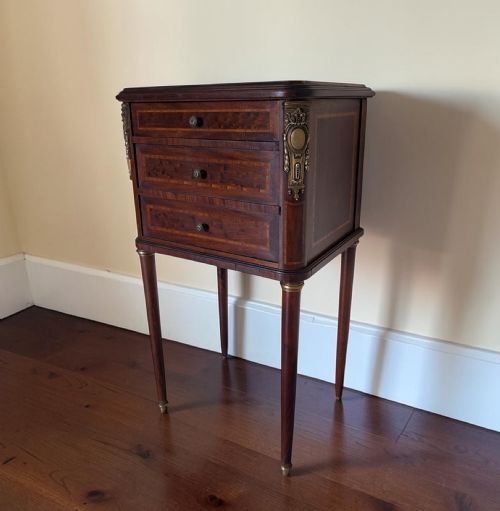
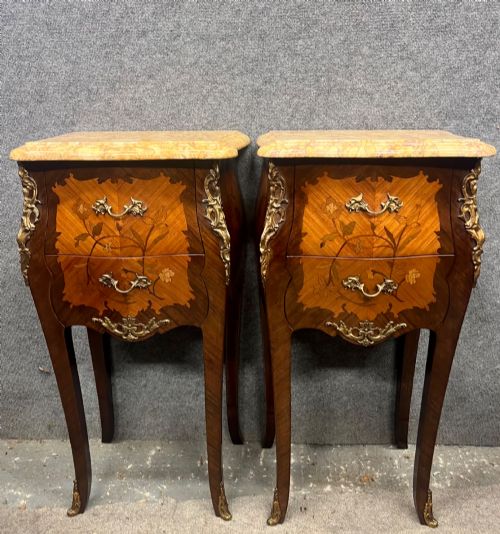
Decorative surfaces rely on techniques such as parquetry, quartered veneers, and painted finishes, sometimes accented by cast brass or ormolu mounts.
Several tables arrive with hidden pot-shelves, proving that even eighteenth-century French cabinetmakers understood the necessity of discreet storage.
What varies in quality
The standard of timber selection and complexity of parquetry or inlay dictate the refinement of a piece, distinguishing simple provincial work from ornate metropolitan output.
Quality shows in the precision of joinery, the integration of brass or ormolu mounts, and whether marble tops retain their original profiles and polishes.
The French Side Table with Drawers Glossary
- Ormolu
- Gilded bronze mounts used for decorative enrichment on furniture. These mounts are cast and chased before application to the wood.
- Parquetry
- Geometric wood veneer work arranged in repeating patterns. It creates a decorative mosaic surface on tabletops and drawer fronts.
- Demi lune
- A half-moon or semicircular shape. This profile is frequently seen on console tables and chests designed to sit flat against a wall.
- Commode
- A low chest of drawers or cabinet. French commodes often feature marble tops and sophisticated veneer work.
- Provincial
- Denoting items originating from the regions rather than Paris. These pieces often display simpler, sturdier construction and local timber choices.
French Side Table with Drawers: Frequently Asked Questions
Where should I place a French side table?
These tables suit bedrooms as bedside cabinets or living spaces where a small surface and drawer storage are required.
Their compact proportions allow them to sit beside seating or in hallways without crowding the floor plan.
How do I identify a Louis XVI style table?
Louis XVI pieces typically exhibit straight tapered legs, neoclassical symmetry, and restrained decorative mounts.
In contrast to earlier rococo curves, this style favours geometric lines and architectural clarity.
Are marble tops original to these tables?
Many nineteenth-century console and bedside tables were constructed specifically to carry fitted marble slabs.
Checking the fit against the wood frame helps determine whether the top belongs to the period of manufacture.
How do I care for polished wood surfaces?
Regular dusting with a dry, soft cloth maintains the finish without building up unwanted residues.
Keeping timber away from direct heat sources prevents the wood and historical veneers from drying out or splitting.