




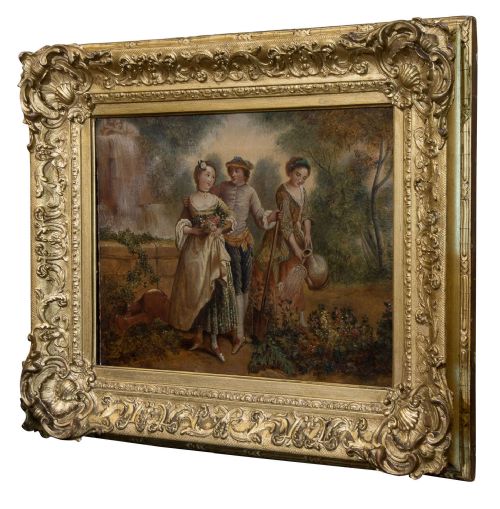


French School Landscape Canvas
When you search for a french school landscape canvas, you enter a tradition stretching from Barbizon riverbanks to mid-century Mediterranean coasts.
French School Landscape Canvas
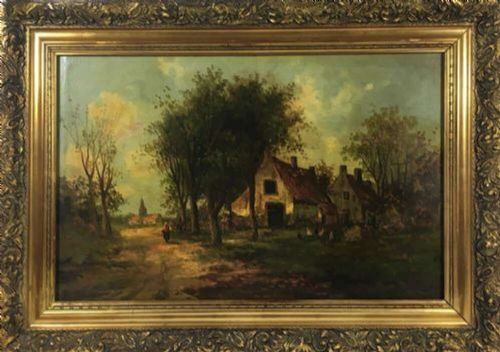
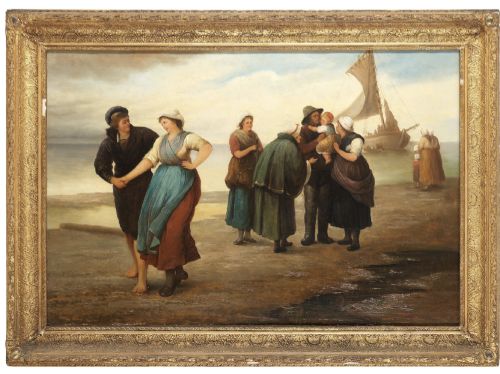
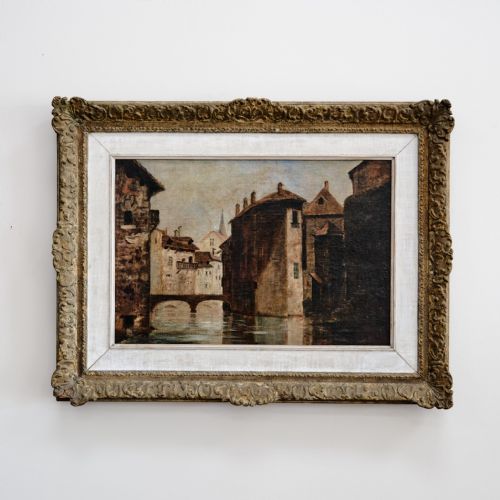
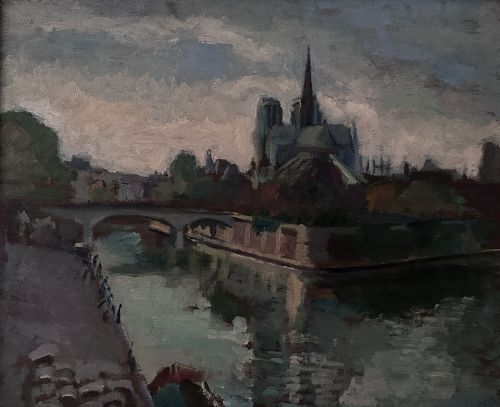
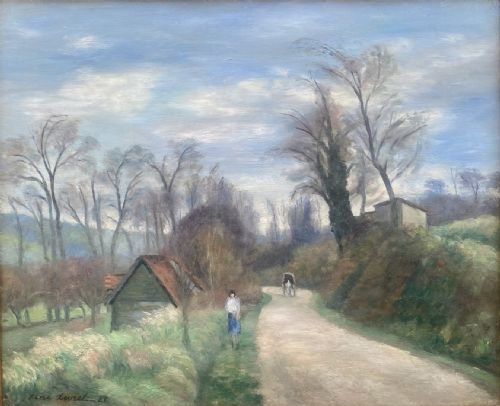
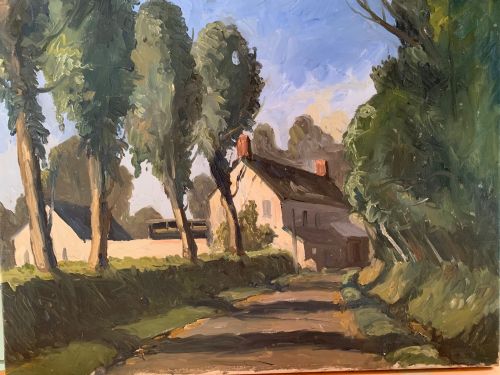
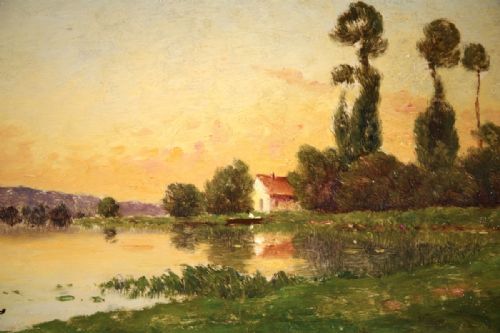
A french school landscape canvas captures rural vistas, river scenes, and cityscapes produced across the nineteenth and twentieth centuries. These paintings range from nineteenth-century academic realism and Barbizon pastoral views to twentieth-century impressionism, modernism, and cubist abstraction.
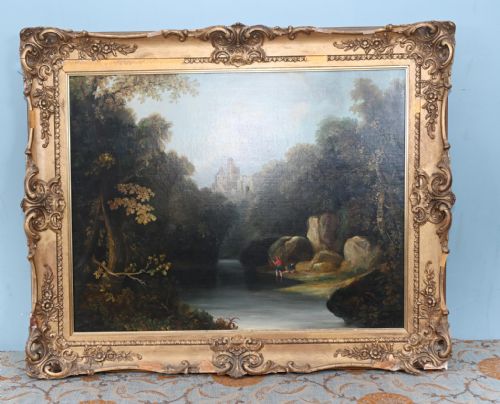
Most examples encountered here span the nineteenth century through the mid-twentieth century, featuring subjects such as Norman rivers, Provençal courtyards, and Parisian quays. The majority present oil paint applied to stretched canvas, occasionally housed in period gilt wood frames.
Materials and Construction
The foundation of these works relies on oil paint applied to woven canvas supports, sometimes reinforced with gesso on underlying wooden stretcher frames. Artists utilised oil pigments to build rich textures, working en plein air or within studios to capture shifting atmospheric effects.
Frames typically consist of carved or moulded wood, frequently finished with gilt layers that complement the tones of the canvas within. Canvas preparation involved priming layers that allowed nineteenth-century and modernist painters to manipulate light and shadow across rural and urban views.
Several canvases preserve the actual dust and pollen of nineteenth-century Normandy air, having spent generations quietly overlooking rustic French farmyards.
Factors Defining Quality
Quality rests upon the confidence of brushwork, the handling of natural light, and the compositional balance achieved across the canvas. Superior works display a deliberate command of tone and atmosphere, whereas lesser examples rely on formulaic repetition without observational depth.
The strength of provenance and the clarity of attribution also separate standard decorative works from master canvases. Artworks bearing documented signatures or connections to established regional movements demonstrate greater artistic ambition in their execution.
Paul Désiré Trouillebert·Honore Cavaroc·Henri Jaques Delpy·Raymond Picque·Gabriel Dauchot·Eduard Leon Cortes·Pierre Emmanuel Eugene Damoye·Alphonse Robert·Henri Therme·Alexandre Decamps
The French School Landscape Canvas Glossary
- Barbizon School
- A nineteenth-century French art movement dedicated to realistic, unidealised landscape painting rooted in direct observation of nature.
- Plein air
- The practice of painting outdoors to capture immediate natural light, weather, and atmospheric conditions directly onto the canvas.
- Gesso
- A plaster-like mixture applied to wooden panels or frames to prepare a smooth surface for gilding or painting.
- Impressionism
- A nineteenth-century painting style focusing on small, thin brush strokes and accurate depiction of changing light.
- Provenance
- The documented history of ownership of an artwork, establishing its authenticity and historical timeline.
French School Landscape Canvas: Frequently Asked Questions
How do I identify a Barbizon landscape?
Barbizon canvases typically focus on earthy, unembellished rural scenes, forests, and farmyards with subdued palettes and heavy brushwork. They reflect an early commitment to painting outdoors before the height of impressionism.
Look for atmospheric skies, rendered textures of soil and bark, and a focus on peasant labour or quiet rural seclusion rather than grand historical narratives.
What defines twentieth-century French modernism?
Twentieth-century modernist canvases move away from strict academic realism toward simplified forms, vibrant colourists palettes, and structural compositions. Artists experimented with abstraction and post-impressionist techniques while retaining recognisable landscape motifs.
These pieces often show Provence, Mediterranean coastal towns, or industrial harbours interpreted through personal expressive vision rather than strict topographical accuracy.
Are these paintings usually signed?
Many examples bear artist signatures, monograms, or studio stamps, though a significant portion of period work remains unattributed or indistinctly signed. Unsigned works frequently emerge from regional workshops or followers of established schools.
Signature presence enhances historical documentation, but unsigned canvases still hold substantial artistic merit through their material quality and compositional strength.
How should I care for an oil on canvas?
Oil paintings require stable indoor environments away from direct sunlight, extreme temperature shifts, and high humidity to prevent canvas slackening and paint cracking. Dusting should be done gently with a soft, dry brush without applying pressure to the paint surface.
Professional conservation should be sought for cleaning older varnish layers or repairing structural damage to the wooden stretcher frames.