






Barbizon School Landscape Art
Barbizon school landscape art captures quiet rural French scenes and pastoral views that bring profound atmosphere to any room.
Barbizon School Landscape Art
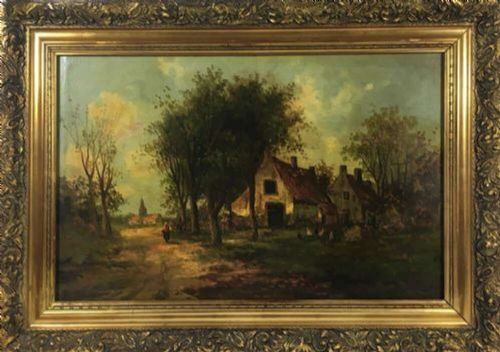
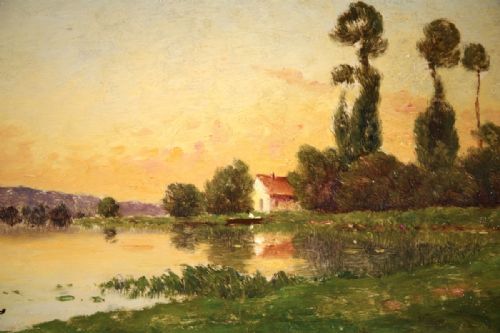
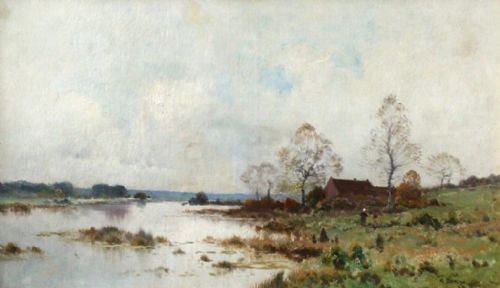
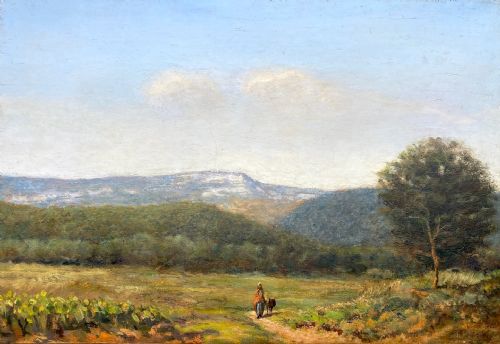
When you search for barbizon school landscape art, you encounter oil paintings, watercolours, and charcoal drawings depicting rural French views, farmyards, rivers, and woodland paths. The pieces date principally from the nineteenth century, including works from the eighteen-sixties, eighteen-seventies, and Victorian periods.
You are most likely to meet canvases and paper works showcasing pastoral settings, river banks, and cattle grazing. These artworks reflect the French movement that turned away from academic classicism to observe nature directly.
How they were made
Artists worked primarily with oil paint on canvas or watercolour on paper, capturing light and atmosphere directly from the French countryside. Charcoal also appears in preparatory and finished works.
Many of these historic works are housed in their original giltwood or gilt wood frames, which complement the tonal depth of the nineteenth-century landscapes.
Nineteenth-century French painters often got mud on their boots to bring cows and riverbanks indoors.
What varies in quality
Quality rests in the assured handling of light, shadow, and brushwork across the canvas or paper. Masterful works convey atmospheric depth in rural scenes, while lesser pieces remain stiff or formulaic in their composition.
The integrity of the original surface, the subtlety of the pastoral palette, and the suitability of the period giltwood frame distinguish exceptional examples from standard works.
Paul Désiré Trouillebert·Henri Jaques Delpy·Alphonse Robert·Pierre Emmanuel Eugene Damoye·Henri Joseph Harpignies
The Barbizon School Landscape Art Glossary
- Barbizon School
- A nineteenth-century French art movement dedicated to naturalistic landscape painting. Artists painted outdoors to capture realistic pastoral scenes.
- Giltwood
- Wood carved and covered with a thin layer of gold leaf. It is commonly found on frames enclosing nineteenth-century paintings.
- Pastoral
- A genre of art depicting rural life, shepherds, farmyards, and gentle countryside landscapes. These scenes emphasise a quiet harmony with nature.
- Impressionist
- A later nineteenth-century style influenced by earlier naturalistic movements. It focuses on the visual impression of the moment, particularly shifting light.
Barbizon School Landscape Art: Frequently Asked Questions
What is barbizon school landscape art?
These works are nineteenth-century French paintings and drawings focusing on naturalistic rural scenes, forests, and river views. They represent a pivotal shift toward painting outdoors.
Collectors prize them for their atmospheric treatment of light and their foundational role in the development of modern landscape painting.
Where were these artists active?
The movement centred on the village of Barbizon near the Fontainebleau Forest in France. Artists gathered there to escape urban life and paint the surrounding woods and plains.
Many works also depict Provence, the banks of the Loire, and other rural French departments.
How do I display these paintings?
Hang them in spaces with controlled natural light to preserve the oil on canvas or delicate watercolour surfaces. Traditional rooms suit their muted earth tones and pastoral subjects best.
Pairing them with period giltwood frames enhances their historic presence on a wall.
How do I identify a period work?
Examine the canvas preparation, the medium, and the style of the brushwork characteristic of the nineteenth century. Signatures, or lack thereof, alongside historical framing often provide clues to origin.
Subject matter focusing on unidealised French farmyards and woodland paths is typical of the movement.