
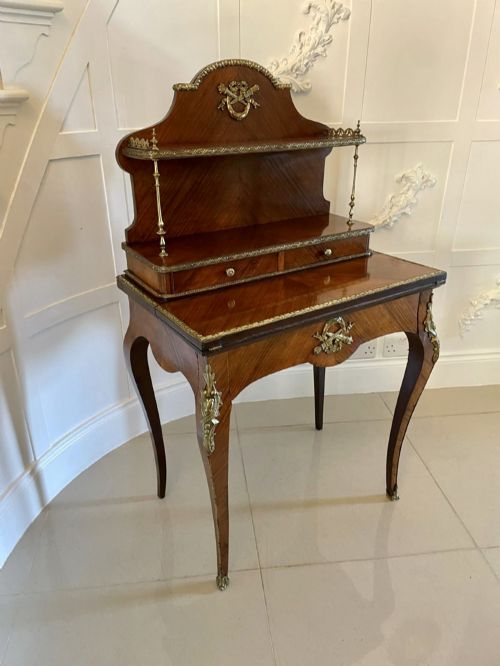
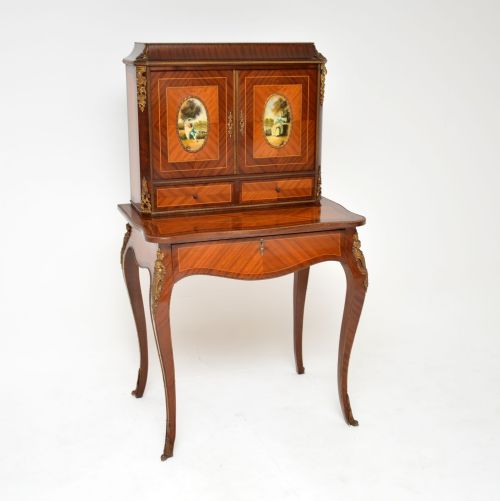
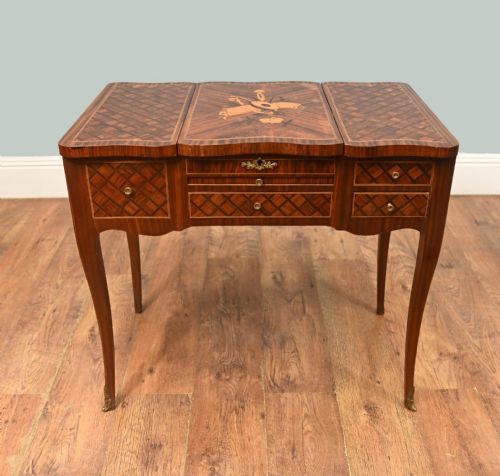


French Rosewood Bonheur Du Jour
A French rosewood bonheur du jour is a small lady's writing desk with compartments, offering refined elegance and practical storage for correspondence.
French Rosewood Bonheur Du Jour
When you search for a French rosewood bonheur du jour, you encounter refined writing furniture primarily originating from the nineteenth century, including Victorian interpretations and Regency examples. These pieces typically combine a writing surface with an upper section of small drawers, cupboards, or pigeonholes designed for stationery and correspondence.
The most common versions met on this page span Louis XV Revival, Louis XVI, and French Rococo Revival styles, alongside inlaid rosewood pieces from the eighteen-eighties. They function both as compact desks and decorative cabinets suitable for a drawing room or boudoir.
Makers and cabinetmakers of the period utilised exotic timbers to create these sophisticated lady's desks, which occasionally double as dressing tables or jewellery cabinets. The surviving examples demonstrate the enduring appeal of compact, multi-functional antique writing furniture.
Materials and construction techniques
The construction relies on solid carcases veneered in figured rosewood and kingwood, frequently enhanced by intricate marquetry inlay and contrasting timbers such as satinwood and walnut. Craftsmen shaped these compact writing desks using traditional joinery methods suited to intricate cabinetwork.
Metal mounts in ormolu, gilt bronze, and brass define the decorative scheme of many pieces, highlighting structural lines and framing panels of wood and porcelain. Glass elements and marble tops also appear on specific secrétaires and side cabinets within the range.
Listings feature nineteenth-century periods, Victorian eras, and Regency pieces constructed from rosewood, kingwood, ormolu, and porcelain in various Revival styles.
Distinguishing quality in the range
The refinement of the marquetry inlay and the depth of the rosewood grain set the finest examples apart from simpler pieces. Master craftsmen achieved superior visual harmony through careful selection of timber veneers and precise geometric or floral patterns.
The French Rosewood Bonheur Du Jour Glossary
- Bonheur du jour
- A small, light lady's writing desk featuring a tiered upper section with shelves, drawers, or a cabinet above the writing surface. The term translates from French as day's delight.
- Ormolu
- Gilt bronze mounts applied to furniture for decorative effect. This technique involves coating a bronze base with a finely ground gold-mercury amalgam and heating it.
- Marquetry
- Decorative veneer work forming pictures or patterns using various woods, shells, or metals. Craftsmen cut thin pieces of material and fit them meticulously into a background veneer.
- Escritoire
- A writing desk with a sloping or drop-front flap concealing compartments and drawers. It shares similarities with the bureau and often incorporates fine inlay.
- Kingwood
- A dense, heavy tropical timber displaying rich dark violet and golden-brown stripes. Cabinetmakers used it extensively for contrasting banding and marquetry on high-end furniture.
French Rosewood Bonheur Du Jour: Frequently Asked Questions
What is a French rosewood bonheur du jour used for?
These pieces served historically as private writing desks for ladies to handle correspondence, keep journals, or store small valuables and jewellery.
Today, they function well as compact writing tables or decorative focal points in sitting rooms and studies where space is limited.
How do I identify a Victorian bonheur du jour?
Victorian examples often incorporate revived continental styles like Louis XV or Sheraton Revival, utilising rich rosewood veneers and marquetry inlay.
They frequently date from the mid to late nineteenth century and reflect the period's taste for ornate, multi-functional lady's writing furniture.
Are these desks suitable for daily writing?
Their compact writing surfaces accommodate laptops, tablets, and letter writing comfortably, provided you use appropriate care with antique veneered surfaces.
The internal compartments and small drawers remain practical for organising stationery, pens, and modern correspondence essentials.