

French Rococo Writing Desk
A french rococo writing desk brings curves, gilt mounts and figured veneers together for a practical surface with theatrical presence.
French Rococo Writing Desk
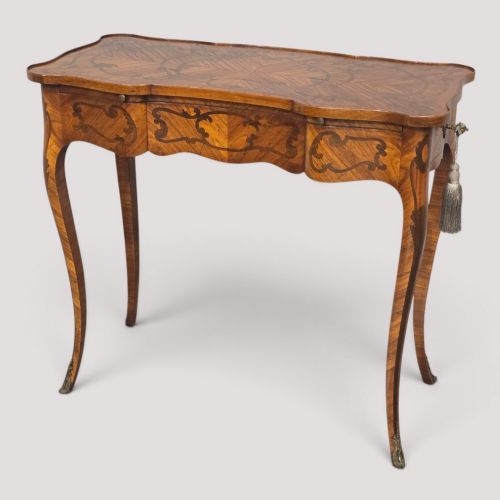
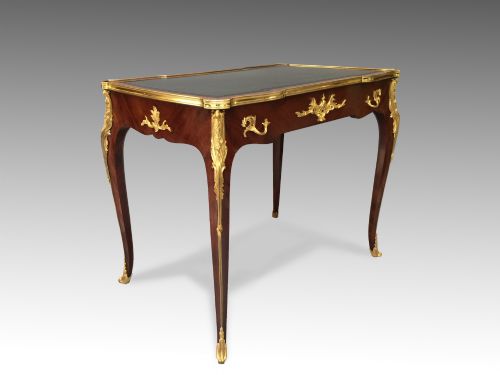
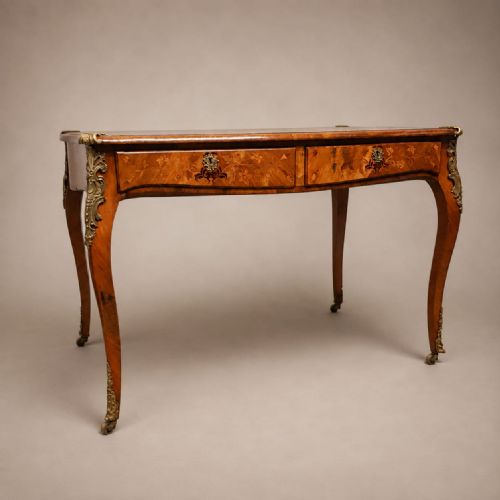
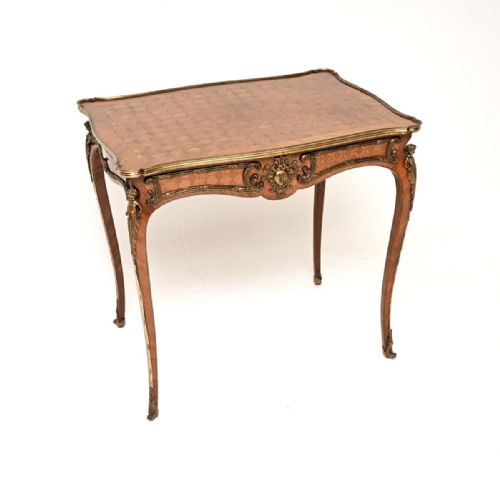
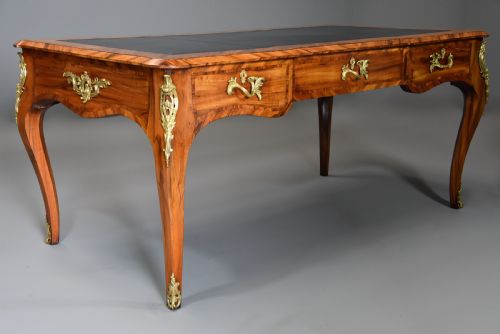
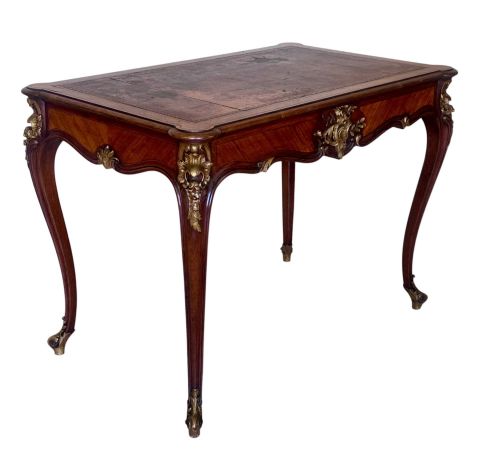
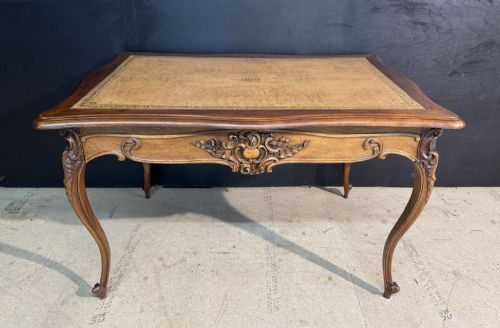
A french rococo writing desk takes the organic lines and asymmetrical flourish of eighteenth-century taste and reinterprets them in nineteenth-century workshops. Buyers seeking this form encounter bureau plats, serpentine writing tables, and inlaid cabinets dating from the Victorian era down to nineteen-thirty, with nineteen-century examples dominating the selection.
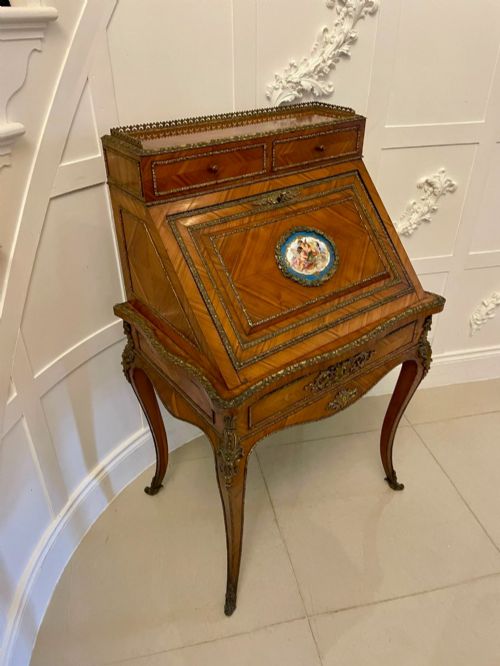
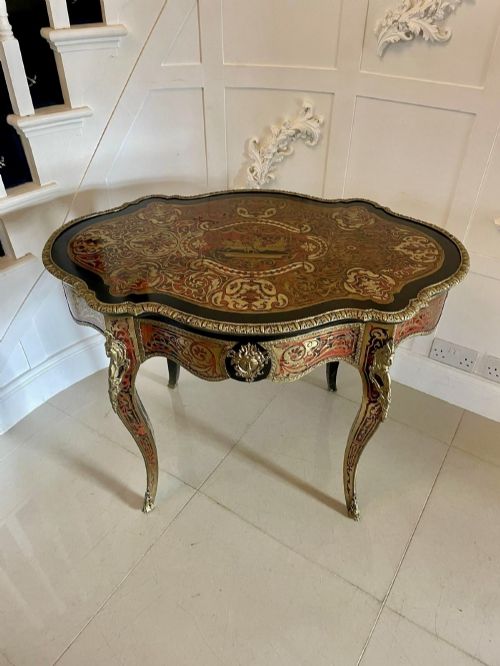
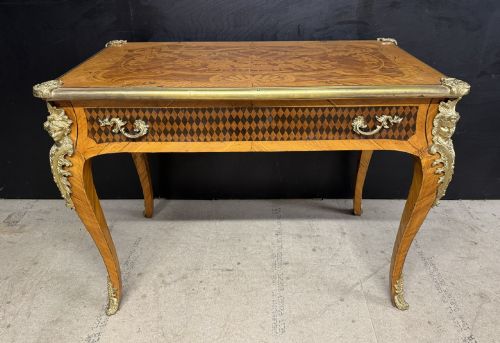
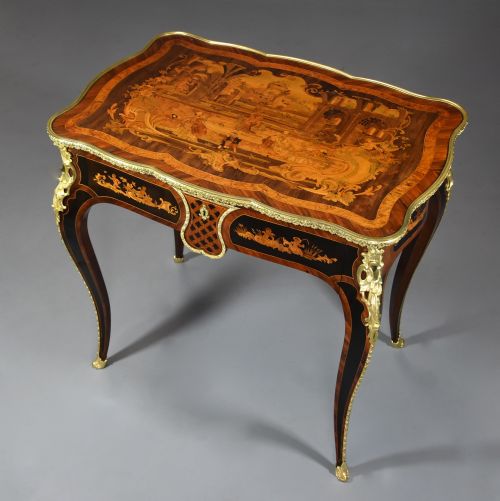
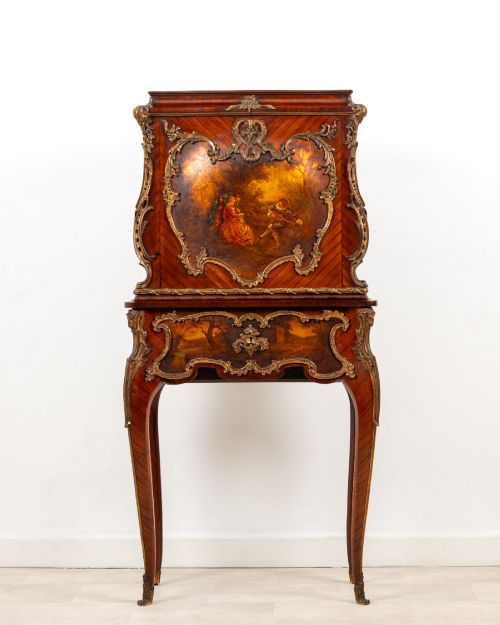
The objects combine domestic utility with elaborate surface decoration, frequently incorporating leather inserts for writing alongside parquetry and marquetry panels. Forms range from freestanding centre tables and kneehole desks to bonheur du jour cabinets and secrétaire units fitted with internal drawers.
Origins span Parisian cabinet makers and English firms producing pieces under strong French influence during the Victorian period. Survival rates favour nineteenth-century revivals over eighteenth-century originals, meaning most pieces met here reflect the renewed enthusiasm of later decades.
Materials and Construction
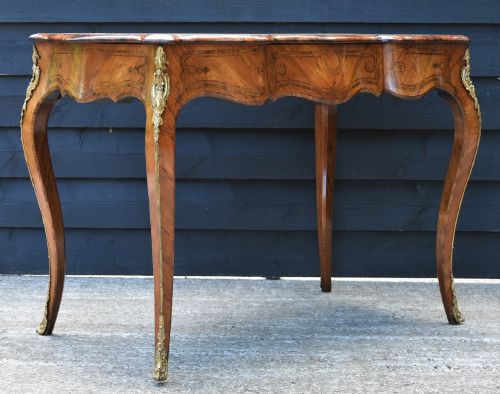
Maker's workshops rely on dense timbers such as kingwood, walnut, rosewood, and mahogany as foundations for intricate veneers. These woods are cut and arranged into geometric parquetry patterns or floral marquetry scenes across tabletops and drawer fronts.
Cast ormolu and gilt bronze mounts follow the serpentine contours of the frames, protecting vulnerable corners and accentuating cabriole legs. Leather writing surfaces are tooled with gold leaf, while specialised panels employ Vernis Martin varnishing techniques or incorporate porcelain plaques.
French Rococo Writing Desk Retail Price Guide 2026
Typical asking prices for french rococo writing desk among the pieces listed under this phrase on Sellingantiques today, from the lower quarter to the upper quarter. They describe what is for sale here now, not the wider market.
Listings feature pieces spanning the nineteenth and early twentieth centuries, constructed from kingwood, walnut, and ormolu.
Distinctions in Quality
The calibre of a piece depends on the precision of the veneer work and the crispness of the cast bronze mounts. Superior examples display seamless joins in the marquetry and hand-chased detail in the ormolu rather than uniform factory casting.
Structural integrity also separates workshop output, visible in the stability of serpentine frames and the smooth operation of drawers and drop-front mechanisms. The weight of the timber and the depth of the finish determine how well the piece holds its presence in a room.
François Linke·Edwards & Roberts·CH. Jeanselme & Co·Millet·Durand
The French Rococo Writing Desk Glossary
- Bureau plat
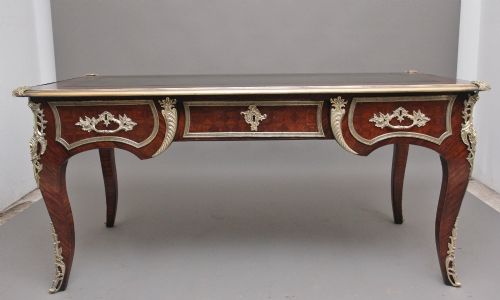
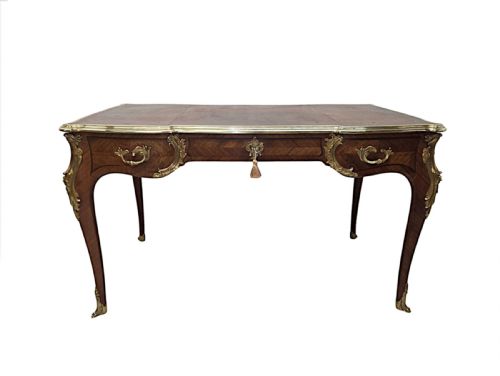
- A freestanding writing table fitted with drawers across the frieze, designed to sit away from walls. These tables often feature leather-lined tops and elaborate ormolu mounts.
- Ormolu
- Gilded bronze used for decorative mounts, handles, and sabots on nineteenth-century furniture. The metal is cast and chased to highlight organic scrollwork.
- Marquetry
- Inlaid patterns formed by fitting contrasting veneers into a wooden ground to create floral or pictorial scenes. It requires considerable skill to align grain and colour.
- Parquetry
- Geometric wood inlay forming repeating patterns such as cubes or chequers across tabletops and drawer fronts. This technique showcases the natural tones of exotic timbers.
- Vernis Martin
- A simulated Japanese lacquer technique developed in France, using translucent varnishes over painted panels. It appears on cabinet doors and secretaire writing units.
French Rococo Writing Desk: Frequently Asked Questions
What is a bureau plat?
A bureau plat is a flat-topped writing table with drawers, designed to stand in the middle of a room rather than against a wall.
These pieces typically feature a leather writing insert and decorative ormolu mounts along the frieze and legs.
How do I date these desks?
Dating relies on timber choices, construction methods, and stylistic revival markers from the nineteenth century.
Most surviving pieces date from eighteen-sixty to nineteen-thirty, reflecting Victorian and Edwardian revivals of earlier French styles.
Where should I place a centre table?
Freestanding centre tables and writing desks suit open floor plans where all four sides remain visible.
Their finished backs and detailed marquetry allow them to function as central room dividers.
What woods are commonly used?
Cabinet makers used kingwood, walnut, rosewood, and mahogany as primary timbers for their rich grain.
These woods provide a dark ground for intricate parquetry patterns and contrasting floral marquetry.
Are these desks practical for writing?
Many models retain their original tooled leather writing surfaces, providing a functional working area.
Fitted drawers and compartments offer storage for stationery while maintaining the decorative exterior.