
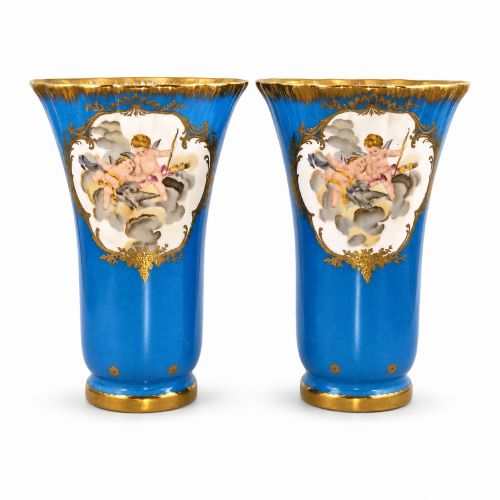


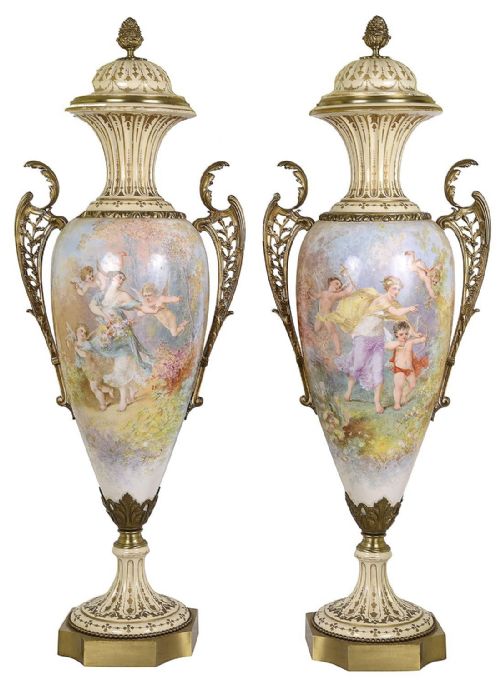

French Rococo Revival Urns
French rococo revival urns are flamboyant nineteenth-century porcelain and gilt bronze statement pieces that bring dramatic continental style into a room.
French Rococo Revival Urns
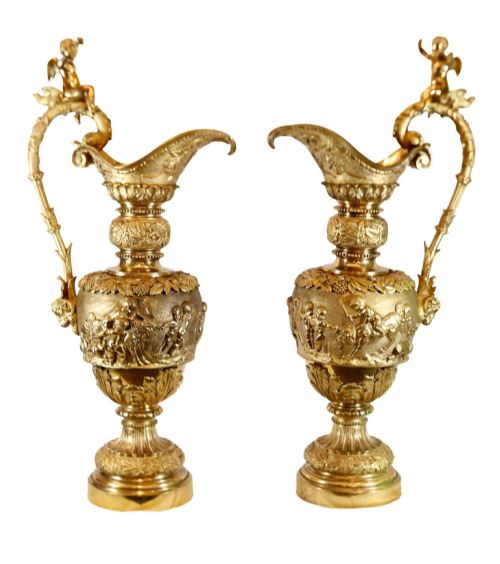
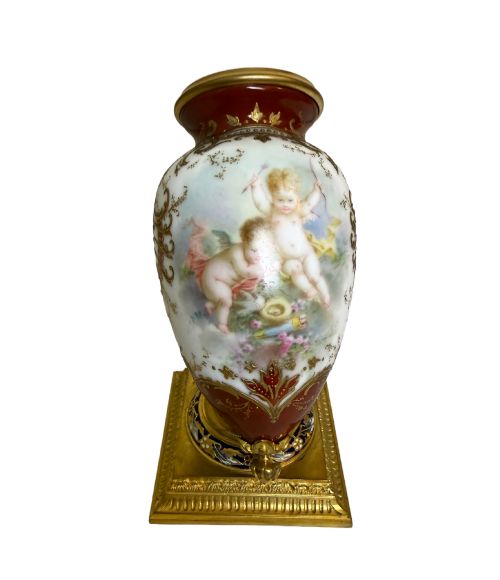
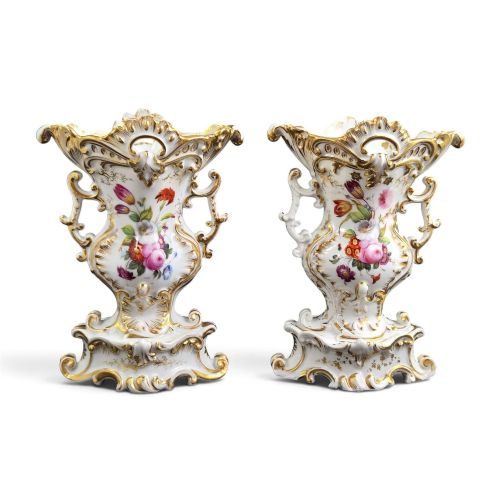
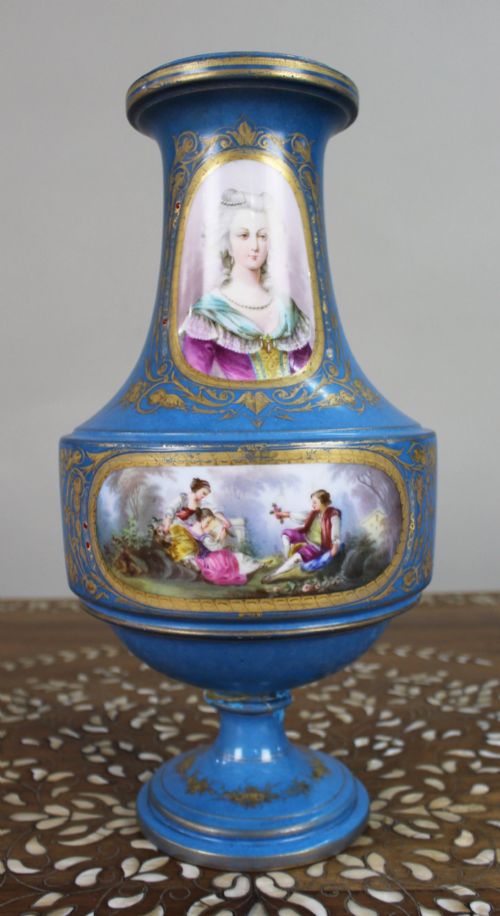
French rococo revival urns encompass nineteenth-century decorative vases, lidded vessels, and clock garnitures fashioned in styles like French Sevres style, Chinoiserie, and Victorian rococo revival. You will most frequently encounter pairs of porcelain and gilt bronze ormolu vases bearing hand-painted floral motifs and rich cobalt or bleu celeste grounds.
Makers and factories such as Jacob Petit, Samson Paris, and KPM Berlin shaped the market during periods spanning the mid-nineteenth century through to about 1900. These ornate objects function primarily as decorative garnitures, mantel ornaments, and converted table lamps designed to dominate a parlour or drawing room.
How they were made
Potters shaped hard-paste and bisque porcelain bodies, applying hand-painted pigments alongside raised white enamel before glazing and firing. Artisans then mounted these ceramic bodies into cast and chased gilt bronze, ormolu, or gilt metal frames.
Metal components required intricate casting and fire-gilding techniques to achieve the characteristic bright golden surface sheen. Hand-painted floral panels and cobalt blue backgrounds were often meticulously executed to imitate earlier factory standards from Sevres or Meissen.
Listings feature nineteenth-century materials including porcelain, gilt bronze, ormolu, enamel, and bisque porcelain across periods from the 1850s to 1900.
What varies in quality
Quality reveals itself in the crispness of the ormolu casting and the delicacy of the hand-painted porcelain decoration. Superior pieces display deeply chased gilt bronze mounts that fit the ceramic body precisely, alongside finely detailed floral painting and vibrant enamel work.
The weight and substance of the gilt bronze mounts separate finer workshop output from simpler commercial pieces. Furthermore, matched pairs with intact covers and well-preserved gilding command greater attention than heavily worn or mismatched garniture components.
Jacob Petit·Samson Paris·KPM Berlin·Vion et Baury·Vincenti of Paris
The French Rococo Revival Urns Glossary
- Ormolu
- A gold-coloured bronze alloy used for decorative mounts on porcelain vessels and clock cases. It provides a rich, metallic lustre that contrasts with painted ceramics.
- Garniture
- A set of three or more matching ornamental vases or urns designed to sit together on a mantelpiece. These matched groups are often paired with a central clock.
- Bleu Celeste
- A bright turquoise or sky-blue porcelain ground colour famously utilised at the Sevres factory. It serves as a popular backdrop for hand-painted floral reserves.
- Potpourri
- A perforated lidded vessel designed to hold dried scented plant materials for perfuming rooms. Many nineteenth-century examples double as decorative display urns.
- Bisque
- Unglazed fired white porcelain that has a matte, tactile finish resembling marble. It was frequently utilised for sculptural figures and decorative vases.
French Rococo Revival Urns: Frequently Asked Questions
How do I identify French rococo revival urns?
Look for asymmetrical scrolls, naturalistic floral motifs, and lavish gilt bronze mounts framing painted porcelain bodies.
These nineteenth-century decorative objects often feature cobalt or bleu celeste backgrounds reminiscent of earlier Sevres production.
Were these urns originally functional?
Most of these vessels served a purely decorative purpose as mantelpiece ornaments, garniture sets, or focal points on furniture.
Some lidded examples functioned as potpourri containers, while later specimens were adapted into table lamps.
What is a clock garniture set?
A clock garniture is a matched decorative ensemble consisting of a central mantel clock flanked by two matching urns or vases.
These three-piece sets were designed to create a symmetrical display across a fireplace mantel or sideboard.