


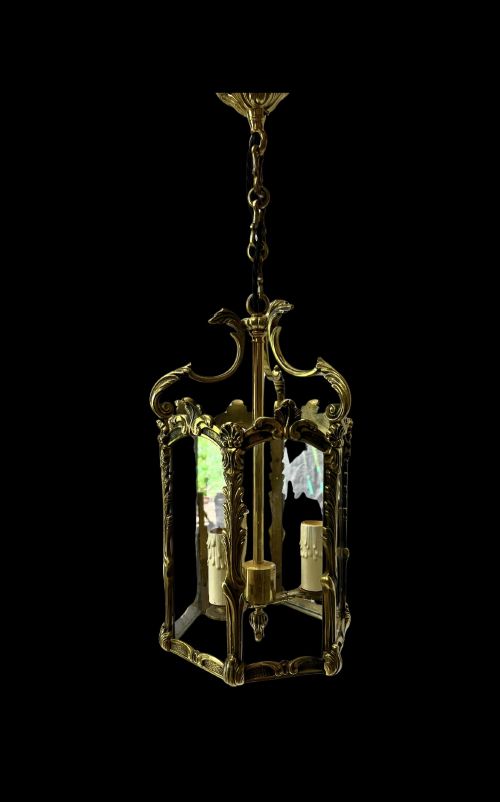


French Rococo Pendant Lantern
These French rococo pendant lantern pieces bring asymmetric curves and intricate brass frames to a hallway, illuminating interiors with period charm.
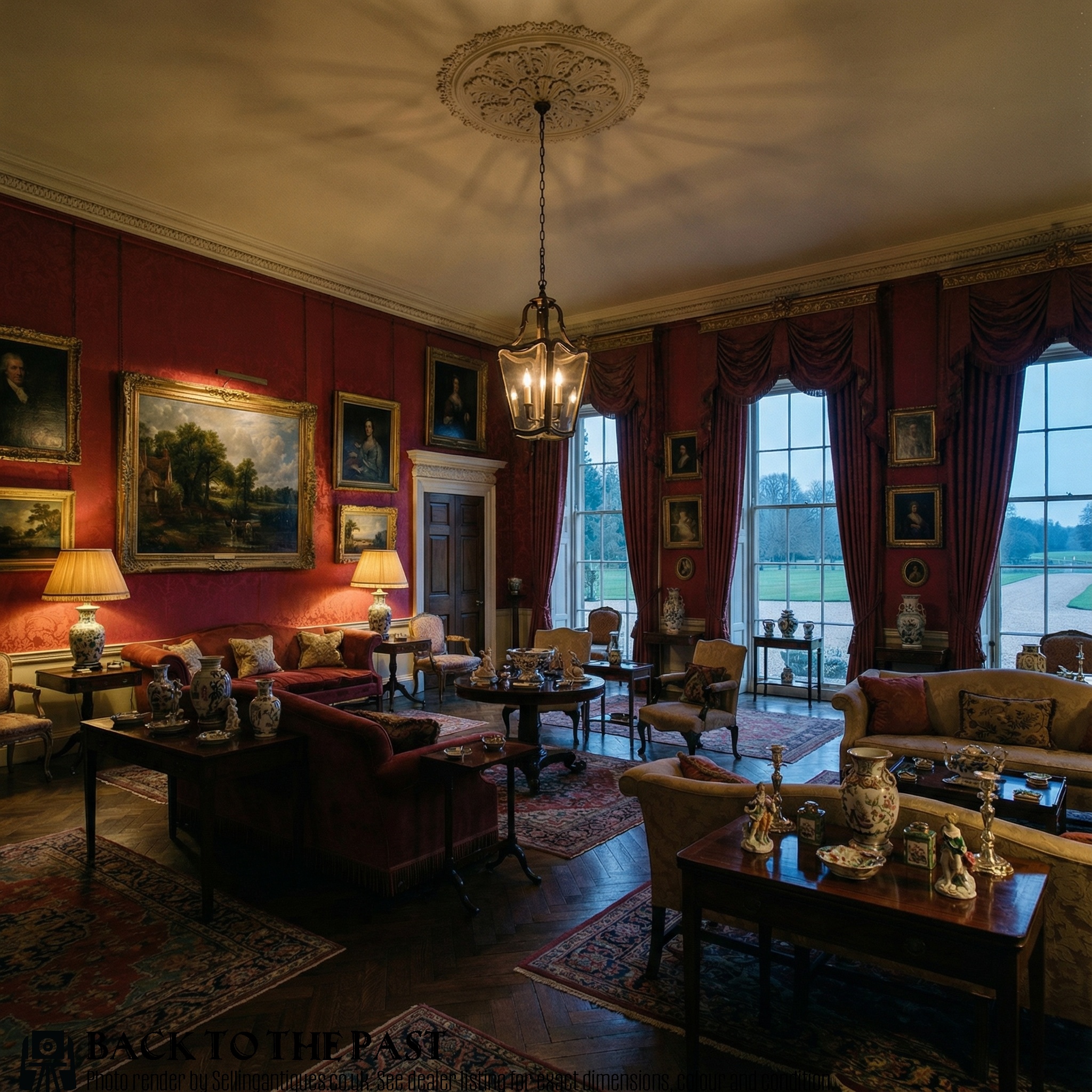
French Rococo Pendant Lantern
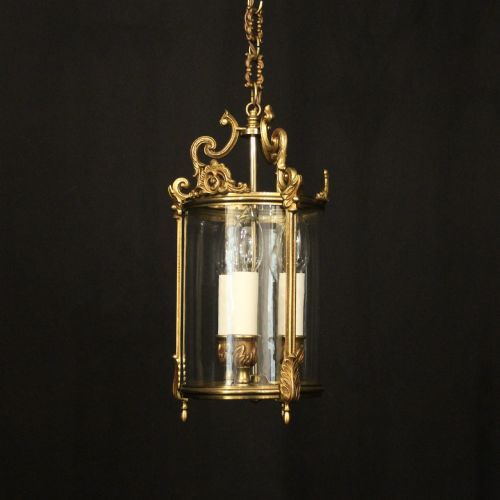
A French rococo pendant lantern brings decorative hanging illumination to a hallway, landing or reception room. These pieces combine glazed panels with ornate metal frames that reflect eighteenth-century design principles.
Most examples found here date from the late nineteenth century through to the 1930s, showing revival styles inspired by earlier chateau interiors. Single and multi-light configurations appear regularly across these decades.
Buyers will encounter ceiling-mounted fixtures described variously as hall lanterns, pendant lights and chandeliers. The core form remains a glazed cage suspended by a chain or rod.
Assessing quality and execution
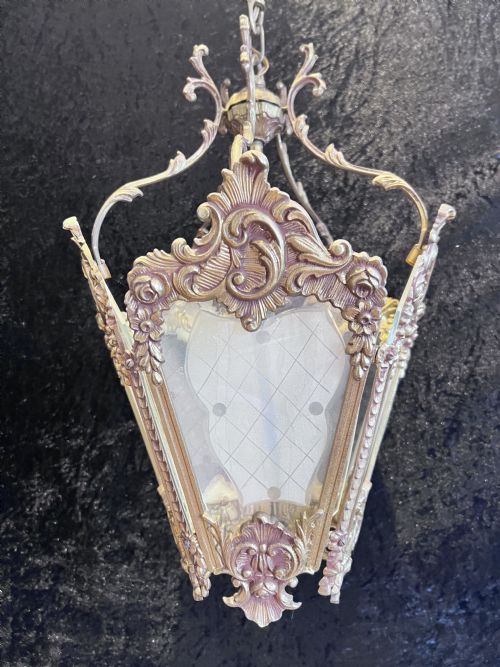
The crispness of the cast brass or bronze detailing distinguishes finer examples from standard production pieces. Superior items display deep chasing and well-defined asymmetric rococo motifs rather than soft, repetitive casting.
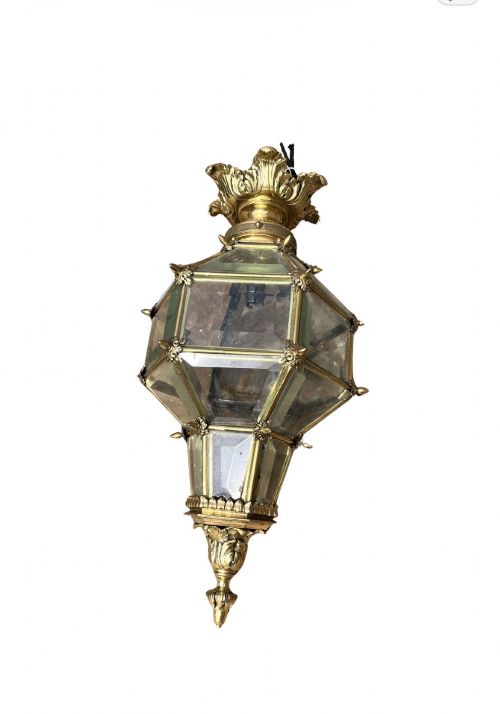
The integration of the glass panels within the metal framework indicates the standard of assembly. Heavy bevelled glass and robust suspension loops denote careful construction suited to domestic environments.
French Rococo Pendant Lantern Retail Price Guide 2026
Typical asking prices for french rococo pendant lantern among the pieces listed under this phrase on Sellingantiques today, from the lower quarter to the upper quarter. They describe what is for sale here now, not the wider market.
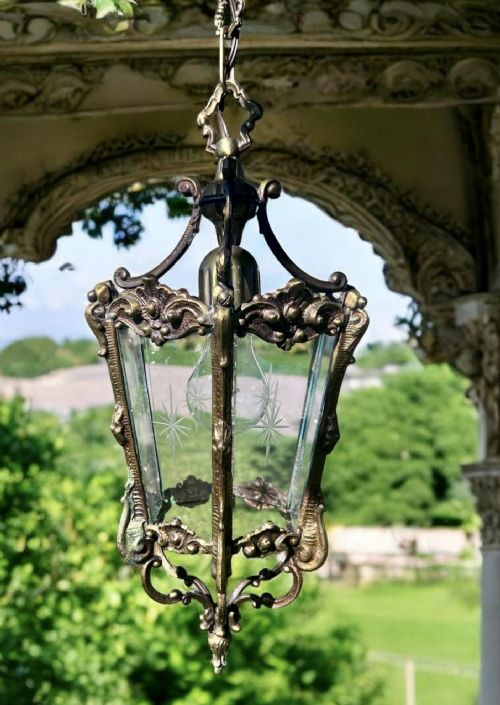
Some lanterns include bevelled glass panes that turn ordinary hallway illumination into a subtle display of refracted light.
The French Rococo Pendant Lantern Glossary
- Rococo Revival
- A nineteenth-century design movement that reinterpreted the ornamental curves and naturalistic motifs of the eighteenth-century French style. This aesthetic defines the decorative metalwork seen on these hanging fixtures.
- Gilt Bronze
- Bronze metal coated with a thin layer of gold or gold-coloured alloy to impart a rich metallic sheen. This finish appears frequently on high-end French hall lanterns.
- Bevelled Glass
- Glass panes featuring angled edges ground down to create a decorative border. This treatment catches the light and adds depth to the lantern enclosure.
- Toleware
- Painted or enamelled sheet metal utilised in specific decorative lighting pieces. It provides an alternative surface finish to polished brass or bronze.
French Rococo Pendant Lantern: Frequently Asked Questions
How do I hang a hall lantern?
Suspension typically relies on a matching chain and ceiling canopy attached to structural joists. Professional electricians should handle the wiring and weight load of metal and glass fixtures.
Height placement depends on clearance requirements in hallways or stairwells, ensuring the fixture clears head height while providing adequate illumination.
What period do these lanterns date from?
The pieces listed span from the late nineteenth century through the 1930s, often adopting earlier Regence or rococo design vocabularies. Revival pieces from this era emulate eighteenth-century chateau aesthetics using contemporary manufacturing techniques.
Dating relies on material analysis, casting style and electrical wiring evidence rather than original eighteenth-century manufacture.
Can I use modern light bulbs?
Standard modern lamp holders inside these fixtures accommodate contemporary LED or incandescent candle bulbs. Care must be taken with wattage limits to protect historic wiring and surrounding metalwork.
Interior access panels or hinged doors allow straightforward bulb replacement without dismantling the structural frame.
How do I clean brass and glass?
Dusting with a dry, soft cloth prevents particulate buildup on the delicate metal surfaces and glass panels. Avoid abrasive polishes that can strip gilt or silvered finishes from bronze and brass.
Glass cleaner applied directly to a cloth rather than the fixture protects the surrounding metalwork from chemical runoff.