
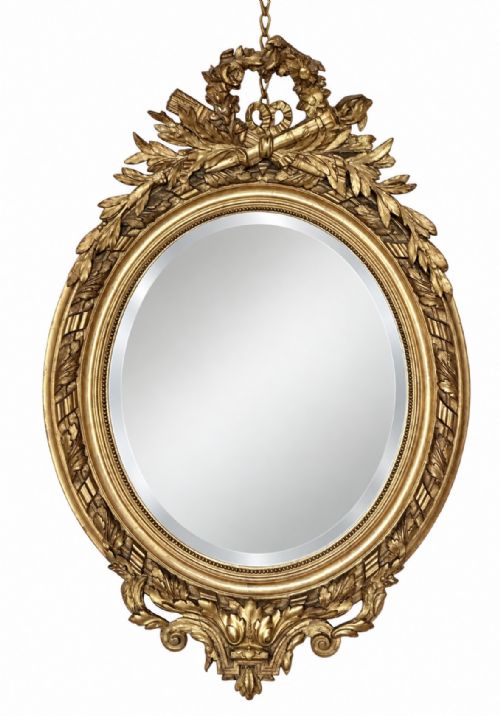


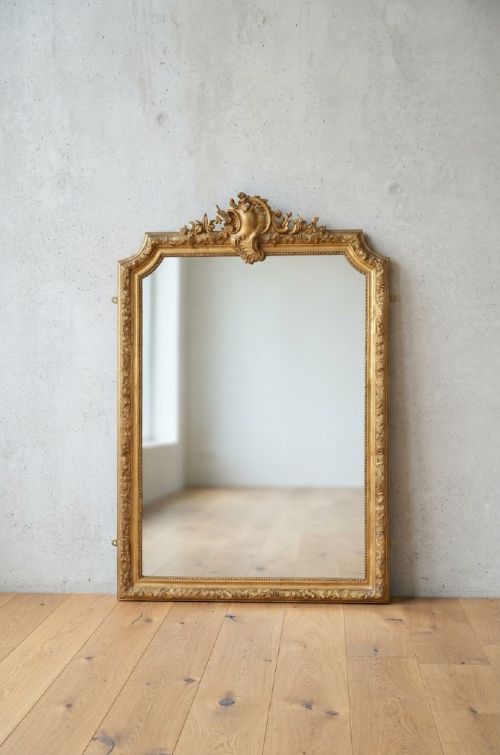
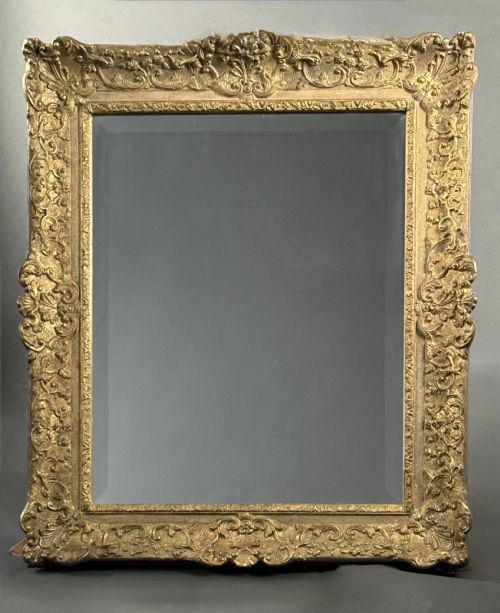
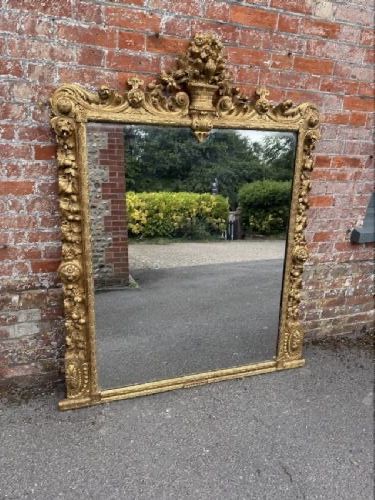
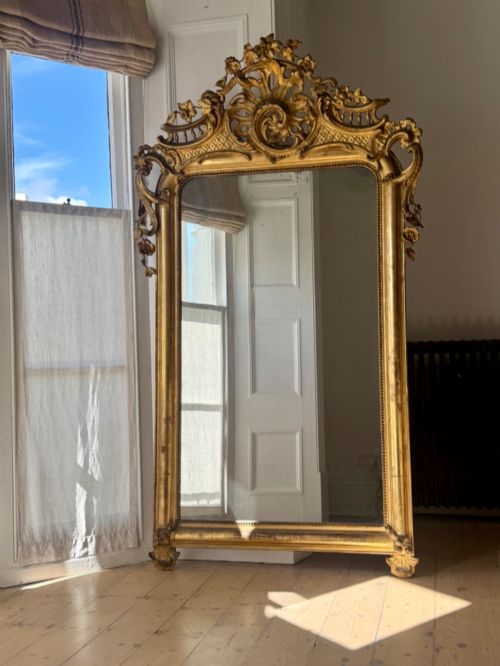
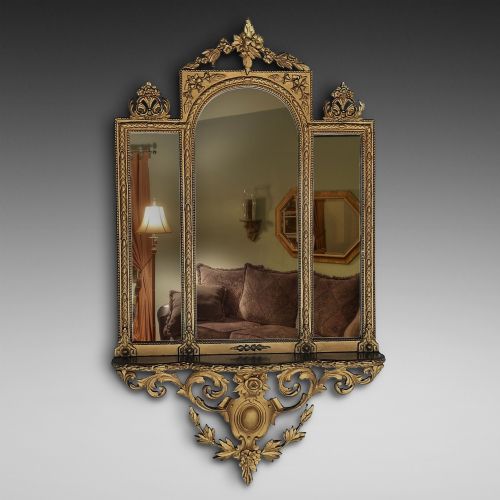
French Rococo Overmantel Mirror
These heavy frames bring grandeur to a room, and a french rococo overmantel mirror reflects light while anchoring a chimney breast.
French Rococo Overmantel Mirror
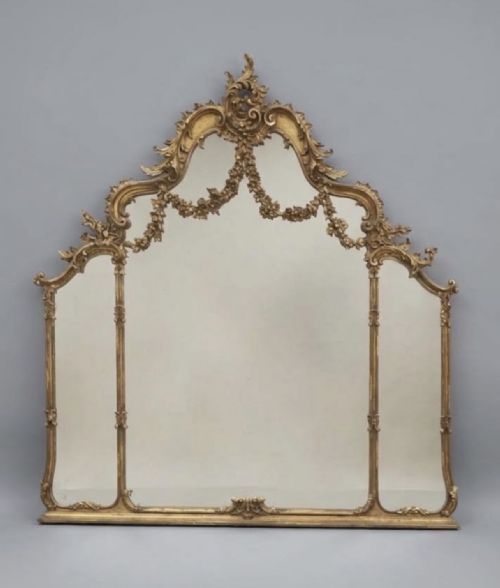
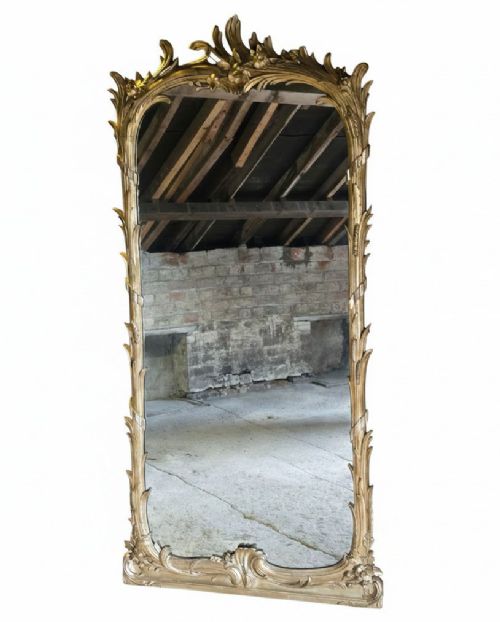
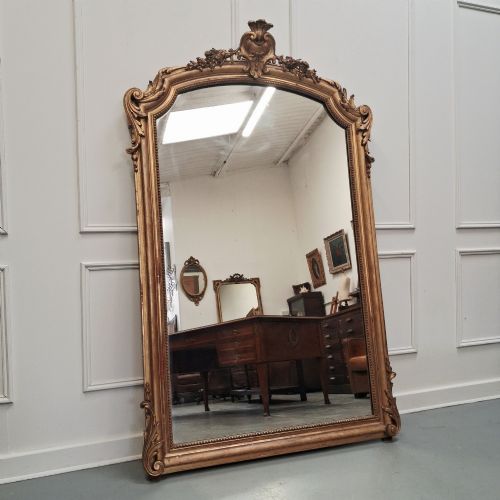
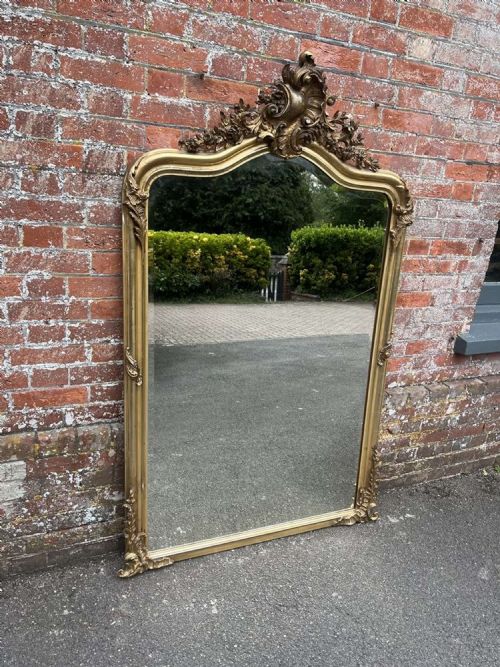
A french rococo overmantel mirror sits above a fireplace, designed to dominate the hearth with sweeping curves, asymmetrical scrolls and naturalistic floral motifs. Most pieces found here belong to the nineteenth century, including the Victorian era and the Rococo Revival, though genuine eighteenth-century examples also appear.
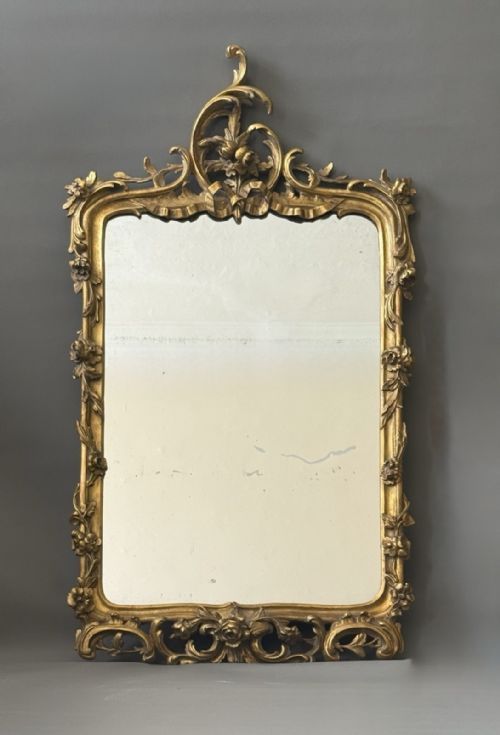
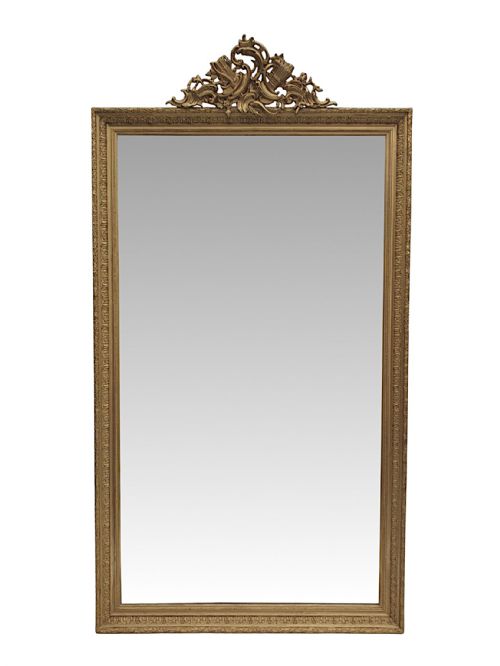
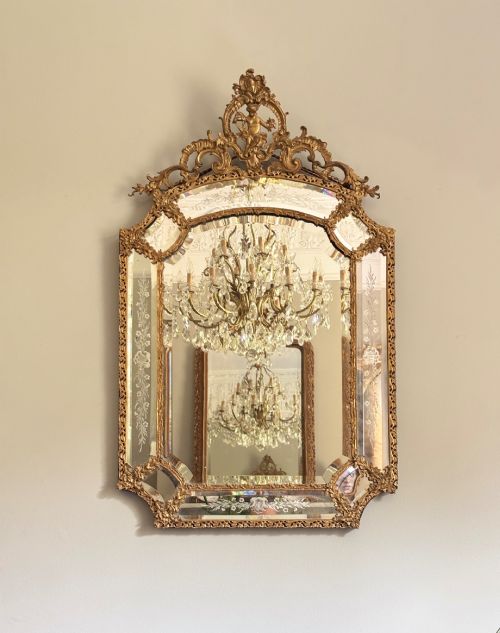
The format ranges from monumental proportions down to smaller wall-hanging variants, often incorporating shaped tops, crested pediments and triple plates. Makers drew heavily on Louis XV inspiration, resulting in frames that curve organically outward and upward from the mantelpiece.
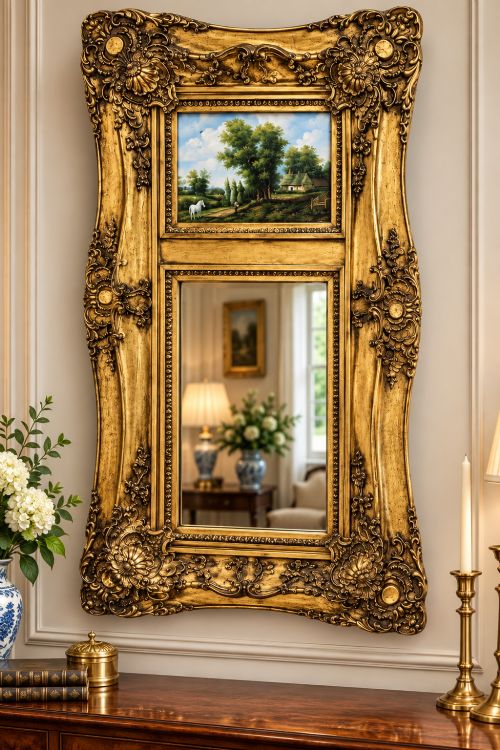
Alongside purely giltwood frames, buyers will encounter trumeau mirrors featuring integrated oil paintings of pastoral scenes or seascapes, as well as painted and parcel-gilt versions.
How they were made
Carvers shaped wooden frames from timber such as oak or pine, then applied layers of gesso to build up the intricate relief work of scrolls and foliage. Artisans laid gold leaf or used gilding over this gesso base to achieve a brilliant metallic sheen.
Mirrors from earlier periods frequently utilise mercury glass plates, which develop distinctive foxing and dark spots over time. Later nineteenth-century examples often employ bevelled mirror plates set securely within the carved framework.
Listings span the eighteenth, nineteenth, and early twentieth centuries, featuring giltwood, gesso, mercury glass, and oil-painted trumeau panels.
What varies in quality
The depth and crispness of the carving distinguish finer work from simpler production, particularly where delicate C-scrolls and floral elements meet the main frame. Hand-carved wooden relief displays sharper undercut details than moulded composition ornament.
The condition and authenticity of the mirror plate itself alter the character of the piece, with original mercury glass holding distinct historic value compared to later replacement mirror glass.
The French Rococo Overmantel Mirror Glossary
- Overmantel
- A mirror specifically proportioned to hang on the wall directly above a fireplace mantelpiece. These frames are usually wider than they are tall or built on a grand scale.
- Gesso
- A plaster-based mixture applied to wood frames to create a smooth surface for carving or gilding. Artisans model high-relief rococo scrolls directly into this compound.
- Mercury glass
- An early type of mirror glass made by pouring a silvering mixture of mercury and tin behind double-walled glass. It produces a mottled, reflective surface with characteristic foxing spots.
- Trumeau
- A decorative wall mirror featuring an integrated oil painting or panel set into the upper portion of the frame. Pastoral landscapes and marine scenes frequently appear above the mirror glass.
- Cushion mirror
- A frame profile where the outer moulding slopes gently inward toward the glass like a soft pillow. This style gained popularity during the mid-nineteenth century revival periods.
French Rococo Overmantel Mirror: Frequently Asked Questions
Where should I hang an overmantel mirror?
These mirrors are traditionally positioned centrally on the wall directly above a fireplace mantelpiece. Their original purpose was to reflect firelight and brighten the room while filling the vertical space below the ceiling.
You can also mount them lower down as leaner mirrors directly against the floor if the proportions of the room allow. Ensure the wall fixings are substantial enough to support the considerable weight of the carved wood and glass.
How do I identify a true nineteenth-century piece?
Examine the construction of the frame from the reverse, where older timber shows hand-tool marks and traditional joinery. The gesso and gilding on nineteenth-century examples often display fine craquelure and minor losses consistent with age.
Check the mirror plate for signs of age such as foxing, light oxidation, or mercury backing rather than modern uniform reflectivity. Stylistic details like Rococo Revival asymmetry also point clearly to nineteenth-century manufacturing techniques.
What is the difference between giltwood and composition?
Giltwood frames feature hand-carved wooden enrichment where the gold leaf is applied directly over gesso on timber. This method allows for deep, sharp undercut details in the floral scrolls.
Composition, or compo, involves moulded putty pressed into shape and applied to a simpler wooden carcass. Compo ornaments feel harder and more uniform under close inspection than hand-carved wood.
How do I care for antique mirror glass?
Clean the glass gently using a soft, dry microfibre cloth to remove dust without disturbing the surrounding gilt surface. Avoid harsh commercial cleaning sprays that can seep behind the edges and damage the silvering or mercury backing.
Keep the mirror away from direct dampness and extreme temperature fluctuations to prevent the wooden frame from warping and the gesso from cracking.