
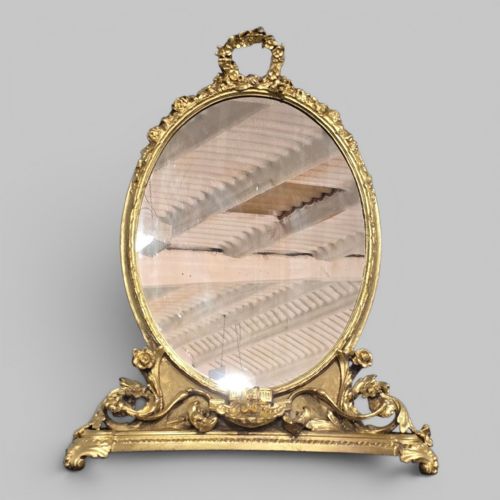


French Rococo Dressing Table
A French rococo dressing table brings flamboyant curves and intricate carving to a bedroom, offering a surface for mirrors and cosmetics.
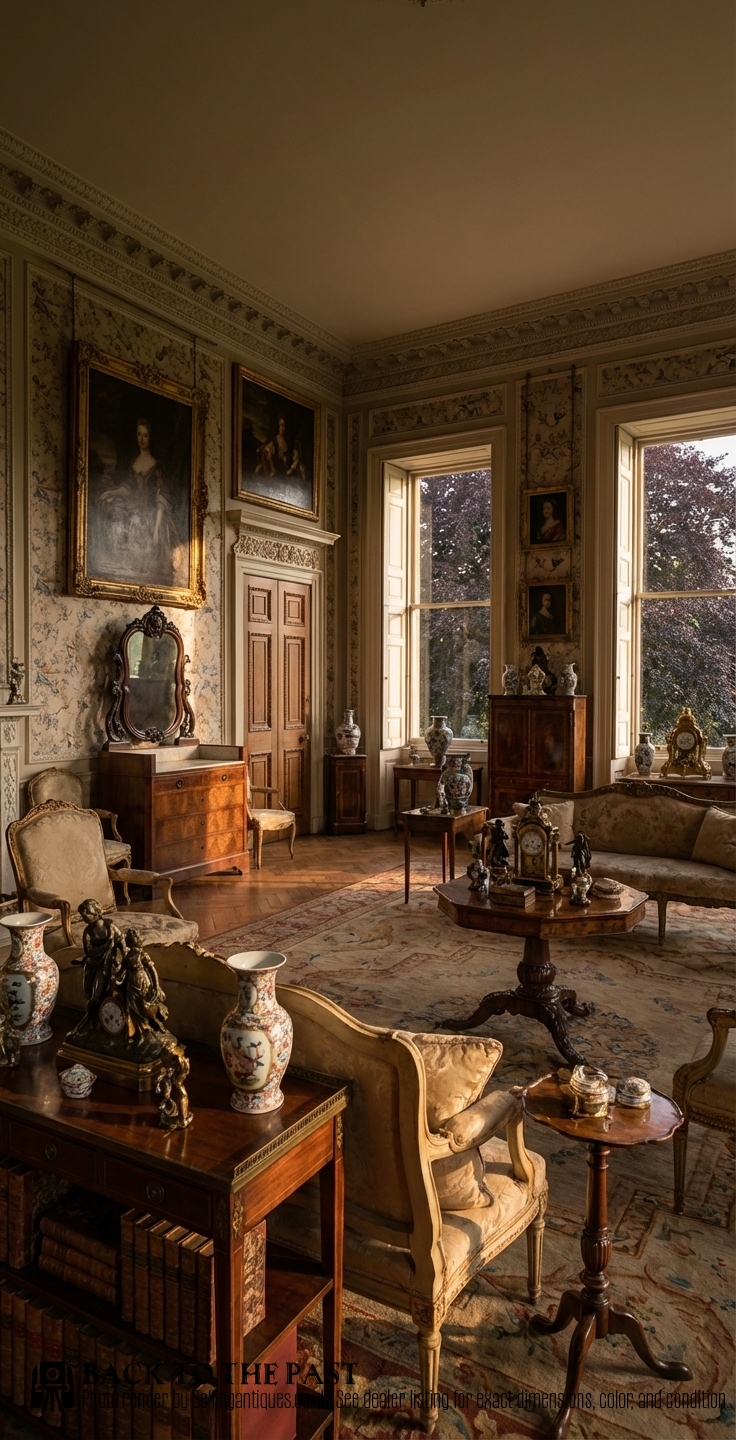
French Rococo Dressing Table
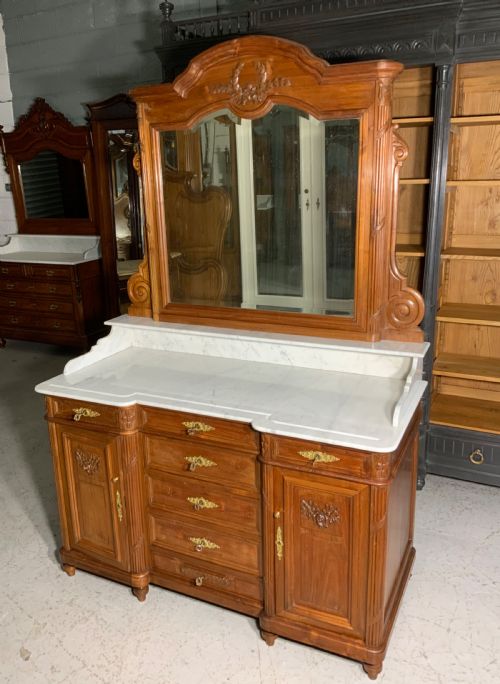
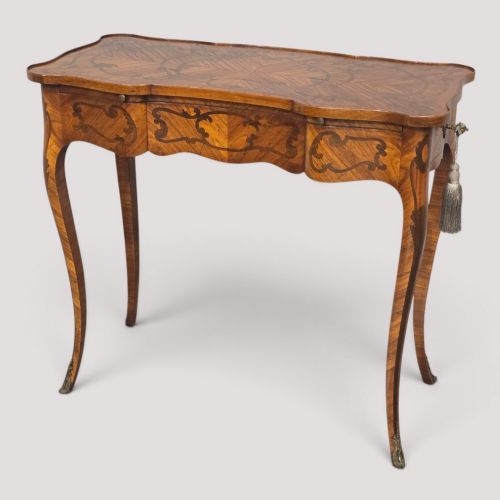
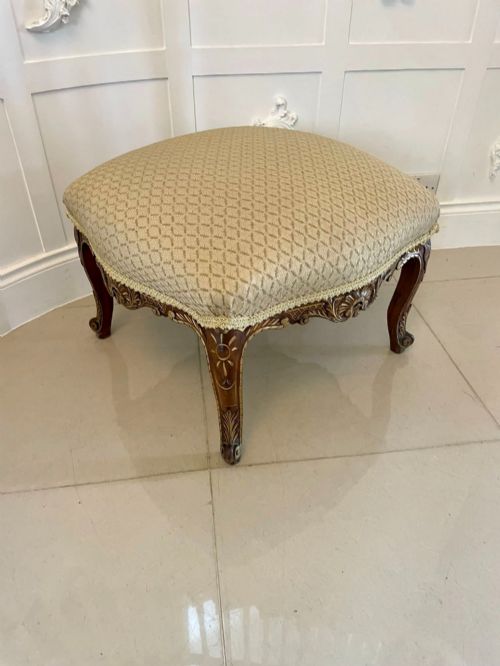
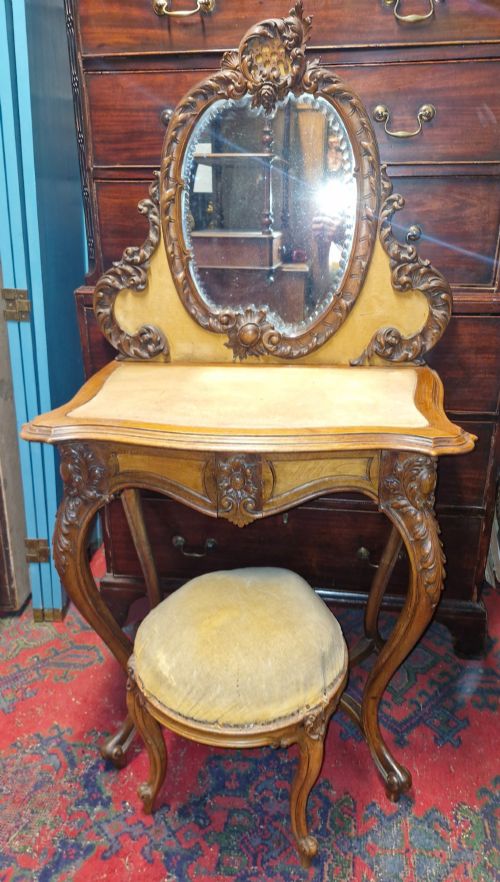
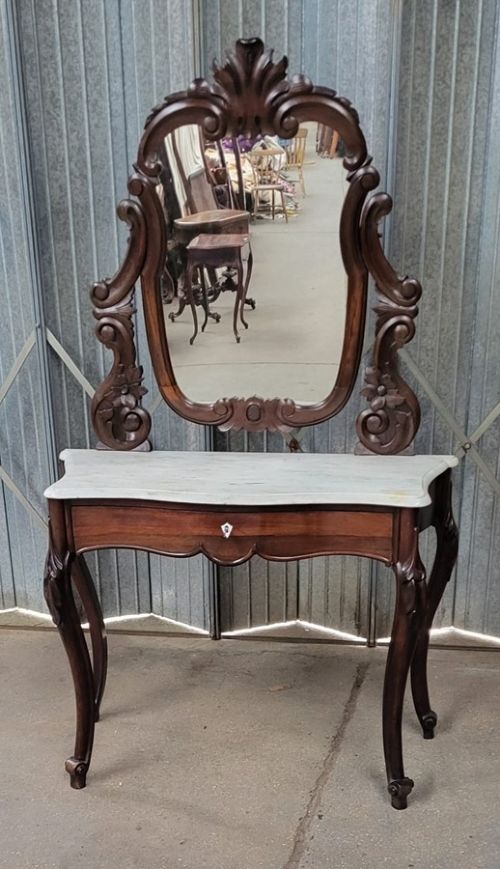
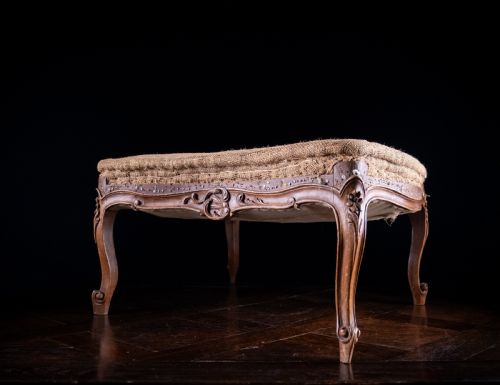
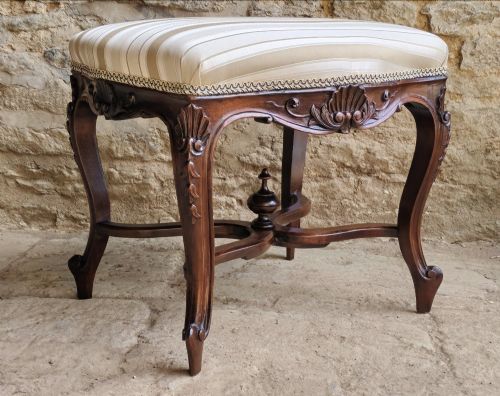
A French rococo dressing table combines asymmetric forms, curved lines, and elaborate carved ornamentation derived from mid-eighteenth-century design. These pieces often incorporate matching or associated seating such as stools alongside the main vanity surface.
The examples gathered here span periods from the nineteenth century into the twentieth century, reflecting revivals of Louis XV and Rococo aesthetics. Alongside full dressing tables, you will encounter related table mirrors, desks, and side tables sharing the same vocabulary of curves.
Materials range from walnut, mahogany, and kingwood to painted finishes and giltwood frames. Many tables incorporate marble tops or decorative marquetry inlays that distinguish them from simpler utilitarian furniture.
Materials and construction methods
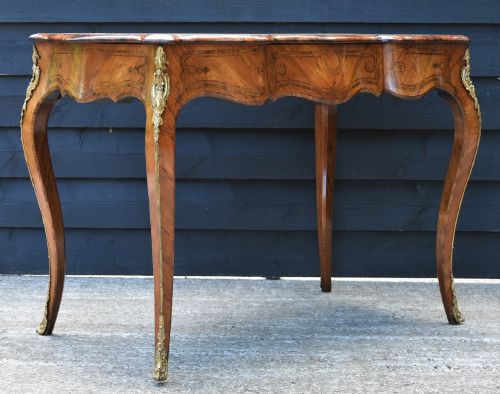
Makers utilised native and exotic timbers such as walnut, mahogany, kingwood, and tulipwood, frequently shaping them into serpentine or bombé contours. Marquetry inlays and applied ormolu mounts added decorative complexity to carcass structures.
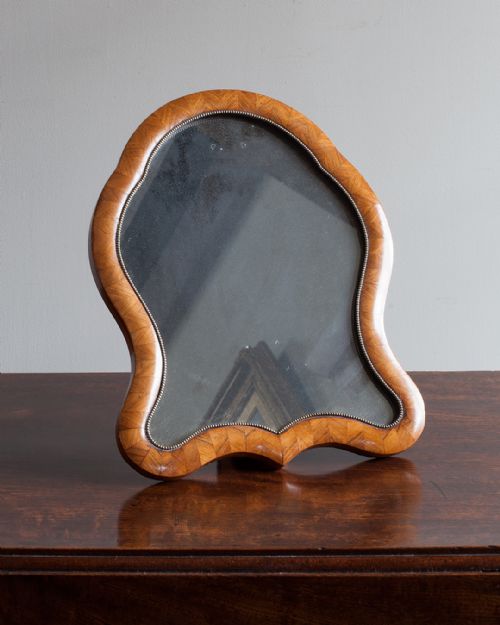
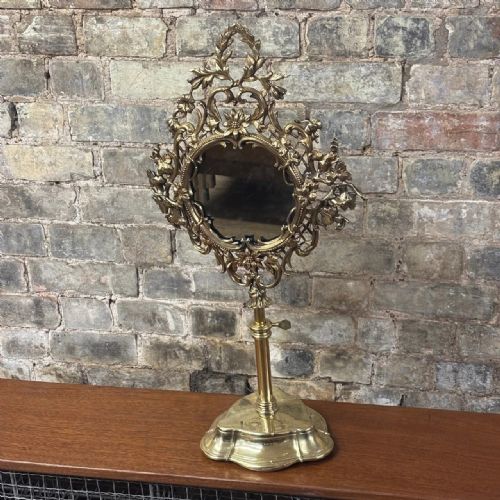
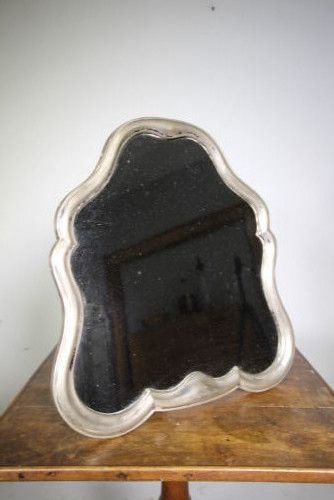
Carved details in solid walnut, beech, or oak demonstrate traditional hand-working techniques including pierced scrollwork and asymmetric foliage. Table mirrors and dressing glasses often incorporate bevelled glass plates set into brass, giltwood, or gesso frames.
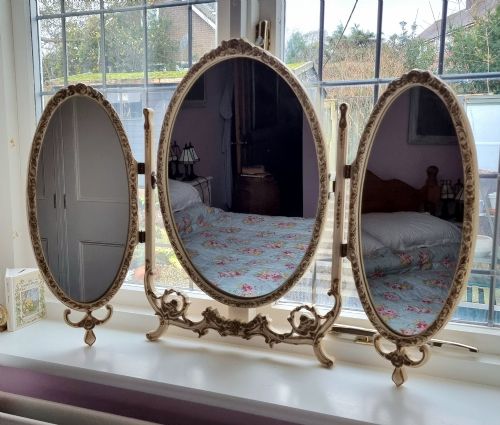
Several mirrors fold for travel, proving that nineteenth-century vanity knew no geographical bounds.
Assessing quality in period examples
Quality rests upon the crispness of the hand-carving and the precision of the joinery shaping the serpentine curves. Pieces utilising finely figured veneers, detailed marquetry, and substantial ormolu mounts generally reflect higher standards of craftsmanship.
The integrity of the structural frame, the weight and clarity of the mirror glass, and the retention of original marble tops or painted surfaces determine the desirability of a piece. Finer examples maintain harmonious proportions between the dressing table and its associated stool.
Maison Pretot Paris·Jean Gille·Joseph Meissonnier
The French Rococo Dressing Table Glossary
- Ormolu
- Gilded bronze mounts applied to furniture. This technique adds metallic highlights to corners, drawer fronts, and mirror frames.
- Serpentine
- A furniture front or top curving inward centrally and outward at the ends. It provides the characteristic undulating silhouette seen on rococo pieces.
- Marquetry
- Fitted pieces of wood veneer forming decorative patterns or pictures on a surface. It demonstrates considerable cabinetmaking skill.
- Kingwood
- A dense, richly figured timber often used for contrasting veneers in nineteenth-century revival furniture. It displays deep brown tones with darker figuring.
- Gesso
- A plaster-like mixture applied to wood surfaces as a base for gilding or painting. It allows for sharp, moulded relief decoration on frames and mirrors.
French Rococo Dressing Table: Frequently Asked Questions
What is a French rococo dressing table?
A French rococo dressing table is a decorative vanity characterised by curved lines, cabriole legs, and ornate carving inspired by eighteenth-century French design.
These pieces frequently include integrated or matching mirrors and are often paired with small upholstered stools.
How do I date a revival dressing table?
Dating relies on timber selection, construction methods, and hardware styles. Pieces here date from the nineteenth and early twentieth centuries during distinct revival periods.
Examining secondary woods, joinery, and the wear on mirror glass helps narrow down the decade of manufacture.
Are mirrors usually attached to the table?
Surviving examples show a mix of configurations. Some dressing tables feature fixed superstructure mirrors, while others are accompanied by separate table-top dressing glasses.
Table mirrors were also made as standalone items to sit atop side tables or chests.
How should I care for marble-topped vanities?
Marble tops require simple cleaning with a damp cloth and mild soap. Avoid acidic cleaners or harsh chemicals that can etch the polished stone surface.
Applying a specialist stone wax helps protect the surface from everyday cosmetic spills.
What seating matches these dressing tables?
Low stools, footstools, and small side chairs with carved wooden frames and upholstered seats accompany these vanities. They were specifically proportioned to fit beneath the kneehole of the dressing table.