

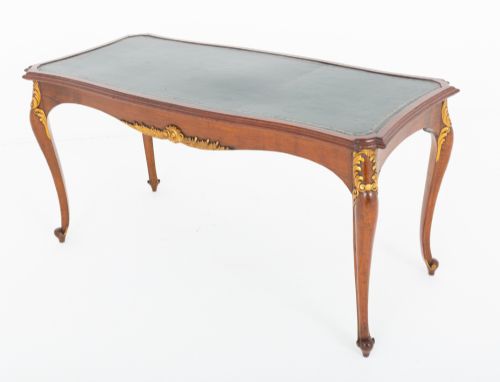
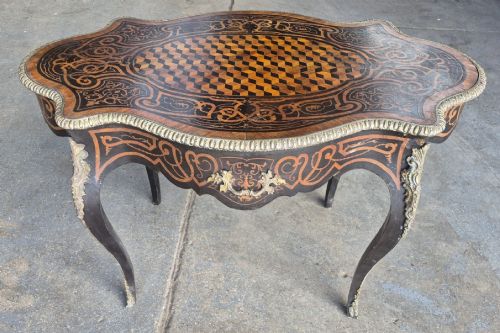
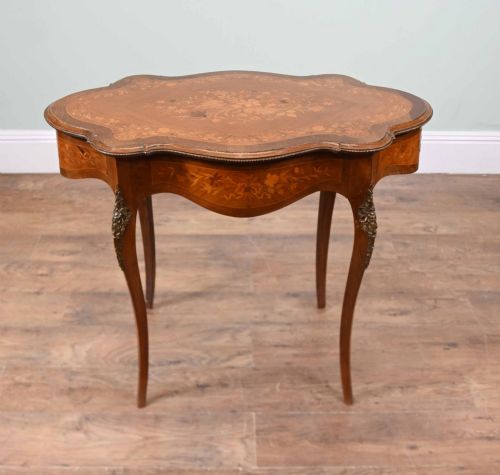
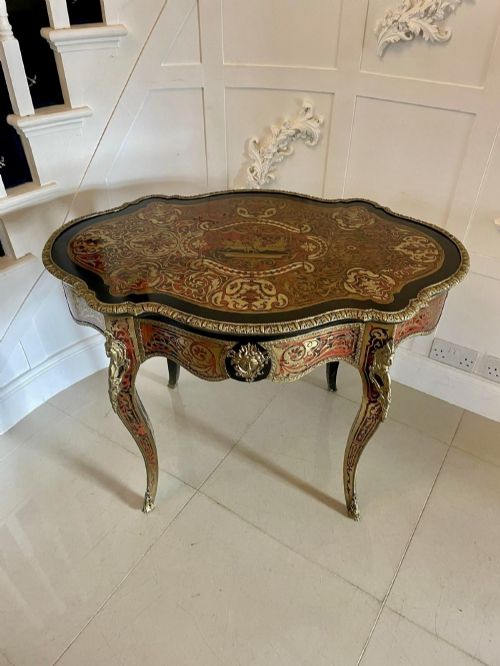




French Rococo Centre Desk
A French rococo centre desk combines free-standing elegance with elaborate serpentine curves, offering a distinguished writing surface designed to anchor any room.
French Rococo Centre Desk
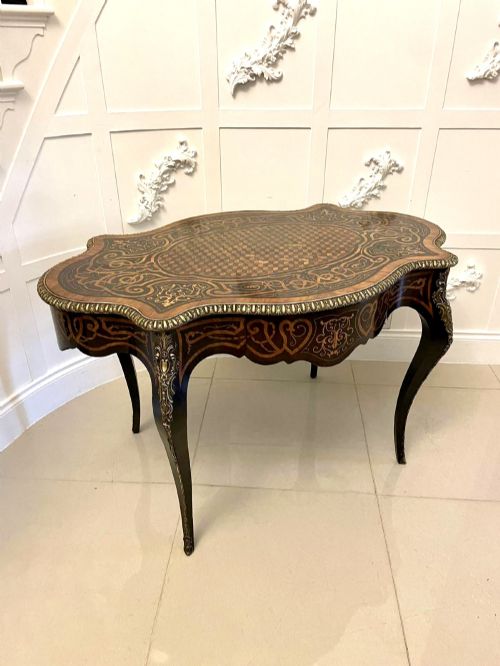
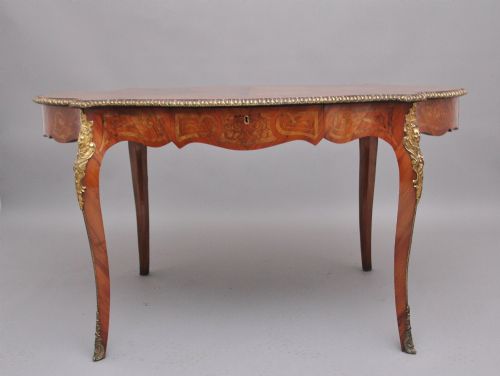
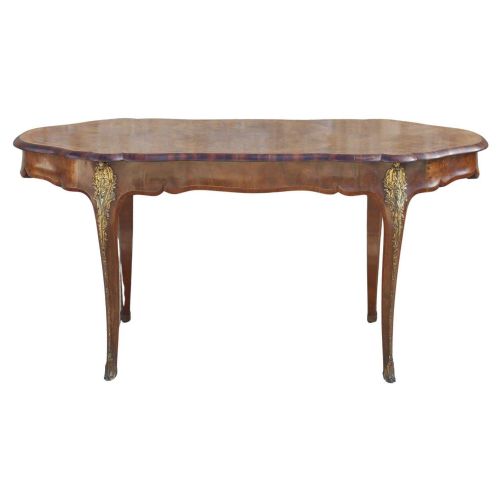
A french rococo centre desk brings together the functions of a writing surface and a fully finished freestanding table, designed to sit proudly in the middle of a room rather than against a wall. These pieces frequently appear in revival styles dating from the nineteenth century, channeling eighteenth-century aesthetic ideals.
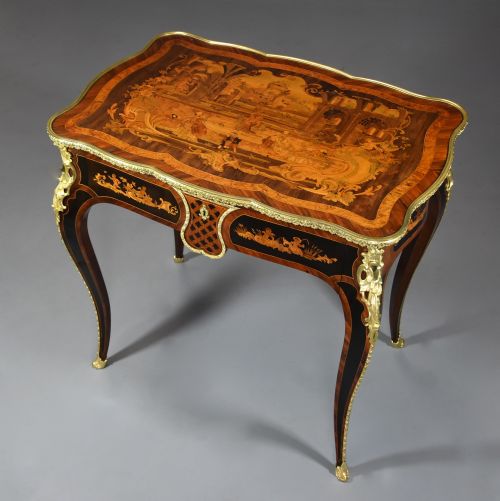
Makers fashioned these works into various forms including bureau plats, writing tables, and shaped centre tables. The prevailing silhouette relies upon serpentine lines and cabriole legs, maintaining a decorative presence from every viewing angle.
Construction and Materials
Craftsmen utilised a rich palette of timbers for the exterior surfaces, selecting burr walnut, kingwood, rosewood, satinwood, and coromandel to achieve intricate grain patterns. Marquetry and parquetry techniques allowed artisans to lay down geometric and floral wood veneers with exact precision.
Mounts cast in ormlou and gilt bronze accentuate the structural contours and protect vulnerable corners. These metal ornaments are chased by hand to introduce high-relief detailing that complements the surrounding inlaid wood.
French Rococo Centre Desk Retail Price Guide 2026
Typical asking prices for french rococo centre desk among the pieces listed under this phrase on Sellingantiques today, from the lower quarter to the upper quarter. They describe what is for sale here now, not the wider market.
Some tables hide drawers behind serpentine aprons, keeping your stationery safe from inquisitive eyes.
Assessing Quality and Execution
The sophistication of the marquetry inlay establishes the baseline of refinement, where tighter, more complex floral or geometric motifs demand greater skill from the cabinetmaker. Subordinate examples rely on simpler wood grains without the meticulous multi-timber composition.
The crispness of the ormlou mounts further distinguishes superior pieces, as heavily chased and deeply sculpted bronze work indicates workshop investment. Weaker examples feature cast mounts with softer details and minimal hand-finishing.
Holland + Son
The French Rococo Centre Desk Glossary
- Bureau plat
- A freestanding writing desk fitted with drawers across the frieze. It lacks a superstructure and presents a finished back.
- Ormolu
- Gilded bronze used for decorative mounts and furniture hardware. It provides a bright metallic contrast against dark exotic woods.
- Marquetry
- The art of applying small pieces of veneer to a structure to form decorative patterns. Artisans cut various woods to fit together like a puzzle.
- Cabriole leg
- A furniture leg featuring a double curve that bends outward at the knee and tapers inward at the foot. This shape derives from animal limbs.
- Parquetry
- Geometric wood inlay work arranged in repeating patterns such as cubes or chequers. It creates a structured contrast to floral marquetry.
French Rococo Centre Desk: Frequently Asked Questions
What is a bureau plat?
A bureau plat is a specific type of writing table featuring a flat top and frieze drawers. It is designed to stand free in a room.
Unlike traditional desks with shelving or backboards, this form offers access from the front while displaying finished cabinetry on all four sides.
How do I style a centre desk?
Positioning a centre desk in the middle of a room allows the intricate marquetry and gilt-bronze mounts to be appreciated from any angle. Keep the surface uncluttered to showcase the wood grain.
Pair the piece with a low-backed chair that tucks neatly underneath to preserve the clean silhouette of the cabriole legs.
What woods were commonly used?
Cabinetmakers employed exotic and native hardwoods including burr walnut, kingwood, rosewood, and satinwood. These veneers offered contrasting natural colours.
Inlayers used these varied tones to construct detailed floral marquetry panels and geometric parquetry designs across the desk top.
How do I date a revival piece?
Nineteenth-century revival pieces often emulate eighteenth-century Louis XV designs through the use of machine-cut veneers alongside hand-chased ormolu mounts. Examine the secondary timbers inside the drawers.
Construction methods and nail types inside the framing help differentiate nineteenth-century workshop production from earlier antique periods.