


French Rococo Candelabrum
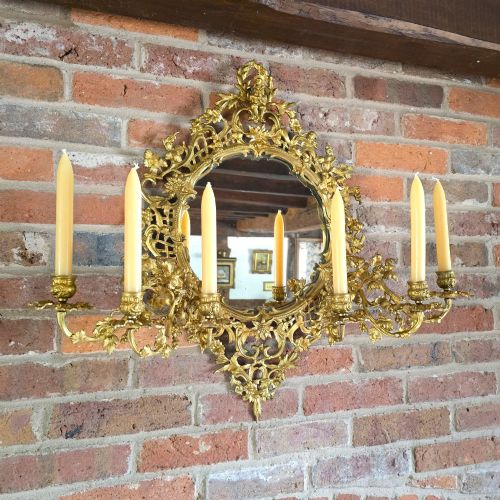
A french rococo candelabrum brings ornate nineteenth-century scrolling and gilt metalwork to a mantelpiece or wall.
French Rococo Candelabrum
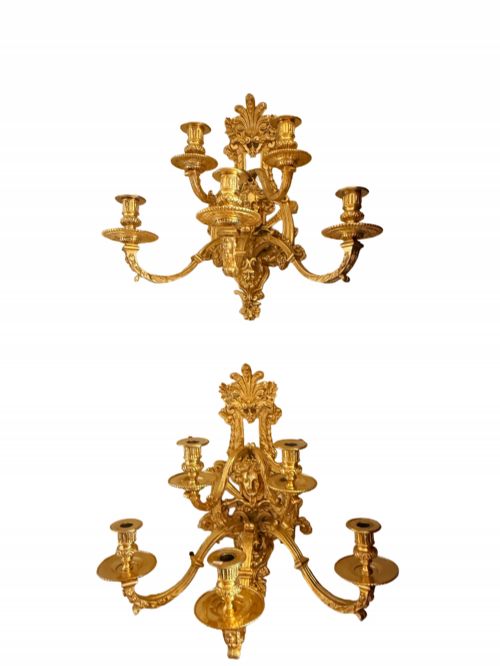
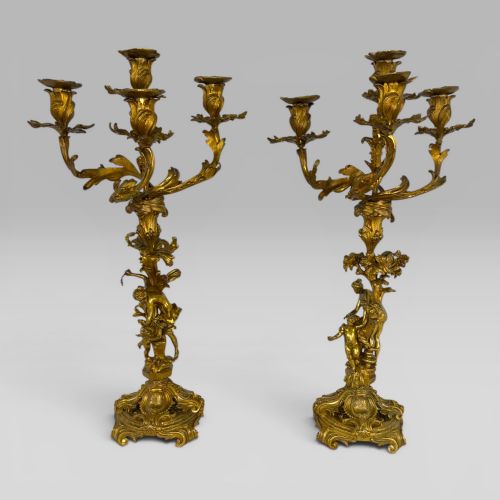
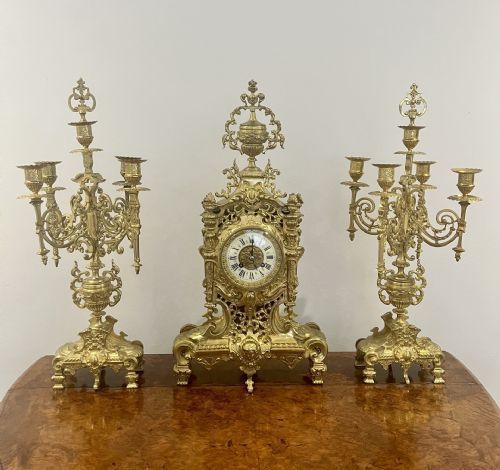
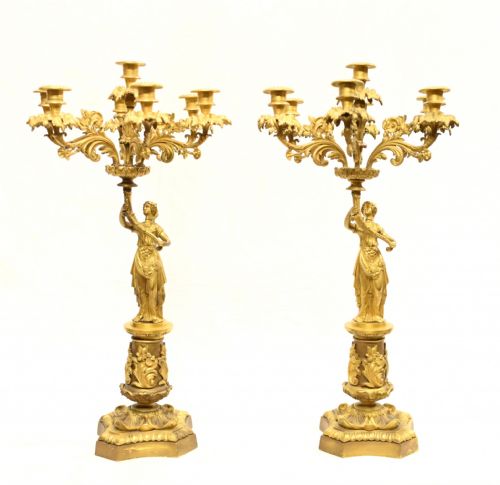
A french rococo candelabrum takes the form of multi-branched candle holders, wall sconces, and clock garniture sets originating primarily in nineteenth-century France.
Makers produced these pieces in styles spanning French Rococo Revival, Louis XV, and Second Empire aesthetics, incorporating figures such as cherubs, puttis, and birds.
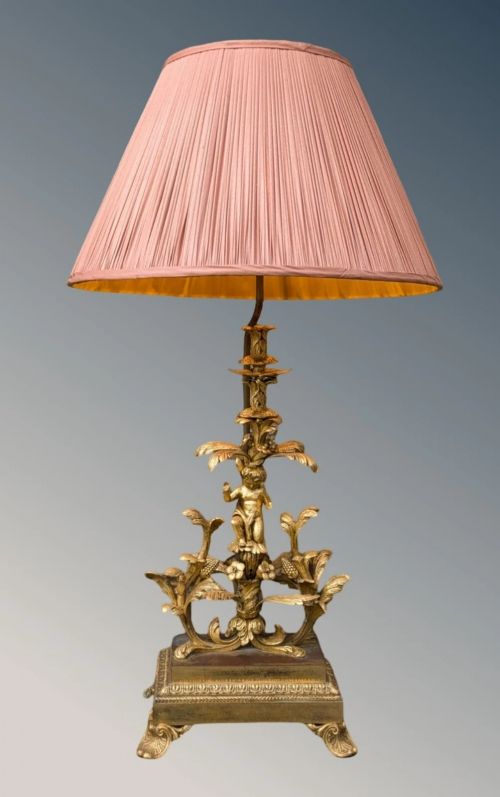
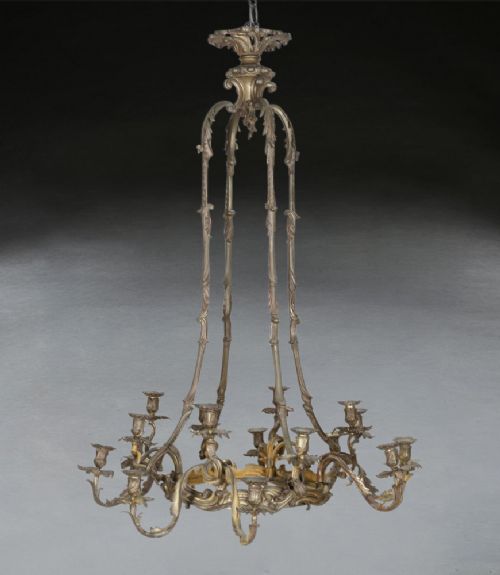
Buyers encounter table lamps, chandeliers, and wall lights alongside traditional candelabras, frequently mounted on marble bases or paired as matching sets.
Materials and Technique
Foundries cast these pieces predominantly in bronze, brass, and ormolu, applying fire gilding or silver plating to achieve luminous metallic surfaces.
Artisans combined metalwork with contrasting elements including marble bases, porcelain figures, enamel, glass crystals, and occasional silver giltwood.
Workshops utilised detailed chasing and figural modelling to create the asymmetry and scrolling foliage characteristic of the style.
Listings feature items from the nineteenth and early twentieth centuries, constructed in gilt bronze, ormolu, brass, marble, and porcelain.
Quality and Execution
The refinement of the casting and the depth of the metal chasing separate standard production from superior examples.
Integration of subsidiary materials, such as finely painted porcelain or dense marble plinths, determines the overall execution tier of a piece.
The French Rococo Candelabrum Glossary
- Ormolu
- Gilt bronze produced by applying a mixture of gold and mercury to a bronze base and heating it. This technique creates a durable golden finish seen on nineteenth-century pieces.
- Garniture
- A set of three or more matching decorative objects, typically comprising a central clock flanked by candelabras or vases. These sets balanced mantelpiece displays in nineteenth-century interiors.
- Torchère
- A stand or candelabrum designed to hold a light source high. The term derives from the French word for torch.
- Sconce
- A wall-mounted lighting fixture with multiple branches. Antique versions often feature scrolling arms and figural mounts.
- Chasing
- The process of refining cast metal by hand with punches and chisels. Fine chasing adds crisp detail to leaves, scrolls, and figures.
French Rococo Candelabrum: Frequently Asked Questions
What periods do these pieces come from?
The available inventory originates largely from the nineteenth century, spanning decades from eighteen fifty to nineteen thirty. Makers drew heavily upon eighteenth-century Louis XV designs during these later revivals.
Dates appear across nineteenth-century styles including French Rococo Revival and Second Empire. Pieces from this era often carry characteristics of Victorian or Edwardian manufacture while retaining continental forms.
How do I clean an ormolu candelabrum?
Dust these items gently with a soft, dry brush to protect the gilded surface. Avoid abrasive cloths, chemical dips, and commercial metal polishes that strip gold leaf.
Moisture can damage underlying bronze or brass if allowed to sit in crevices. Professional conservation remains advisable for pieces requiring deeper cleaning or restoration.
Were these pieces electrified later?
Many nineteenth-century candelabras and wall sconces underwent conversion to electricity during the twentieth century. Original wiring is uncommon on antique lighting fixtures.
Conversion methods varied, with some alterations preserving the original candle nozzles while others replaced internal components. Buyers frequently check the wiring condition before installation.
What is a clock garniture set?
A clock garniture pairs a central mantel clock with matching side pieces such as candelabras or vases. These matched suites created a unified display for large rooms.
Sets frequently feature shared motifs like cherubs, puttis, or porcelain birds across all components. The evidence shows these configurations appearing alongside standalone candelabras.