




Rococo Cherub Lamps
Rococo cherub lamps combine playful figures with ornate scrolling metalwork to bring theatrical warmth into a room.
Rococo Cherub Lamps
When searching for rococo cherub lamps, buyers encounter lighting fixtures featuring sculptural figures of putti combined with decorative elements from the nineteenth and early twentieth centuries. The selection spans table lamps, oil lamps, wall sconces, and chandeliers originating from French, Italian, and Victorian workshops.
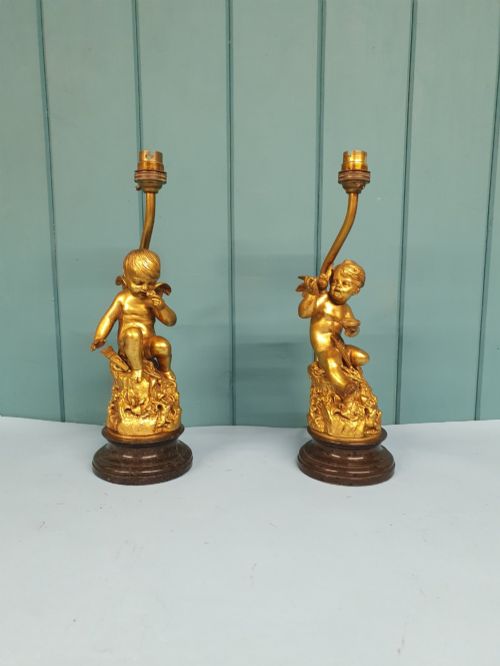
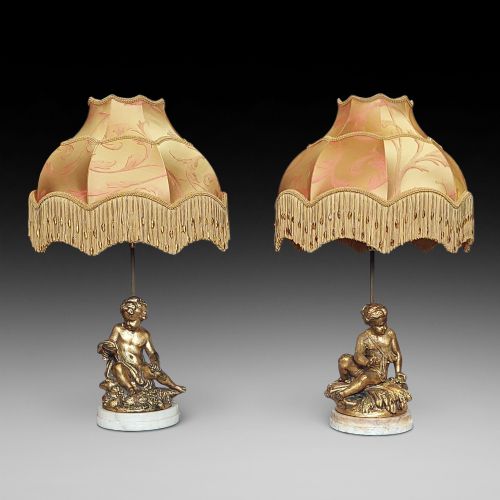
Table lamps and converted oil lamps form the majority of the pieces found in this category. These often pair cast metal figures with marble bases, porcelain bodies, or fabric shades, reflecting the enduring popularity of French revival styles.
How they were made
Foundry workers utilised bronze, brass, or gilt metal to cast the sculptural figures and ornate mounts. Gilding and ormolu finishes were frequently applied to metal components to create a rich, reflective surface.
Makers incorporated porcelain elements from factories like Meissen and Sitzendorf alongside carved alabaster, marble, and cut glass crystals. These diverse materials were assembled using threaded rods and screws to support electrical wiring or oil burning mechanisms.
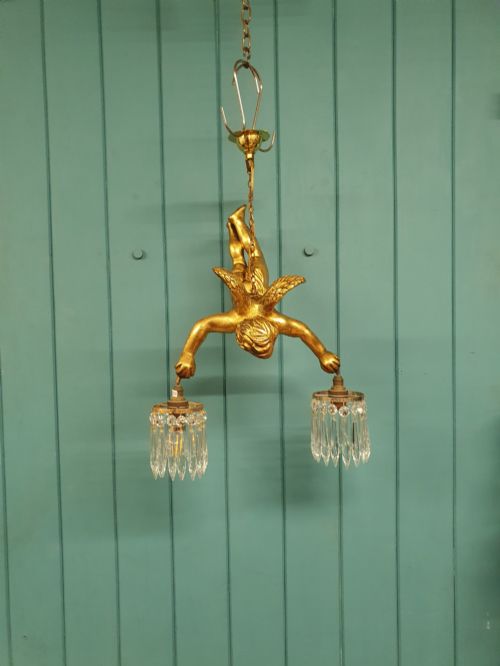
Several cherubs appear caught mid-flight, valiantly holding up heavy crystal spikes as if lighting a ballroom.
What varies in quality
The crispness of the chasing on bronze and ormolu castings separates standard production from finer examples. Sharp details in the faces and wings of the figures indicate superior craftsmanship.
The choice of base materials, such as heavy marble or finely painted porcelain, distinguishes the more substantial pieces. Original gilding and intact crystal components also elevate the overall standard of the object.
Sitzendorf·Meissen
The Rococo Cherub Lamps Glossary
- Ormolu
- A gilded bronze technique used extensively on nineteenth-century decorative metalwork. It gives fittings a bright, golden appearance.
- Putti
- Depictions of chubby male infants, often winged, used as decorative motifs in classical and revival art. They form the central sculptural focus of these lighting pieces.
- Spelter
- A zinc alloy commonly utilised as a less expensive alternative to bronze for cast figures. It was frequently painted or electroplated to resemble more costly metals.
- Torchère
- A stand or decorative lamp designed to mimic a torch. Several pieces in this category take the form of figures holding aloft light sources.
- Toleware
- Painted or enamelled sheet metal utilised for decorative lamp components and shades. It provides vibrant colour accents alongside gilded mounts.
Rococo Cherub Lamps: Frequently Asked Questions
Are these lamps electrified?
Many of these pieces began life as oil lamps or bronze statuettes before receiving electrical conversions during the twentieth century. Buyers should examine the wiring arrangements carefully.
Some items retain their original burners or candle sockets alongside later adaptations for modern domestic use.
How do I identify the period?
Dating relies on examining the casting methods, the composition of the metal alloys, and any factory marks on porcelain elements. Nineteenth-century examples often display heavier bronze casting.
Later revival pieces from the early twentieth century frequently employ spelter or lighter brass mounts combined with simpler wiring channels.
Where should I place a cherub lamp?
These ornate fixtures suit prominent locations like sideboards, mantelpieces, or large entrance tables where their detailed metalwork can be fully appreciated. Their reflective surfaces catch natural light during the day.
Paired table lamps work particularly well on matching console tables or flanking a fireplace.
What is French rococo revival?
This decorative movement draws inspiration from the flamboyant, asymmetrical curves of eighteenth-century French design. It emphasises natural motifs, scrolls, and playful figural subjects.
Victorian and early twentieth-century makers reinterpreted these motifs in their lighting designs to create dramatic decorative accents.