


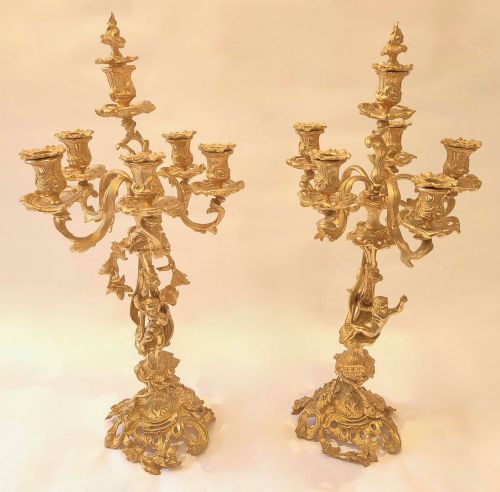


Brass Putti Candelabra
Brass putti candelabra are decorative lighting pieces featuring winged figures, bringing nineteenth-century French warmth and classical theatre to a room.
Brass Putti Candelabra
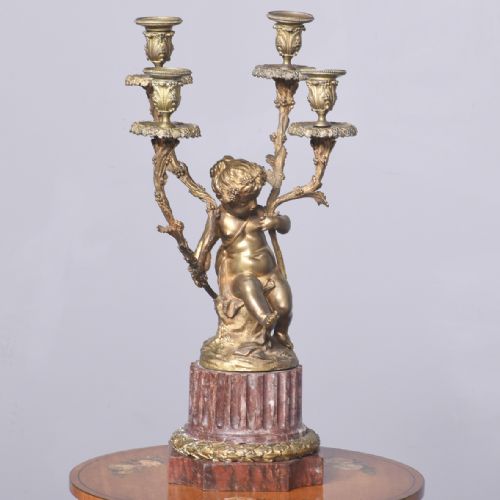
Brass putti candelabra encompass nineteenth-century lighting pieces featuring cherubs, putti, and cupids cast in metal and paired with marble. These items appear across the Victorian era, bringing sculptural figures into functional lighting forms.
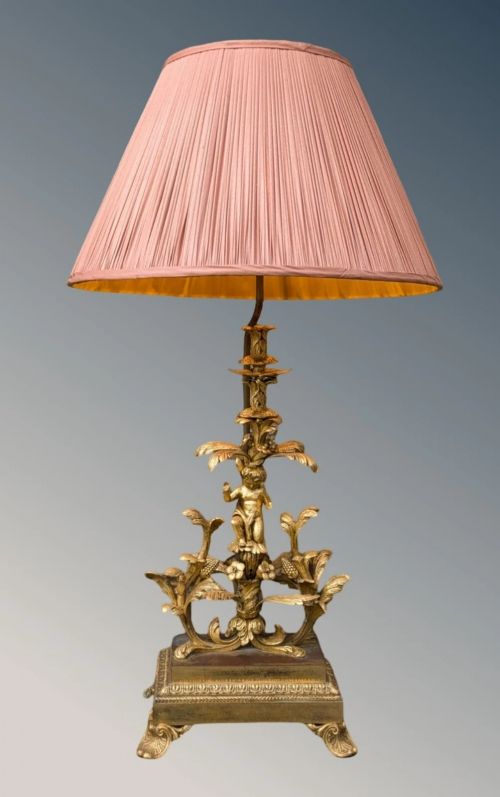
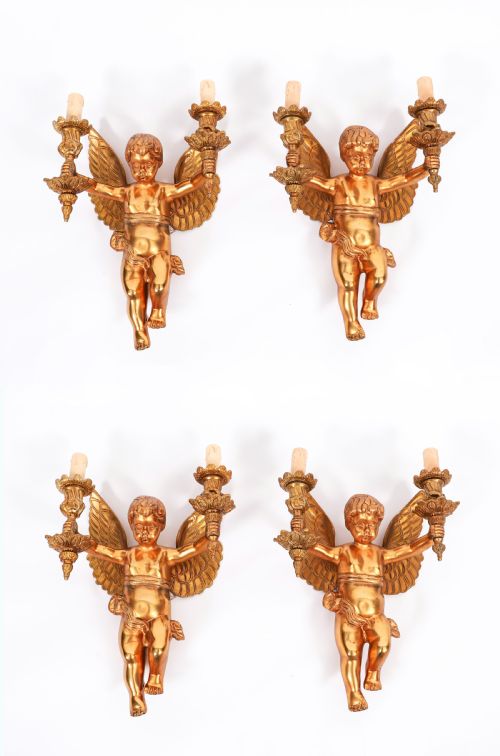
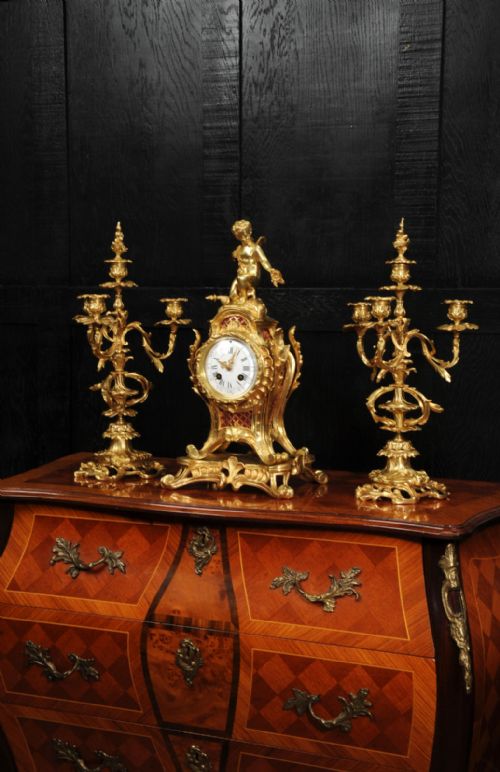
The selection on this page centres on French Rococo Revival and Louis XVI styles, featuring paired candelabra, wall lights, and clock garniture sets. These pieces combine cast metal figures with multiple candle arms or conversion elements for table use.
Materials and casting methods
Foundry workers utilised bronze, brass, and ormolu to cast figures and branch mounts, often finishing surfaces with mercury gilding or patination. White marble frequently forms the heavy structural bases for these sculptural lighting pieces.
Craftsmen chased the metal surfaces by hand after casting to sharpen feather, hair, and drapery details on the putti figures. Individual branches were secured with threaded pins to allow assembly and dismantling for cleaning.
Current listings span the nineteenth century, featuring materials such as gilt bronze, ormolu, marble, and patinated bronze across French Revival styles.
Assessing quality and execution
The crispness of the chasing on the putti figures separates superior castings from softer, mass-produced examples. Deep hand-tooling creates depth in hair and wings that simple casting fails to achieve.
The integration of materials determines the success of a piece, particularly how cleanly ormolu mounts meet the white marble bases. Heavier gauge metal and substantial marble plinths indicate higher ambition from the nineteenth-century maker.
The Brass Putti Candelabra Glossary
- Putti
- Plumed or unwinged infant figures derived from classical art, frequently used in nineteenth-century decorative metalwork. These cherubic motifs serve as the central sculptural support in candelabra design.
- Ormolu
- Finely ground high-carat gold mercury-gilded to a bronze base. This technique produces a warm, durable finish characteristic of French decorative objects.
- Garniture
- A set of matching decorative objects, typically a mantel clock flanked by two matching candelabra or vases. These balanced sets dominated nineteenth-century interior display.
- Rococo Revival
- A nineteenth-century design movement favouring asymmetrical scrolls, natural foliage, and flowing organic lines. It draws inspiration from earlier French eighteenth-century decorative arts.
- Chasing
- The artful finishing of a metal casting by hand using small punches and hammers. This process sharpens surface details lost during the primary sand or lost-wax casting.
Brass Putti Candelabra: Frequently Asked Questions
What are brass putti candelabra?
These nineteenth-century lighting fixtures incorporate cast metal figures of winged cherubs or cupids supporting candle arms. They typically originate from French workshops following Rococo Revival or Louis XVI design principles.
Such pieces often form part of larger mantel garniture sets alongside clocks or appear as balanced pairs for side tables and chests.
How were these candelabra used?
Nineteenth-century households placed these candelabra on mantelpieces, console tables, and dining sideboards to provide ambient illumination by candlelight. The reflective gilt surfaces helped amplify the modest light of tallow or wax candles.
Many surviving examples have since been adapted for electricity while retaining their original sculptural bronze and marble bodies.
How do I date these pieces?
Dating relies on examining the casting quality, the composition of the marble bases, and the specific stylings of the putti figures. Nineteenth-century examples frequently exhibit heavy brass, bronze, or ormolu construction tied to Victorian revival movements.
Comparing the mounting screws, threading, and patination against known French production periods from the eighteen-sixties to eighteen-eighties provides further chronological clarity.
How do I clean gilt bronze?
Dust gilt bronze gently with a soft, dry brush to prevent accumulation in the recesses of the putti figures. Moisture and harsh cleaning agents strip the mercury gilding or damage patinated bronze surfaces.
Professional conservation advice should be sought before applying any cleaning solvents to nineteenth-century metalwork.