




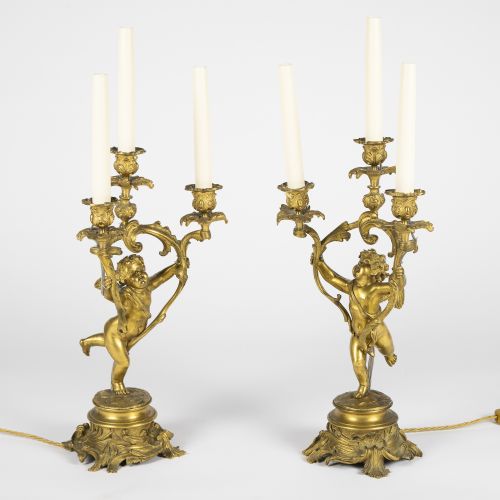
Pair French Cherub Lamps
Pair french cherub lamps bring theatrical nineteenth-century lighting into a room, combining cast metal figures with traditional decorative forms.
Pair French Cherub Lamps
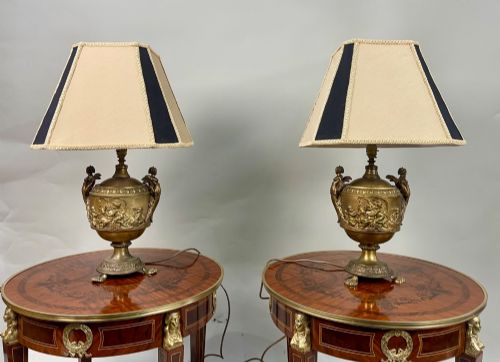
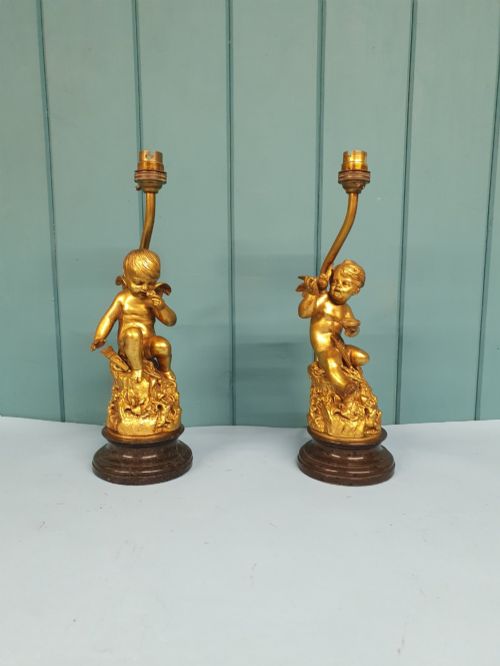
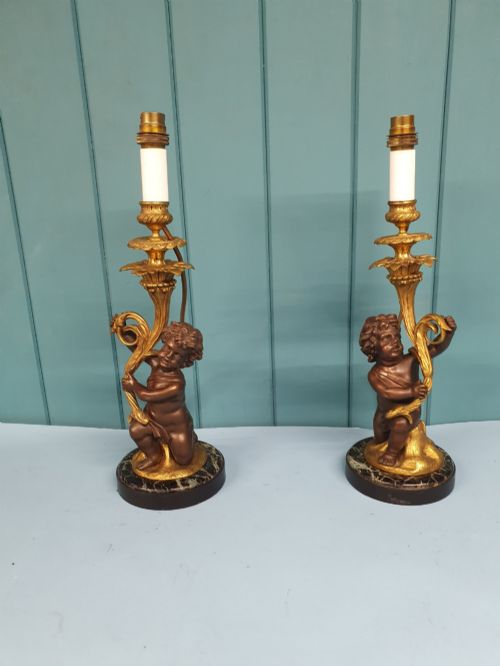
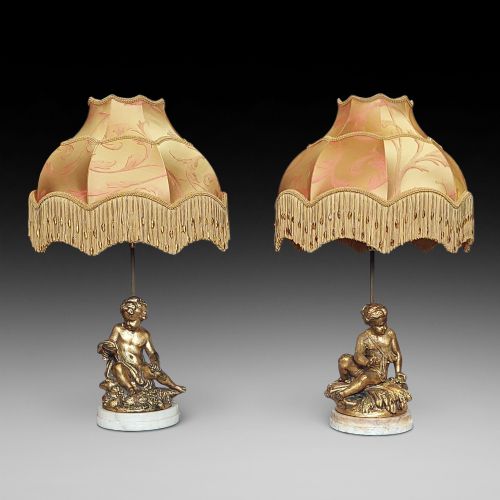
Pair french cherub lamps comprise matching figural lights depicting winged putti, spanning table lamps, wall sconces, and candelabra from the nineteenth and early twentieth centuries. These decorative objects draw on revival styles, placing figurative sculpture at the centre of domestic illumination.
The most common versions encountered here are table lamps cast in gilt metals, bronze, or brass, frequently mounted on marble bases. They emerge from periods favouring ornate French design, including Rococo revival and neoclassical movements.
Materials and construction
Foundry work dominates the production of these pieces, utilising bronze, brass, and cast metals that are often gilded or given patinated finishes. Figures of cherubs and putti are cast in sections before being assembled alongside candle arms or lamp fittings.
Bases frequently incorporate contrasting materials such as marble and alabaster, while wall sconces and candelabra utilise giltwood and moulded plaster components. Fabric shades complete many of the surviving table configurations.
Pair French Cherub Lamps Retail Price Guide 2026
Typical asking prices for pair french cherub lamps among the pieces listed under this phrase on Sellingantiques today, from the lower quarter to the upper quarter. They describe what is for sale here now, not the wider market.
The listings span from the Victorian era through the 1930s, featuring materials such as marble, bronze, alabaster, and giltwood.
Judging quality and execution
Superior examples reveal themselves through the crispness of the metal chasing and the expressive modelling of the cherub figures. Finishes range from deep patination to rich fire gilding, where the depth of the metallic application defines the visual weight of the object.
Base construction and material selection also divide the range, with solid marble mounts and substantial bronze castings sitting above lighter brass and cast composition alternatives. The integration of electrical fittings into older lighting bodies shows varying degrees of sympathy to the original structure.
The Pair French Cherub Lamps Glossary
- Ormolu
- Gilded bronze produced through a mercury amalgamation process common in nineteenth-century French metalwork. This finish gives a deep, warm metallic lustre that resists tarnishing over decades.
- Putti
- Plump, winged infant figures frequently depicted in classical and revival art. They form the central sculptural motif of these lighting fixtures.
- Torchère
- A stand or lamp modelled on an ornamental torch holder. Several pieces adopt this vertical form to elevate the light source.
- Candelabra
- Branched lighting fixtures designed to hold multiple candles or electrified bulbs. They offer a more complex silhouette than single-bulb table lamps.
- Rococo Revival
- A nineteenth-century design movement emulating the asymmetrical curves and organic scrollwork of the eighteenth century. This style heavily influences the bases and mounts of many cherub lamps.
Pair French Cherub Lamps: Frequently Asked Questions
How do I wire antique cherub lamps?
Rewiring requires a qualified electrician to run modern flex through the existing internal channels without damaging the metal or stone body. Many pieces accept standard modern lamp holders while retaining their historical outer appearance.
Patina and surface finishes should be protected from harsh solvents during any rewiring or maintenance work. Preserving the original mountings ensures the structural integrity of the base remains undisturbed.
Are these lamps French in origin?
Many examples reflect French manufacturing techniques and stylistic influences, particularly those utilising ormolu and Rococo revival motifs. Similar revival pieces were also produced across Europe during the nineteenth and early twentieth centuries.
Examining the casting quality and the style of the mounts helps determine the workshop traditions behind each pair. French pieces frequently display finer chasing on the bronze and brass surfaces.
What maintenance do gilt metal lamps need?
Dusting gently with a dry, soft cloth is sufficient for regular care of gilded and bronze surfaces. Avoid chemical cleaners and polishes, which can strip away thin gilt layers and historical patina.
Marble bases benefit from occasional wiping with a damp cloth followed by immediate drying. Keeping the lamps away from direct moisture preserves both the stone and the metallic components.
How do I date these lighting pieces?
Dating relies on evaluating the casting methods, material combinations, and stylistic markers such as Rococo revival or arts and crafts details. Pieces from the nineteenth century often feature heavier bronze work and hand-finished chasing.
Later twentieth-century examples incorporate different assembly techniques and standardised electrical components. Comparing the base materials and decorative motifs against known period pieces provides a reliable chronology.