


French Putti Candelabra
French putti candelabra bring figurative bronze work and marble bases together to light rooms with classical mythology and decorative elegance.
French Putti Candelabra
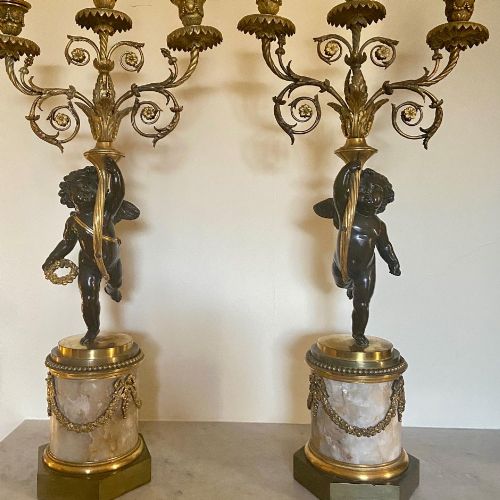
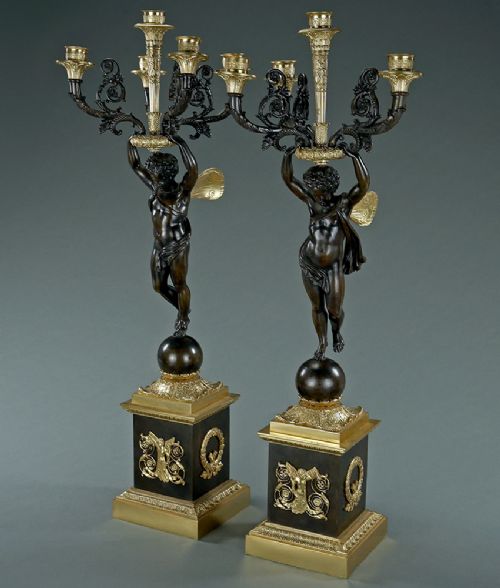
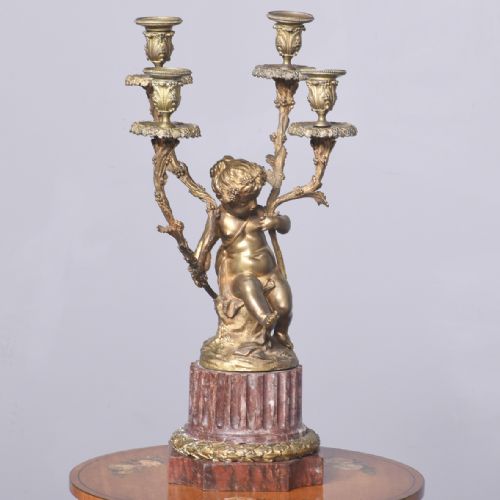
French putti candelabra combine sculptural figures of winged children with branch systems designed to hold multiple candles or lightbulbs. These pieces emerge primarily from the nineteenth century, drawing heavily on Louis XVI style and Rococo Revival aesthetics.
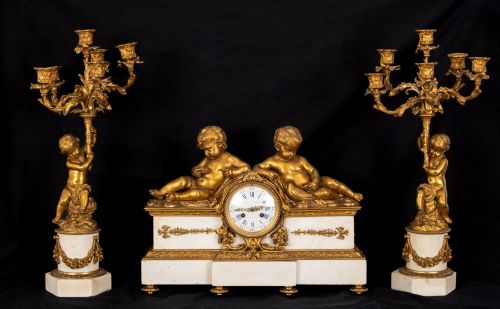
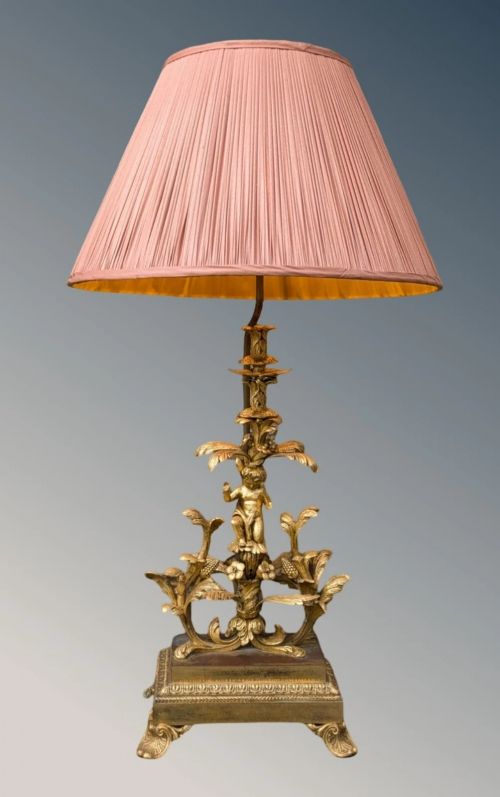
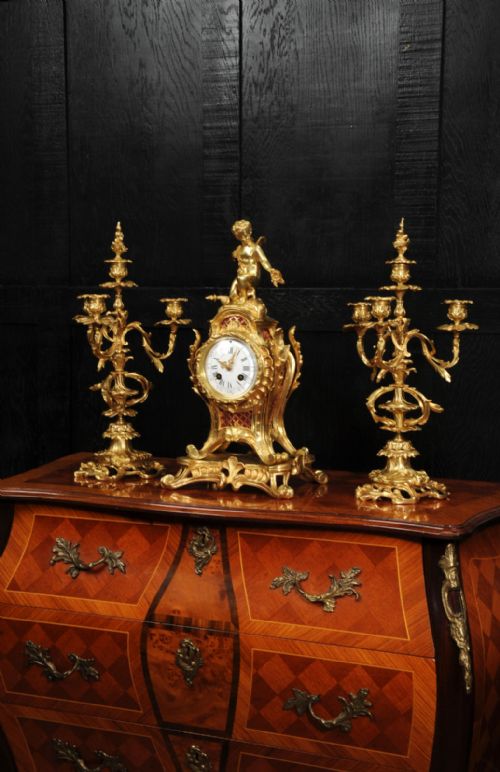
Buyers most frequently encounter matched pairs mounted upon contrasting stone plinths, often functioning as standalone mantel garnitures or components of larger clock sets. The figures themselves take various forms, appearing as standalone bronze sculptures, gilt-metal candle holders, or integrated table lamps.
Materials and Construction
Makers utilised cast bronze, patinated metal, and ormolu to form the bodies and branching arms of these figural pieces. Artisans chased the metal surfaces by hand after casting to sharpen details in the wings, hair, and drapery.
Foundations frequently incorporate white marble, red marble, or porphyry bases that anchor the heavy bronze figures. Ormolu gilding or silver plating completed the decorative scheme on many nineteenth-century examples.
Design influences across these pieces draw on French Rococo Revival, Louis XVI, French Empire, and Second Empire styles.
Factors of Quality
Quality rests heavily upon the crispness of the bronze casting and the depth of the subsequent hand-chasing work. Superior examples display subtle facial expressions and carefully articulated feathers on the putti wings rather than soft, mass-produced contours.
The choice of secondary materials marks distinctions in the tier of manufacture, with solid marble and fire-gilded ormolu sitting above standard gilt-metal or spelter compositions. Integrated clock garniture sets show additional craftsmanship through matching stylistic motifs across every component.
Claude Clodion·Francois Redmond
The French Putti Candelabra Glossary
- Putti
- Winged infant figures, often representing mythological cherubs or cupids in classical art. They appear frequently in sculptural metalwork.
- Ormolu
- Finely ground high-carat gold mercury-gilded onto a bronze object. This technique creates a rich, durable yellow finish.
- Garniture
- A set of matching decorative objects, typically comprising a central mantel clock flanked by two matching candelabra or vases.
- Patinated Bronze
- Bronze treated with chemicals or heat to produce a dark, protective surface layer. This process highlights the sculptural contours.
- Torchère
- A tall ornamental stand or lamp modelled to resemble a classical torch. These pieces often incorporate figurative bronze stems.
French Putti Candelabra: Frequently Asked Questions
What are French putti candelabra?
These decorative lighting pieces feature sculptural infant figures cast in bronze or metal, holding multiple candle arms. They stem primarily from nineteenth-century French workshops.
Craftsmen paired these figurative elements with stone bases and classical revival styles to create ornamental items for wealthy interiors.
How were they used historically?
Owners placed them on mantelpieces, often flanking matching clocks as part of a garniture set. They provided functional illumination during evening hours by holding wax candles.
Over time, many surviving examples found conversion into table lamps or wiring for electricity while retaining their original sculptural stands.
How do I live with them?
Position these heavy bronze pieces on sturdy furniture such as sideboards, mantelpieces, or dedicated console tables. Their stone bases require stable horizontal surfaces to prevent tipping.
Keep them away from direct moisture and clean the metal surfaces gently with a soft dry cloth to protect the original patination and gilding.
How do I identify periods?
Examine the casting quality, base materials, and stylistic motifs to determine the era of manufacture. Nineteenth-century pieces often reflect Louis XVI or Rococo Revival influences through symmetrical scrollwork and naturalistic foliage.
Heavier marble mounts and fire-gilded ormolu typically indicate earlier nineteenth-century production, while later adaptations utilise spelter or simplified base structures.