





Gilded Putti Lamps
Gilded putti lamps are decorative lighting fixtures featuring cherubic figures finished in gold, bringing theatrical warmth and classical sculptural presence to any room.
Gilded Putti Lamps
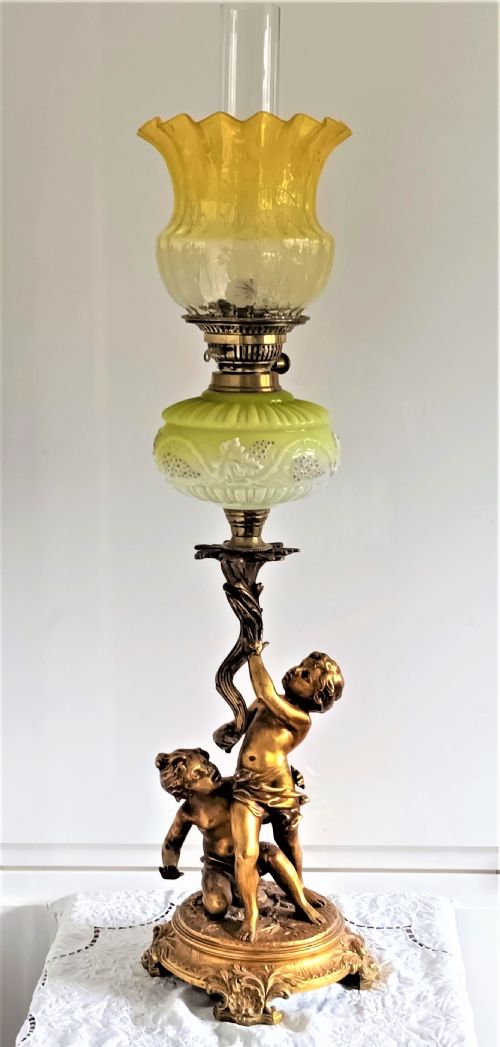
Gilded putti lamps combine ornate sculptural figures of cherubs with functional illumination, taking forms such as table lamps, oil lamps, candelabra, hanging lanterns, and ceiling lights. These pieces draw heavily on historical European aesthetics, emerging across the nineteenth and early twentieth centuries through distinct regional revivals.
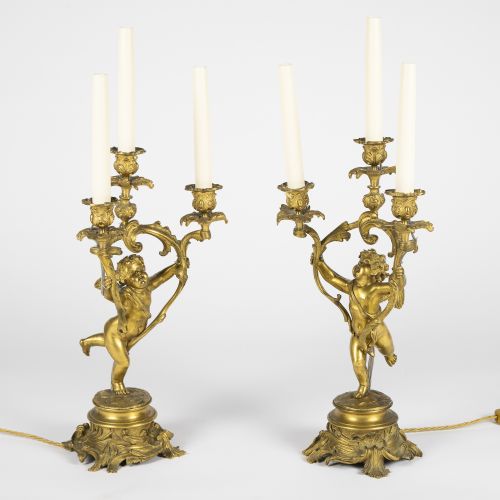
The versions most frequently encountered on this page originate from French workshops adhering to Rococo Revival, Empire, or Baroque traditions, alongside English Victorian interpretations and Italian Florentine designs. They frequently incorporate multi-light configurations or paired figures that function as symmetrical mantel or table ornaments.
Buyers seek these objects for their dramatic silhouette and the way their metallic finishes catch ambient light. Each surviving piece records the shifting tastes of nineteenth-century and Edwardian interiors, where classical myth and domestic illumination merged.
How they were made
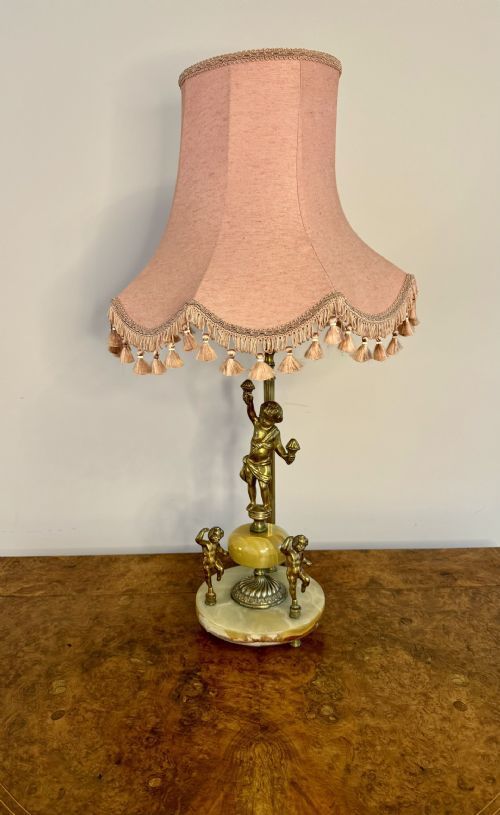
Makers utilised cast metals such as bronze, brass, and ormolu to form the structural bodies and the detailed contours of the putti, applying mercury gilding or gold leaf to achieve a luminous surface. These metal components were often paired with carved giltwood or combined with contrasting patinated bronze and inset onyx bases.
Lighting elements were subsequently adapted or integrated into the sculptural mounts, ranging from electrified fittings and oil reservoirs to hanging lantern frames fitted with glass panels and fabric shades.
Gilded Putti Lamps Retail Price Guide 2026
Typical asking prices for gilded putti lamps among the pieces listed under this phrase on Sellingantiques today, from the lower quarter to the upper quarter. They describe what is for sale here now, not the wider market.
The material palette spans gilt bronze, brass, ormolu, carved giltwood, and onyx, reflecting nineteenth-century and early twentieth-century manufacturing methods.
What varies in quality
The distinction between standard production and exceptional work rests entirely in the crispness of the chasing and the depth of the casting. Superior examples exhibit finely articulated facial expressions, feathers, and drapery on the putti, whereas lesser pieces display soft or blurred surface details from worn moulds.
Material selection further defines the hierarchy, distinguishing solid cast ormolu and hand-carved giltwood from simpler brass or plated metal alternatives. The integration of high-grade stone bases, such as onyx, marks pieces intended for prominent display in formal drawing rooms.
The Gilded Putti Lamps Glossary
- Putto
- A plump, naked male child figure frequently found in classical art and decorative objects. They resemble cherubs and often appear winged in lighting mounts.
- Ormolu
- Finely chopped high-karat gold applied to a bronze base using a mercury amalgamation technique. This historic process yields a deep, enduring metallic lustre.
- Candelabra
- A branched candlestick or lamp holding multiple lights. These fixtures distribute illumination across several arms extending from a central stem.
- Giltwood
- Timber coated with a thin layer of gold leaf or powder. This finish provides a rich decorative surface on carved wooden frames and lanterns.
- Patinated bronze
- Metal darkened or coloured through chemical treatment or natural oxidation. It creates a tonal contrast against bright gilded surfaces.
Gilded Putti Lamps: Frequently Asked Questions
Are these lamps safe to use today?
Most antique lighting requires rewiring to meet modern safety standards before regular daily use. A qualified electrician can easily update internal cords while preserving the historic exterior.
Original sockets and plugs are often replaced to ensure compatibility with contemporary wall outlets and bulbs.
How do I clean gilded bronze surfaces?
Dusting gently with a dry, soft microfibre cloth is the safest way to maintain the metallic finish. Avoid liquid cleaners, abrasives, or harsh chemical polishes that can strip the gold leaf or ormolu.
Professional conservation is recommended if deeper cleaning is required to remove accumulated grime.
What is the difference between ormolu and gilt brass?
Ormolu consists of mercury-gilded bronze, which produces a warm, deep golden tone that resists tarnishing over centuries. Gilt brass is typically a brighter, yellower metal that was cheaper to produce.
Examining the weight and the sharpness of the underlying metal casting usually reveals which material was utilised.
How do I date a putti lamp?
Dating relies on stylistic clues, manufacturing techniques, and material combinations recorded in the piece. Nineteenth-century examples often favour heavy cast bronze and elaborate Rococo Revival scrolling, while Edwardian pieces introduce onyx bases.
Wiring styles, switch types, and maker marks, where present, also help narrow down the period of manufacture.