
French Rococo Appliques
French rococo appliques bring theatrical asymmetry and gilt warmth to a room, casting candlelight through elaborate scrolled arms.
French Rococo Appliques
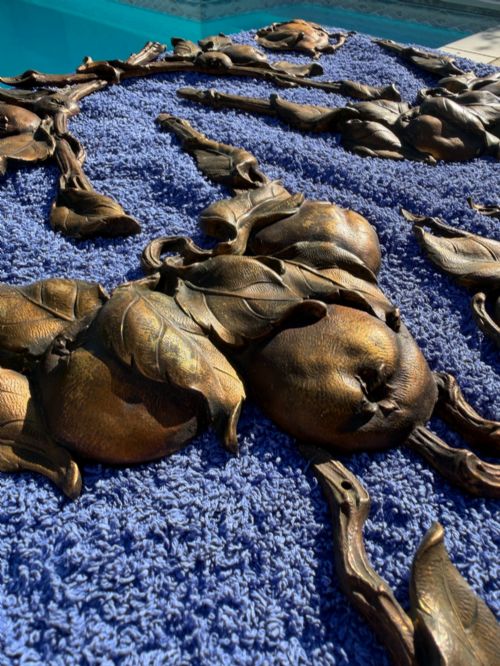
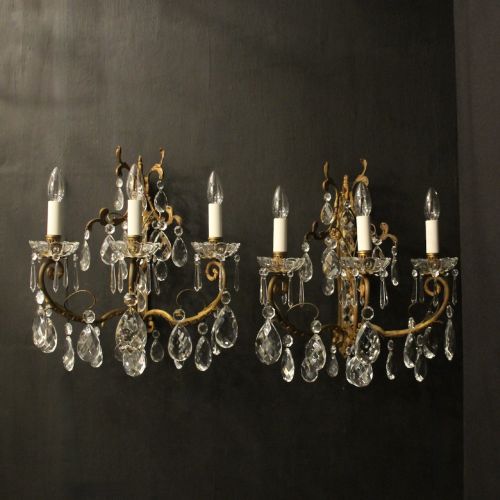
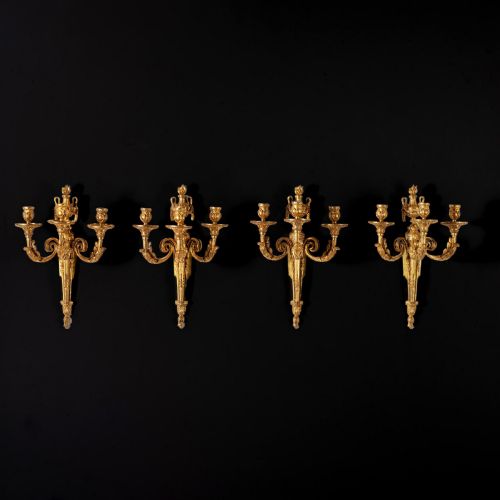
French rococo appliques are wall-mounted light fixtures and decorative metal ornaments designed to illuminate and adorn interiors with flowing, organic motifs. When you search for this phrase, you encounter wall lights, wall sconces, and furniture mounts originating from various periods including the eighteenth, nineteenth, and twentieth centuries.
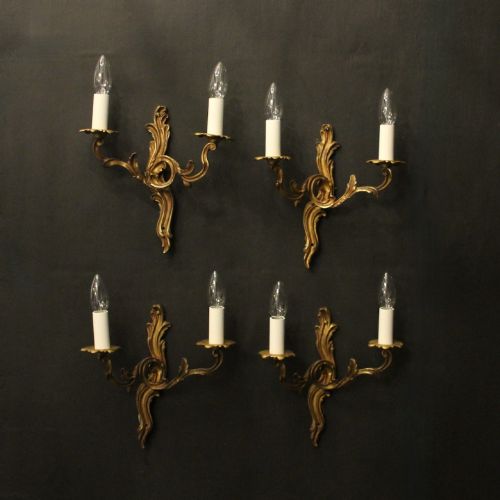
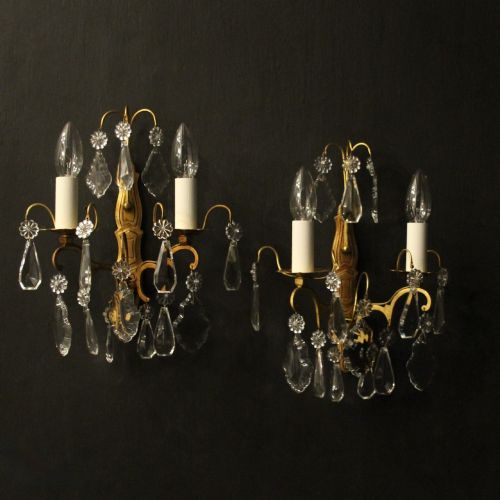
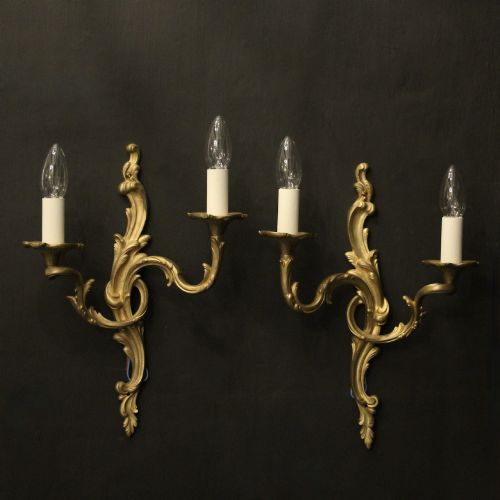
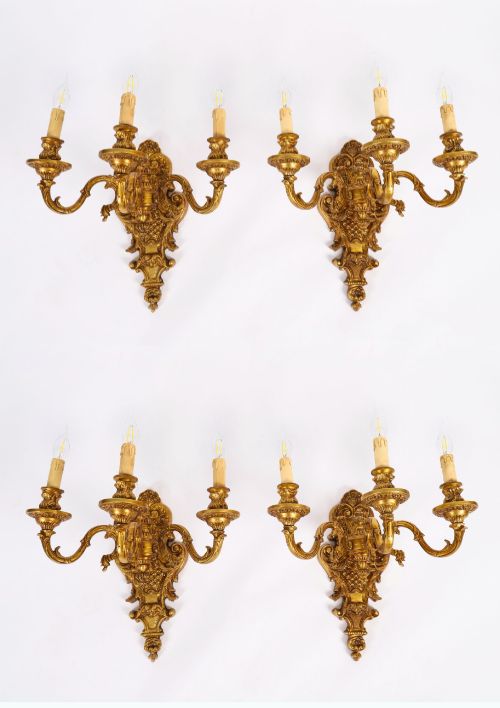
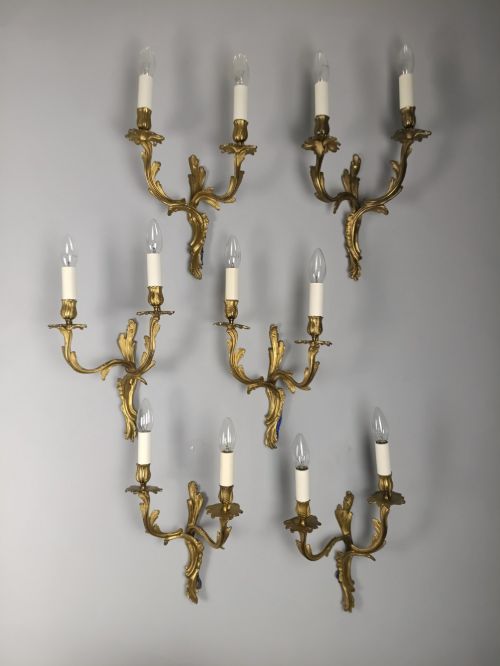
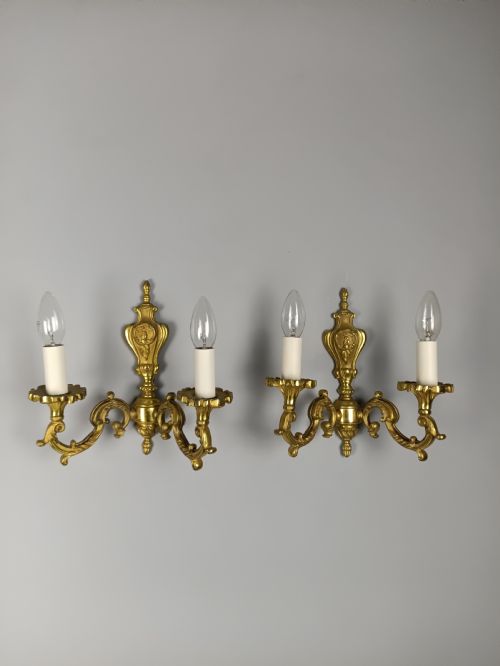
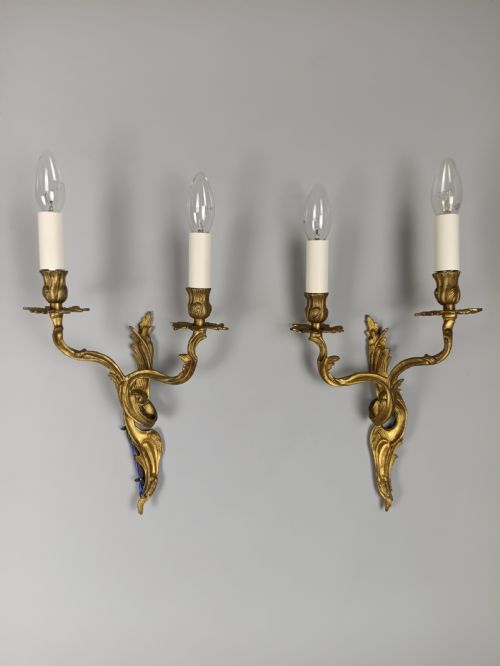
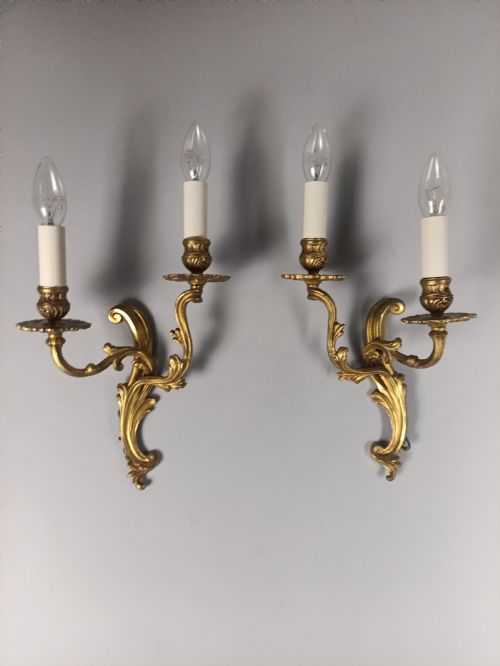
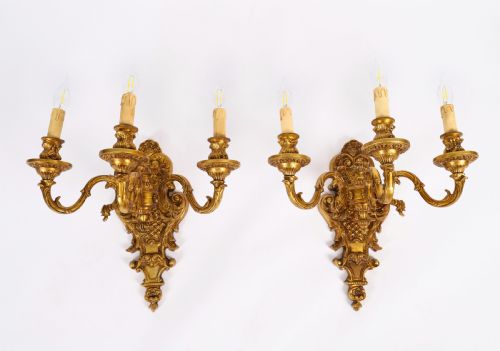
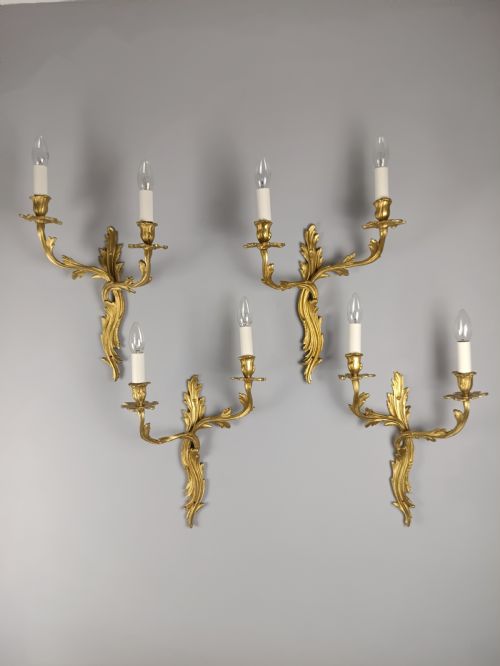
The pieces on this page lean heavily towards twentieth-century productions alongside nineteenth-century revivals, often taking the form of twin-arm or triple-arm wall lights. These fixtures typically adopt the characteristic asymmetrical scrolls, leaf motifs, and shell forms associated with the Louis XV taste.
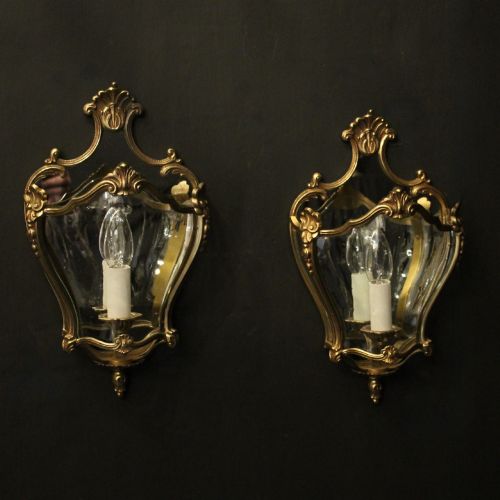
Beyond standard illumination, the selection includes decorative ornaments, furniture mounts, and half-lanterns in matching metallic finishes. Buyers find both single pairs and larger sets suitable for uniform placement across larger architectural spaces.
Materials and construction
The primary material foundation relies on bronze, brass, and various base metals shaped through casting and chasing techniques. Artisans achieved the characteristic golden finish through gilding, producing surfaces of gilt bronze, ormolu, and gilt brass.
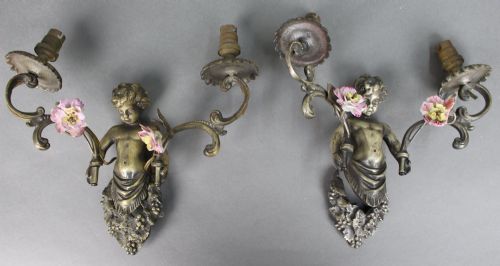
Metal components were frequently cast in sections, then assembled with threaded fasteners or pins before receiving their final surface treatment. Certain pieces incorporate secondary elements like porcelain flowers or silver plating to vary the decorative effect.
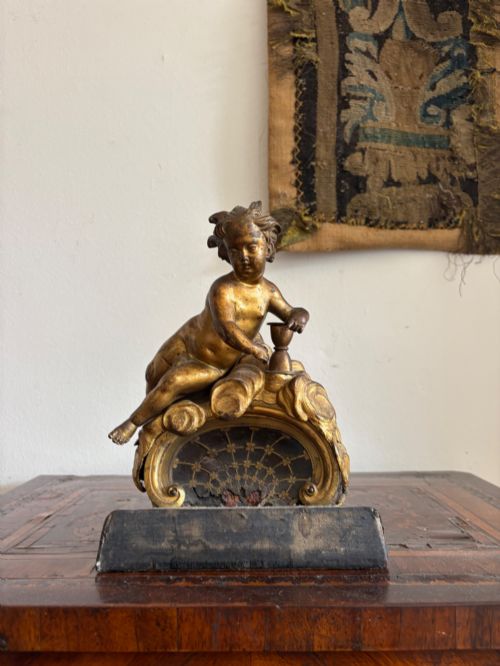
Recorded forms include twin-arm wall lights, triple-arm sconces, furniture mounts, and porcelain-adorned cherub figures.
Assessing quality
Quality reveals itself in the crispness of the chase work and the depth of the casting, where master artisans hand-finished details like acanthus leaves and C-scrolls after the metal came out of the mould. Lesser examples display softened contours and uniform machine smoothing that obscure the energetic asymmetry characteristic of the style.
The weight of the metal and the complexity of the arm configurations also distinguish superior works from standard production. Heavier cast bronze specimens with robust backplates and articulated multi-branch designs demand greater technical skill than lighter brass counterparts.
Poix Blin
The French Rococo Appliques Glossary
- Applique
- A wall-mounted decorative fixture or light sconce designed to be fixed directly to wood panelling or masonry. The term covers both functional lighting and purely ornamental mounts.
- Ormolu
- Finely ground high-carat gold applied to a bronze base through a mercury amalgamation process. This historic technique produces a deep, warm lustre distinct from modern electroplating.
- Girandole
- An ornamental branched wall light or candelabra featuring reflective surfaces or mirrors to multiply the flickering candle flame. These pieces combine sculptural wall mounts with multiple candle nozzles.
- Finial
- A terminating ornamental detail marking the topmost or lowermost extremity of a fixture. On wall lights, they often anchor the baseplate or crown the upper cartouche.
French Rococo Appliques: Frequently Asked Questions
How do I install antique wall lights safely?
Many vintage wall lights arrive rewired with modern flexible cable, yet professional installation remains essential to anchor heavy metal backplates securely to wall studs.
Qualified electricians ensure that internal connections meet current standards while preserving the historic structure of the bronze or brass arms.
Can I use standard bulbs in these sconces?
Original candle nozzles often accommodate small Edison screw or bayonet cap fittings adapted during twentieth-century rewiring projects.
Sourcing low-wattage LED candle bulbs maintains the historic amber glow without generating excessive heat that could compromise vintage wiring or delicate porcelain elements.
How do I clean gilded bronze surfaces?
Dust accumulated within the intricate crevices of rococo scrollwork requires careful removal using a soft natural bristle brush or dry microfiber cloth.
Harsh chemical polishes, abrasive pads, and liquid cleaners must be avoided entirely because they strip away the delicate gold layer beneath.
How do I distinguish eighteenth-century pieces from later revivals?
Authentic eighteenth-century specimens display hand-filed construction marks, mercury gilding characteristics, and casting irregularities unique to period foundry practices.
Nineteenth and twentieth-century revivals utilise machine-threaded screws, uniform electrical conversions, and brighter modern electrogilt finishes.