


French Revival Pier Cabinet
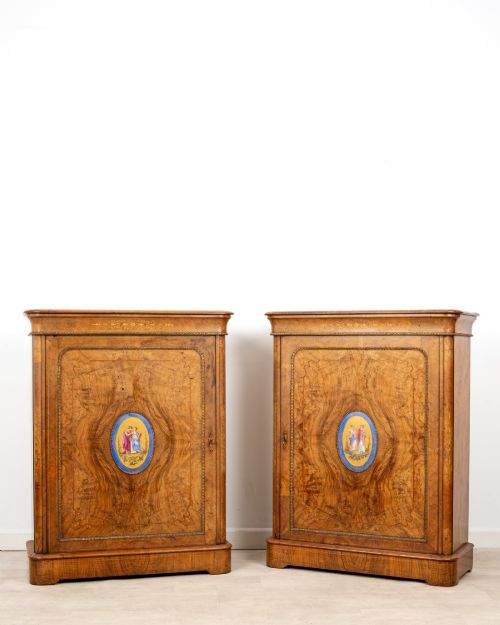
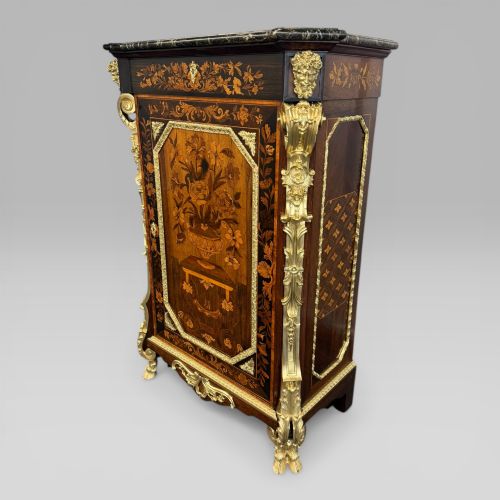
These French revival pier cabinet pieces bring striking nineteenth-century display space and refined Parisian styling into your drawing room.
French Revival Pier Cabinet
A french revival pier cabinet sits against narrow wall spaces between windows, offering enclosed display for precious porcelain and glassware. The examples here span the nineteenth century, from Victorian interpretations to Napoleon III pieces.
Most items on this page take the form of side cabinets, display cabinets, and pier cabinets featuring glazed doors and timber carcasses. You will encounter walnut, burr walnut, ebonised wood, and satinwood constructions across the selection.
Many specimens incorporate decorative elements such as Sevres style plaques and ormolu mounts. These variations reflect diverse nineteenth-century tastes influenced by Louis XV and Louis XVI styles.
Materials and construction methods
Cabinet makers utilised foundational timbers including walnut, burr walnut, ebonised wood, kingwood, and satinwood to build the carcass. Surfaces often received elaborate treatments like marquetry, cross-banding, and boulle work.
Gilded bronze ormolu mounts accent corners, borders, and feet, while inset porcelain plaques provide colourful focal points. Pietra dura panels and glass door panels complete the intricate assembly of these nineteenth-century furnishings.
Listings feature nineteenth-century pieces incorporating walnut, ormolu, porcelain, and glass across various French revival styles.
Differences in quality and execution
Quality rests in the crispness of the cast ormolu mounts and the precision of the timber inlay or boulle work. Superior pieces display harmonious proportions and finer hand-chiselled details on the metalwork.
The choice of primary timber creates a tier of distinction, with burr walnut and satinwood items sitting alongside standard walnut carcasses. Hand-painted porcelain plaques and specialised stone inlays like pietra dura elevate individual pieces.
Edward Holmes Baldock
The French Revival Pier Cabinet Glossary
- Pier cabinet
- A narrow cabinet designed to fit against the wall space between windows. These pieces often feature glass doors to display ornaments.
- Ormolu
- Gilded bronze mounts applied to furniture for decorative effect. The metal is cast and chased to produce crisp ornamental details.
- Boulle
- An elaborate form of marquetry utilising brass and tortoiseshell inlaid into wood. It is named after the French cabinet maker Andre-Charles Boulle.
- Pietra dura
- An artistic technique using cut and fitted polished coloured stones to create pictorial designs. It appears on select nineteenth-century cabinet panels.
- Sevres style
- Ceramic plaques and porcelain panels decorated in imitation of the Sevres factory output. They frequently feature hand-painted scenes and rich borders.
French Revival Pier Cabinet: Frequently Asked Questions
What is a french revival pier cabinet?
A french revival pier cabinet is a narrow nineteenth-century display piece designed for the wall space between windows. They typically feature glazed doors, timber construction, and decorative mounts.
Cabinet makers in Britain and France produced these items during the Victorian and Napoleon III periods. They served primarily to showcase prized porcelain and small decorative objects.
How do you date a pier cabinet?
Dating relies on examining the timber species, construction methods, and decorative styles present on the carcass. Nineteenth-century examples often combine walnut or ebonised wood with ormolu mounts.
Stylistic cues such as Louis XVI revival details or specific plaque designs help narrow the decade of production. Examining the interior construction and lock mechanisms provides further clues.
Where were pier cabinets placed?
Pier cabinets take their name from the architectural pier, which is the solid wall between two window openings. Placing them in these narrow spaces maximised utility in formal nineteenth-century rooms.
They also found positions along blank salon walls where their reflective glass and gilded mounts enhanced candlelight. Their slim proportions prevented them from obstructing movement.