
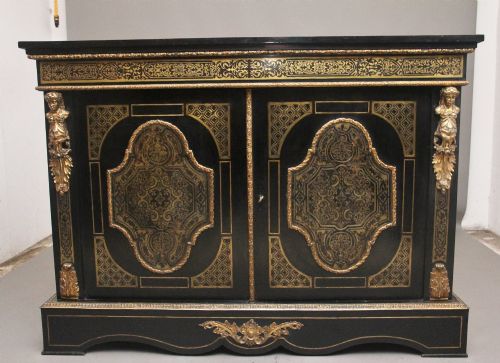
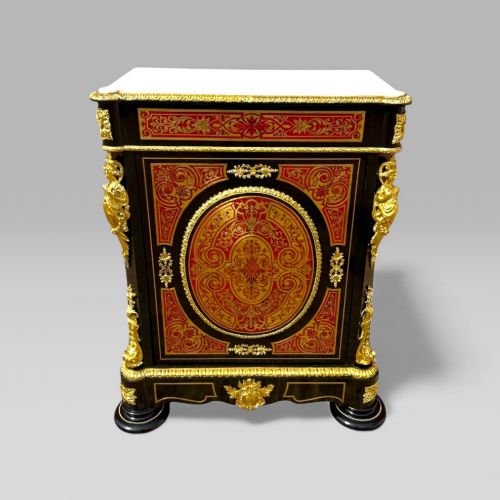


Boulle Work Cabinets
Boulle work cabinets are striking pieces of nineteenth-century furniture covered in brass and tortoiseshell marquetry that bring immediate French opulence to a room.
Boulle Work Cabinets
When you search for boulle work cabinets, you encounter nineteenth-century French furniture designed for display and storage in formal reception rooms. The versions most commonly met on this page include pier cabinets, credenzas, and larger display cabinets originating from the Napoleon III period and Louis XVI style.
These items take various functional forms alongside standard cabinets, ranging from writing desks and bookcases to sideboards and credenzas. Most pieces date from the nineteenth century, specifically around eighteen sixty to eighteen eighty, reflecting a strong revival of earlier court aesthetics.
How they were made
The primary technique relies on intricate marquetry combining brass and tortoiseshell laid into ebonised wood or ebony cores. Artisans cut these contrasting materials together to create complex scrolling patterns and symmetrical motifs.
Finished carcases receive heavy ormolu and gilt bronze mounts along structural edges, often accompanied by inset marble tops and glass panels for display sections.
Tortoiseshell panels frequently hide beneath thin brass layers, meaning makers swapped the background and foreground materials to create matching twin cabinets.
What varies in quality
Quality rests upon the precision of the marquetry cutting and the crispness of the cast ormolu mounts fitted to the carcase. Superior examples display tightly fitted brass and tortoiseshell without excessive filler, maintaining sharp contrasts across the surface.
The choice of secondary woods and the weight of the gilt bronze mounts distinguish standard production from exceptional pieces. Heavier framing, superior marble tops, and refined carving elevate certain cabinets within the nineteenth-century range.
The Boulle Work Cabinets Glossary
- Boulle work
- A form of marquetry using brass and tortoiseshell developed during the seventeenth century and revived later. This technique creates elaborate metallic and dark patterns across furniture surfaces.
- Ormolu
- Gilded bronze used for decorative mounts and framing on furniture. This material highlights corners, feet, and friezes with metallic brilliance.
- Pier cabinet
- A low cabinet designed to stand against a wall pier between windows. These pieces often feature glass doors for displaying porcelain or ornaments.
- Credenza
- A sideboard or cabinet used for storage and display. Nineteenth-century examples often incorporate extensive marquetry and gilt bronze mounts.
- Ebonised wood
- Timber stained or treated to resemble ebony. This dark finish provides a strong background that makes the brass and tortoiseshell inlay stand out clearly.
Boulle Work Cabinets: Frequently Asked Questions
What are boulle work cabinets?
These are nineteenth-century French furniture pieces decorated with intricate brass and tortoiseshell marquetry set into dark wood. They include cabinets, credenzas, and bookcases designed for display.
Most examples date from the Napoleon III era and feature gilt bronze mounts and marble tops. They serve as focal points in formal interiors.
Where were they made?
The pieces available originate from France during the nineteenth century. They reflect historical revivals including the Louis XVI style popular during the Napoleon III period.
French workshops produced these items for domestic and international markets, utilising traditional marquetry methods alongside cast bronze mounts.
How do you clean them?
Maintenance requires dry dusting with a soft cloth to protect the delicate brass and tortoiseshell surfaces. Moisture can damage the adhesives and wood underneath.
Avoid chemical polishes and keep the furniture away from direct sunlight and heat sources to prevent the tortoiseshell from warping or lifting.
How do I style a boulle cabinet?
These cabinets work well in traditional and eclectic interiors where their metallic inlay can catch the light. Placing them against plain walls lets the detailed marquetry stand out.
They function effectively as display spaces for ceramics, glassware, or books while adding distinct nineteenth-century character to a room.