
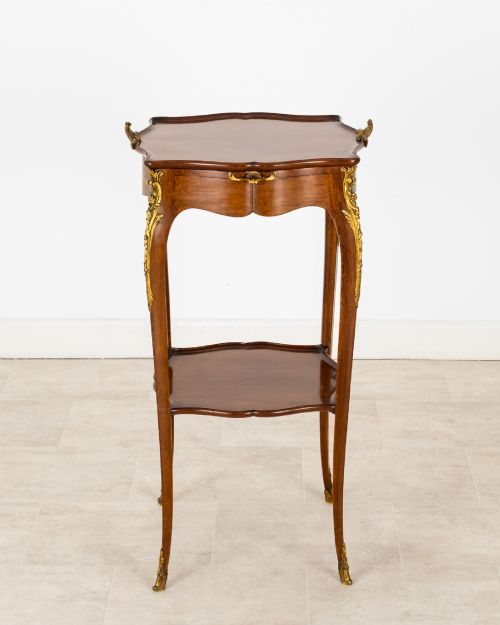


French Revival Occasional Table
A french revival occasional table brings continental flair to a room, offering surface space and ornamental elegance in compact forms.
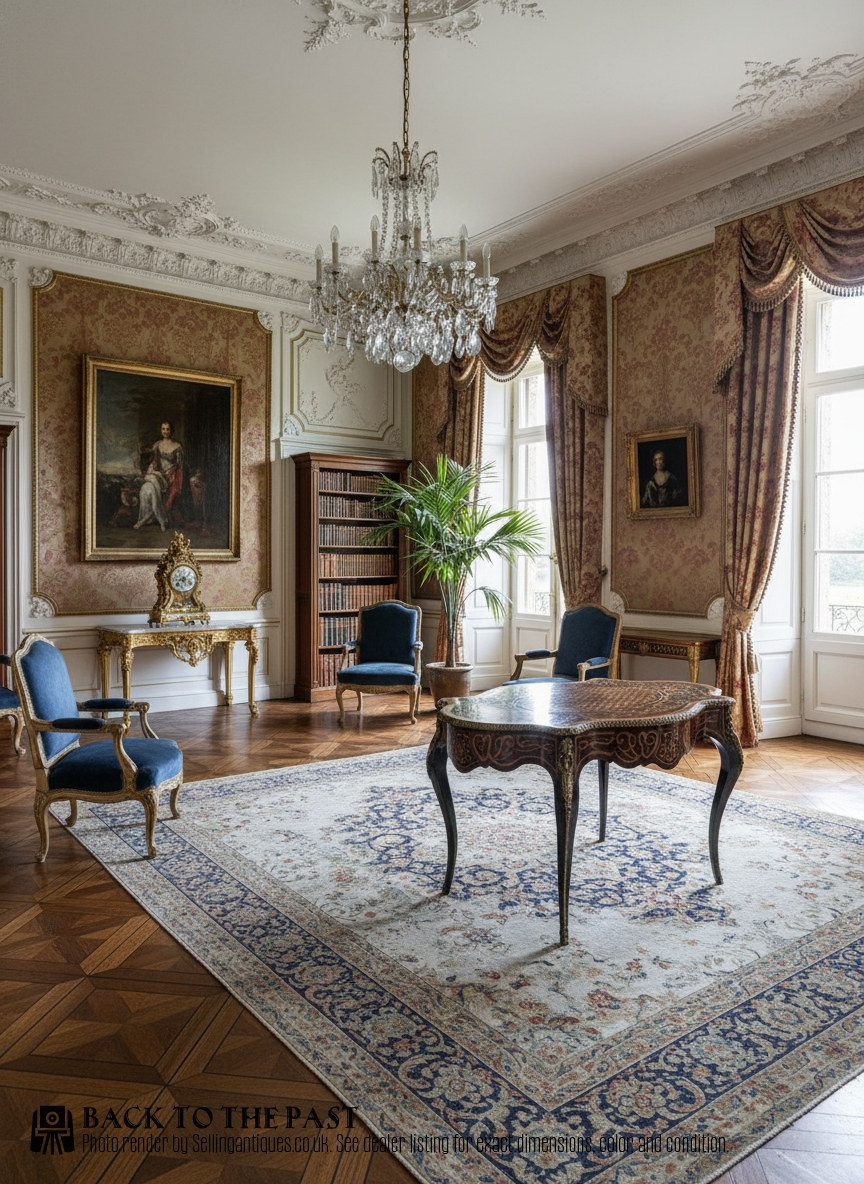
French Revival Occasional Table
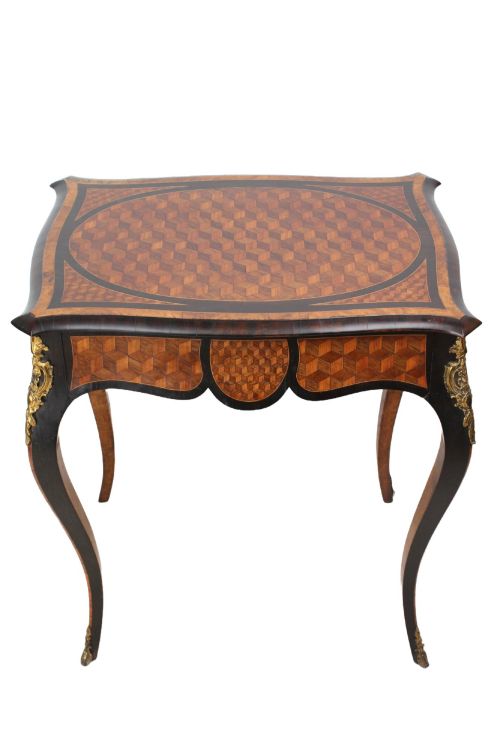
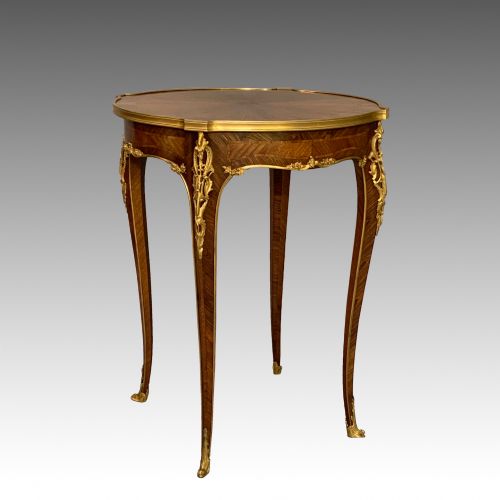
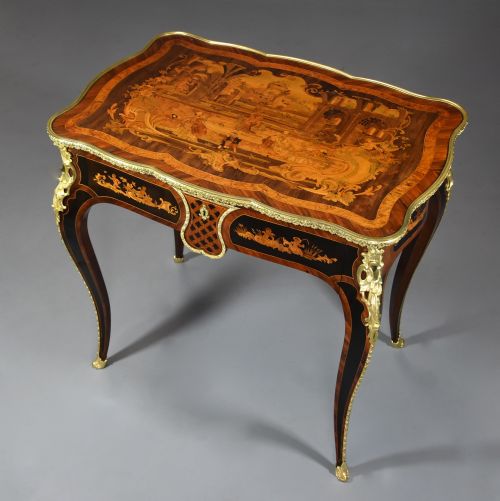
A french revival occasional table channels the decorative vocabulary of earlier royal courts, adapting grand eighteenth-century aesthetics for nineteenth-century drawing rooms. The pieces appearing most frequently take the form of side tables, centre tables, and lighter occasional pieces designed for flexible placement.
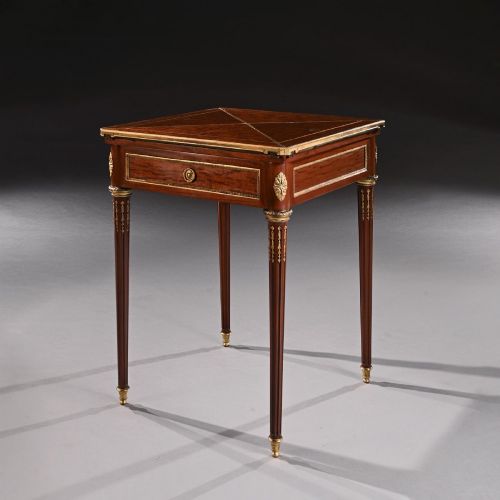
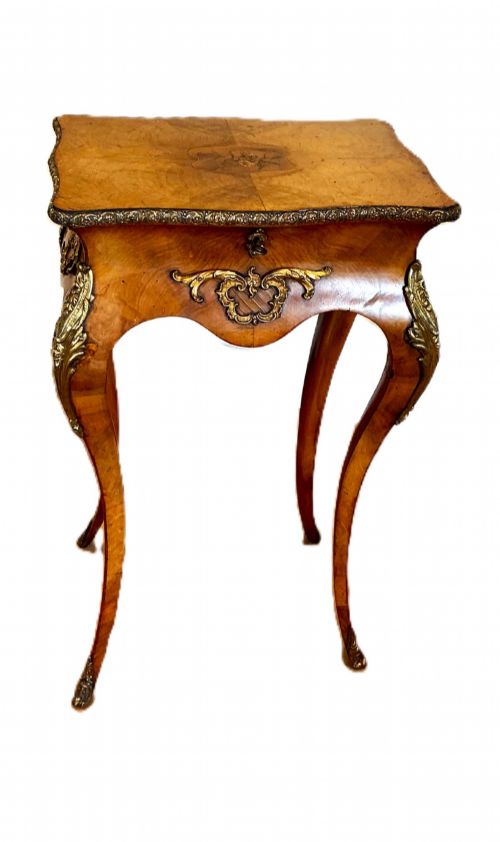
Makers drew on Louis XV, Louis XVI, and Rococo revivals, applying serpentine lines, cabriole legs, and symmetrical mounts to walnut, kingwood, and rosewood foundations. These tables served various domestic functions, from card playing and writing to displaying decorative objects.
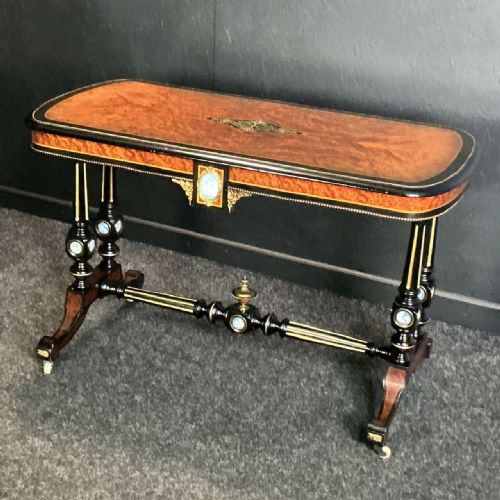
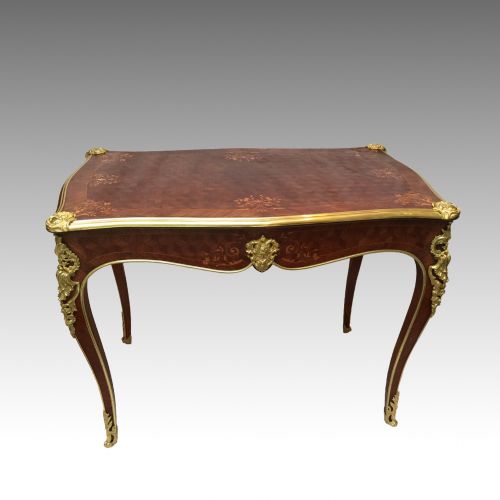
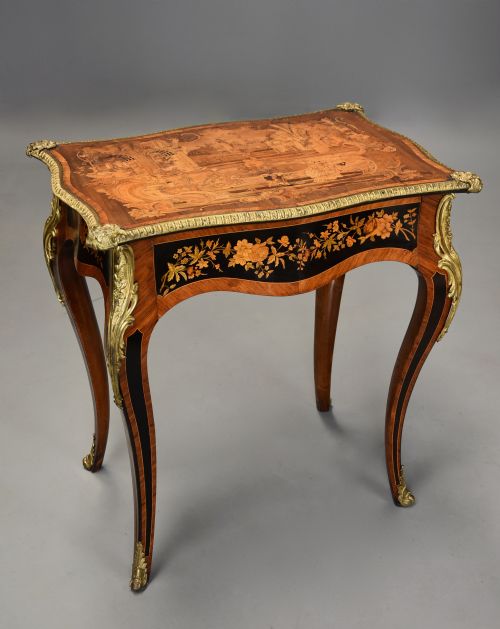
The material palette embraces rich timbers contrasted with polished metals and inset porcelain plaques. Examples range from simple walnut surfaces to highly elaborated marquetry designs framed in gilt bronze.
How They Were Made
Cabinetmakers constructed sturdy carcases of walnut, mahogany, or satinwood before applying intricate veneers of kingwood and rosewood. Parquetry and marquetry patterns were meticulously cut and fitted by hand to create geometric displays or floral pictorial scenes across the timber tops.
Mounts of ormolu, brass, and gilt bronze were cast, chased, and secured to corners, aprons, and legs to accentuate the fluid curves of the revival styles. Marble tops, frequently edged with brass galleries, added weight and a cool tactile surface to circular gueridons and side tables.
Several tables conceal small writing drawers or drop leaves, ready for sudden correspondence or card games.
What Varies in Quality
The distinction between standard production and masterwork execution lies in the precision of the marquetry and the crispness of the bronze casting. Finer tables exhibit seamless veneer alignment across opening drawers and complex curves, while simpler versions rely on printed or basic geometric patterns.
Mount quality dictates the visual impact of the piece, with hand-chased ormolu displaying sharp relief and deep lustre compared to flatter, cast-only alternatives. The structural integrity of the timber ground and the integration of secondary woods reveal the original workshop standards.
JAS Shoolbred·Joseph-Emmanuel Zwiener·Antoine Lampre·François Linke·Haentgos Freres·Gillows·Charles Topino
The French Revival Occasional Table Glossary
- Ormolu
- Gilt bronze mounts applied to furniture edges and legs for decorative contrast. This technique involves amalgamating gold onto a bronze base through fire-gilding.
- Marquetry
- The art of forming decorative patterns from small pieces of veneer. Craftsmen assemble woods of different natural colours to create pictorial or abstract designs.
- Parquetry
- Geometric wood inlay forming repeating patterns such as cubes or chequers. This technique provides a structured surface texture across tabletops.
- Gueridon
- A small round occasional table supported by a central column or three legs. Originating in the seventeenth century, these tables gained renewed popularity during later revival periods.
- Sevres
- Porcelain plaques incorporated into furniture surfaces, celebrated for their hand-painted floral or avian motifs. These panels are typically framed in gilded bronze mounts.
French Revival Occasional Table: Frequently Asked Questions
Where should I place a french revival occasional table?
These tables fit easily beside a sofa or chair to hold lamps and small objects, or stand freely in the middle of a room as a centre table.
Their decorative tops and polished mounts reward placement in well-lit areas where the timber grain and metalwork catch the light.
How do I care for marble and wood surfaces?
Wipe wooden surfaces with a soft, dry cloth and avoid harsh chemical polishes that can degrade nineteenth-century varnish or wax finishes.
Marble tops benefit from immediate cleaning of liquid spills to prevent staining, using mild soap and water followed by thorough drying.
How can I distinguish Louis XV and Louis XVI styles?
Louis XV revival pieces feature asymmetrical curves, flowing cabriole legs, and exuberant rococo scrollwork across the aprons and mounts.
Louis XVI revival tables shift towards neoclassical symmetry, displaying straight tapered legs, fluted columns, and restrained geometric framing.
Are these tables suitable for daily use?
Most occasional tables were built to handle the demands of Victorian drawing rooms, offering stable surfaces for writing, reading, and entertaining.
Using coasters and protecting delicate marquetry or porcelain plaques from heavy impact ensures these antique pieces remain functional.