






Kidney Shaped Accent Table
A kidney shaped accent table offers a graceful curve that hugs a sofa or bed with exceptional charm.
Kidney Shaped Accent Table
A kidney shaped accent table brings a distinctive serpentine outline to interiors, functioning primarily as a side, occasional, bedside, or lamp table. These surfaces provide compact utility without sacrificing floor space, fitting snugly beside seating or against walls.
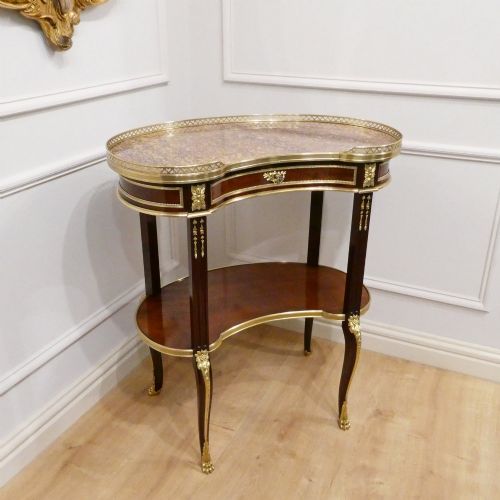
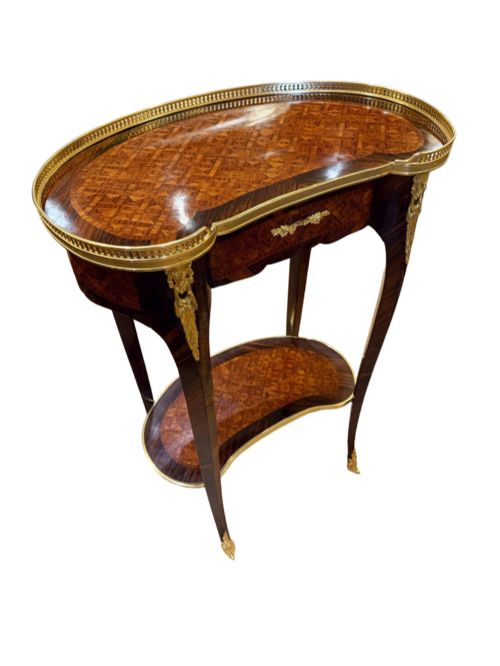
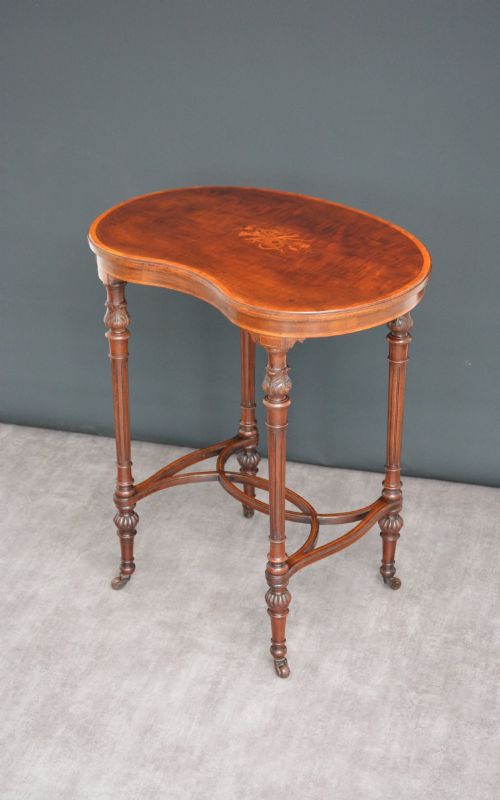
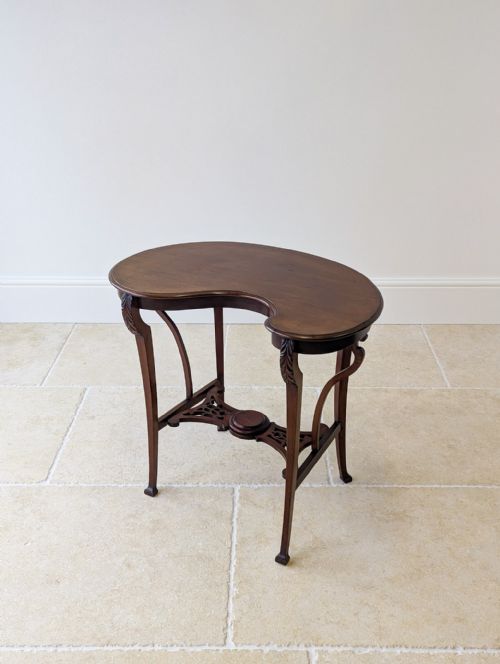
The pieces on this page span the Victorian and Edwardian eras alongside French revival movements, with Edwardian mahogany and rosewood examples appearing frequently alongside nineteenth-century French designs. Makers and workshops from these periods favoured the curvaceous silhouette for both occasional and tea table formats.
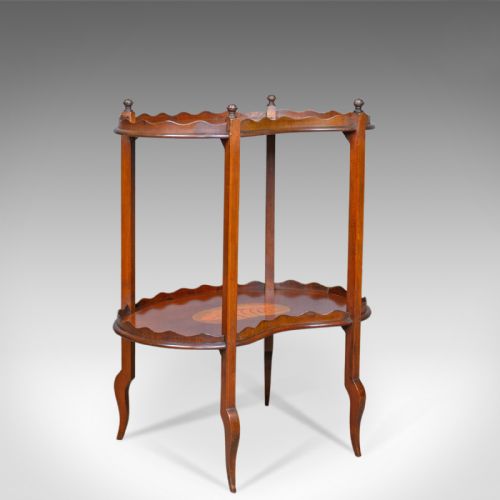
Buyers will encounter single occasional tables, tiered étagères, and occasional nests configured in the characteristic kidney bean form. The sweep of the top allows the user to draw the piece closer while seated, combining decorative grace with practical intent.
Materials and construction
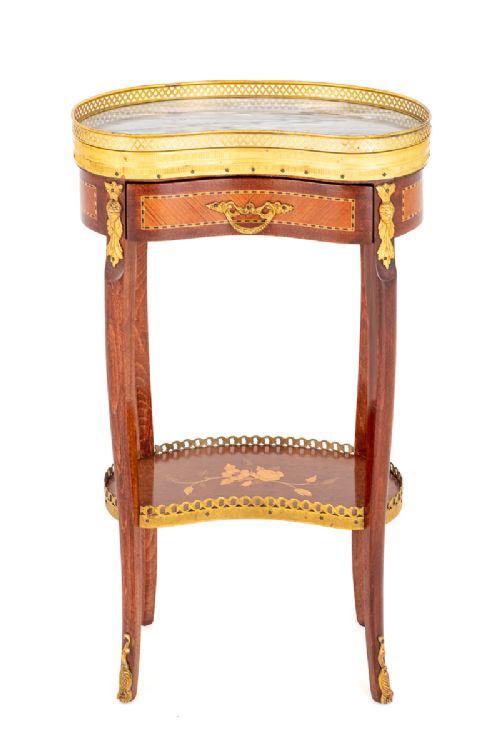
Cabinetmakers constructed these tables using a foundation of mahogany, rosewood, or satinwood, often enhanced by intricate boxwood stringing and parquetry or marquetry inlay. Skilled artisans shaped the tight curves of the timber frame to match the sweeping outline of the top.
Mounts in ormolu and galleries in brass frequently edge the upper surface, whilst marble tops appear on select French variations. These metal elements required precise casting and fitting to complement the undulating wooden edges of the table.
Designed to hug the human waist, the kidney shape proves that furniture can be both polite and extremely flattering to a corner.
Distinctions in craftsmanship
Quality rests upon the crispness of the marquetry and the fidelity of the timber veneers used across the curved surface. Superior examples display seamless grain matching and refined inlay work that follows the difficult contours of the top without lifting.
The choice of secondary woods, the weight and detail of the cast brass or ormolu mounts, and the stability of the slender legs differentiate standard production from exhibition pieces. Finer tables maintain rigid joinery despite the structural challenges inherent in a curved apron and leg configuration.
Maison Millet·F. Linke
The Kidney Shaped Accent Table Glossary
- Marquetry
- Decorative patterns formed by the insertion of pieces of veneer into a master wood base to create pictorial or geometric designs. This technique demands immense precision on curved table tops.
- Ormolu
- Gilded bronze ornamentation applied to furniture mounts and galleries during the eighteenth and nineteenth centuries. The alloy gives a rich gold-coloured finish that accentuates French revival styles.
- Parquetry
- Geometric mosaic woodwork used for repeating patterns on tabletops. It differs from marquetry by relying strictly on angular shapes rather than pictorial motifs.
- Étagère
- A set of open shelves for displaying small objects or books, sometimes built into the tiered format of these tables. Such multi-level designs maximise display space within a compact footprint.
- Gallery
- A small raised metal or wooden rail bordering the edge of a table top to prevent items from sliding off. This feature is common on refined Edwardian and French occasional tables.
Kidney Shaped Accent Table: Frequently Asked Questions
Where should I place a kidney table?
These tables suit small spaces where straight edges feel too rigid, fitting neatly beside an armchair or serving as a bedside stand.
Their curved front allows you to pull the piece closer when seated with a book or cup of tea.
How do I distinguish Edwardian from Victorian examples?
Edwardian versions often feature lighter satinwood or rosewood with delicate boxwood inlay and airy two-tier formats. Victorian pieces tend to rely on heavier mahogany with deeper tones and robust turned supports.
Examining the secondary woods and overall heft of the frame generally clarifies the period of manufacture.
What is the purpose of the raised gallery?
The raised brass or wooden gallery acts as a functional fence to stop small items from rolling off the curved surface. It adds a decorative border that defines the distinctive silhouette of the top.
This detail frequently indicates a higher grade of occasional or tea table.
Can these tables support a heavy lamp?
Most lamp and side tables from this selection easily handle standard lighting and decorative items. The slender legs require stable placement on flat flooring to prevent wobble.
Heavier marble-topped variations offer a sturdier base for larger lamps.
How do I care for inlaid wooden surfaces?
Maintain the finish by avoiding direct sunlight and keeping the timber away from extreme temperature shifts that cause veneer to lift. Dust gently with a dry cloth and apply occasional wax suited to antique hardwoods.
Protect the polish from moisture by using coasters beneath drinks.