


French Repeater Carriage Clock
A french repeater carriage clock brings precise mechanical timekeeping and grand decoration together in a portable brass and glass housing.
French Repeater Carriage Clock
A french repeater carriage clock is a portable timekeeper designed for travel and domestic use, combining an internal movement with a glass-paneled brass case. These pieces originate predominantly from the nineteenth century, spanning periods from the eighteen-fifties through the Edwardian era.
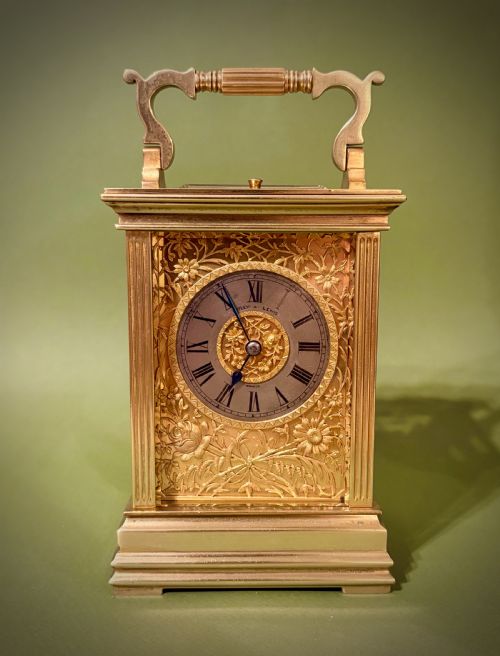
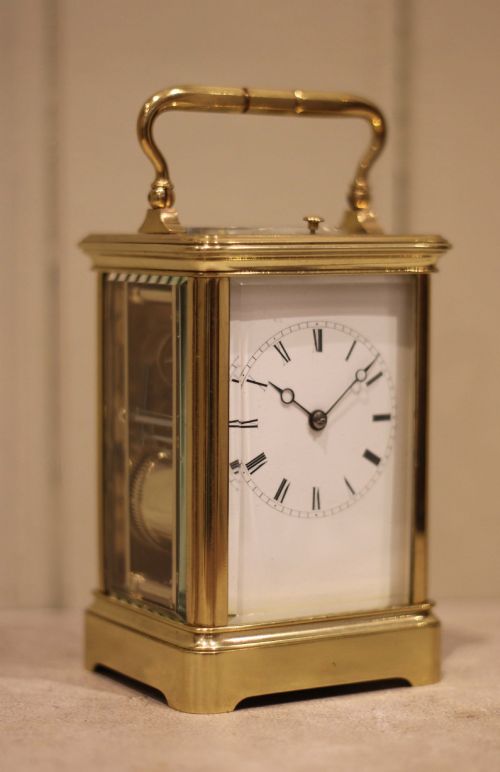
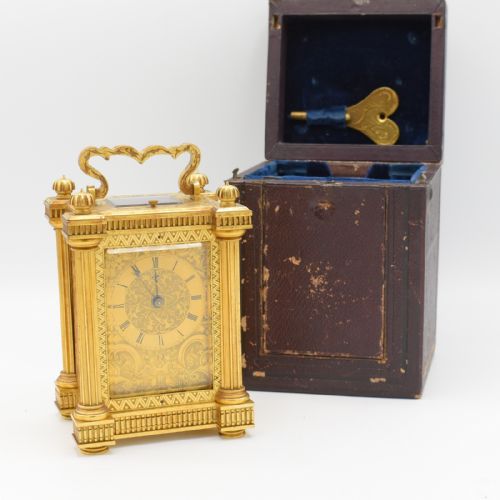
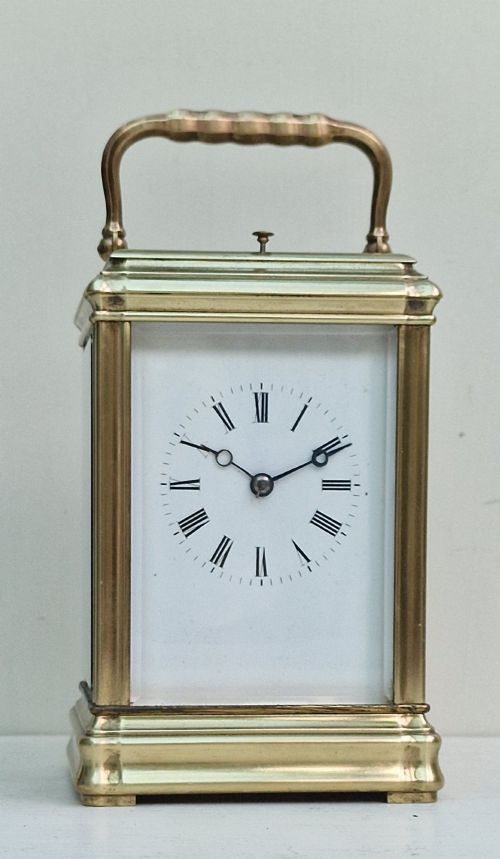
The versions most commonly met on this page feature striking mechanisms, repeating buttons, and white enamel dials housed within traditional gorge, oval, or engraved cases. Examples often arrive accompanied by their fitted leather travel boxes and original winding keys.
Materials and Construction
Makers constructed the structural frames and panels primarily from brass, frequently applying a full gilding or silver-gilding to the metal surfaces. Beveled glass windows fit tightly into the top, sides, and door to display the escapement and gear trains within.
Dials are formed of white enamel with painted Roman or Arabic numerals, sometimes surrounded by intricate gilt mask faces or detailed hand-painted enamel floral panels. Steel components operate the internal striking, alarm, and repeating complications.
Listings feature movements signed by prominent nineteenth-century makers alongside traditional gorge and oval brass cases.
Evaluating Quality
Quality separates ordinary timepieces from exceptional specimens through the complexity of the movement and the crispness of the case decoration. Grande sonnerie striking, alarm functions, and five-minute repeating complications elevate the internal engineering well above standard hourly strikes.
The refinement of the exterior finishes dictates the visual distinction of a piece, from deeply hand-engraved brass framing to delicate portrait or floral enamel paintings on the panels. Surviving original boxes, matching paperwork, and fully gilded surfaces further distinguish premier examples.
Howell And James London·Brunelot·L Epee·J F Bautte Et Cie·Bourdin Paris·Alfred Drocourt·Henry Jacot
The French Repeater Carriage Clock Glossary
- Repeater
- A mechanism that chimes the hours and quarters upon demand when a button or pendant is pressed. This complication allowed owners to check the time in darkness without lighting a candle.
- Gorge case
- A specific rectangular brass case design featuring stepped mouldings on the top and base. It represents one of the most widespread housing styles for nineteenth-century models.
- Grande sonnerie
- A complex striking train that automatically chimes both the hours and the passing quarters on every quarter hour. It stands apart from standard striking clocks that sound only the hours.
- Escapement
- The internal mechanical linkage that controls the rotation of the gear train by releasing the wheel at regulated intervals. Platform escapements are standard in these portable timepieces.
- Mask
- The gilt metal plate surrounding the central enamel dial face. It is frequently chased or engraved with floral and scroll motifs.
French Repeater Carriage Clock: Frequently Asked Questions
How do I wind a french repeater carriage clock?
Insert the matching winding key into the arbors located on the underside or backplate of the movement. Turn the key gently until you feel resistance, ensuring you do not overwind the mainsprings.
Different arbors control the timekeeping train, the striking train, and the alarm where fitted. Take care to support the clock securely during the winding process.
What is the repeater button for?
Pressing the button on top of the case triggers the striking mechanism to sound the last elapsed hour and quarter. This allowed Victorian users to tell the time in a dark bedroom.
The mechanism relies on internal racks and gongs to count out the correct acoustic signal on demand.
How should I clean the glass and brass?
Wipe the beveled glass panels gently with a soft dry cloth to remove dust. Avoid harsh chemical polishes on gilded brass surfaces to preserve the original finish.
Professional horological maintenance is recommended for cleaning internal gear trains and delicate enamel dials.