






French Regency Table Lamp
A French regency table lamp brings classical sculptural presence to a room through bronze, ormolu, and gilded detail.
French Regency Table Lamp
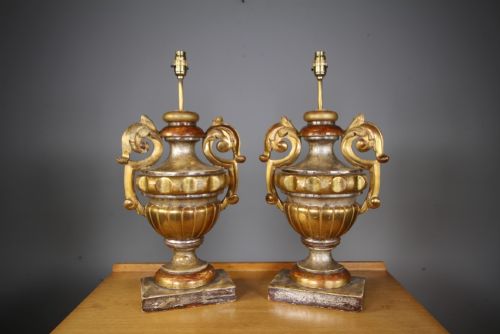
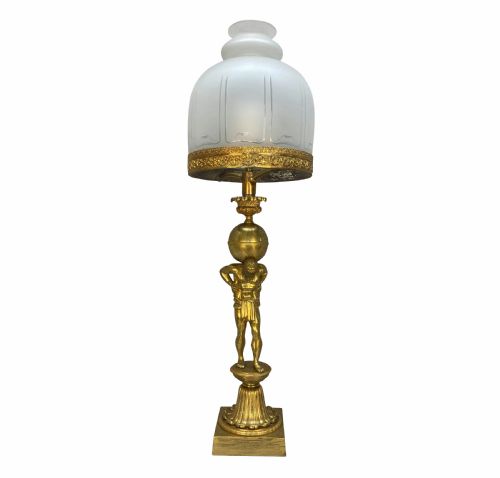
A french regency table lamp takes sculptural form from classical antiquity, often appearing as an urn, a candlestick, or a figural subject like Atlas. These pieces draw upon the Neoclassical, French Empire, and Regency styles, reflecting aesthetic vocabularies that span the nineteenth century and revivals into the twentieth century. The selection includes matched pairs and individual table lights, desk lamps, and occasional converted vessels.
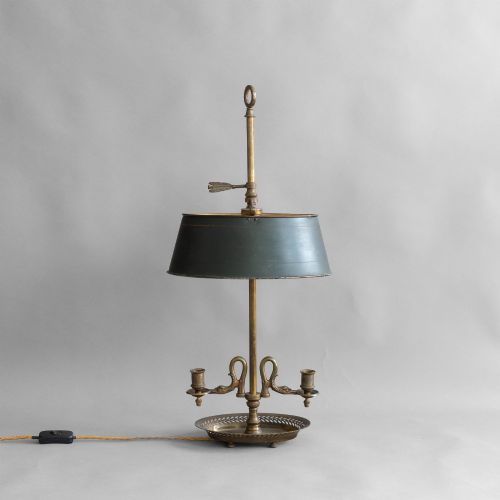
Most examples originate from the nineteenth century or early twentieth century, incorporating periods from Regency proper through Victorian, Edwardian, and later revival decades. Forms range from compact bouillotte desk lamps with adjustable shades to large decorative urn lamps mounted on marble bases.
Materials and Construction
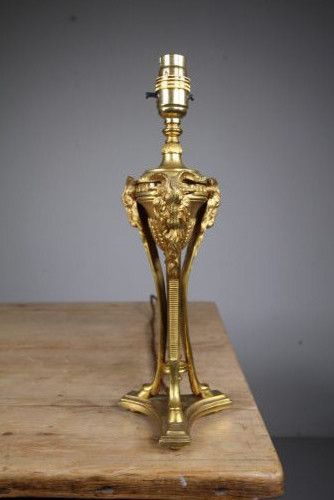
Construction relies heavily on cast metals, predominantly bronze, brass, ormolu, and gilt bronze, frequently paired with white or coloured marble plinths. Details are achieved through precision casting and gilding, combining polished metallic surfaces with patinated bronze elements.
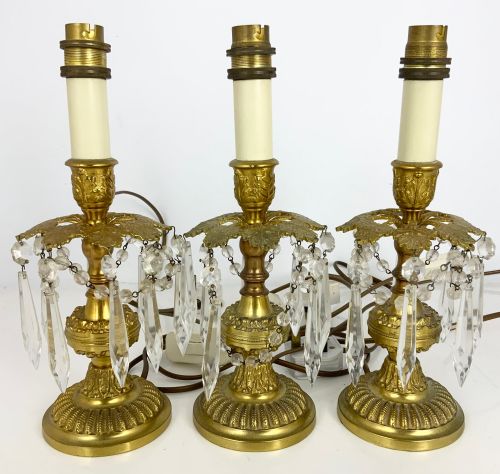
Many items incorporate supplementary materials such as cut glass, lustres, silk fabric shades, and painted toleware. Converted pieces utilise antique ceramic vases or turned timber elements, integrating wiring into historical vessels.
The listings show materials spanning bronze, brass, ormolu, marble, silk, glass, and painted toleware across the nineteenth and early twentieth centuries.
Quality and Execution
Quality rests in the crispness of the metal chasing and the depth of the mercury gilding or ormolu finish. Superior castings exhibit sharp relief on classical motifs like acanthus leaves, ram heads, and drapery.
The weight of the bronze and the selection of supportive materials, such as solid marble bases and matched glass lustres, distinguish finer workshop productions from lighter decorative alternatives.
The French Regency Table Lamp Glossary
- Ormolu
- Finely ground high-carat gold applied to a bronze base using a mercury amalgamation process. This technique creates a rich, matte golden surface characteristic of classical French lighting.
- Toleware
- Painted or enamelled sheet metal, frequently used for the shades and bodies of traditional desk and table lighting. It provides durable colour and a contrasting matte texture against polished metal mounts.
- Bouillotte lamp
- An adjustable desk lamp featuring a central shaft, a saucer base to catch wax, and a height-adjustable shade. These pieces traditionally served card players during the game of bouillotte.
- Gueridon
- A small circular table on a central pillar or three legs, often serving as a stand for decorative objects or lighting. The form originates from seventeenth-century French furniture design.
French Regency Table Lamp: Frequently Asked Questions
What is a french regency table lamp?
A french regency table lamp is a decorative light fixture influenced by classical French design and nineteenth-century Regency aesthetics. These pieces typically feature cast bronze, ormolu, and architectural motifs derived from antiquity.
They often take the form of urns, columns, or candlesticks, designed to provide ambient illumination while serving as sculptural centrepieces in a room.
How do I identify a period piece?
Period identification relies on examining the weight of the metal casting, the hand-chased surface details, and the method of construction. Nineteenth-century examples frequently show heavier bronze bases and traditional patination.
Secondary materials like antique marble, cut glass lustres, and early wiring apertures also help differentiate genuine nineteenth-century pieces from later twentieth-century revivals.
Were these lamps originally electrified?
Most historical lamps were originally designed for candles or oil rather than electricity. Many surviving examples are later conversions where historical vases, candlesticks, or urns were adapted for modern wiring.
This conversion process preserves the decorative body of the antique object while integrating contemporary functional electrical components.
Where should I place a bouillotte lamp?
A bouillotte lamp suits a desk, a library table, or a sideboard where adjustable task lighting is useful. The characteristic metal shade directs light downward onto the surface.
Placing one on a small side table or a pier table creates a focal point that highlights surrounding architectural or decorative details.