



French Provincial Commode Cabinet
A french provincial commode cabinet brings regional warmth and utility into a room, offering practical storage topped with fine marble or timber.
French Provincial Commode Cabinet
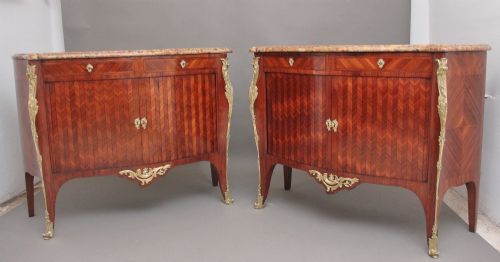
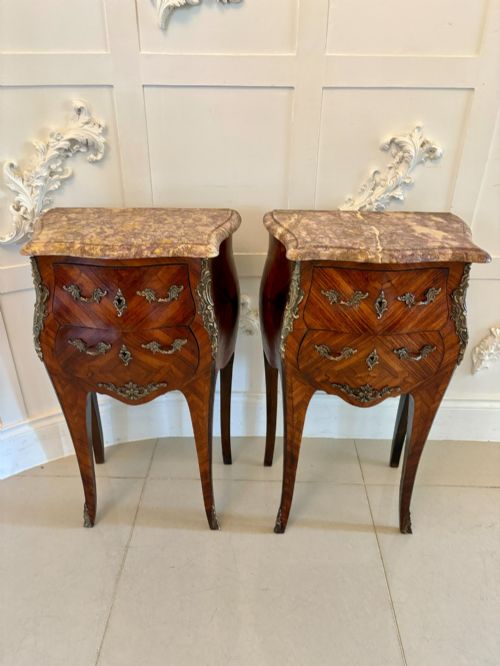
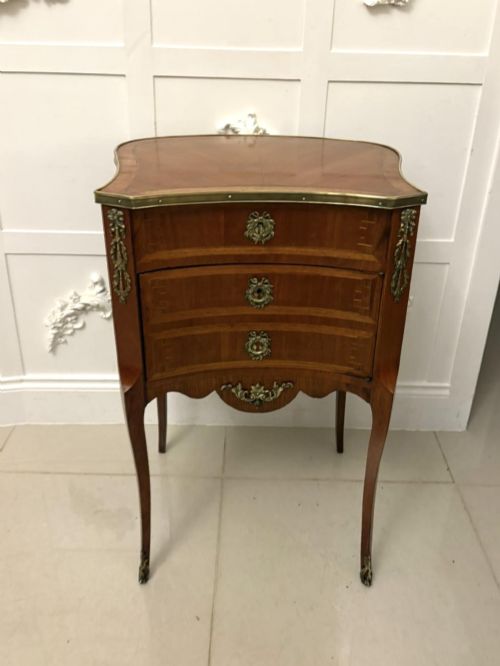
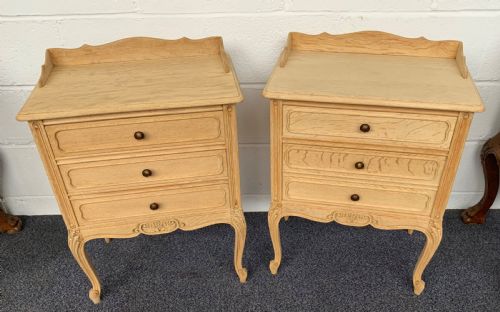
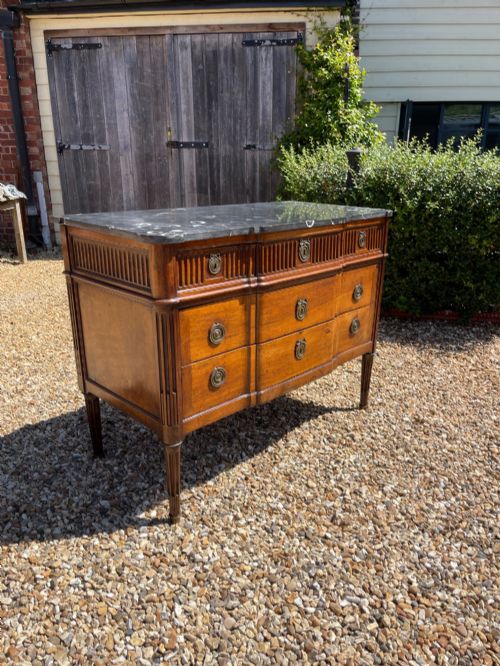
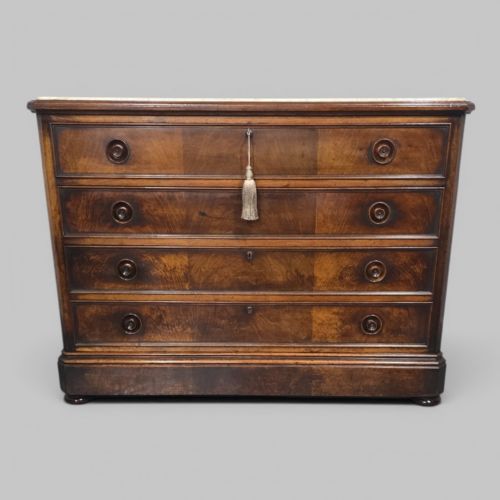
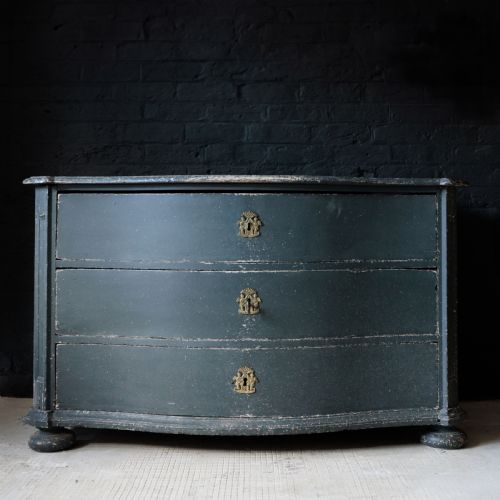
A french provincial commode cabinet is primarily a chest of drawers or bedside cabinet originating from regional France, spanning from the eighteenth century into the twentieth century. These pieces serve as functional storage furniture, often appearing as serpentine chests, bombe shapes, or smaller bedside units.
The versions most commonly met on this page include walnut and cherrywood examples from the eighteenth century alongside later walnut, oak, and marquetry pieces from the nineteenth and early twentieth centuries. Buyers also encounter painted wood finishes and specialised forms such as miniature apprentice chests or two-piece commode and vitrine combinations.
How they were made
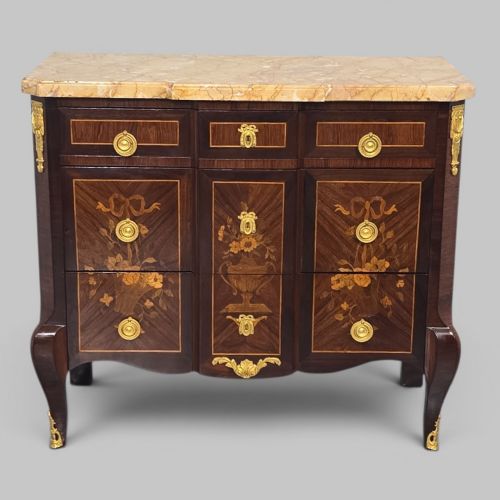
Cabinet makers utilised solid timbers such as walnut, oak, cherrywood, and kingwood, often applying intricate marquetry patterns or veneer over carcases. Structural and decorative enrichment frequently included ormolu, brass, and gilt bronze mounts fitted to corners and handles.
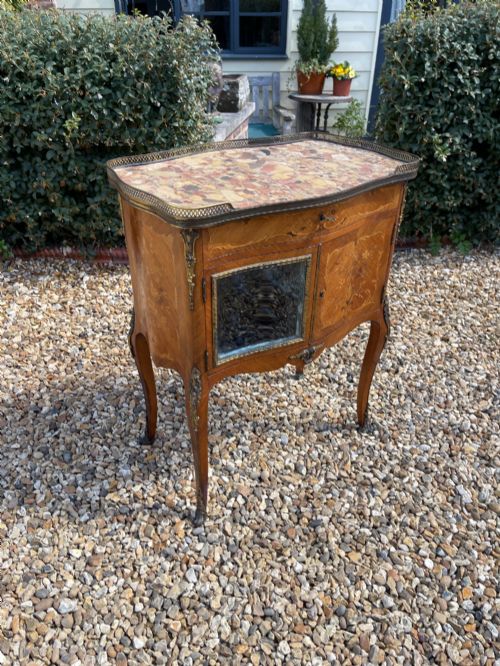
Many of these cabinets incorporate heavy marble tops, particularly on serpentine and demi-lune forms. Joinery methods reflect traditional regional carpentry, paired with hand-carved details seen in Louis XV and Louis XVI style revivals.
French Provincial Commode Cabinet Retail Price Guide 2026
Typical asking prices for french provincial commode cabinet among the pieces listed under this phrase on Sellingantiques today, from the lower quarter to the upper quarter. They describe what is for sale here now, not the wider market.
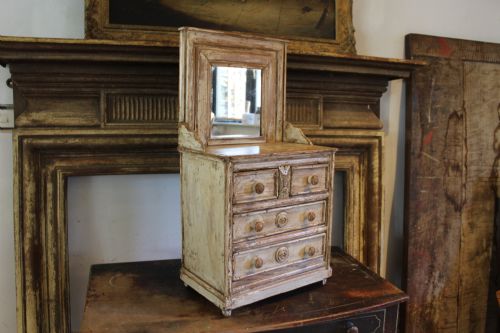
Miniature apprentice pieces offer tiny, perfectly scaled drawers built by aspiring cabinet makers to prove their skill.
What varies in quality
Quality rests upon the crispness of the timber selection, the integration of marquetry inlay, and the weight and execution of ormolu or brass mounts. Eighteenth-century pieces show hand-cut regional joinery, whereas later revival items depend on the precision of the cabinet work and the quality of the marble top.
The proportion and silhouette dictate visual success, separating robust regional country furniture from refined urban workshop interpretations. Original mounts and uncompromised surface timber distinguish superior examples from heavily restored counterparts.
Joseph Zwiener
The French Provincial Commode Cabinet Glossary
- Commode
- A low chest of drawers or cabinet designed for domestic storage. These pieces frequently sit in bedrooms or living spaces.
- Serpentine
- A curved shape resembling a snake, featuring a convex centre flanked by concave sides. This line appears frequently on eighteenth-century drawer fronts.
- Marquetry
- The art of applying pieces of veneer to a structure to form decorative patterns. Craftsmen use various coloured woods to create floral or geometric designs.
- Ormolu
- Gilt bronze mounts applied to furniture for decoration. This technique heightens the visual contrast against walnut and kingwood surfaces.
- Demi-lune
- A half-moon shape characteristic of console tables and cabinets designed to fit flat against a wall. These pieces often feature marble tops.
- Bombe
- A swelling, outward-curving profile found on the sides and fronts of advanced case furniture. This exuberant contour defines specific continental styles.
French Provincial Commode Cabinet: Frequently Asked Questions
How do I style a commode in a modern room?
A commode serves as a focal point in a bedroom or hallway, offering surface space for lamps, mirrors, or decorative objects while concealing clutter within its drawers. Pairing a wooden or marble-topped chest with contemporary surroundings creates a balanced interior.
Because these cabinets come in various forms such as demi-lune consoles or compact bedside chests, they fit easily into diverse spatial layouts. Their natural timber tones and inlaid details add textural warmth to neutral or minimalist spaces.
How do I date an antique commode?
Dating a commode involves examining the timber species, construction methods, hardware, and stylistic details. Eighteenth-century pieces typically display regional hand-cut joinery and native woods like cherrywood or walnut.
Later nineteenth-century and early twentieth-century examples often follow Louis XV or Louis XVI revival styles, incorporating machine-assisted elements or specific marquetry techniques. Ormolu mounts and marble tops also help anchor a piece within a particular period.
What is the difference between a commode and a bedside cabinet?
A commode is traditionally a larger chest of drawers designed for general room storage, frequently featuring a serpentine or bombe profile. Bedside cabinets are smaller scaled units meant to sit next to a bed.
Despite the size difference, both share similar stylistic traits, such as marble tops, marquetry, and regional French influences. Listings may include pairs of bedside tables alongside single full-sized commodes.