
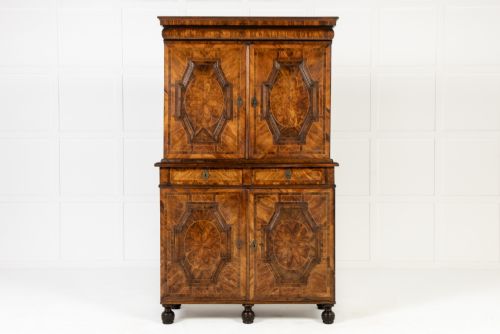


French Provincial Buffet Cabinet
A French provincial buffet cabinet brings rustic utility and regional craftsmanship into a modern dining room or kitchen.
French Provincial Buffet Cabinet
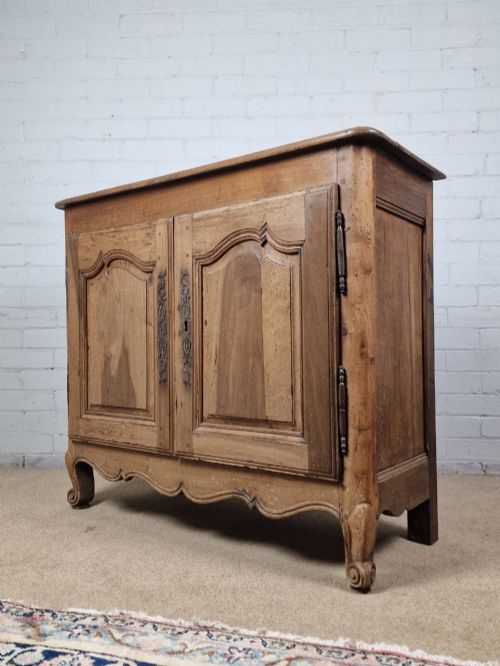
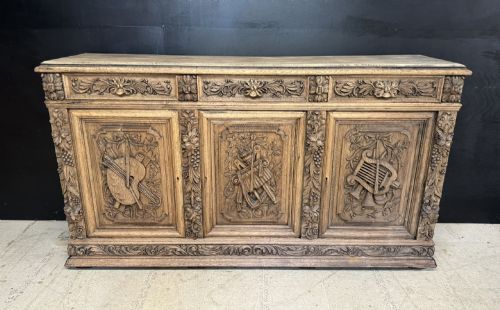
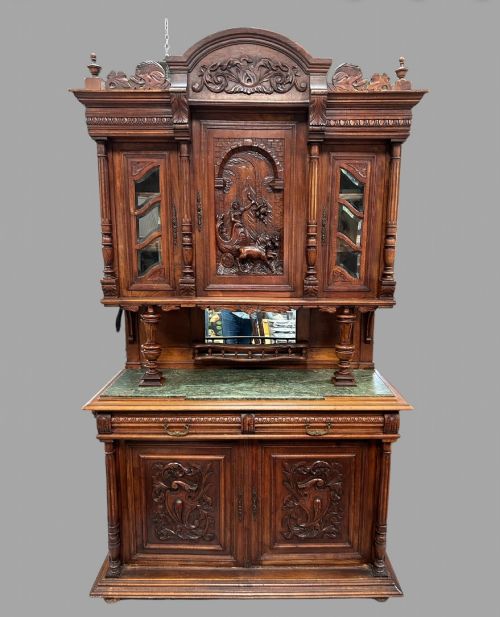
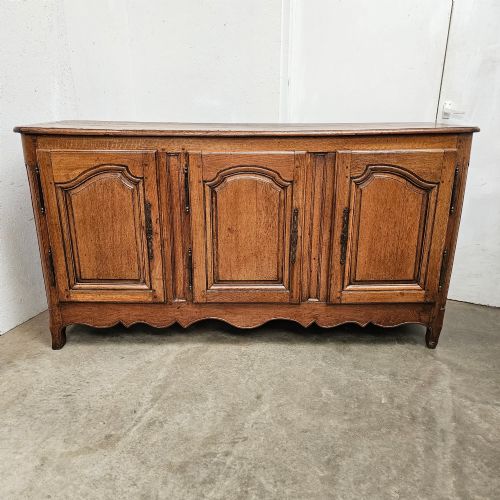
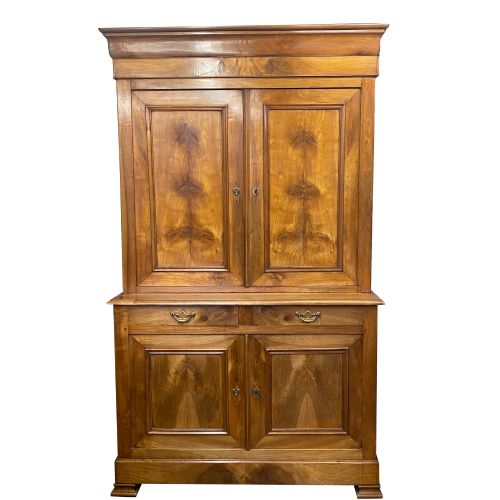
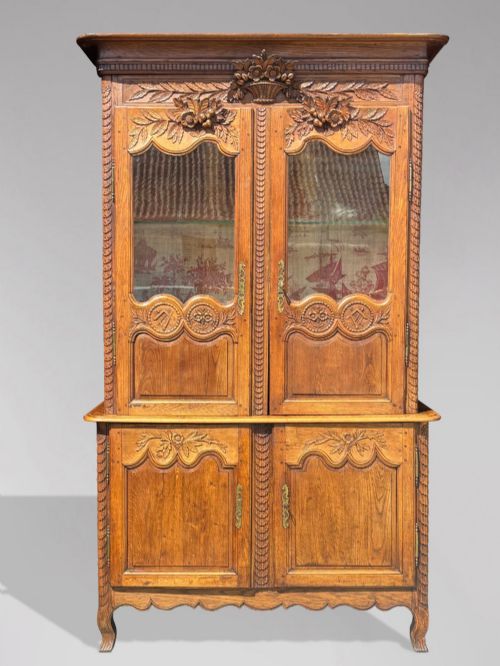
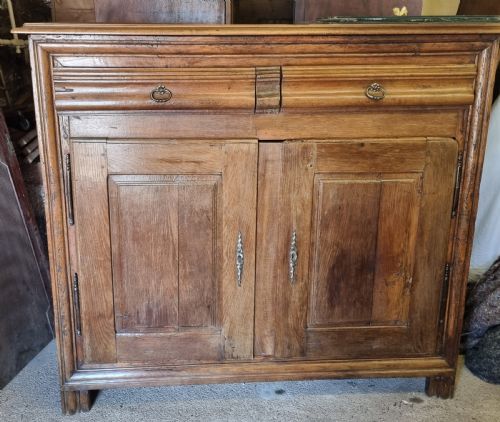
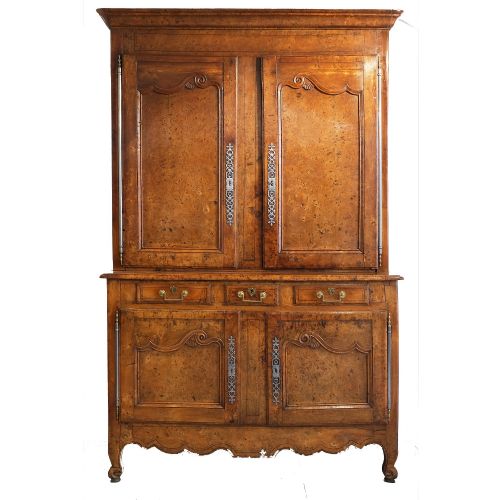
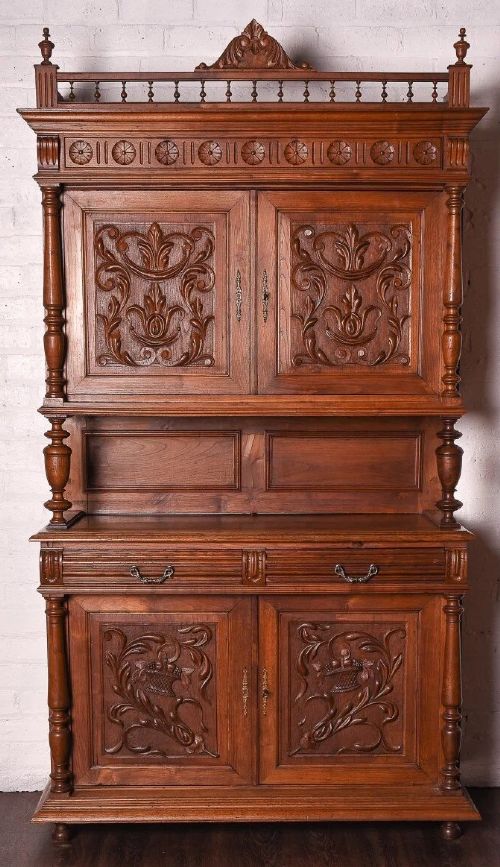
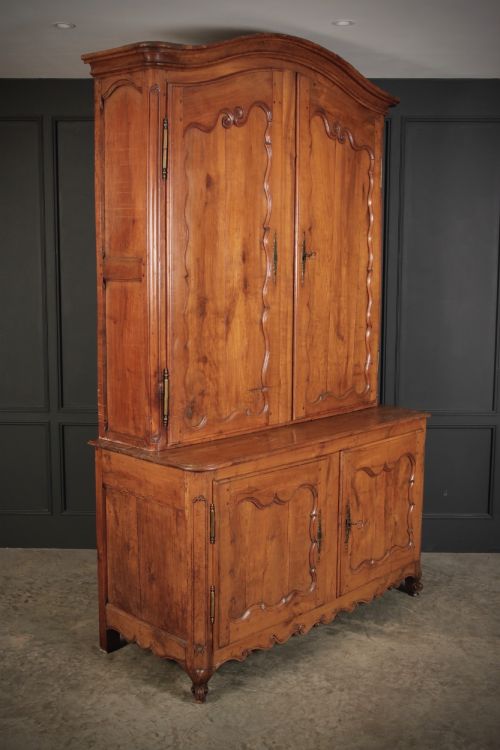
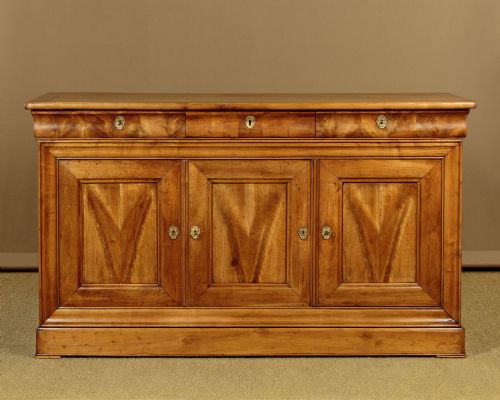
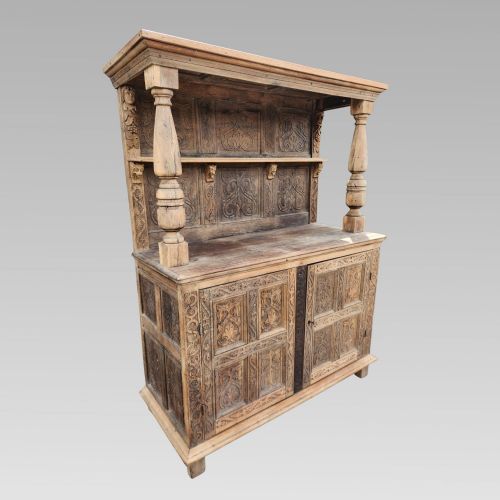
A french provincial buffet cabinet represents heavy storage furniture originating from regional France, primarily encountered on this page in forms such as sideboards, enfilades, and two-part cupboards known as deux corps. These pieces serve as practical storage for tableware and provisions while displaying the distinct regional tastes of French cabinet makers.
The inventory on this page spans from the eighteenth century through to the early twentieth century, featuring styles that range from plain country oak utility pieces to carved Louis XV and French Renaissance Revival formats. Buyers encounter low kitchen buffets alongside tall housekeeper cupboards and large larder cabinets.
Regional variations appear across timber choices and construction methods, reflecting the local woods available to provincial workshops. Pieces often combine generous proportions with panelled doors, brass hardware, and iron hinges suited to daily domestic use.
Materials and construction methods
Provincial workshops relied heavily on native hardwoods, primarily oak, cherry wood, walnut, ash, elm, and chestnut, supplemented occasionally by fruit wood and burr elm veneers. These timbers were selected for durability and joined using traditional peg and mortise techniques to withstand seasonal humidity shifts.
Iron and brass hardware, including decorative hinges, escutcheons, and drop handles, secure heavy doors and drawers on these cabinets. Later twentieth-century examples incorporate marble tops, introducing stone surfaces alongside traditional timber parquetry and glass panels.
Listings on this site feature nineteenth-century and eighteenth-century periods alongside twentieth-century iterations built from solid oak, cherry wood, walnut, and marble.
Factors that define quality
The standard of carving and the integrity of the timber distinguish finer pieces from standard utilitarian storage. Superior examples display crisp hand-carved detailing on solid oak or cherry wood, whereas lesser items rely on simpler panel work or later alterations.
Originality of surface finish and hardware heavily influences the integrity of a piece. Cabinets retaining their early hinges, locks, and patinated timber surfaces hold greater authenticity than those stripped or fitted with replacement elements.
The French Provincial Buffet Cabinet Glossary
- Enfilade
- A long sideboard or buffet fitted with a succession of doors along the front, traditionally used in French dining rooms for serving food.
- Deux Corps
- A tall two-part cabinet featuring an upper cupboard section resting upon a deeper lower buffet base.
- Parquetry
- A geometric mosaic of wood pieces used for decorative surfaces, frequently seen on tabletops and cabinet doors.
- Escutcheon
- A flat plate surrounding a keyhole, usually fashioned from brass or iron to protect the surrounding timber.
- Fruit Wood
- Timber sourced from fruit-bearing trees such as cherry, pear, or apple, prized by provincial makers for its fine grain and warm tone.
French Provincial Buffet Cabinet: Frequently Asked Questions
How do I date a french provincial buffet cabinet?
Dating relies upon examining construction marks, timber types, and the style of hand-carved details. Eighteenth-century examples typically show pegged joinery and hand-sawn boards.
Later nineteenth and twentieth-century pieces incorporate machine-cut elements and alternative surface materials like marble tops.
Where were these cabinets originally used?
These pieces functioned in provincial French kitchens, dining rooms, and hallways as storage for linens, tableware, and dry goods. Tall two-part cupboards often stored food provisions in large country houses.
Lower buffet formats served dining spaces for food preparation and serving.
How do I maintain the timber surface?
Maintenance requires regular dusting with a dry cloth and occasional application of traditional beeswax to nourish aged hardwoods. Avoid placing timber furniture near direct heat sources to prevent warping.
Marble top variants require gentle cleaning with neutral soap to protect the stone.