
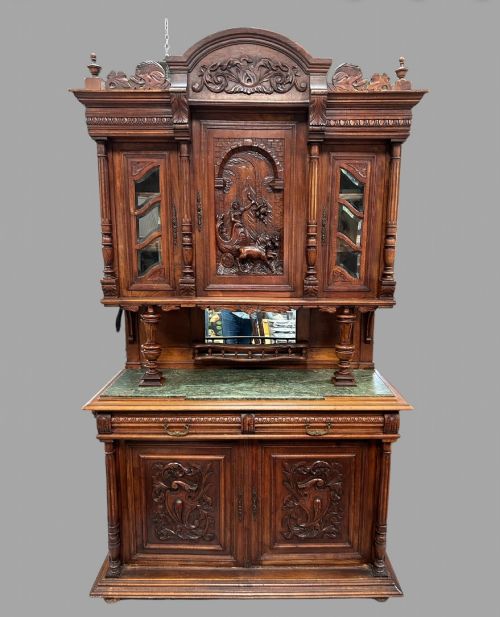
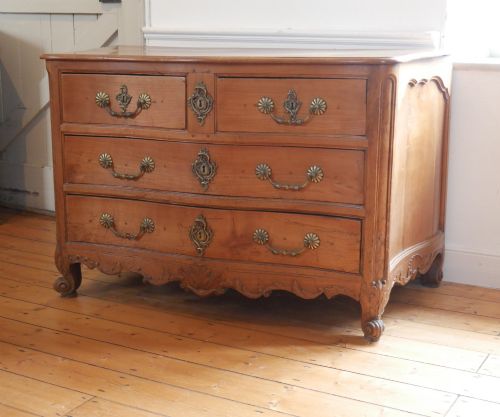
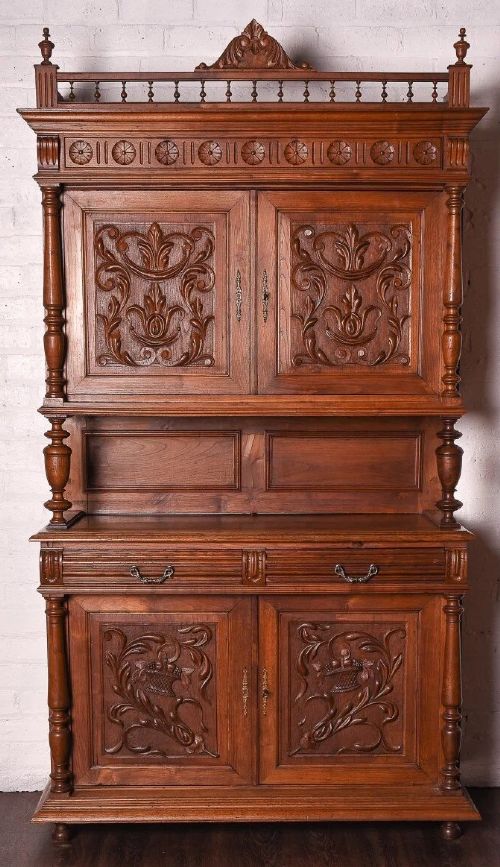
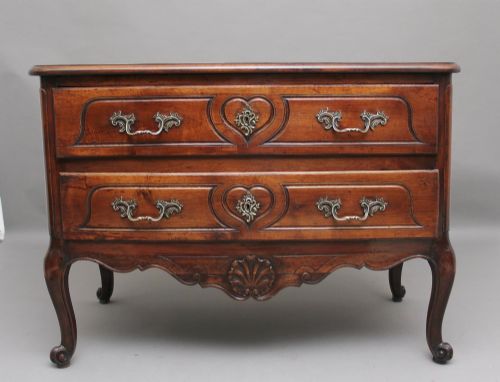
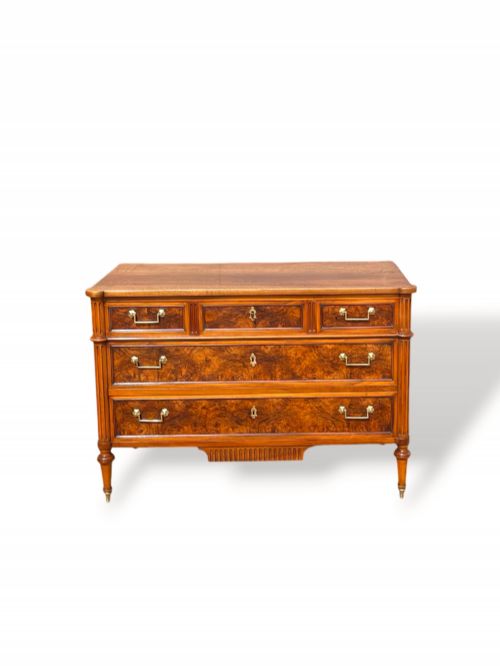


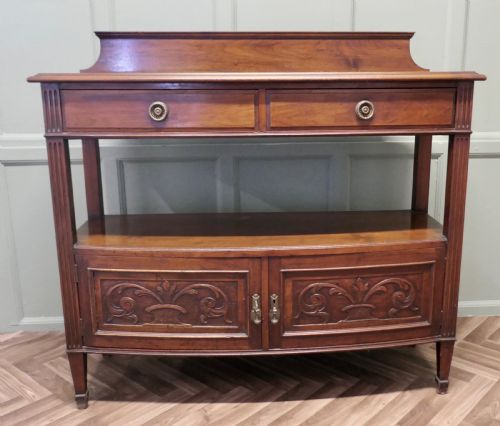

Carved French Walnut Sideboard
A carved french walnut sideboard brings solid timber and centuries of regional cabinetmaking together to anchor a dining room.
Carved French Walnut Sideboard
A carved french walnut sideboard appears in forms ranging from eighteenth-century provincial buffets and commodes to nineteenth-century revival cabinets and later art deco designs. Buyers seek these pieces for generous storage capacity combined with rich wood grain and deep relief carving.
The selection includes regional dresser bases, serpentine commodes, and marble-topped servers spanning the eighteenth, nineteenth, and early twentieth centuries. Pieces originating from French provincial workshops sit alongside grander chateau and renaissance revival iterations.
Materials and construction
Cabinetmakers utilised solid walnut and burr walnut veneers over robust carcases, often mounting heavy slab marble tops or incorporating brass and ormolu hardware. Iron fittings and glass elements appear on specific display cabinets and specialised storage pieces.
Joinery relies on traditional hand-cut dovetails and pegged frame construction, while surface decoration involves intricate hand carving, marquetry inlay, and polished finishes that accentuate the natural figure of the timber.
The listings span the eighteenth century through to nineteen-thirty, uniting provincial walnut buffets with art deco cabinets and marble-topped servers.
Judging the standard
Quality rests on the crispness of the hand-carved detail, the selection of figured walnut timber, and the integrity of the original structural joinery. Finer examples display harmonious proportions, substantial marble slabs, and intact brass or ormolu mounts without modern replacement parts.
Étienne Kohlmann·Gabriel Viardot
The Carved French Walnut Sideboard Glossary
- Commode
- A low chest of drawers or cabinet originating in France, often featuring a serpentine front and marble top. These pieces served primarily in formal rooms for storage and display.
- Buffet
- A sideboard or storage cabinet designed for dining rooms to hold tableware and food service items. They often include cupboards and drawers arranged beneath a serving surface.
- Marquetry
- The art of applying pieces of veneer to a structure to form decorative patterns and pictures. Craftsmen selected different woods to create tonal contrast without paint.
- Ormolu
- Gilded bronze mounts applied to furniture for decorative accent during the eighteenth and nineteenth centuries. The technique adds metallic contrast to dark walnut surfaces.
- Credenza
- A sideboard or buffet cabinet typically standing low to the ground with doors enclosing shelving. They developed in various revival styles across the nineteenth century.
Carved French Walnut Sideboard: Frequently Asked Questions
How do I date a walnut sideboard?
Dating relies on construction methods, hardware types, and stylistic indicators such as provincial mouldings or revival motifs. Examining drawer linings and timber shrinkage provides further clues to age.
Eighteenth-century examples typically show hand-cut dovetails and pegged joints, whereas nineteenth-century revival pieces incorporate heavier machine-sawn elements and distinct period ornamentation.
Are marble tops original to these sideboards?
Many nineteenth-century and art deco sideboards were manufactured specifically to receive heavy marble slabs for practical serving use. These stone tops generally match the exact dimensions and edge profiles of the timber carcase below.
Replacement marble is occasionally fitted during restoration work, so inspecting the seating and support framing helps determine originality.
Where were these pieces used?
These sideboards and buffets served primarily in dining rooms and grand salons for storing silver, linens, and serving dishes. The flat top surface functioned as a station for food presentation during meals.
Smaller commodes and cabinets were also placed in drawing rooms and hallways to display decorative objects and store household items.
How do I care for french walnut furniture?
Maintenance involves keeping the timber away from direct heat sources and sudden temperature fluctuations to prevent wood splitting. Regular dusting with a soft, dry cloth preserves the polished finish.
Periodic application of suitable furniture wax feeds the walnut grain without building up heavy chemical residues on the carved surfaces.