


French Post Impressionist Artwork
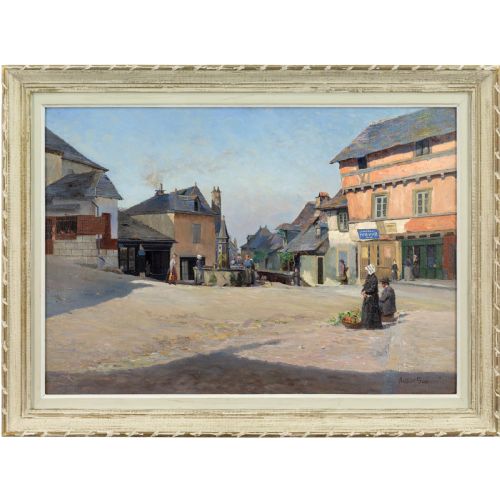
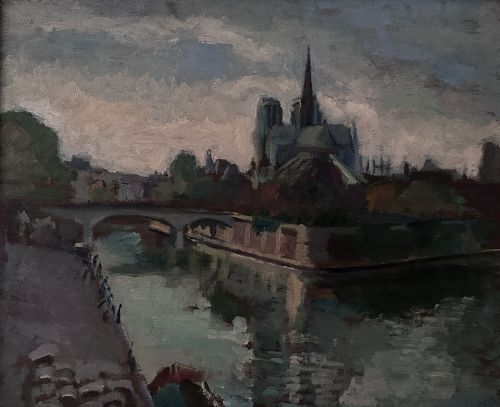
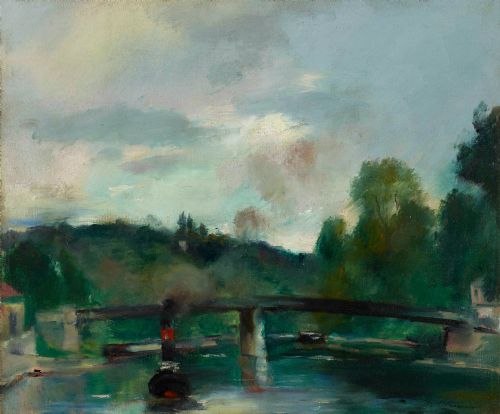
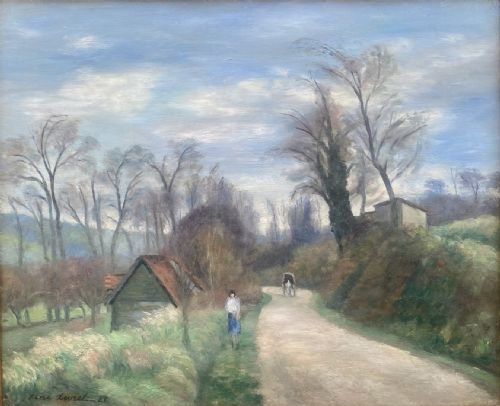
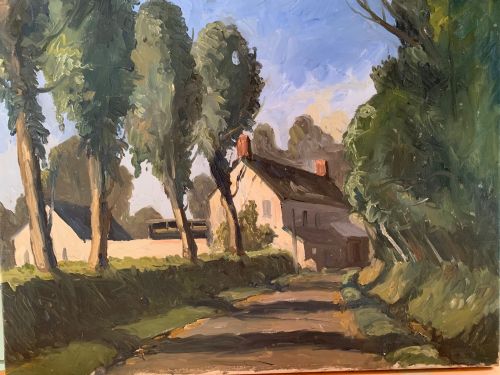
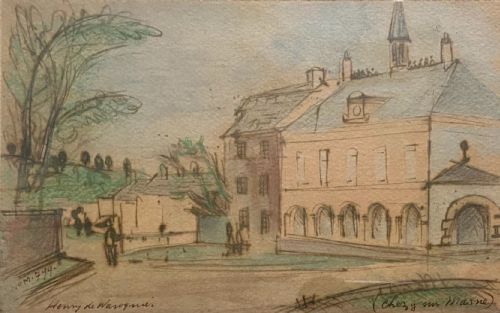
French post impressionist artwork captures the light and atmosphere of France across canvases and panels spanning the nineteenth to the mid-twentieth century.
French Post Impressionist Artwork
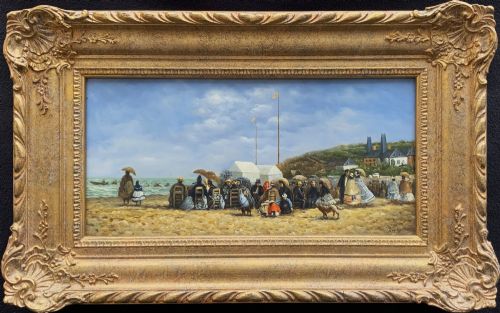
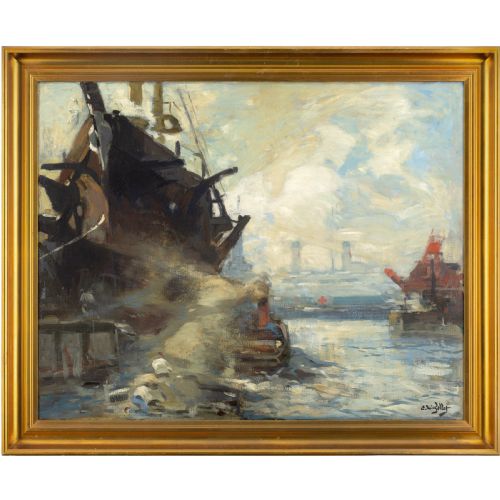
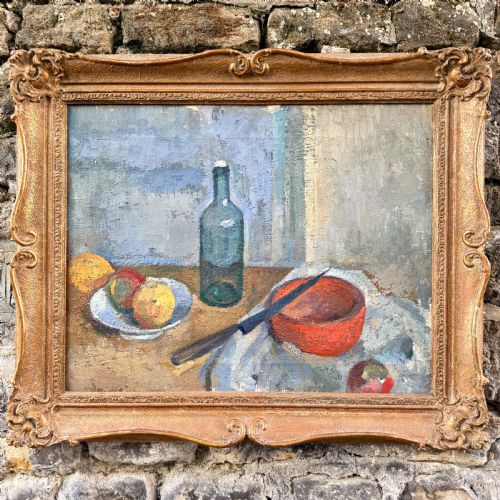
French post impressionist artwork encompasses oil paintings, gouache works, and mixed media drawings created across various decades including the 1900s, 1910s, 1920s, 1930s, 1940s, 1950s, and 1960s. These pieces record landscapes, coastal scenes in Brittany and Normandy, Paris street scenes, and intimate interiors.
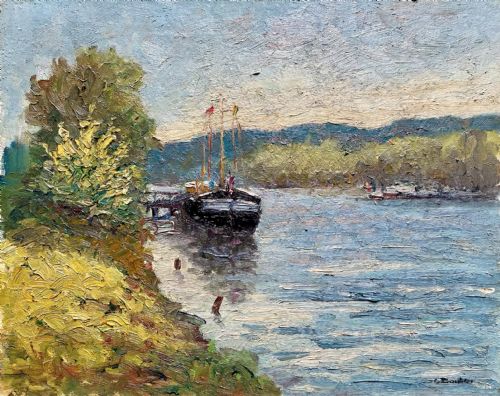
Buyers frequently encounter canvas and panel paintings showcasing vibrant brushwork and distinctive regional light from the South of France, Provence, and the banks of the Seine. The selection includes works produced during the early twentieth century alongside mid-century interpretations of Post-Impressionism and Impressionism.
The category spans diverse formats ranging from large oil paintings to smaller studies on paper and board. Artists working within this tradition explore light, colour, and form through varied stylistic lenses such as pointillism, cubist abstraction, and plein air painting.
Materials and techniques
Paintings in this selection rely principally upon oil paint applied to canvas, wood panels, or boards using varied brushwork and palette knife techniques. Artists also utilised gouache, ink, and watercolour on paper to capture swift impressions of light and movement.
Many works retain their period frames constructed from wood, gesso, and gilt wood, which complement the surface textures of the paintings. The combination of oil on canvas with traditional wooden stretching frames remains standard across the majority of these pieces.
Listings feature works spanning the nineteenth century through the 1960s, executed in oil on canvas, oil on panel, and gouache on paper.
Assessing quality and execution
Quality in these paintings rests upon the handling of light, brushwork confidence, and the expressive cohesion of the composition. Superior works demonstrate a assured command of colour and tone, whether depicting a bustling Paris street or a quiet provincial interior.
The strength of the artist's touch and the preservation of the original paint surface dictate the visual impact of each piece. Finer examples maintain crisp articulation in their details while retaining the luminous atmospheric qualities characteristic of the movement.
Eugène-Louis Gillot·Arthur Gué·Henri Ottmann·Rene Levrel·Henry de Waroquier·Paul-Élie Gernez·Paul-Jean Anderbouhr·Edouard Julien·Henri Vincent-Anglade·Louis Suire·Jean-Baptiste Olive·André Prévot-Valéri·Merio Ameglio·Majorie Hoare·CHARLES MALFROY·Cecil R. Doyly-John·Marc Aldine·Antoine Bouvard Senior·Eduard Leon Cortes·Armand Guillaumin·Jean Hippolyte Marchand·Jeffrey Pratt
The French Post Impressionist Artwork Glossary
- Post-Impressionism
- An artistic movement developing from the rejection of impressionist constraints, focusing on symbolic content, heavier brushwork, and structured forms. Artists extended impressionist techniques while exploring emotional depth.
- Plein air
- The practice of painting outdoors to capture direct observations of light and landscape. Practitioners record fleeting atmospheric conditions directly from nature.
- Pointillism
- A technique where small, distinct dots of pure colour are applied in patterns to form an image. The viewer's eye optically blends the hues from a distance.
- Gouache
- An opaque water-based paint that dries to a matte finish, allowing for vibrant colour blocks and graphic definition on paper or board.
- Gesso
- A plaster-like mixture applied to wood panels or frames to provide a smooth, prepared surface for painting or gilding.
French Post Impressionist Artwork: Frequently Asked Questions
What defines French post impressionist artwork?
These works build upon impressionist foundations by prioritising expressive brushwork, bold use of colour, and personal interpretations of light and form. They capture scenes ranging from Parisian street life to quiet rural landscapes across France.
Created across several decades into the mid-twentieth century, the artworks reflect a continuous dialogue with natural light and modern artistic techniques.
How should I display an oil painting on panel?
Panel paintings require stable indoor environments away from direct sunlight and extreme temperature fluctuations to prevent warping of the wood. Displaying them in their original or period-appropriate frames helps support the structure.
Ensure the hanging wall is dry and secure, using appropriate fixings designed for the weight of the framed wood and gesso construction.
Are these paintings created outdoors?
Many works within this tradition were painted plein air to capture immediate effects of natural light and weather conditions. Artists carried portable supplies into fields, streets, and coastal locations to record live scenes.
Other compositions, particularly larger or more complex studio pieces, were developed indoors using preliminary sketches and studies completed on site.
How do I identify different periods within the style?
Dating relies upon stylistic evolution, artist signatures, and recorded exhibition histories associated with specific decades from the early twentieth century onward. Earlier works often align closely with traditional impressionist palettes, while later mid-century pieces introduce bolder abstractions.
Examining the canvas preparation, framing materials, and stretcher construction also offers helpful clues regarding the approximate era of creation.