

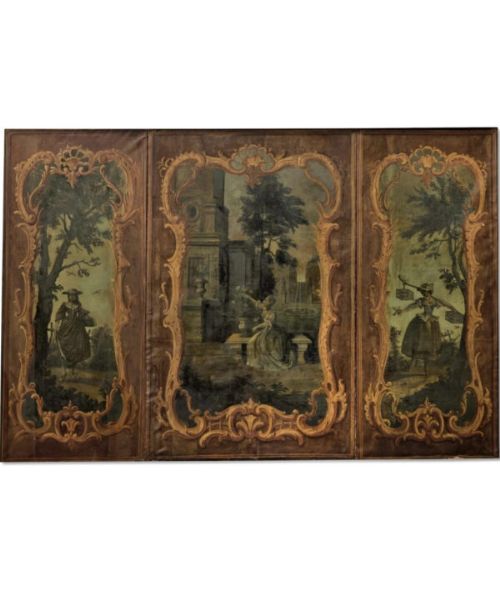




French Painted Wall Panel
A french painted wall panel brings interior architecture alive with centuries of oil paint, carved wood and pastoral scenes.
French Painted Wall Panel
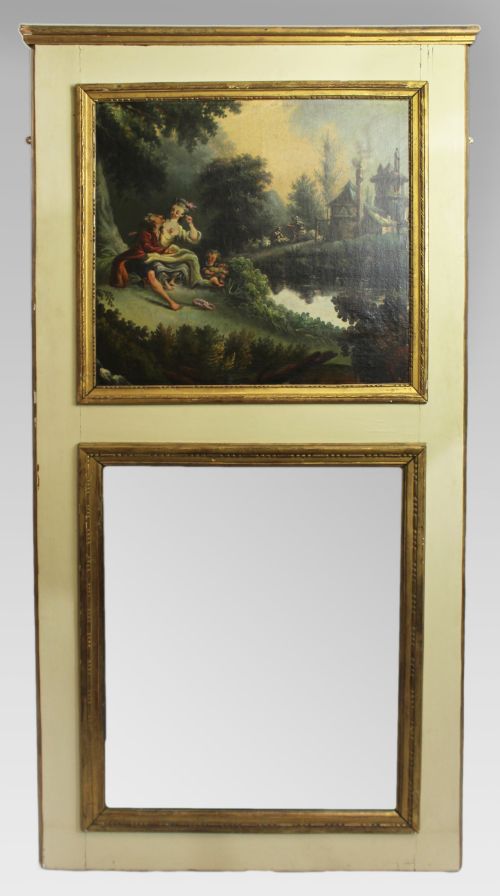
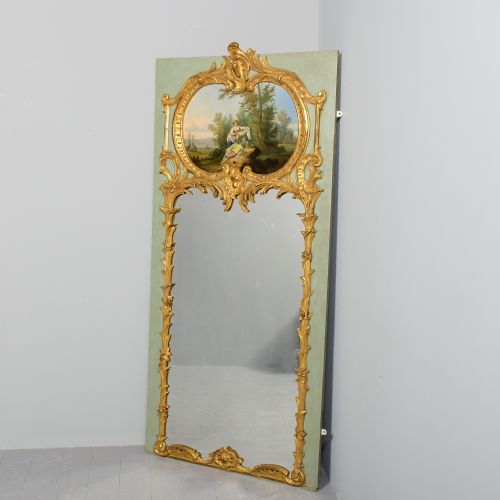
A french painted wall panel is an architectural element designed to integrate directly into a room's decorative scheme, often incorporating oil paint, giltwood and canvas. Buyers frequently encounter trumeau mirrors combining a painted panel with a looking glass, alongside standalone decorative boiserie sections.
The pieces on this page span several centuries, with particular emphasis on 18th-century overdoor pieces and 19th-century interpretations in the Neoclassical and French Provincial styles. These works range from grand grisaille wall hangings to carved wooden panels depicting floral reliefs and pastoral subjects.
Originating in chateaux and townhouses, these panels served to divide walls harmoniously while displaying fine figurative art or decorative motifs. They remain sought after for bringing distinct historical character and vertical proportion to contemporary interiors.
How They Were Made
Craftsmen built these panels primarily from wood, applying gesso as a smooth preparatory ground before adding oil paint, parcel gilt or polychrome decoration. Many examples incorporate carved wooden frames and architectural mouldings alongside painted canvas inserts.
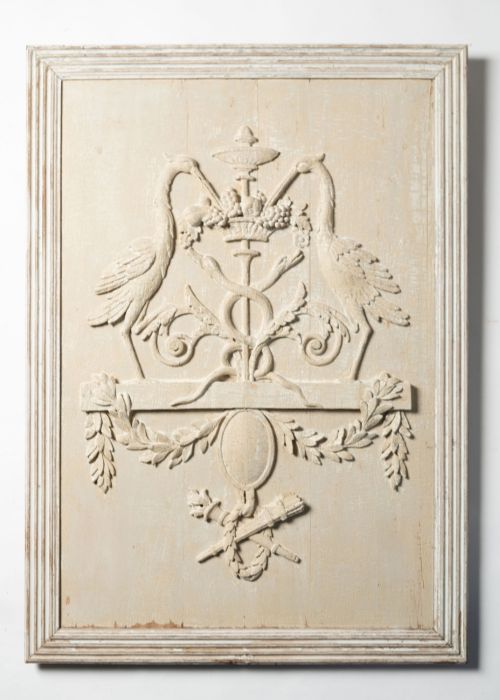
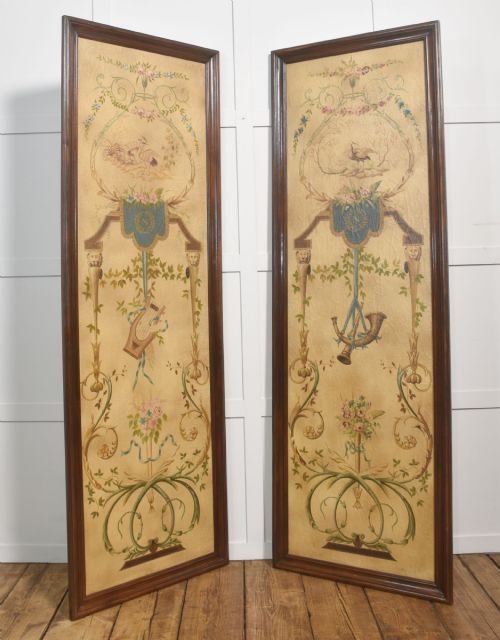
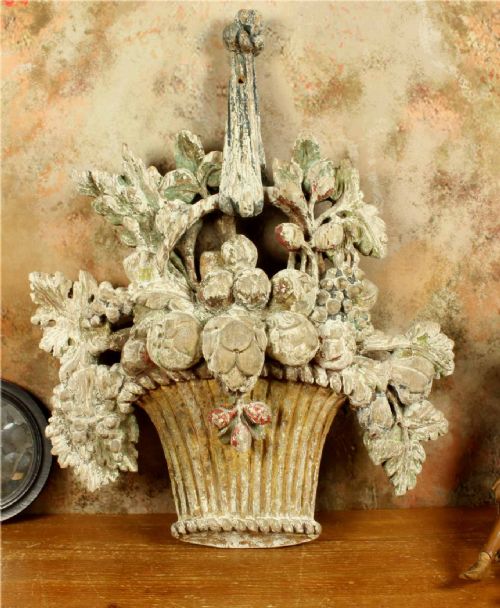
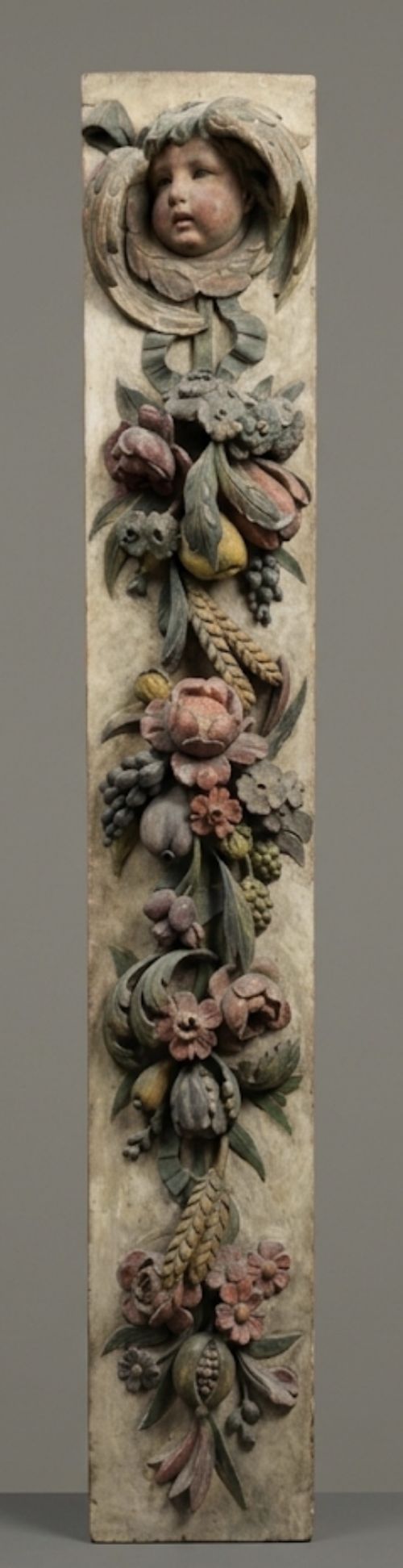
Surface preparation involved skilled hand carving for floral garlands, musical tropes and classical reliefs, followed by layers of traditional oil paint applied by specialist decorators. Gilding techniques utilised genuine metal leaf applied over bole to achieve an aged lustre.
The inventory records wall mirrors, architectural salvage, oil paintings and decorative boiserie panels spanning the 18th to 20th centuries.
What Varies in Quality
Quality rests upon the execution of the hand painting and the depth of the wood carving, distinguishing standard decorative factory output from masterwork atelier pieces. Finer panels exhibit superior draughtsmanship in figurative scenes and crisper definition in carved gesso and wood.
The integrity of the original surface finish heavily dictates value, as untouched 18th-century polychrome surfaces and authentic period gilding carry greater artistic merit than later overpainting. Structural joinery and the preservation of original canvas or wood substrates also determine a piece's historical standing.
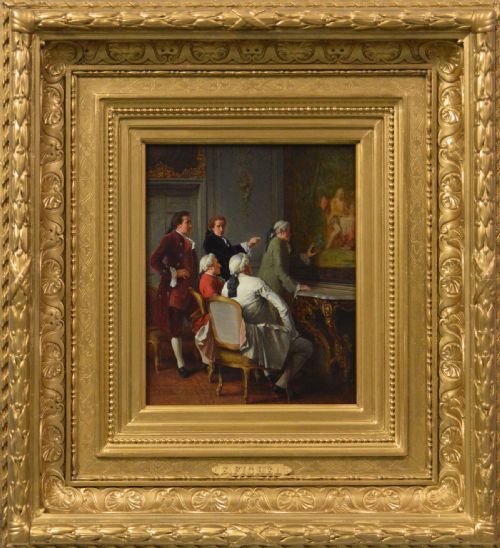
Raymond Subes·Paul-Élie Gernez·Jean-Baptiste van Loo·Benjamin Eugene Fichel·Edouard Julien·Samson·PAUL LEON JAZET·Jeffrey Pratt·H. Desprez
The French Painted Wall Panel Glossary
- Trumeau
- A decorative wall mirror or panel designed to fit the space between windows or above a fireplace. These architectural fixtures frequently pair an oil painting with a lower mirror plate.
- Boiserie
- French wood panelling used to adorn the interior walls of rooms, often carved and painted in classical or rococo designs. It provides a formal architectural framework for domestic spaces.
- Grisaille
- A painting executed entirely in shades of grey or neutral monochromatic hues, mimicking the visual effect of a sculptural relief. Artists often employed this technique for decorative overdoors.
- Gesso
- A plaster mixture consisting of a binder mixed with chalk, gypsum or pigment, applied to wood surfaces to create a smooth base for painting or gilding. It allows for intricate low-relief moulding.
- Polychrome
- The practice of decorating architectural elements and sculptures in multiple distinct colours. This technique enhances the visual theatricality of carved wooden panels.
French Painted Wall Panel: Frequently Asked Questions
How were french painted wall panels used originally?
These panels functioned as permanent architectural ornamentation within formal reception rooms, salons and bedchambers of wealthy residences. They served to unify the decorative scheme of an interior by matching wall proportions and incorporating mirrors or overdoor artwork.
Craftsmen integrated them directly into the wall panelling or mounted them above mantelpieces and doorways. Their primary purpose was to display sophisticated painted art and carved motifs as part of a cohesive spatial design.
How do I hang a heavy wooden panel safely?
Hanging architectural panels requires identifying structural wall studs or masonry support points to bear the substantial weight of solid wood and gesso. Professional mirror and picture hanging brackets distributed across the upper and lower framework provide stability.
Due to the weight of antique timber and glass in trumeau configurations, direct mounting into wall anchors ensures the piece remains secure against the plaster. Consulting a professional art installer is advisable for particularly large or fragile boiserie sections.
How can I tell an 18th-century panel from a later copy?
Examining the construction behind the panel often reveals period joinery techniques, such as hand-cut dovetails, pegged joints and older pine or oak substrates. Age-appropriate wood shrinkage, tool marks and the natural oxidisation of oil paint and gesso offer clues to authenticity.
Later 19th-century revival pieces tend to exhibit machine-cut elements and standardised mouldings that differ from bespoke 18th-century workshop practices. The craquelure in the paint layer should also correspond naturally to the passage of time rather than artificial ageing.
Can these panels be used in a bathroom or kitchen?
Placing antique painted wood and canvas in moisture-prone rooms risks damaging fragile gesso, oil paint and historical glues. High humidity causes timber to expand and contract, leading to paint flaking and warping of the panel substrate.
Dry interior environments such as living rooms, hallways and dining rooms offer the stable climate required to preserve these delicate surfaces. Maintaining consistent indoor temperatures prevents the deterioration of historic finishes.