



French Painted Enamel
French painted enamel represents a rich tradition of decorative metal and ceramic work, prized for its miniature detail and vibrant colour.

French Painted Enamel
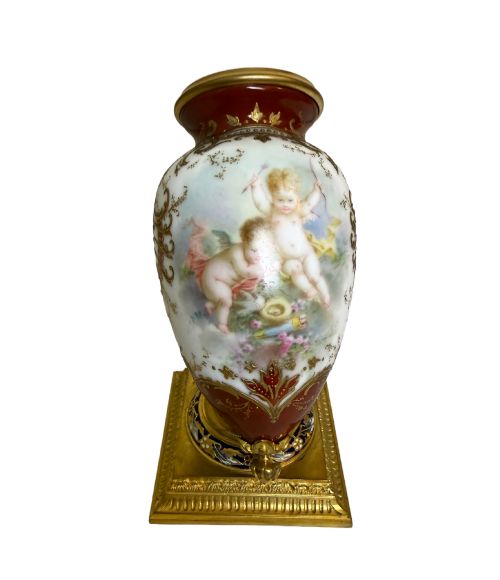
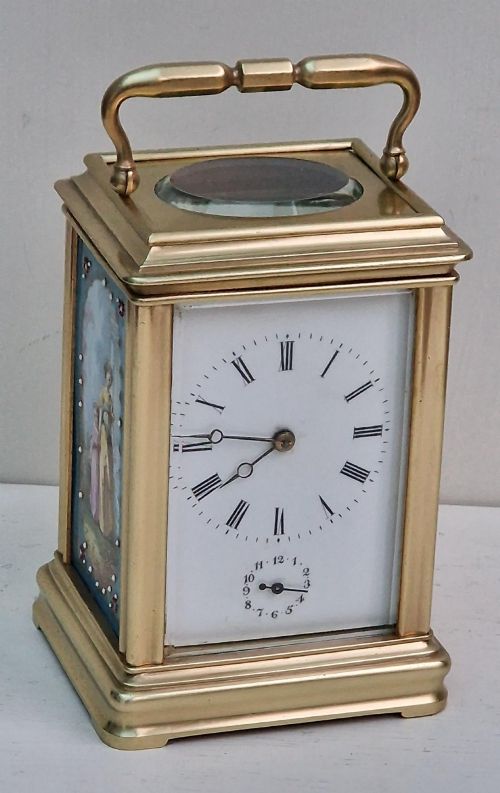
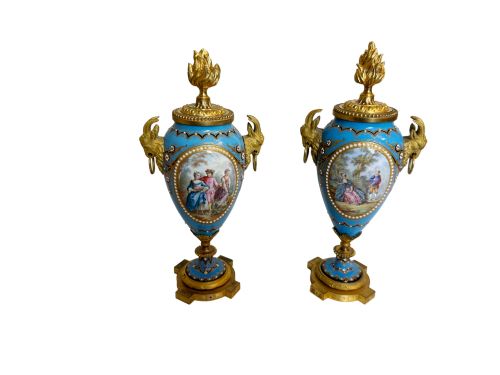
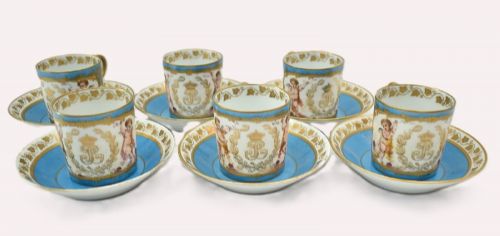
French painted enamel encompasses a diverse selection of antique items designed for decorative and domestic utility. Pieces on this page span from delicate 18th-century Limoges plaques and salt bowls to 19th-century carriage clocks, mantel clocks, trinket boxes, and vases.
The selection frequently includes works associated with historic centres of production such as Sevres and Limoges, often mounted in gilt bronze or ormolu. Buyers encounter domestic accessories, lighting, and wall art bearing meticulous hand-painted pictorial or floral scenes.
The aesthetic bridges several distinct periods, notably the 18th century, the Victorian era, and the early 20th century. Forms range from utilitarian items like door push plates and pharmacy signs to purely decorative cassolettes and jewellery caskets.
Materials and construction techniques
Makers fused vitreous enamel powders onto supportive substrates such as copper, porcelain, or glass through controlled kiln firing. This created a durable, lustrous surface capable of holding fine miniature brushwork in opaque and translucent pigments.
Metal mounts in gilt bronze, ormolu, brass, and wrought iron frequently frame the enamel panels, particularly on clocks, caskets, and vases. Gold leafing and raised white enamel details provide textural contrast and linear definition to the painted compositions.
Listings feature items from the 18th, 19th, and early 20th centuries, utilising enamel, porcelain, glass, and gilt bronze.
Distinctions in quality and execution
The distinction between tiers rests upon the precision of the miniature painting and the integrity of the enamel surface. Superior examples demonstrate crisp linework, nuanced colour blending, and freedom from firing flaws or later restoration.
Mounting and housing further separate standard production from superior pieces. Heavy, well-chased ormolu or gilt bronze mounts that integrate harmoniously with the enamel panels indicate higher workshop standards.
Sevres·Limoges·Samson Paris·Alfred Drocourt·Le Roy & Fils·Legras·Daum
The French Painted Enamel Glossary
- Limoges enamel
- A traditional technique originating from the French city, involving painted scenes directly onto a flat copper plaque. The method allows for detailed pictorial representations.
- Ormolu
- Gilt bronze mounted decoratively on furniture, clocks, and vases. The technique involves applying a finely ground gold-mercury amalgam to bronze.
- Cassolette
- A decorative vessel designed to serve as a perfume burner or vase. These objects often feature removable lids and ornate metal mounts.
- Champlevé
- An enamelling technique where troughs are carved into the metal surface and filled with enamel paste before firing. This differs from flat painted enamel.
- Crystal regulator
- A mantel clock featuring glass panels on all sides to reveal the movement. These clocks frequently incorporate painted enamel dials or decorative panels.
French Painted Enamel: Frequently Asked Questions
What is French painted enamel?
French painted enamel refers to decorative works where vitreous enamel is applied to a base and hand-painted with pigments. These objects range from 18th-century plaques to 19th-century clocks and trinket boxes.
The tradition encompasses both independent miniature paintings on copper and enamel panels integrated into porcelain and bronze decorative arts.
How do I date these items?
Dating relies on stylistic clues, mounting techniques, and maker marks associated with specific periods like the 18th century, Victorian era, or early 20th century. Movement types in clocks and the style of the gilt bronze mounts also provide chronological markers.
Examining the palette and subject matter helps contextualise the piece within broader movements such as Rococo Revival or Art Nouveau.
Where were these pieces made?
Many items originate from established French artistic centres, notably Limoges for enamel plaques and Sevres for porcelain components. Paris workshops produced numerous luxury carriage clocks and mantel clocks.
Some pieces bear signatures or marks from specific makers, while others reflect the broader output of French decorative arts studios.
How should I care for enamel items?
Enamel surfaces require gentle handling to prevent scratching or chipping of the vitreous glass layer. Dusting with a soft, dry cloth preserves the painted details without harming the finish.
Metal mounts in ormolu or gilt bronze should be kept away from moisture and harsh cleaning agents to maintain their original appearance.