
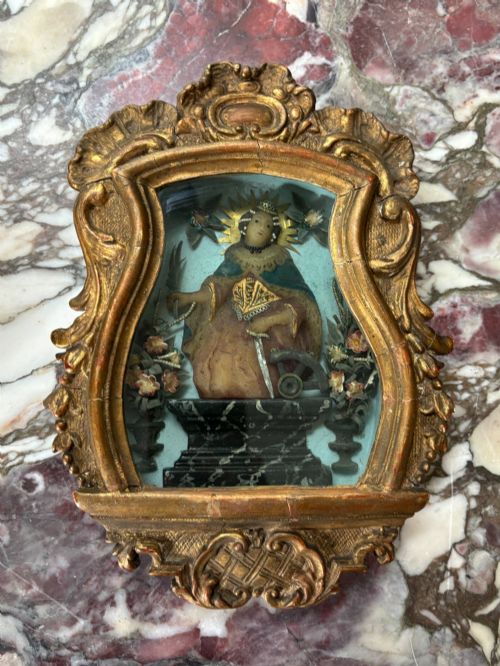


Baroque Religious Icon
A baroque religious icon brings intense devotional drama to a room through centuries-old wood, copper and oil paint.

Baroque Religious Icon
A baroque religious icon encompasses devotional sculptures, oil paintings and enamel plaques created across European and colonial traditions. When searching for a baroque religious icon, buyers encounter pieces spanning the seventeenth and eighteenth centuries, alongside nineteenth-century works.
How they were made
Carvers shaped wood such as applewood and timber into figures, finishing surfaces with giltwood and polychrome paint. Artisans also worked in enamel upon copper bases to create durable devotional plaques.
Painters applied oil on canvas to depict figures like Mary and Saint Sebastian within framed artworks. These traditional methods yielded textured surfaces that reflect the devotional focus of the period.
Saint Barbara holds her tower with steady seventeenth-century patience.
What varies in quality
Depth of carving and detail in facial expressions distinguish finer wooden sculptures from simpler statues. The preservation of original polychrome paint and giltwood layers significantly shapes the visual impact of each piece.
Enamel plaques and oil paintings depend on the clarity of pigment and the skill of the brushwork. Works retaining their original frames and structural integrity demonstrate superior craftsmanship.
The Baroque Religious Icon Glossary
- Polychrome wood
- Wood sculpture decorated in multiple colours of paint. This technique added lifelike realism to devotional figures in churches.
- Giltwood
- Wood carved and treated with a thin layer of gold leaf. It provided a radiant background for ecclesiastical artworks.
- Corpus Christi
- An artistic depiction of Jesus on the cross. These figures form the central focus of traditional crucifixes.
- Enamel plaque
- A smooth surface created by fusing powdered glass to a metal base like copper. Limoges workshops specialised in this detailed medium.
Baroque Religious Icon: Frequently Asked Questions
What is a baroque religious icon?
These pieces comprise carved statues, framed paintings and enamel plaques created for Christian devotion. They originated in European and colonial workshops during the seventeenth and eighteenth centuries.
Artisans utilised wood, copper, oil paint and gold leaf to construct objects intended for prayer and contemplation. Each item reflects the dramatic artistic style of the period.
How were these icons used?
Believers placed these sculptures and paintings in churches, private chapels and domestic rooms to aid daily prayer. They served as focal points for religious devotion and remembrance of saints.
Crucifixes and framed saints also marked sacred spaces within homes. Their dramatic postures encouraged emotional connection with the religious narratives they portrayed.
How do I care for wooden religious carvings?
Keep wooden sculptures and giltwood frames away from direct sunlight and sudden temperature shifts. Stable indoor conditions protect the underlying timber and painted surfaces.
Dust the carved details gently with a soft, dry brush without applying moisture or cleaning agents. Preserving the original surface requires minimal intervention.
How can I tell the period of an icon?
Examine the materials, tool marks and framing styles to understand the likely era of creation. Seventeenth and eighteenth-century works often display specific regional carving characteristics and material preparation.
Compare the style of the oil paint or polychrome pigment with documented examples from continental workshops. Subtle signs of age in the wood and canvas help establish the timeline.