
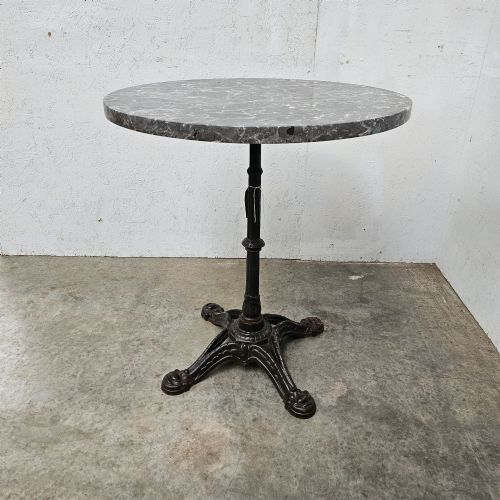


French Outdoor Dining Table
These French outdoor dining tables bring durable iron frames and weathered wood tops straight to the terrace.
French Outdoor Dining Table
A French outdoor dining table brings heavy iron or steel framing together with hardy timber tops, designed for long afternoons spent eating in the garden. When you search for a French outdoor dining table, you find pieces intended for café terraces, country gardens, and sheltered courtyards.
The versions you meet most often on this page date from the early decades of the twentieth century, alongside a few examples from the nineteenth century. They appear as standalone tables or complete sets paired with matching folding chairs and garden seats.
Materials and construction
Frames rely on cast iron and wrought iron, offering substantial weight and structural rigidity for exterior use. Foundries cast decorative bases with scrollwork and tripod supports, while blacksmiths hammered and bent iron bars into sturdy aprons and folding mechanisms.
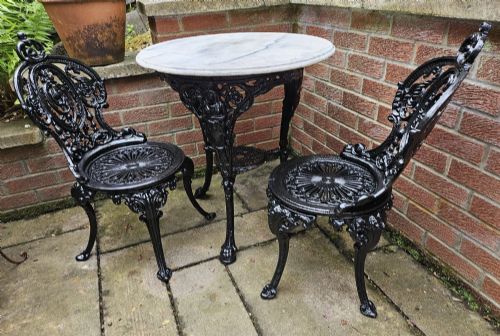
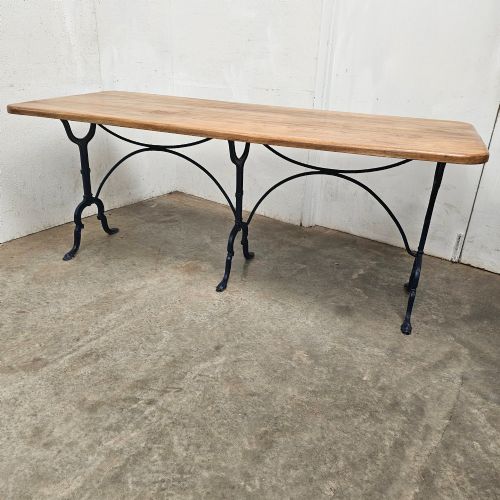
Tops combine solid elm and other dense woods with smooth slabs of marble or zinc sheeting. Carpenters joined thick timber planks to withstand the elements, while metalworkers edged tabletops to protect against knocks and weather ingress.
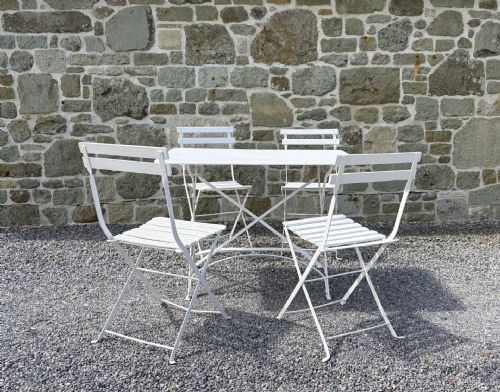
Many folding chairs still lock into place with a satisfying snap after a century of unfolding in French sunshine.
What separates the best pieces
Quality rests in the substance of the materials and the crispness of the foundry work on the iron bases. Heavier castings with deep relief detailing and thick, uncompromised marble or elm tops stand well above lighter, utilitarian replacements.
The integrity of the original surfaces dictates desirability, where authentic patination on the iron and the timber shows decades of honest weathering rather than modern distress. Well-engineered folding mechanisms and stable joinery ensure the piece remains practical for daily dining.
The French Outdoor Dining Table Glossary
- Bistro table
- A small table traditionally used in French cafes and pavement eateries. These round or rectangular surfaces save space while seating two to four diners.
- Cast iron
- Iron poured into a mould while molten to create ornate bases and legs. This material provides the heavy ballast needed for outdoor furniture.
- Wrought iron
- Iron heated and worked by hand with tools to create structural frames and scrolls. It offers flexibility and strength compared to cast iron.
- Zinc top
- A sheet of zinc applied over a wooden core to create a waterproof and wipe-clean surface. This material develops a soft grey patina through exposure.
- Elm
- A durable hardwood frequently selected for table tops due to its interlocking grain and resistance to splitting. It takes a rich tone under decades of use.
French Outdoor Dining Table: Frequently Asked Questions
Can I leave these tables outside all year?
Most iron and stone combinations handle outdoor conditions well, though wooden tops and zinc sheets benefit from winter storage or protective covers.
Shielding the furniture from prolonged winter dampness preserves the timber and prevents unnecessary corrosion on the metal frames.
How do I clean a marble table top?
Use warm water and a mild, non-acidic soap with a soft cloth to wipe down the stone surface.
Avoid harsh chemical cleaners that can etch the marble or strip away the natural patina built up over generations.
Are these tables heavy to move?
Cast iron bases and stone or hardwood tops add considerable weight to ensure the furniture stays stable on uneven ground.
Having two people helps when relocating larger dining tables or sets across the garden patio.
How do I date an iron garden table?
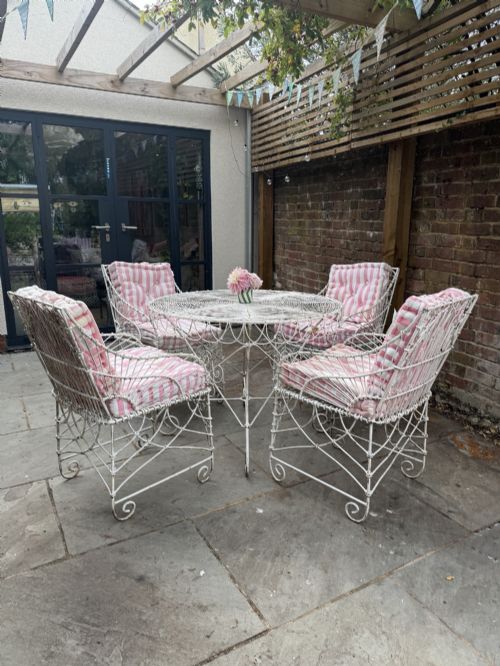
Look closely at the construction methods, bolt types, and the style of the cast iron base, which often reflects design periods like Art Deco or Victorian wirework.
Patina and the wear patterns on the feet also provide clear clues about the age of the piece.