
French Ormolu Table Clock
When you search for a french ormolu table clock, you find heavy cast bronze decorated with mercury gilding, housing precise movements designed to anchor a room.
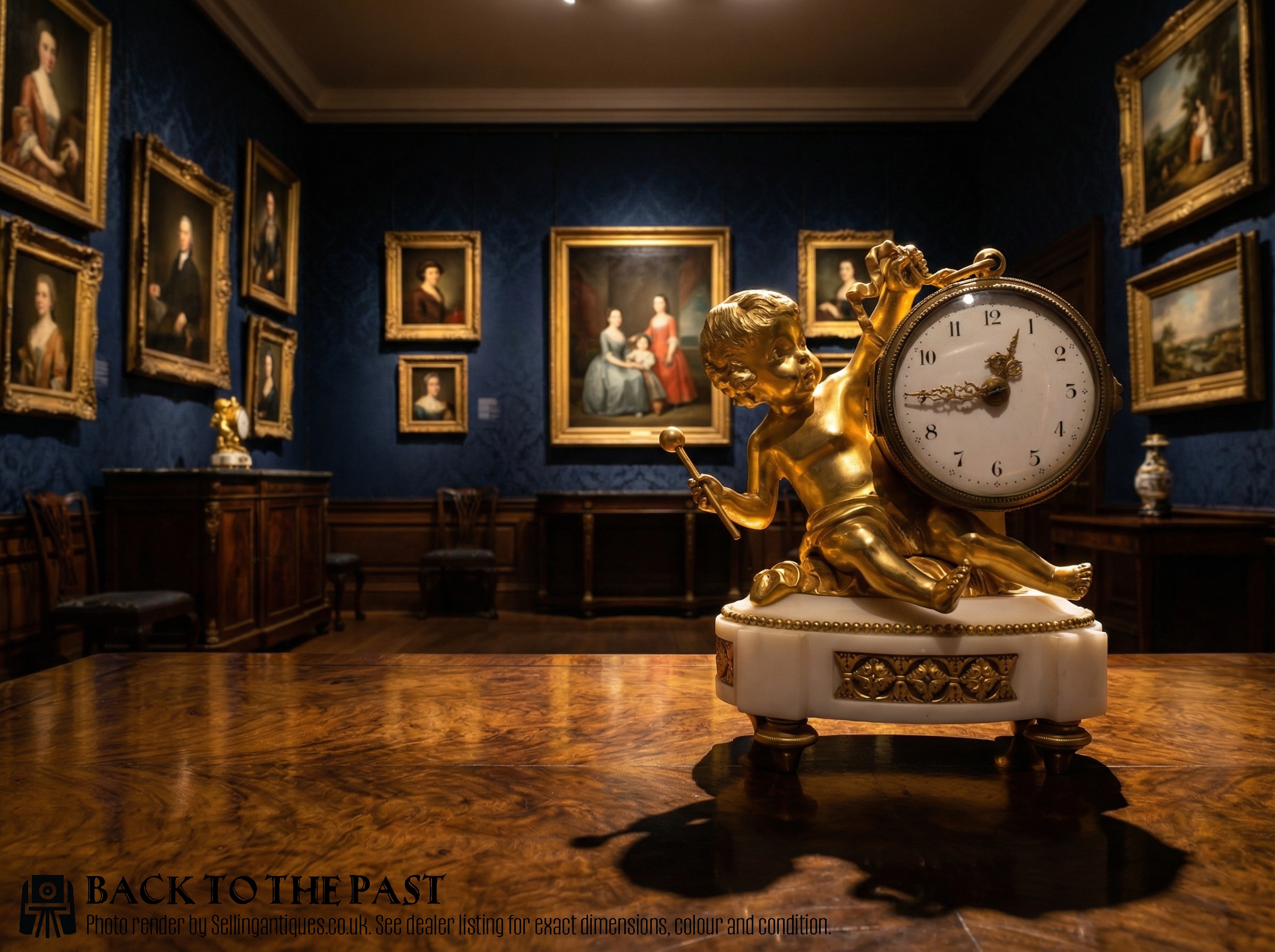
French Ormolu Table Clock
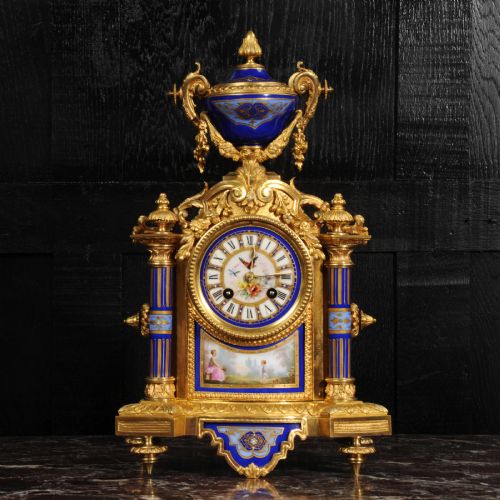
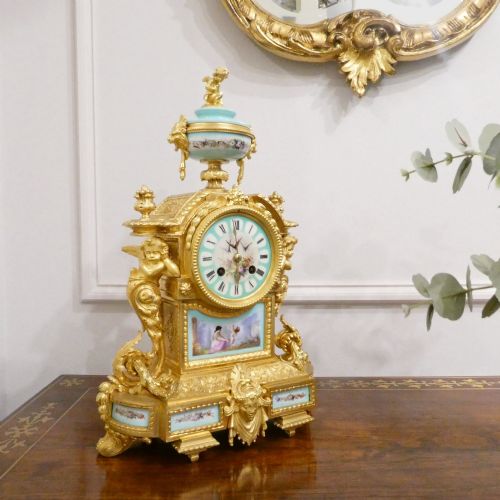
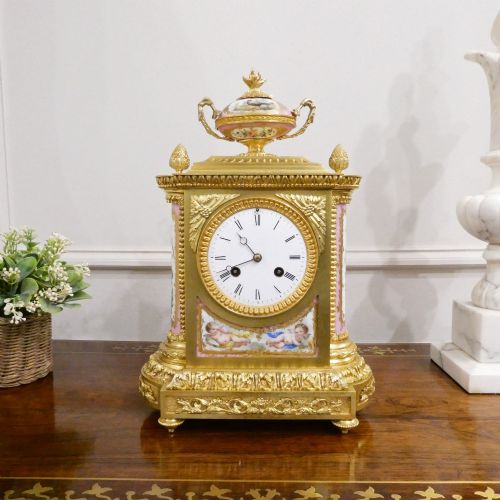
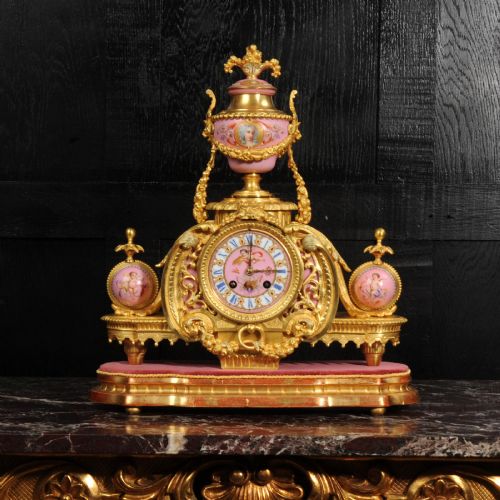
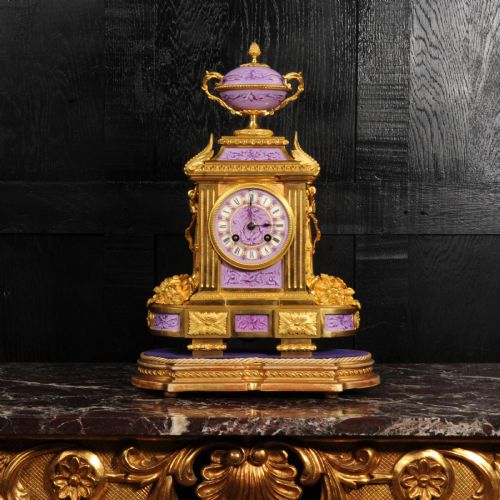
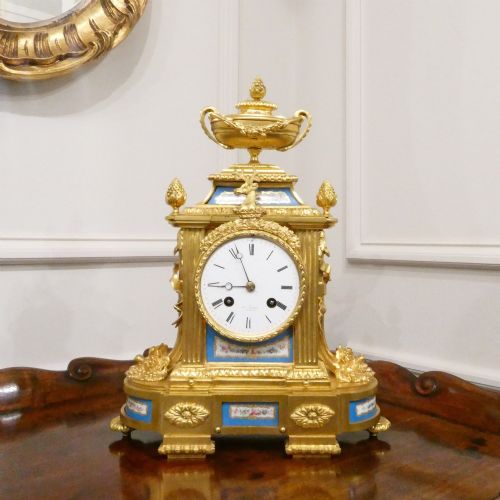
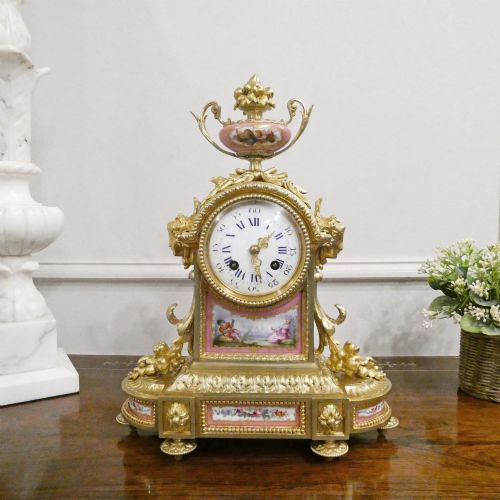
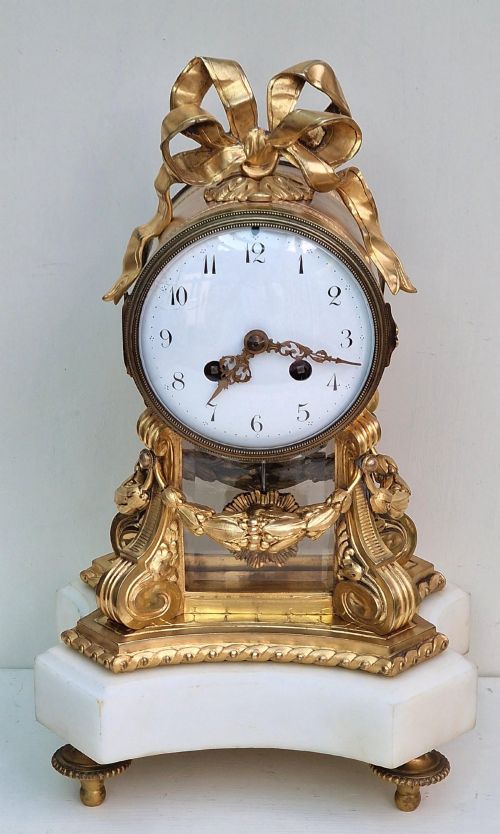
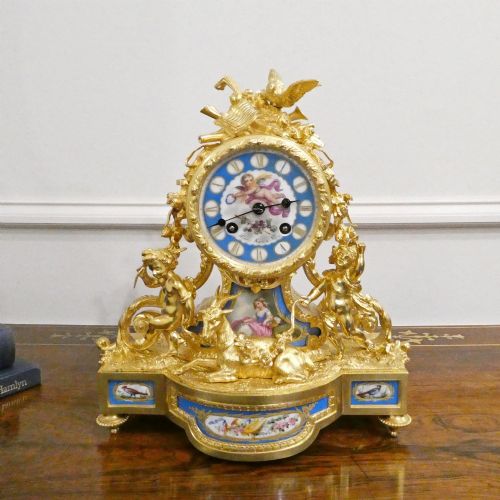
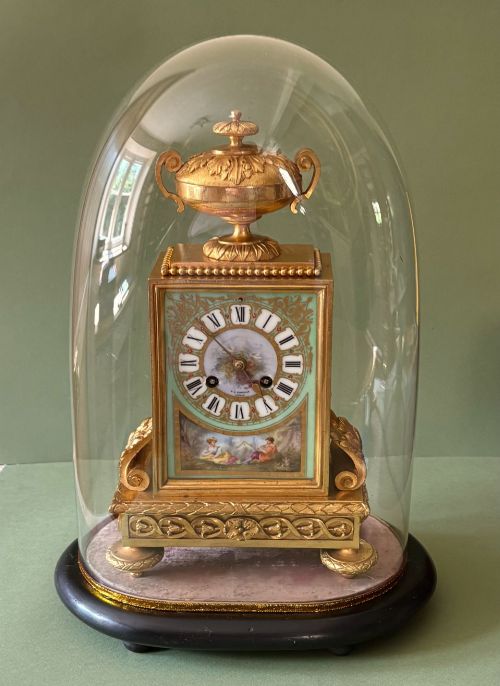
A french ormolu table clock is a mantel timepiece or striking clock housed in cast and gilt bronze, frequently paired with porcelain panels or marble bases. The selections span the nineteenth century, including specific dates from the eighteen-fifties through nineteen-hundred.
The prevalent styles encountered here are French Empire, Louis XVI Revival, and French Rococo Revival, alongside architectural portico clocks and figural subjects. Makers such as Achille Brocot, Henry Marc, and Vincenti et Cie appear across the records.
Materials and construction
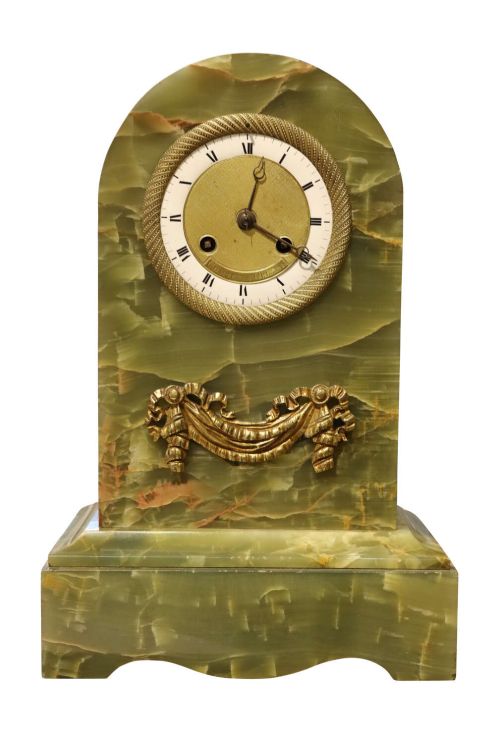
The primary material is gilt bronze, known as ormolu, formed through mercury gilding techniques to achieve a durable metallic lustre. Cases combine this metal with white marble, green onyx, tortoiseshell, and Sèvres porcelain panels.
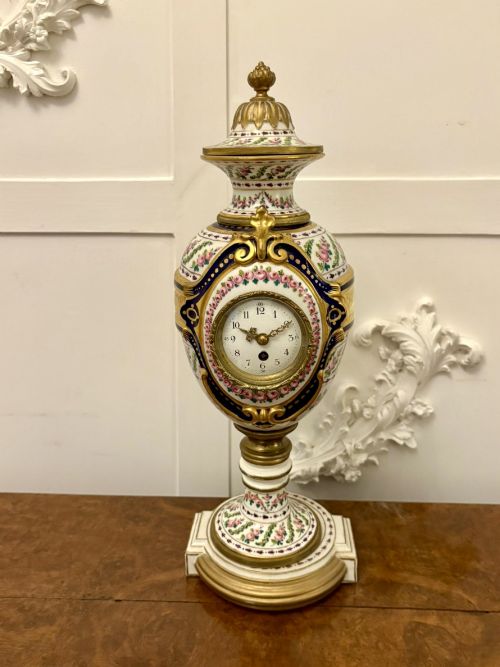
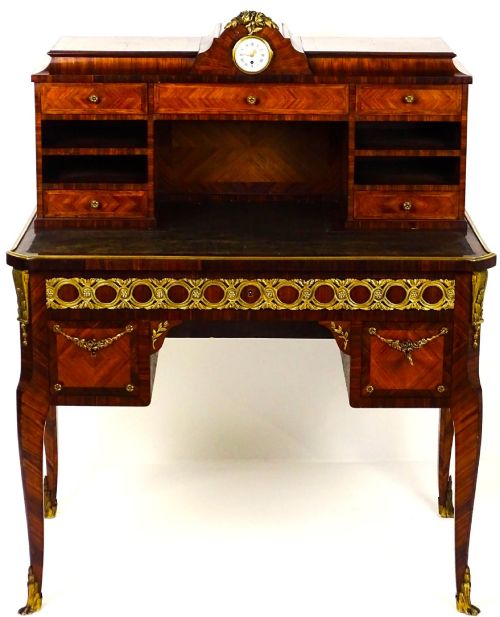
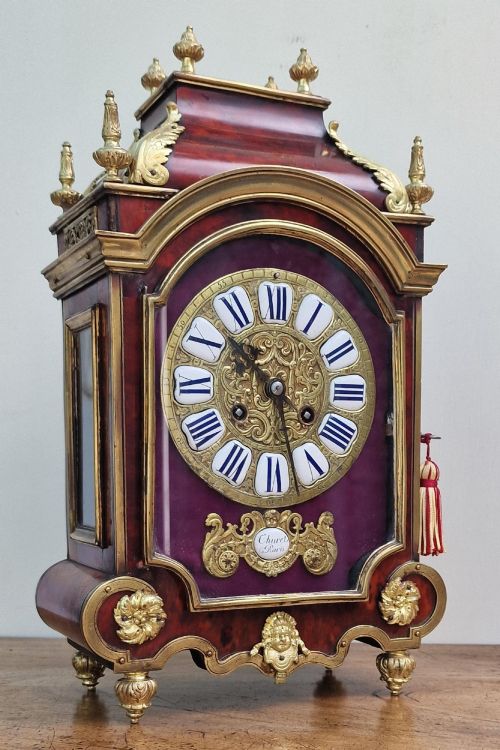
Clock movements are housed within these decorative structures, often accompanied by enamel dials and hand-painted porcelain or miniature paintings by artists like Rodier. Wood carcases utilise rosewood, mahogany, and Boulle marquetry veneers.
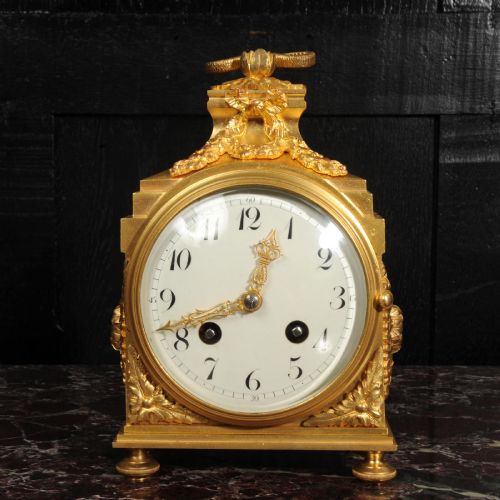
The recorded object types include drumhead mantel clocks, portico clocks, and multi-piece garniture sets alongside traditional desk pieces.
Factors of quality
Quality rests upon the crispness of the bronze chasing and the depth of the mercury gilding, where sharp detail separates superior castings from soft secondary work. The integration of complex materials like hand-painted Sèvres porcelain or tortoiseshell veneer dictates overall execution.
The reputation of the maker, whether Achille Brocot, Henry Dasson, or Samuel Marti, influences the desirability of the piece. Fully restored, original movements that retain their matching components represent the upper tier of surviving examples.
Achille Brocot·Henry Marc·Charles à Orléans·Japy Freres·Paul Sormani·Vincenti·Siffel and Cartier·Henry Dasson·Canaillor of Paris·Etienne Lenoir·Samuel Marti·Henry Mark
The French Ormolu Table Clock Glossary
- Ormolu
- Gilt bronze produced by applying a mixture of mercury and gold to a cast bronze object and heating it. This historic technique creates a matte and bright gold finish characteristic of antique French horology.
- Boulle
- Marquetry technique utilising tortoiseshell and brass inlaid in scroll or arabesque patterns. It is named after the cabinetmaker André-Charles Boulle and commonly seen on nineteenth-century clock cases.
- Garniture
- A set consisting of a central clock flanked by matching decorative objects such as urns or candelabra. These sets were designed to sit symmetrically on a mantelpiece.
- Pendule d'Officier
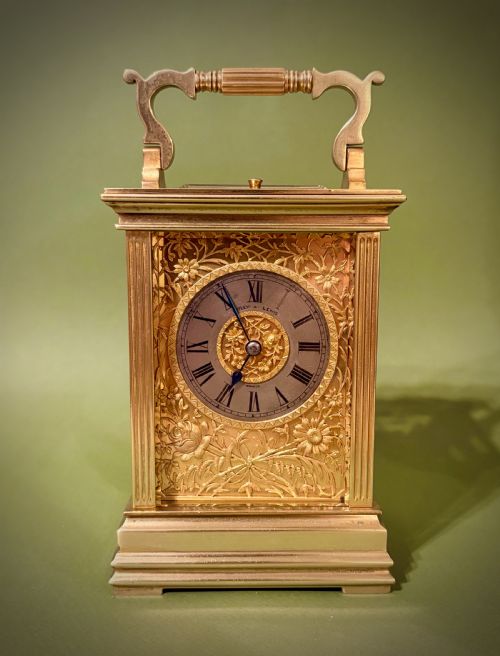
- A portable military-style clock featuring a carrying handle on top of the case. They typically possess striking movements within compact architectural or drumhead brass frames.
- Champlevé
- Enamelling technique where troughs are dug into a metal surface and filled with vitreous enamel powder before firing. The resulting coloured patterns flush with the metal enrich the clock case.
French Ormolu Table Clock: Frequently Asked Questions
What is ormolu?
Ormolu is a term used to describe gilded bronze, created by applying an amalgam of mercury and gold to a cast bronze base. The mercury is then driven off by heat, leaving a bonded gold layer.
This finish gives the metal a distinctive warm gold lustre that resists tarnishing over centuries. It forms the defining visual element of these French timepieces.
How do I wind the clock?
Winding requires a key matched to the square arbor on the dial face, turned gently until resistance is felt. Care must be taken not to overwind the mainspring.
Most antique French movements require a key turn once a week. Pendulums should be secured with a transit screw if the clock is moved.
How do I identify the period?
Period identification relies on stylistic cues, such as the martial motifs of the Empire era or the scrolling foliage of Rococo Revival. Maker signatures and stampings on the backplate provide precise manufacturing dates.
Materials also offer clues, as specific marble colours and porcelain styles align with mid to late nineteenth-century manufacturing trends.
Where should I place the clock?
These clocks require a stable, level surface such as a mantelpiece, sideboard, or dedicated desk. A solid foundation ensures the pendulum swings evenly and keeps accurate time.
Direct sunlight and damp environments should be avoided to protect the delicate gilt bronze surfaces, enamel dials, and wood veneers.