



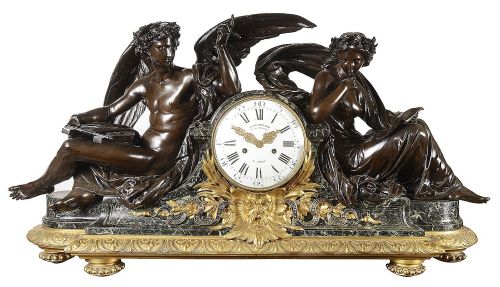

Gilt Bronze Allegorical Clock
These gilt bronze allegorical clock pieces bring classical figures and rich metalwork into a room, offering both sculptural presence and timekeeping.
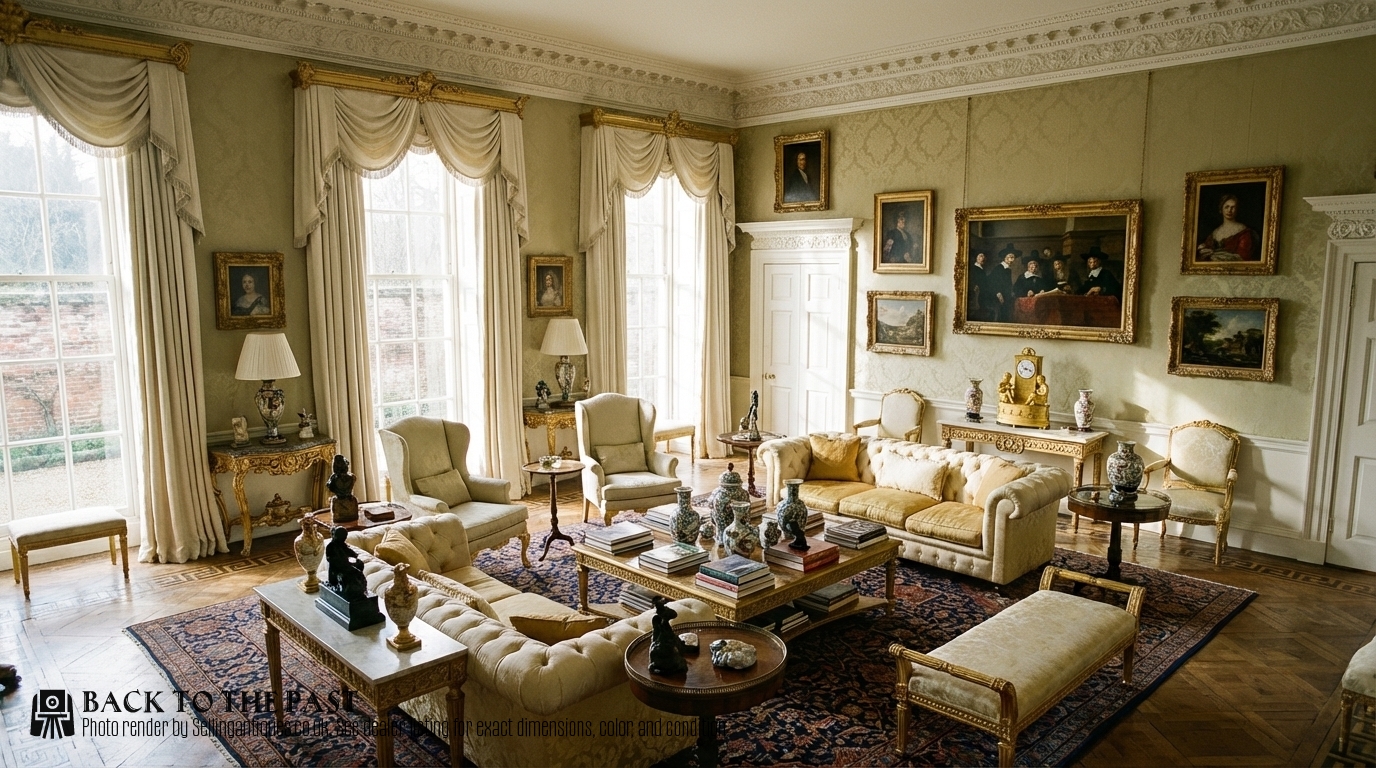
Gilt Bronze Allegorical Clock
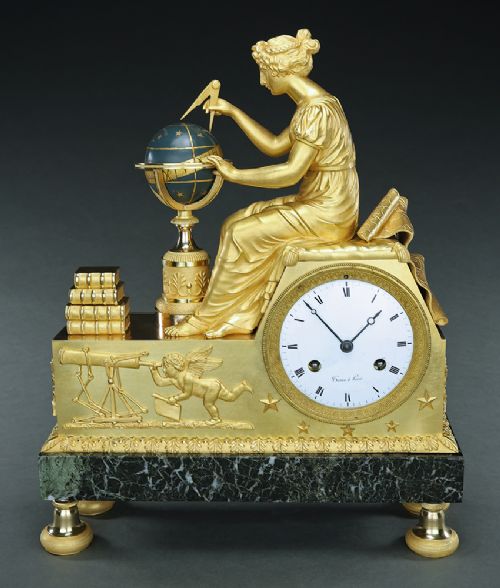
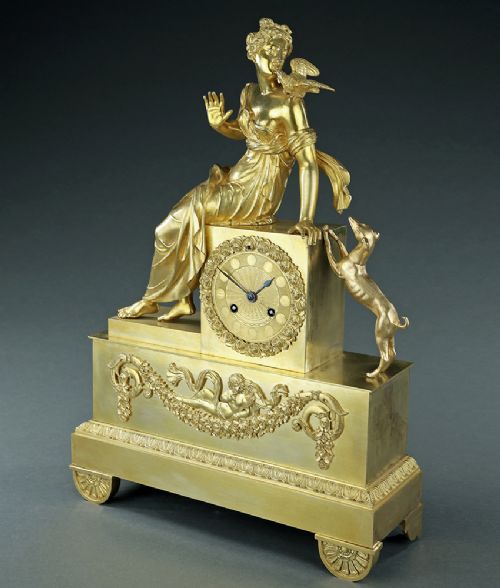
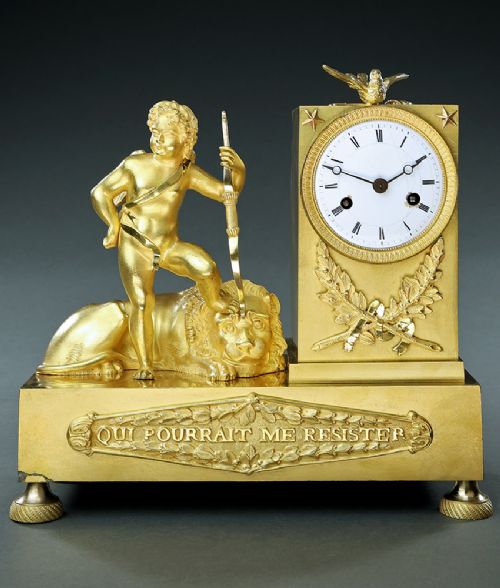
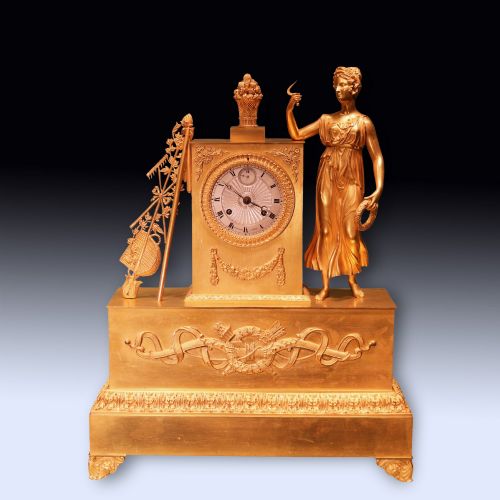
A gilt bronze allegorical clock presents sculptural figures representing themes such as love, fidelity, astronomy, or triumph rather than a simple timekeeper. These decorative objects take the form of mantel clocks and larger clock garnitures incorporating side pieces.
The versions met most frequently on this page originate from the nineteenth century, including French Empire, Louis XVI style, and Victorian examples. Makers and designers referenced include Reiche, Remond, Canaillor, Deniere Et Fils, Victor Paillard, and Frères Raingo.
Many examples pair cast metal figures with contrasting materials like white enamel dials, marble bases, and bronze details. The iconography draws heavily on classical mythology and moral themes, depicted through cast and chased metalwork.
How they were made
Foundry workers cast the primary forms in bronze before applying a layer of mercury gilt or ormolu to create a rich golden surface finish. Artisans then chased the cooled metal by hand to sharpen details on drapery, hair, and ornamentation.
Makers integrated white enamel chapters for the clock face alongside mechanical movements sourced from specialised horological workshops. Bases frequently combined green marble or rouge marble with cast bronze feet and mounts.
Gilt Bronze Allegorical Clock Retail Price Guide 2026
Typical asking prices for gilt bronze allegorical clock among the pieces listed under this phrase on Sellingantiques today, from the lower quarter to the upper quarter. They describe what is for sale here now, not the wider market.
What varies in quality
The richness and evenness of the gilding determine the visual depth of the object. Quality varies according to the architectural ambition of the marble base and the complexity of the figural composition.
Reiche·Canaillor of Paris·Remond·Deniere Et Fils·Victor Paillard·Frères Raingo
The Gilt Bronze Allegorical Clock Glossary
- Gilt Bronze
- Metal cast in bronze and coated with a layer of gold or gold amalgam. This technique protects the underlying metal while providing a bright, reflective finish.
- Ormolu
- A term for gilding applications using finely ground gold mercury paste on bronze. It creates a warm, deep yellow lustre characteristic of period French metalwork.
- Garniture
- A set consisting of a central clock flanked by matching decorative objects such as urns or candelabra. These sets were designed to display symmetrically on a mantelpiece.
- Chasing
- The hand-tooling of metal surfaces using small punches and hammers after casting. This process adds texture and definition to hair, foliage, and garments.
- Enamel
- A glassy substance fused to a metal dial substrate through high-heat firing. It provides a smooth, durable white surface for painted numerals.
Gilt Bronze Allegorical Clock: Frequently Asked Questions
What is an allegorical clock?
An allegorical clock uses figurative sculpture to convey a specific story, concept, or moral lesson rather than simply showing the time. These subjects often reference classical mythology, astronomy, or virtues like fidelity and chastity.
Makers arranged these figures around a central dial, turning a practical timekeeper into a narrative artwork for the salon or drawing room.
How do I identify French Empire style?
French Empire pieces display strict symmetry, military motifs, and direct inspiration from ancient Greek and Roman art. You will often see dark patinated bronze combined with bright ormolu mounts.
The sculptural subjects frequently celebrate triumph, astronomy, or classical deities, reflecting the aesthetic tastes of the early nineteenth century.
What is a clock garniture?
A clock garniture is a matched set comprising a central mantel clock and two accompanying side ornaments, such as urns or vases. These items were manufactured together to create a unified decorative scheme for a fireplace mantel.
The materials and figural motifs match across all pieces in the set.
Where should I place a heavy marble clock?
Because these objects combine dense marble bases with heavy bronze components, they require a stable, level surface capable of supporting considerable weight. A sturdy mantelpiece or a strong console table provides a suitable home.
Ensure the placement protects the piece from direct foot traffic where the protruding ormolu mounts might suffer accidental knocks.
How do I care for gilt bronze?
Dust gilt bronze surfaces gently with a dry, soft artist brush to remove particles from the recessed chasing without abrading the finish. Avoid commercial metal cleaners or abrasive cloths, as these can strip away the historic gilding.
Keep the clock away from direct sunlight and damp environments to preserve both the metalwork and the marble base.