


French Ormolu Jewellery Casket
A French ormolu jewellery casket brings nineteenth-century salon elegance to a dressing table, designed to hold precious trinkets behind glazed or porcelain panels.
French Ormolu Jewellery Casket
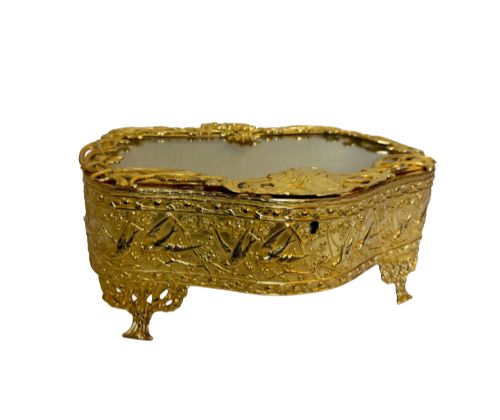
A French ormolu jewellery casket is primarily an object of nineteenth-century display, encountered most frequently in forms dating from the eighteen-sixties through to eighteen-nineties. These pieces take the shape of trinket boxes, decorative caskets, and display boxes designed to sit upon tables and dressing surfaces.
The aesthetic draws heavily upon French Second Empire, Napoleon III, and Rococo Revival idioms, occasionally touching into Art Nouveau design. Buyers will regularly find examples incorporating porcelain panels, coloured glass, and marble alongside the characteristic gilt metal framework.
Materials and construction
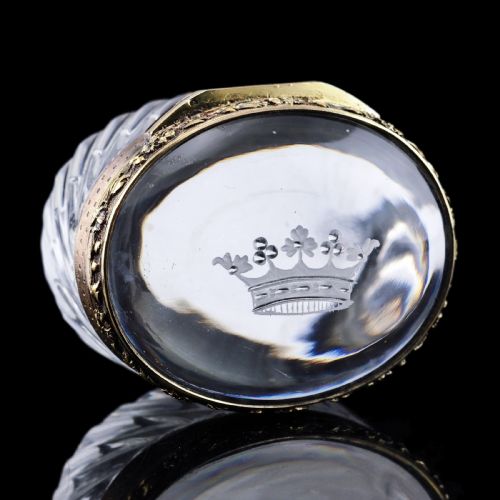
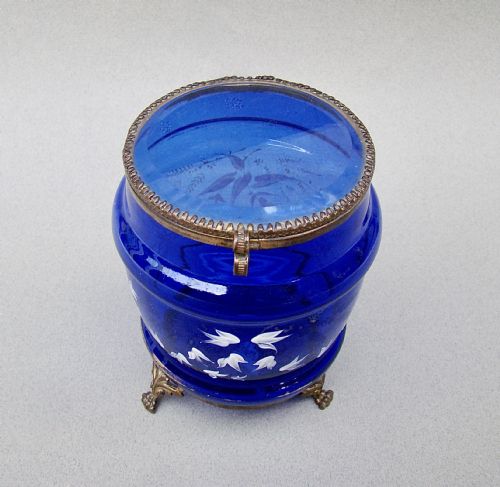
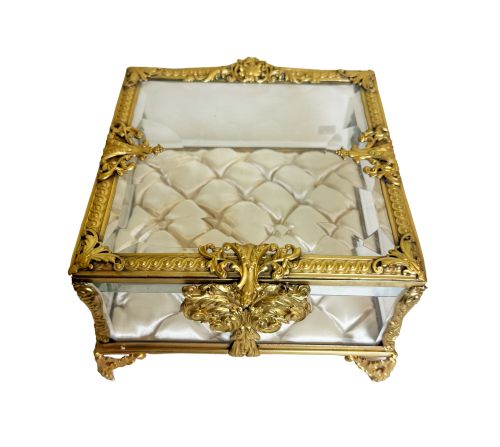
Makers constructed these caskets using cast ormolu and gilt bronze frames to house panels of Sevres porcelain, Limoges miniatures, cut crystal, and Bristol blue or plain glass. Interiors were typically lined with silk to cushion delicate items.
Secondary structural elements include brass, marble, onyx, kingwood, and mother-of-pearl, assembled with mechanical precision to support hinged lids and glazed display walls.
A gilded metal eagle proudly perches atop a nineteen-hundred cut crystal box, watching over the trinkets within.
Judging quality in ormolu caskets
Quality rests upon the crispness of the ormolu casting and the weight of the bronze framework, where sharp chasing distinguishes superior work from softer secondary production. The integration of specialised panels, such as hand-painted porcelain or inset pietra dura, elevates a piece significantly.
The precision of the glass or crystal cutting and the snug fit of hinged lids indicate the standard of original manufacture. Finer examples maintain original silk linings and undamaged glazed panels without structural compromise.
The French Ormolu Jewellery Casket Glossary
- Ormolu
- A gilded bronze technique utilising finely ground gold mercury amalgams applied to cast bronze. This treatment creates the bright golden surface characteristic of nineteenth-century French luxury goods.
- Sevres
- A type of porcelain associated with French royal manufactories, frequently painted with pastoral scenes or portraits. These plaques often form the hinged lids and side panels of nineteenth-century caskets.
- Boulle
- A form of marquetry employing brass and tortoiseshell inlay developed in France. Pieces utilising this technique show intricate metallic patterns across wooden surfaces.
- Pietra dura
- An artistic technique using cut and fitted polished coloured stones to create geometric or pictorial designs. It appears occasionally as an inset panel upon casket lids.
French Ormolu Jewellery Casket: Frequently Asked Questions
What were French ormolu jewellery caskets used for?
These caskets served as luxurious receptacles on nineteenth-century dressing tables and salon desks, holding small personal valuables, rings, and keepsakes.
Their decorative presence was equally important, acting as miniature display cabinets for painted porcelain plaques and coloured glass.
How do I date a nineteenth-century casket?
Dating relies upon stylistic markers such as Napoleon III revival motifs, Second Empire proportions, or later Art Nouveau curvilinear framing. Period indicators also emerge through associated materials like Sevres-style porcelain and specific glass types.
Documented dates in the evidence span from eighteen-hundred through to nineteen-hundred, with concentrations in the eighteen-sixties and eighteen-eighties.
How do I care for silk-lined interiors?
Original silk linings require gentle treatment, avoiding moisture and direct sunlight to prevent the fabric from degrading over time. Light dusting with a soft brush helps maintain the interior without disturbing fragile textiles.
Are glass panels original to these boxes?
Glass and crystal panels on these caskets are typically bevelled and fitted directly into the bronze or ormolu framework during original manufacture. Examining the rebate and mount helps confirm the panel integrity.