



Antique Crystal Trinket Box
These antique crystal trinket box pieces are vanity containers holding jewellery and dressing table essentials, prized for their combination of heavy glass and precious metal mounts.
Antique Crystal Trinket Box
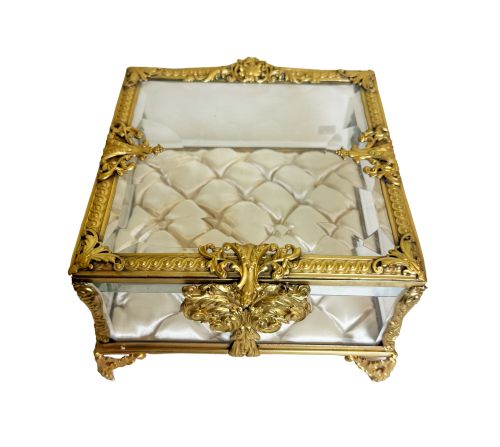
An antique crystal trinket box is a small container designed for dressing tables to hold jewellery, powder, or pins. The forms include circular powder boxes, heart-shaped vessels, and rectangular caskets meant for display on a vanity.
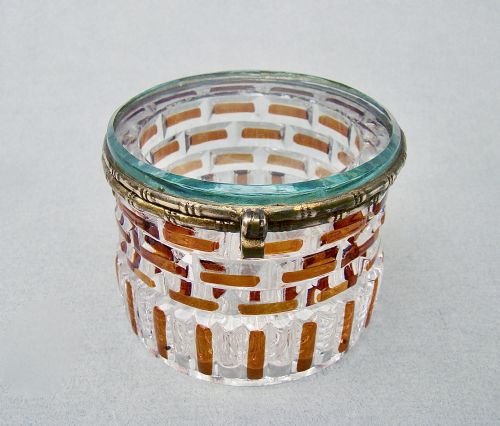
Most examples found here combine thick glass or crystal bodies with metal lids and mounts. They span periods from the Georgian era through the Edwardian years and into the geometric lines of the Art Deco 1930s.
How they were made
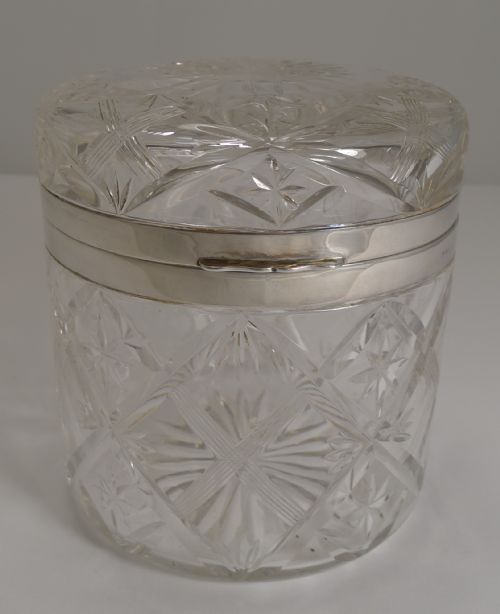
The glass bodies are typically formed from cut crystal or lead crystal, shaped by blowing or moulding before craftsmen cut deep geometric patterns into the surface to catch the light. This heavy glass gives each vessel a solid, substantial weight in the hand.
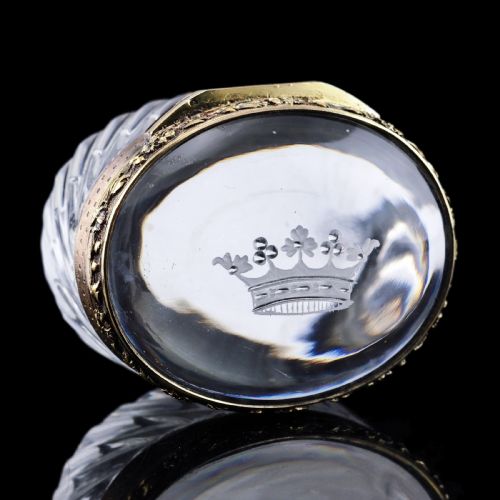
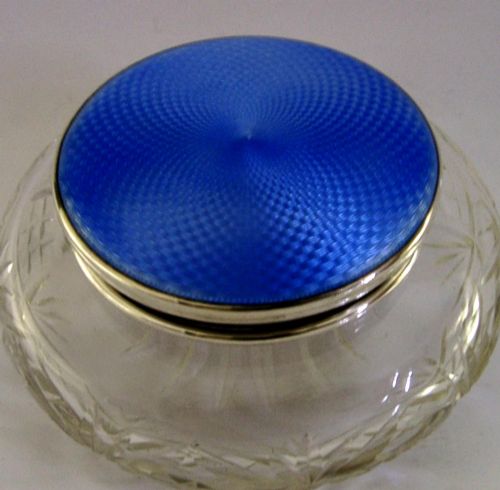
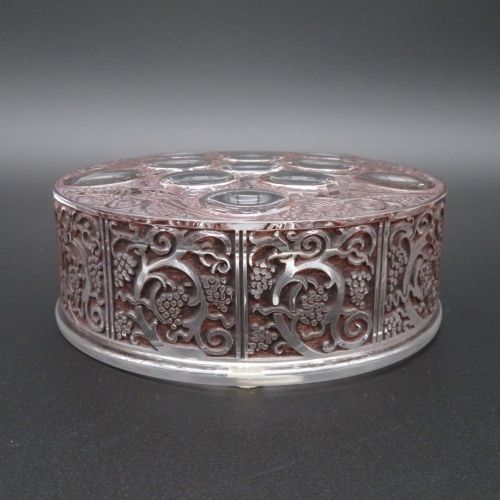
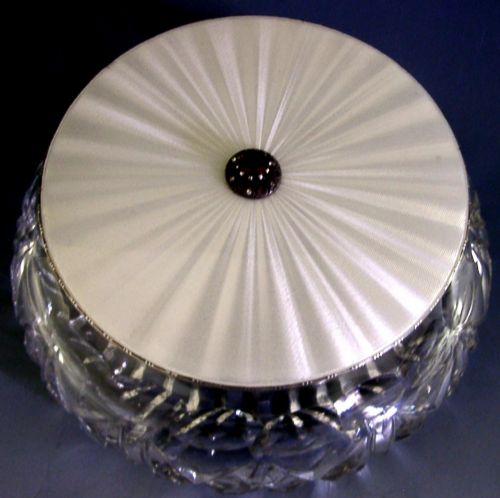
Metal mounts in sterling silver, silver gilt, or gilt bronze are fitted securely around the rims and hinged lids. Workshops employed techniques like enamelling, ormolu casting, and tortoiseshell inlay to decorate the metal frames.
Materials span cut crystal, sterling silver, tortoiseshell, and gilt bronze across English and continental workshops.
What varies in quality
Quality rests upon the depth and crispness of the glass cutting, where sharper facets and higher lead content produce a brighter brilliance. The weight of the crystal and the clarity of the material distinguish finer boxes from simpler commercial wares.
The execution of the metal mounts also separates pieces, with cast bronze, hallmarked sterling silver, and hand-applied enamel demonstrating superior craftsmanship compared to thin plated brass or plain pressed metal.
Baccarat·Lalique·Hoffman·Posen
The Antique Crystal Trinket Box Glossary
- Cut Crystal
- Glass containing lead oxide with facets carved into the surface by a grinding wheel. This composition increases the refractive index, making the material heavier and more sparkling than standard glass.
- Sterling Silver
- An alloy of silver containing parts of other metals for durability, standardly marked with assay office hallmarks in British pieces. It forms the protective rims and hinged lids of many dressing table containers.
- Ormolu
- A golden-coloured alloy of copper and zinc used to simulate gold, cast and chased to form decorative mounts on French boxes. It provides a warm metallic contrast against clear or amber glass.
- Art Deco
- A design style dominant in the 1930s characterised by stylised geometric shapes, symmetry, and streamlined forms. Pieces from this period often feature stark angles and enamelled accents.
- Vanity Jar
- A container with a fitted lid used on a dressing table for cosmetics, pins, or powder. These jars share materials and construction methods with traditional trinket boxes.
Antique Crystal Trinket Box: Frequently Asked Questions
How do I date an antique crystal trinket box?
Dating relies on a combination of the cutting style, the metal mounts, and any visible hallmarks stamped onto the silver or bronze. Georgian and Victorian pieces often display heavier hand-cut facets, whereas 1930s items favour geometric Art Deco lines.
Maker signatures etched into the crystal or stamped on the metal frames also help narrow down the period of manufacture. Examining the hinge construction and the style of any engraved monograms provides further clues to the decade of origin.
What were crystal trinket boxes used for?
These vessels sat on dressing tables and boudoir desks to hold small personal items such as rings, brooches, hairpins, and loose powder. They kept dressing table surfaces tidy while displaying valuable ornaments.
Larger caskets served to store cigarettes or letters, functioning as decorative desk accessories in addition to vanity items. Their transparent or coloured walls allowed owners to view the contents at a glance.
How do I clean and care for cut crystal?
Wash the glass body in lukewarm water with a mild detergent, using a soft cloth to avoid scratching the surface. Take care to keep moisture away from glued joints or delicate fabric linings inside older boxes.
Polish silver or gilt metal mounts separately with an appropriate metal cleaner, ensuring the polish does not come into contact with the glass or enamel. Dry all metal parts thoroughly after cleaning to prevent tarnishing.