






French Ormolu Dish
A french ormolu dish brings nineteenth-century gilt bronze and cut crystal to a table, offering a heavy mount that catches light.
French Ormolu Dish
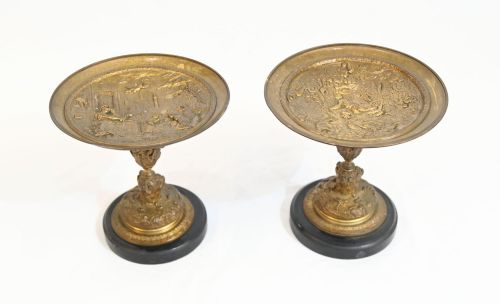
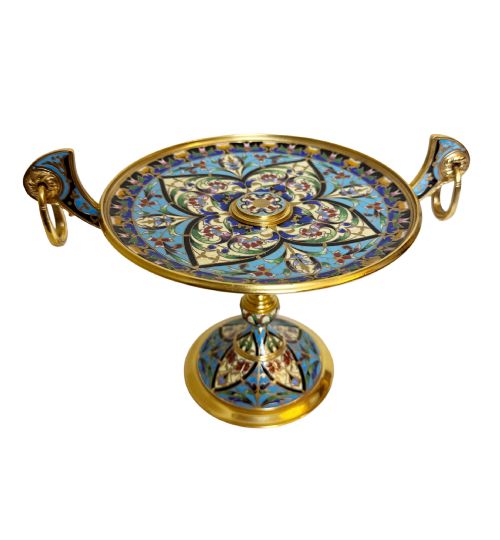
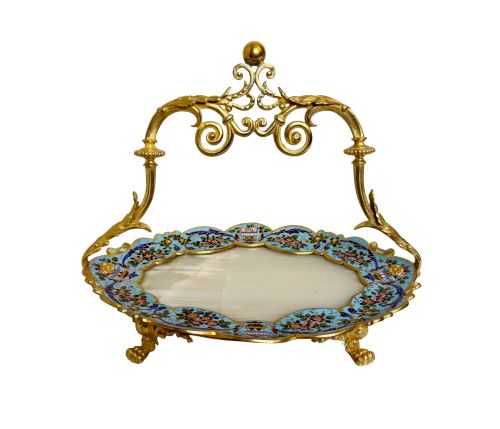
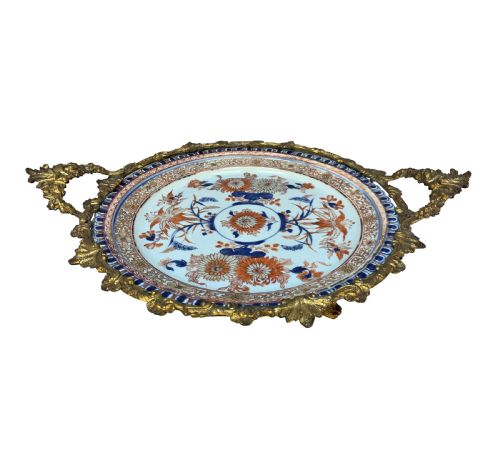
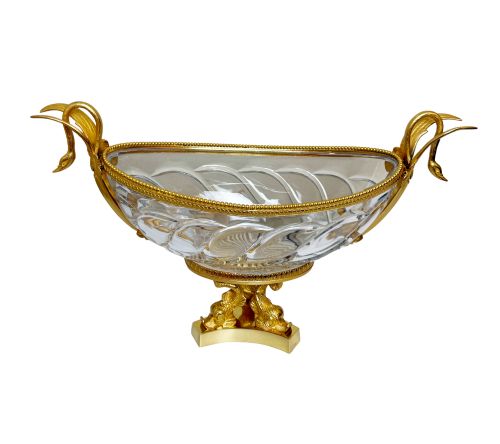
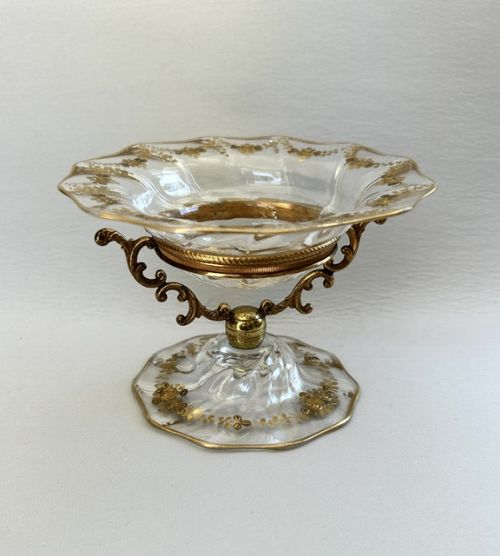
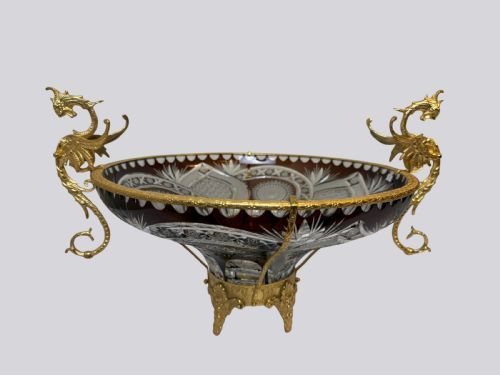
A french ormolu dish combines gilded bronze mounts with materials such as porcelain, crystal, glass, and onyx. The pieces on this page span the nineteenth century and the early twentieth century, taking forms like tazzas, centrepieces, serving dishes, and pin trays.
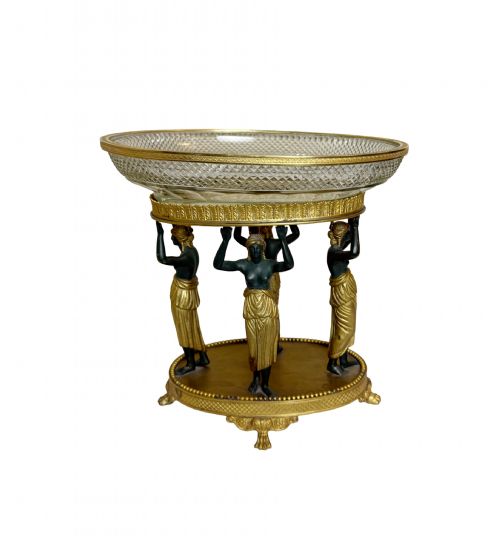
Buyers will frequently encounter tazzas and centrepiece bowls flanked by cherubs, mermen, or classical mounts. The stylistic vocabulary ranges from French Rococo Revival and Empire style to Art Nouveau and Japonesque expressions.
The origin is predominantly French, reflecting nineteenth-century manufacturing traditions that paired cast metal with decorative inserts. These objects functioned as decorative focal points on tables, consoles, and mantelpieces.
Materials and Construction
The foundation rests on cast bronze that receives a fine layer of gold through mercury gilding or electrogilding, creating the characteristic ormolu surface. This metal frame is screwed or pinned together to hold inserts of cut crystal, Sevres porcelain, or champleve enamel.
Glass and crystal bowls are often heavy and deeply cut, contrasting with the warm metallic sheen of the gilt bronze mounts. Additional natural elements like marble, onyx, malachite, and blue john provide dense bases and contrasting colour accents.
French Ormolu Dish Retail Price Guide 2026
Typical asking prices for french ormolu dish among the pieces listed under this phrase on Sellingantiques today, from the lower quarter to the upper quarter. They describe what is for sale here now, not the wider market.
Listings feature pieces from the 18th Century through to the 1920s, dominated by 19th Century items.
Evaluating Quality
The definition and depth of the bronze chasing dictate the visual merit of the ormolu mount. Crisp feathering on cherubs, sharply rendered hair, and clean edges on cast acanthus leaves separate superior metalwork from softer, more rounded commercial castings.
The integration between the metal mount and the central material indicates workshop standard. A top-tier dish fits its porcelain plaque, enamel panel, or cut crystal bowl precisely without packing or loose play in the screw fittings.
Louis Pierre Malpass·Sevres
The French Ormolu Dish Glossary
- Ormolu
- A term referring to gilt bronze, where a layer of gold is applied to a bronze base. It provides a bright, durable golden finish that resists tarnish.
- Tazza
- A shallow saucer or bowl raised on a stem and foot, frequently utilised for serving or display. Nineteenth-century examples often incorporate figural ormolu stems.
- Champleve Enamel
- A technique where troughs are dug into the surface of the metal and filled with vitreous enamel before firing. It creates vibrant patterns within the bronze framework.
- Jardiniere
- A decorative container intended to hold flowers or plants. These often feature cut glass bowls secured in elaborate ormolu frames.
- Comport
- A decorative dish raised on a pedestal, used for fruit or sweetmeats at the table. They appear in porcelain and glass with gilt metal mounts.
French Ormolu Dish: Frequently Asked Questions
What is ormolu?
Ormolu denotes gilt bronze, created by applying gold to a cast bronze body. This technique yields a warm, metallic finish that defines nineteenth-century decorative metalwork.
The surface requires careful maintenance to preserve the original gilding without abrasive cleaning agents. Over time, genuine ormolu develops a soft patina beneath the gold layer.
How are these dishes cleaned?
Cleaning requires a soft cloth and warm water, avoiding harsh metal polishes that strip the gold layer. Crystal and porcelain inserts can often be lifted out for separate washing.
Moisture must be kept away from glued or pinned joints to prevent corrosion of the underlying bronze armature.
Where were they placed?
These dishes occupied central positions on dining tables, sideboards, and drawing-room mantelpieces. They held fruit, flowers, visiting cards, or small trinkets.
Grand Tour travellers also brought them home as souvenirs to display in nineteenth-century parlours.
How to tell periods apart?
Empire pieces favour classical symmetry, eagles, and heavy architectural mounts. Rococo Revival designs showcase asymmetrical scrolls, naturalistic flowers, and playful cherubs.
Later nineteenth-century and turn-of-the-century items incorporate champleve enamel and Japonesque motifs reflecting evolving Victorian tastes.