


French Opalescent Glassware
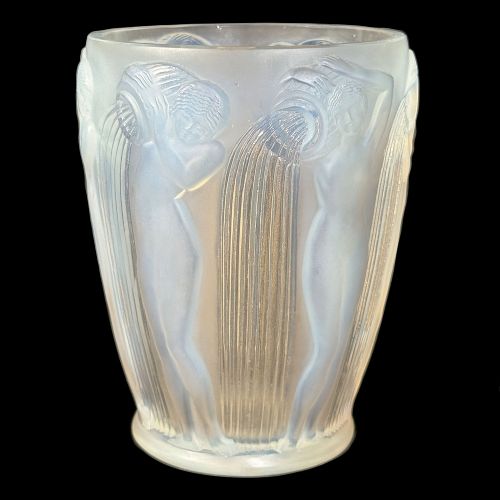
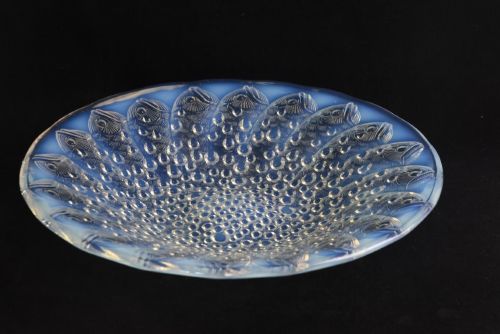
French opalescent glassware combines milky translucent body tones with fiery blue edges, creating decorative objects that catch light from every angle.
French Opalescent Glassware
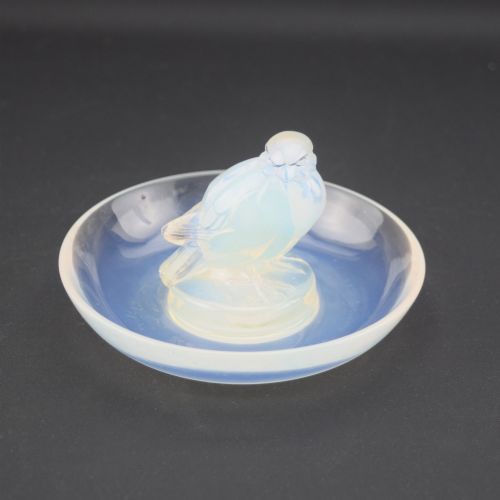
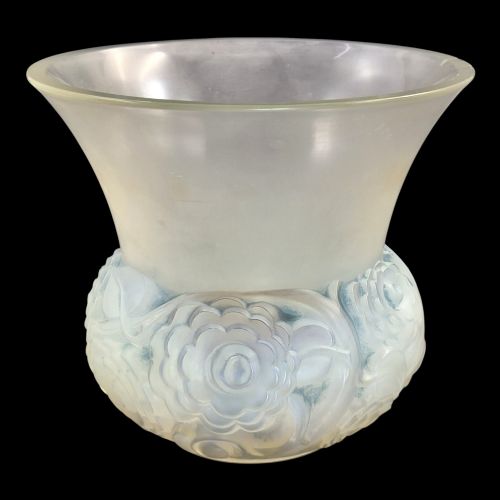
The objects stem predominantly from the 1920s and 1930s, featuring moulded reliefs of flora, fauna, and geometric patterns. René Lalique designs dominate the selection, accompanied by works from makers such as Etling and Sabino. Forms range from shallow coupes and flat plates to deep vases and tiered centrepieces.
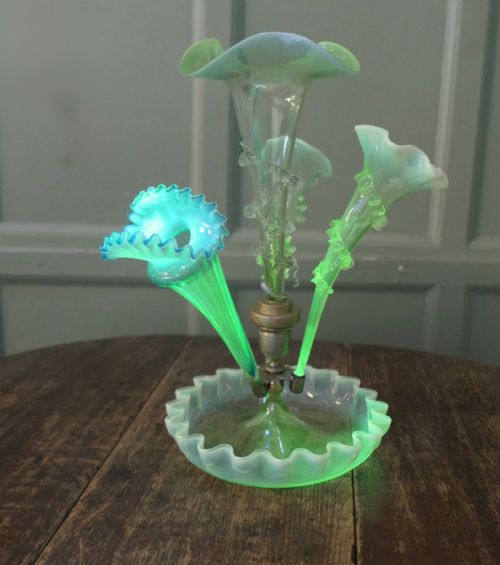
Victorian examples bring earlier Victorian aesthetics into the category, including hand-blown uranium glass pieces mounted in brass or metal. These earlier items contrast with the stylised moulded reliefs characteristic of subsequent Art Deco production. Together, the group spans functional tableware and purely decorative ornaments.
How they were made
Production relies on specialised glass compositions containing bone ash, arsenic, or tin oxide, which form microscopic crystals during cooling to scatter light. Manufacturers utilised pressed glass techniques to achieve deep relief ornamentation, forcing molten material into intricate metal moulds. Certain pieces received secondary treatments, such as blue staining applied to highlight moulded details against the milky ground.
Hand-blown methods appear in nineteenth-century items like trumpet epergnes and rummers, occasionally incorporating uranium to produce a characteristic green fluorescence under ultraviolet light. Metal mounts in brass or other metals are integrated into complex forms like epergnes. The resulting objects balance mechanical pressing with hand-finishing operations such as fire-polishing.
Materials documented across the inventory include opalescent glass, uranium glass, frosted glass, crystal, brass, and metal mounts.
What varies in quality
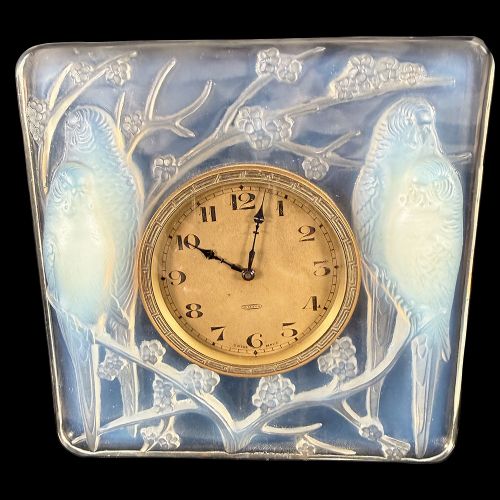
Quality rests on the crispness of the moulded relief and the depth of the opalescent effect within the glass body. Superior examples display sharp definition in complex motifs such as birds, fish, or floral arrangements, where every feather or petal stands clear. The distribution of the milky opalescence and the intensity of the blue fire at the edges determine the visual success of each piece.
The skill of the maker dictates the refinement of the design, from the intricate sculptural forms of established studios to simpler commercial pressings. Heavier metal mounts and well-integrated auxiliary materials like brass support the structural integrity of complex multi-part objects such as epergnes and clocks.
Rene Lalique·Etling·Sabino
The French Opalescent Glassware Glossary
- Opalescent Glass
- Glass that diffuses light through internal particles, creating a milky appearance with contrasting coloured rims. This optical effect shifts according to the angle of ambient light.
- Pressed Glass
- Glass formed by mechanical pressure in a metal mould rather than by free-blowing. This technique allowed intricate surface patterns to be reproduced consistently.
- Uranium Glass
- Glass containing small amounts of uranium oxide, which glows green under ultraviolet light. It appears frequently in Victorian and Art Deco decorative items.
- Epergne
- A centrepiece stand featuring multiple detachable trumpets or bowls for holding fruit or flowers. French examples often incorporate opalescent glass and metal fittings.
- Coupe Ouverte
- An open shallow bowl or basin designed for display or serving. These forms frequently showcase moulded animal or botanical motifs across the interior.
French Opalescent Glassware: Frequently Asked Questions
How do I identify french opalescent glassware?
Look for a translucent glass body that exhibits a milky white tone turning to a distinct blue glow along thin edges and raised reliefs. The material scatters light internally rather than remaining uniformly clear or opaque.
Examine the surface for moulded designs depicting flora, fauna, or geometric Art Deco patterns. Signatures or moulded marks on the base often confirm the workshop of origin.
What periods do these pieces come from?
The available selection primarily spans the 1920s and 1930s, aligning with the height of the Art Deco movement and the output of French glassworks. These decades produced the majority of moulded vases, bowls, and plates seen in the category.
Earlier items trace back to the Victorian era and the nineteenth century, represented by hand-blown rummers and epergnes. These older pieces employ different manufacturing techniques compared to twentieth-century pressed items.
How were these decorative items used?
Vases, bowls, and plates functioned as ornamental tableware or display pieces within middle and upper-class interiors. Perfume bottles and clocks served as dressing table accessories combining utility with decorative sculpture.
Epergnes acted as elaborate table centrepieces for dining rooms, holding flowers or fruit within multiple glass trumpets. Many objects were designed purely for visual effect on mantelpieces and cabinets.
Are these items made of pressed glass?
Many twentieth-century pieces utilise pressed glass techniques, where molten material is forced into metal moulds to create high-relief patterns. This method allowed makers to produce complex sculptural designs consistently across multiple examples.
Earlier nineteenth-century pieces, such as rummers and epergnes, rely on free-blowing and hand-manipulation rather than mechanical pressing. Metal mounts and brass components were added subsequently to multi-part objects.