


French Occasional Desk
When you handle a french occasional desk, you find lighter proportions and decorative timbers built for domestic rooms rather than grand libraries.
French Occasional Desk
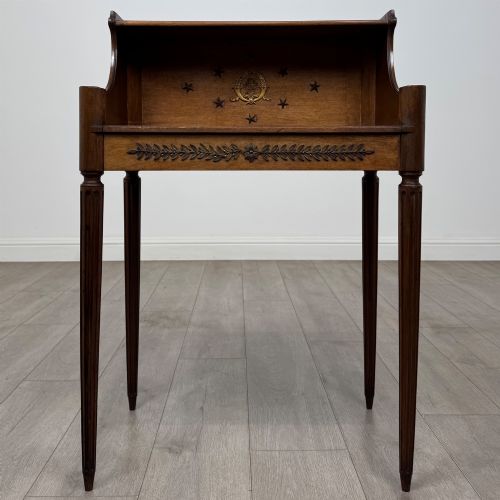
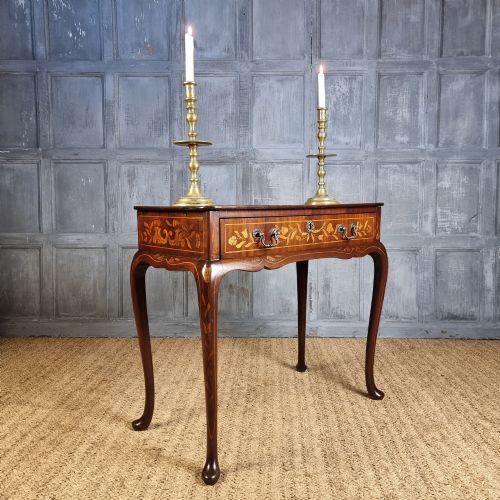
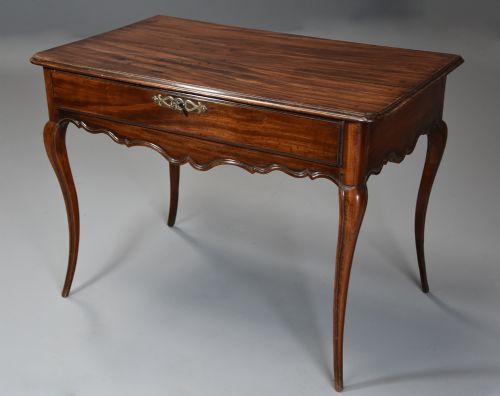
A french occasional desk serves as a compact surface for correspondence, reading, and light domestic management, moving easily between rooms as required. These pieces appear frequently from the nineteenth century alongside earlier eighteenth-century examples, taking forms such as writing tables, work tables, and dressing tables.
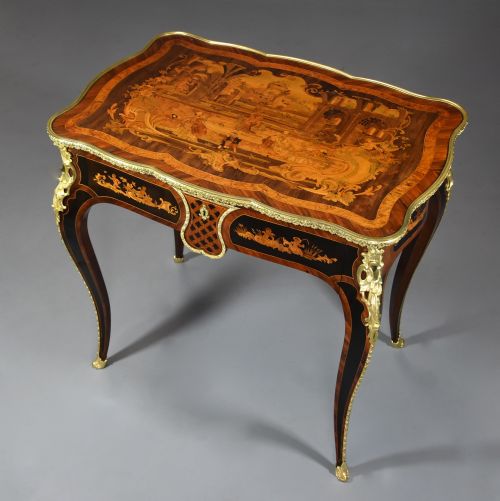
The construction typically relies on timbers like walnut, kingwood, rosewood, and mahogany, often shaped with serpentine edges or kidney-shaped tops. Many incorporate drawers or folding flaps, balancing practical utility with refined domestic presentation.
How they were made
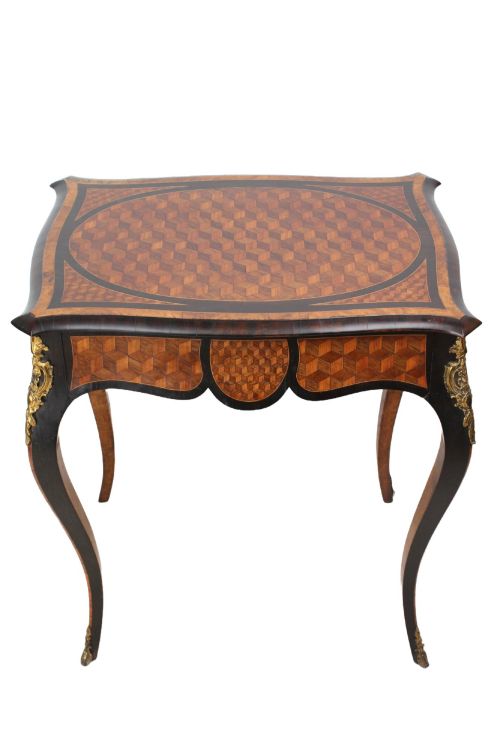
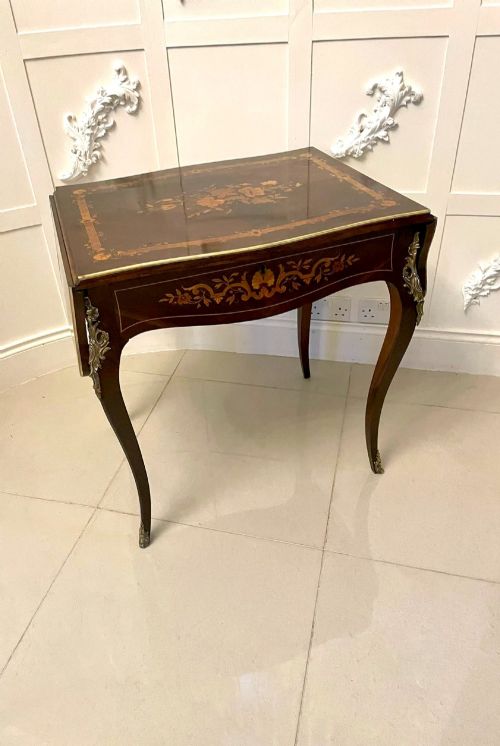
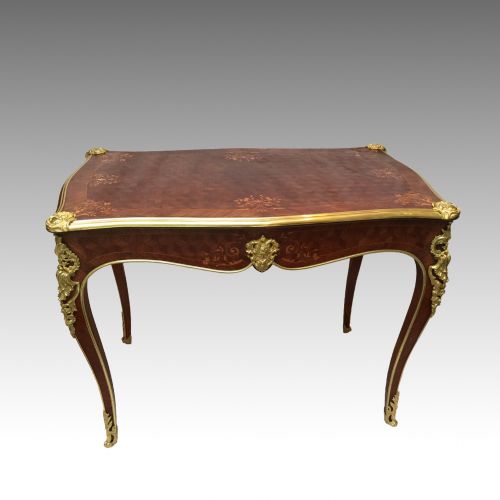
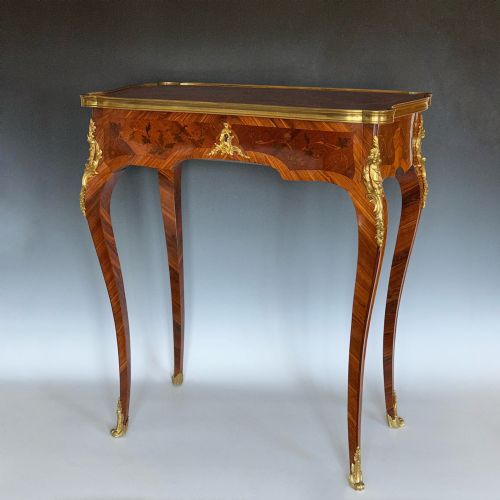
Cabinet makers utilised dense hardwoods including mahogany, walnut, and exotic veneers like kingwood and tulipwood, applied as intricate parquetry and marquetry geometric or floral patterns. Carcass frames relied on traditional joinery to support delicate curved legs and varied top designs.
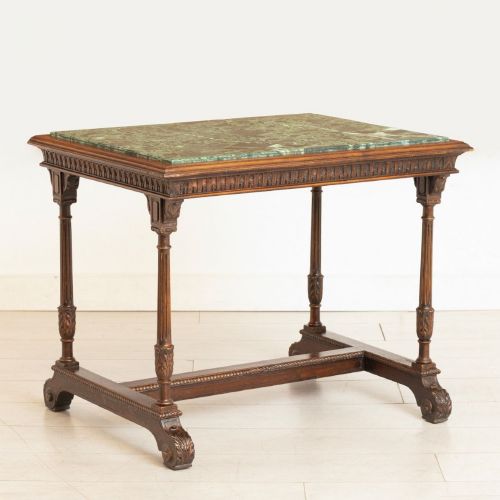
Metal enrichment played a vital role, with cast or chased ormolu mounts, brass galleries, and lockplates fitted to corners and drawer edges. Marble inserts, particularly white or Italian varieties, frequently formed inset tops or protective surfaces above the wooden frame.
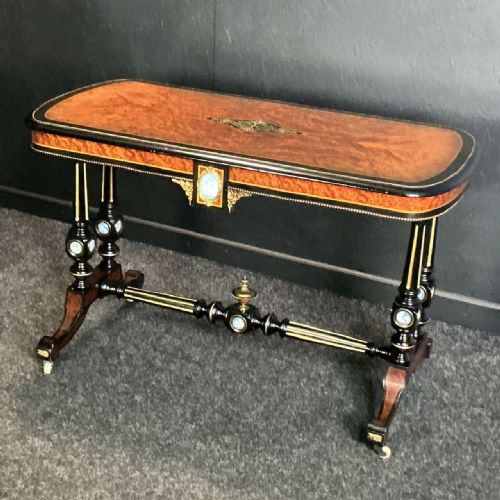
Listings show materials including walnut, ormolu, kingwood, rosewood, mahogany, and ebonised wood across eighteenth and nineteenth-century forms.
What varies in quality
The distinction between standard domestic items and the finest pieces rests upon the precision of the parquetry inlay and the crispness of the cast ormolu mounts. Finer workshops employed thicker veneers and selected figured timbers that retained depth and varied grain movement across the top and drawer fronts.
Structural integrity in the joints and the original patination of the timber surface dictate the long-term desirability of each desk. Pieces that retain their original brassware, working locks, and unblemished marble tops demonstrate superior original manufacture.
JAS Shoolbred·Edward’s And Robert’s·Millet
The French Occasional Desk Glossary
- Ormolu
- Gilded bronze mounts applied to furniture edges and legs. This technique provided ornamental contrast against dark timbers like rosewood and kingwood.
- Marquetry
- Decorative veneer work forming pictorial or floral designs. Artisans cut thin slices of contrasting wood to create detailed scenes across the table top.
- Parquetry
- Geometric wood inlay arranged in repetitive patterns such as cubes or herringbones. It adorned the flat surfaces of nineteenth-century tables and desks.
- Fauteuil
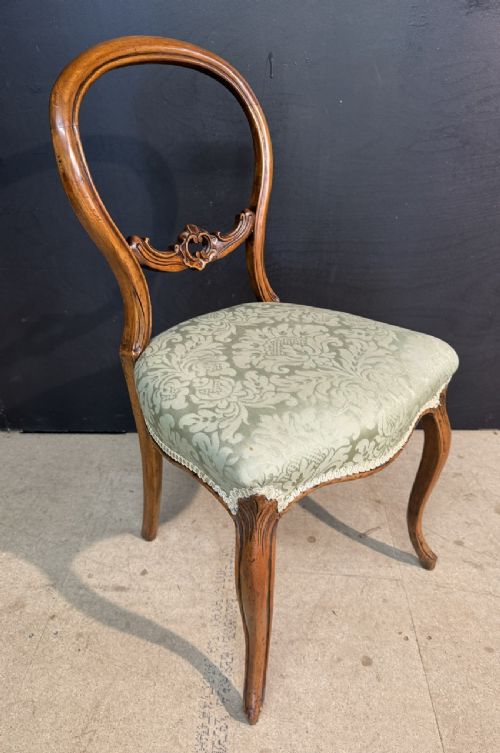
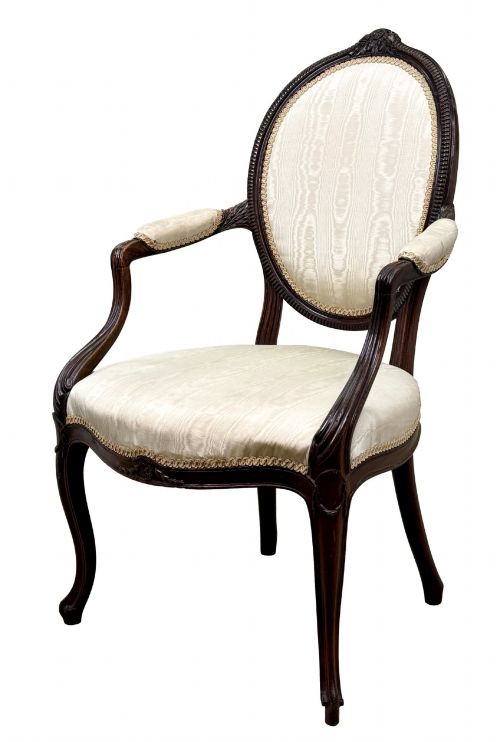
- An open-armed French armchair with upholstered back and arm pads. These seats frequently accompanied writing desks in period salons.
French Occasional Desk: Frequently Asked Questions
What is a french occasional desk used for?
These pieces provided a convenient surface for writing letters, handling accounts, or holding small decorative objects in bedrooms and reception rooms. Their smaller scale allowed them to sit away from walls in the centre of a room.
Unlike heavy partner desks, these lighter tables were easily repositioned as domestic needs changed throughout the day.
How do I identify a nineteenth-century piece?
Nineteenth-century examples often display revival styles such as Louis XV or Louis XVI, utilising exotic veneers like kingwood and rosewood. Look for machine-sawn timber marks and symmetrical ormolu mounts.
Cabinet makers of this era frequently combined parquetry tops with kidney shapes or marble inserts supported by slender cabriole legs.
Are these desks suitable for daily writing?
Most occasional desks provide adequate space for modern notebooks or laptops, though older writing surfaces may require protective desk pads. The drawer space is generally shallow, intended for stationery rather than bulk storage.
Their lightweight frames mean they function best when placed on steady flooring away from direct heat sources.
What is the difference between a side table and a writing desk?
Writing desks incorporate fitted drawers, drop-fronts, or specialised compartments designed specifically for holding paper, ink, and writing instruments. Side tables offer a clean top surface without internal storage compartments.
Many occasional tables bridge both categories, featuring a single shallow drawer concealed within the frieze beneath the top.